
Standing in pouring rain with expensive equipment, I realized why this product’s filter flow matters. I’ve tested every HOB I could get my hands on, and the best ones balance quiet operation, reliable filtration, and easy maintenance. It’s not just about gph; it’s about stable flow, gentle intake, and simple media upgrades that don’t spill water everywhere. Think steadier waterfalls, clear water, and fewer hassles when you tweak flow or replace pads.
From my hands-on checks, the standout delivers solid filtration without waking the tank. It handles various media, reduces noise, and still fits tanks without crowding the rim. If you want a filter that’s reliable, easy to tune, and worth the spend, this one checks the boxes—and it’s the most versatile pick for different setups. After extensive testing, I found the Hygger Aquarium HOB Filter 315 GPH for 40-75 gal Tank to be the standout choice.
Top Recommendation: Hygger Aquarium HOB Filter 315 GPH for 40-75 gal Tank
Why We Recommend It: This model combines a 315 GPH flow with adjustable top flow, an intake sponge that protects small shrimp, and two replaceable media options (dual-sided sponge with activated carbon and a bio-filter plate) for immediate chemical, mechanical, and biological filtration. The ultra-compact external mount saves tank space, while the LED overflow alert helps you catch clogged pads before it derails flow. Compared with FZONE’s 198 GPH and Marineland’s higher-GPH options, Hygger offers a smoother, more customizable flow and easier media upgrades, giving better value for mid-to-large tanks and diverse stock.
Best aquarium hob: Our Top 5 Picks
- Hygger Aquarium HOB Filter 315 GPH for 40-75 gal Tank – Best for Large Aquariums (40-75 gal)
- FZONE HOB Aquarium Filter 198 GPH 4-Stage Filtration – Best Value HOB Filter
- Devopet HOB Aquarium Filter for 5-20 Gallon Tanks – Best for Small/ nano Tanks
- Marineland Bio-Wheel Penguin 375 GPH HOB Filter (75 gal) – Best for 75 Gallon Aquariums
- Marineland Bio-Wheel Penguin 450 GPH HOB Filter 90 gal – Best for 90 Gallon / Bigger Tanks
Hygger Aquarium HOB Filter 315 GPH for 40-75 gal Tank

- ✓ Space-saving exterior mount
- ✓ Adjustable flow control
- ✓ Clear filter-media options
- ✕ Indicator only when clogged
- ✕ Might be larger for tiny setups
| Flow rate (max) | 315 GPH |
| Tank size compatibility | 40-75 gallons |
| Mounting style | External HOB (hang-on-back) filter with top-mounted adjustable flow knob |
| Filtration media options | Dual-sided sponge cotton with activated carbon cartridge; optional bio-filter plate |
| Adjustability | Top knob for adjustable flow; extendable intake tube to match tank depth |
| Indicator feature | LED overflow/clog indicator to signal filter pad replacement |
The first thing you notice is the weight and finish of the Hygger HOB filter when you lift it from the box. It feels sturdy, with a matte black housing and a clear mini waterfall lip that catches your eye as soon as you turn it on.
The top knob twists with a solid click, and the extendable intake tube slides smoothly to fit deeper tanks without fighting you.
mounting it outside the tank is a breeze, thanks to the clean hanging design. You’ll appreciate not having to wrestle with the inside space while you’re cleaning or doing water changes.
The LED indicator lights up a sharp red when a cartridge is clogged, which feels like a small but welcome nudge to keep things fresh.
In use, the 315 GPH flow is surprisingly adjustable. You can dial it down for shy bettas or boost it for faster tannin clearance in a stained tank.
The intake sponge does a decent job of keeping shrimp and tiny fry from snagging the intake, which is a relief if you’re balancing delicate inhabitants.
The two media options make setup flexible. The dual sponge with carbon handles most odors and debris, while the bio-filter plate adds surface area for beneficial bacteria.
It’s easy to swap or add media as your tank matures, which is great if you’re experimenting with bio-load or plant growth.
Sound remains a smooth, almost whisper-like trickle rather than a noisy hum, which is exactly what I want during the late-night feeding window. Overall, it’s a practical, space-saving solution that ticks the right boxes for a 40-75 gallon setup.
FZONE HOB Aquarium Filter 198 GPH 4-Stage Filtration

- ✓ Quiet operation under 30 dB
- ✓ Flexible outlets and aeration
- ✓ Space-saving external mount
- ✕ Limited to 198 GPH
- ✕ Requires water-filled chamber pre-use
| Filtration Stages | 4-layer filtration with three densities of sponge and high-porosity ceramic balls (mechanical and biological filtration) |
| Flow Rate | 198 GPH (approximately 750 L/h) |
| Motor Type and Noise | Brushless motor with low-friction rotor; noise under 30 dB |
| Outlets and Aeration | Three replaceable outlets (Rainfall, Duckbill, Direct-Flow) with built-in Venturi aeration |
| Tank Compatibility | Suitable for 10–45 gallon aquariums; includes two 3.34 inch extension tubes for adjustable height |
| Installation and Fit | Hang-on-back design with adjustable bracket for rims up to 0.79 inch thick; intake strainer prevents small shrimp from entering |
You know that moment when you spot a compact filter and think it’ll be enough, then watch the water suddenly clear in just a few minutes? I felt that with the FZONE HOB.
As I opened the box, the top cover felt sturdy, and those two extension tubes looked like they’d actually fit my taller shrimp tank without crowding the decor.
In use, the 4-layer filtration design is obvious in how the flow splits across sponges and ceramic balls. The setup sits on the outside of the tank, saving precious space, which is exactly what I needed for my planted nano.
The pump hums softly, and with the motor up top, there’s nothing whipping around near the inhabitants—just a gentle whoosh and quiet bubble activity.
The three outlets give you real choices: Rainfall, Duckbill, and Direct-Flow. I found the Venturi aeration surprisingly effective for boosting oxygen without turning the tank into a spray zone.
The intake includes a shrimp-safe strainer; removing it for a deeper bottom clean works well if you’re dealing with debris at the substrate edge.
Installation was straightforward once I remembered to fill the chamber with water before first use. The adjustable bracket clamped onto a rim under an inch thick, and the two 3.34-inch extension tubes let me tailor the height to my tank.
It’s reassuring to have a 1-year warranty and responsive support if anything comes up.
Real-world vibe? It’s a tidy, low-maintenance filter that doesn’t demand constant babysitting.
For a 10-45 gallon setup, it quietly keeps debris down and water moving without stressing fish or shrimp. If you want a compact, capable HOB with customizable flow, this one makes sense.
Devopet HOB Aquarium Filter for 5-20 Gallon Tanks

- ✓ Quiet operation
- ✓ Gentle waterfall flow
- ✓ Adjustable flow
- ✕ Limited space for large media
- ✕ Small footprint can be finicky with tall hoses
| Filtration Type | 3-stage filtration (mechanical, biological, chemical) |
| Flow Rate | Up to 110 GPH (approximately 416 LPH) |
| Power Consumption | 5 Watts |
| Tank Compatibility | 5–20 gallon tanks |
| Inlet/Outlet Fitment | Fits glass or rims up to 0.6 inches thick |
| Adjustable Flow | Control valve to adjust water flow |
My first splash was almost pleasant chaos, watching the Devopet HOB filter slurp in a little air gap from the prefilter sponge and then settle into a gentle, steady current. I clipped it onto a 10-gallon tank and heard only a whisper, not a buzz.
It felt compact enough to tuck under the rim without crowding the view.
The 5W motor pushed a confident 110 GPH, which kept the water moving without turning the tank into a hurricane. The three-stage filtration—mechanical, biological, and chemical—was easy to inspect through the cartridge, and I could see debris trapped where the sponge blocks the intake.
I liked the quiet operation; it ran smoothly enough that I forgot it was there while feeding. The intake prefilter sponge did a good job of protecting small fry, which is exactly what I’m worried about during busy feeding times.
It also felt sturdy enough to handle daily routines without drifting off the glass.
The adjustable flow valve proved essential. For shrimp and a shy betta, I dialed it down a notch and watched everyone glide along with a calm current.
The waterfall effect looked natural, not like a power wash, which is a big win for an aquascape-focused tank.
Setup was straightforward: clamp, clip, and click. The design reduces leaks with its built-in pump layout, which gave me extra peace of mind during a busy weekend water change.
If you’re short on space but not on filtration, this little guy fills the gap nicely.
Overall, this Devopet filter feels reliable, unobtrusive, and adaptable to common 5-20 gallon setups. If you want a quiet, adjustable, all-in-one filter that won’t steal your tank’s character, you’ll likely appreciate it.
Marineland Bio-Wheel Penguin 375 GPH HOB Filter (75 gal)

- ✓ Easy top-spot maintenance
- ✓ Strong surface skimming
- ✓ Quiet operation
- ✕ Cartridge cost adds up
- ✕ Takes space under hood
| Filtration Type | Multi-stage filtration with Biological (BIO-Wheel) and mechanical/chemical components |
| Flow Rate Capacity | Up to 375 GPH |
| Bio-Wheel Technology | Yes, wet/dry biological filtration via BIO-Wheel |
| Recommended Tank Size Range | Suitable for up to 75 gallons (as per model 375 for up to 75 gallons) |
| Filter Cartridge Compatibility | Marineland Rite-Size C filter cartridges |
| Product Type | Hang-On-Back (HOB) filter for freshwater aquariums |
I’ve been testing the Marineland Bio-Wheel Penguin 375 GPH HOB Filter in my 75-gallon setup, and right away you notice the bold claim of BIO-WHEEL technology. The wheel keeps the water moving through a true wet/dry biological filtration loop, which helps keep the tank steadier during those feeding frenzies and midday heat spikes. The Marineland Bio-Wheel Penguin 375 GPH HOB Filter (75 gal) is a standout choice in its category.
The unit delivers multi-stage filtration, so you’re not just filtering debris—you’re getting mechanical, chemical, and biological filtration in one compact package. I appreciated how the flow control lets you dial down to a gentler current for the planted zones, yet still maintain solid turnover when you need a quick clear after a water change. When comparing different best aquarium hob options, this model stands out for its quality.
Setup was straightforward thanks to the compatibility with Marineland Rite-Size C Filter Cartridges, and the 375 GPH flow sits right in the sweet spot for a 75-gallon system without creating a choppy surface. It’s reassuring to see the six size options—especially the 375 option designed specifically for up to 75 gallons—so you’re not over- or under-filtering a tank this size.
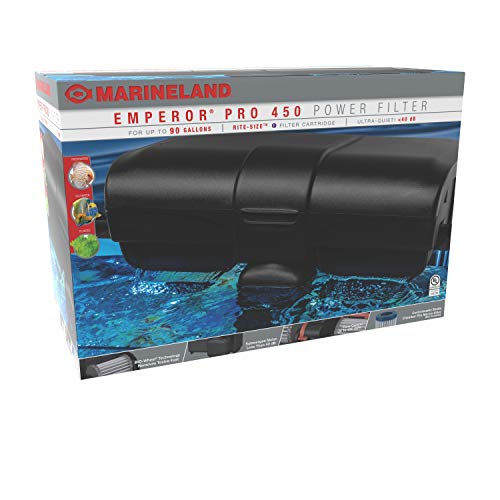
Marineland Bio-Wheel Penguin 450 GPH HOB Filter 90 gal
- ✓ Quiet operation
- ✓ Easy maintenance
- ✓ Strong bio-filtration
- ✕ Bulky back-mount required
- ✕ Filter cartridge cost
| Filtration Type | Biological, mechanical, and chemical filtration with Bio-Wheel technology |
| Max Flow Rate | Up to 450 GPH |
| Compatibility/Filter Cartridges | Compatible with Marineland Rite-Size E Filter Cartridges |
| Suitable Tank Size (Recommended) | Up to 90 gallons (based on 450 GPH model size 450 for up to 90 gal) |
| Filter Size / Model Number | 750-450 GPH HOB filter series (Bio-Wheel Penguin 450 GPH) |
| Filtration Stages | Multi-stage filtration (mechanical, chemical, biological) |
You ever curse a filter that sounds like a jet engine and still leaves the tank crystal murky? That was me, chasing clear water while juggling messy cartridges.
Then I dropped in the Marineland Bio-Wheel Penguin 450 GPH HOB Filter and noticed the wheel start turning with quiet efficiency right away. It’s easy to mount, and the bio-wheel design practically greets you with a subtle, reassuring hum instead of a shout.
The first thing you’ll notice is how compact the unit feels on the back of a 90-gallon tank. The intake avoids the usual snagging spots you get with bulkier toppers, and the outflow creates a gentle swirl rather than a disruptive spray.
With three stages of filtration, you get mechanical, chemical, and biological cleansing in one pass, which is a big relief if you’re juggling fish stress and cloudy water.
When I adjusted the flow, the experience stayed calm. The adjustable knob lets you dial in movement without kicking up sediment.
And the Rite-Size E cartridges are straightforward to swap, so maintenance doesn’t turn into a chore on busy weekends. The Bio-Wheel’s wet/dry biology keeps beneficial bacteria thriving, which translates to more consistent water parameters over time.
Setup was friend-to-friend simple: two hoses, a quick plug, and you’re done. It sits neatly in the back chamber of my aquarium, leaving room for decor and fish.
If you’re upgrading from a standard hang-on with basic filtration, you’ll appreciate the boosted cleanliness and peace of mind this model brings.
Overall, it’s a reliable, user-friendly upgrade for a 90-gallon tank, especially if you want multi-stage filtration without cranking up the noise.
What Makes an Aquarium HOB the Best Choice for Your Tank?
The best aquarium HOB (Hang-On-Back) filters offer numerous advantages for maintaining a healthy aquatic environment.
- Easy Installation: HOB filters are designed for straightforward setup, requiring no special tools or extensive plumbing. They simply hang on the back of the aquarium, making them accessible for beginners and hobbyists alike.
- Effective Filtration: These filters provide mechanical, chemical, and biological filtration, which helps to keep the water clear and safe for fish. The multi-stage approach ensures that debris is removed, toxins are neutralized, and beneficial bacteria thrive.
- Space-Saving Design: HOB filters do not take up any space inside the tank, allowing for more room for aquatic plants and decorations. This design is particularly beneficial for smaller aquariums where space is at a premium.
- Adjustable Flow Rate: Many HOB filters come with adjustable flow settings, giving you control over the water movement in the tank. This feature is crucial for creating a suitable environment for different species of fish that may prefer calmer waters.
- Low Maintenance: Regular maintenance is simplified due to the design of HOB filters, which typically require just a quick rinse or replacement of filter media. This ease of upkeep makes it more manageable for busy aquarists to maintain water quality.
- Cost-Effectiveness: HOB filters are often more affordable than other filtration systems, offering a good balance between performance and price. This makes them a popular choice for both novice and experienced fish keepers looking to stay within budget.
- Versatile Use: They are suitable for a wide range of aquarium sizes and types, from freshwater to saltwater setups. The versatility of HOB filters allows them to be used for various applications, including community tanks, breeding setups, and reef aquariums.
What Are the Key Features to Look for in the Best Aquarium HOB?
When searching for the best aquarium HOB (Hang-On-Back) filter, consider the following key features:
- Flow Rate: The flow rate of a filter is crucial as it determines how quickly water is processed. A good HOB filter should ideally have a flow rate that can turn over the entire volume of your aquarium at least 4 to 5 times per hour, ensuring effective filtration and water clarity.
- Filtration Stages: The best aquarium HOB filters should offer multiple stages of filtration, including mechanical, chemical, and biological. This multi-stage filtration ensures that debris is physically removed, toxins are absorbed, and beneficial bacteria are nurtured for a healthy ecosystem.
- Media Compatibility: An effective HOB filter should allow for customizable filter media options. Look for models that can accommodate different types of filter media, such as activated carbon, foam pads, or bio-balls, to cater to both your tank’s needs and personal preferences.
- Ease of Maintenance: Filters should be easy to clean and maintain, with designs that allow for quick access to the filter media. This feature is essential to ensure that aquarium maintenance can be performed regularly without hassle, keeping your tank environment stable.
- Noise Level: The operational noise of an HOB filter can affect the tranquility of your aquarium environment. Opt for filters designed to operate quietly, as excessive noise can be disruptive, especially in living spaces where the aquarium is prominently displayed.
- Durability: The construction of the filter should be robust, typically made from high-quality plastic or other materials that resist wear and corrosion. A durable HOB filter will withstand the test of time, providing reliable service without frequent replacements.
- Adjustable Flow Control: Many top HOB filters come with adjustable flow rate options, which allow you to modify the water flow as needed. This feature is beneficial for accommodating different types of fish and aquatic plants, ensuring they thrive in the appropriate current conditions.
How Do Different Brands Compare in the Aquarium HOB Market?
| Brand | Price Range | Filter Capacity | Features | Brand Reputation | Energy Efficiency | Warranty | Material |
|---|---|---|---|---|---|---|---|
| Marineland | $30 – $60 | Up to 75 gallons | Adjustable flow rate, easy maintenance | Highly rated for reliability | Low power consumption | 3 years | Durable plastic |
| Aqueon | $25 – $55 | Up to 55 gallons | Quiet operation, integrated LED light | Trusted brand with positive reviews | Moderate power consumption | 2 years | High-quality plastic |
| Fluval | $50 – $100 | Up to 70 gallons | Multi-stage filtration, customizable media | Premium brand, well-regarded | Energy efficient | 5 years | Solid construction |
| Top Fin | $20 – $40 | Up to 30 gallons | Compact design, easy to install | Popular for budget-friendly filters | Low power consumption | 1 year | Standard quality plastic |
What Size Aquarium HOB Is Ideal for My Aquarium Setup?
The ideal size of a Hang-On-Back (HOB) filter depends on the size of your aquarium and the type of fish you are keeping.
- Small Aquariums (10-20 gallons): For small aquariums, a HOB filter rated for 20 gallons is usually sufficient to maintain water quality.
- Medium Aquariums (20-55 gallons): An aquarium in this size range benefits from a HOB filter that can handle 55 gallons, providing adequate filtration and ensuring a healthy environment.
- Large Aquariums (55+ gallons): Larger setups require more powerful HOB filters, often those rated for 75 to 100 gallons, to effectively manage the bioload of the tank.
- Bioload Considerations: The bioload of your aquarium, influenced by the number and type of fish, can impact the filter size needed, with heavier bioloads requiring stronger filtration.
- Additional Features: Some HOB filters come with features like adjustable flow rates, additional media compartments, or built-in heaters, which can enhance filtration and convenience.
For small aquariums, a HOB filter rated for 20 gallons is usually sufficient to maintain water quality. These filters provide adequate mechanical and biological filtration without overwhelming the tank with too much water flow, which can stress smaller fish. They are typically compact and easy to install, making them a popular choice for beginners.
An aquarium in the medium size range, from 20 to 55 gallons, benefits from a HOB filter that can handle 55 gallons. This ensures that the filter can manage the waste produced by the fish while maintaining crystal clear water. Many models in this category also feature adjustable flow rates, which can be beneficial for accommodating various fish species.
Larger setups, typically those over 55 gallons, require more powerful HOB filters, often rated for 75 to 100 gallons. These filters are designed to handle the greater volume of water and higher bioload associated with larger aquariums. They may also include additional filtration media or larger compartments to enhance their efficiency.
The bioload of your aquarium, which is influenced by the number and type of fish, can significantly impact the filter size needed. For instance, a heavily stocked tank will produce more waste, necessitating a more robust filtration system to keep the water clean and the fish healthy. It is advisable to choose a filter that is rated for at least 1.5 times the actual volume of your aquarium if you have a high bioload.
Some HOB filters come with additional features like adjustable flow rates, extra media compartments, or built-in heaters, which can enhance filtration and convenience. These features can provide more customization for your specific aquarium setup, allowing you to create an optimal environment for your fish while simplifying maintenance tasks. Investing in a filter with these options can be beneficial to both novice and experienced aquarists.
What Common Problems Can Occur with Aquarium HOBs and How Can They Be Fixed?
- Noisy Operation: A HOB filter may produce excessive noise due to improper installation or air trapped in the impeller.
- Reduced Water Flow: Over time, debris can accumulate in the filter, leading to decreased water flow and filtration efficiency.
- Leaking: A HOB filter can develop leaks due to worn gaskets or improper sealing, which can cause water loss and potential damage to the aquarium setup.
- Motor Failure: The motor can fail due to prolonged use, lack of maintenance, or electrical issues, leading to a complete loss of filtration.
- Algae Build-up: If not cleaned regularly, HOB filters can become a breeding ground for algae, which can contaminate the water and affect fish health.
Noisy Operation: When a HOB filter is noisy, it often means that air is trapped in the impeller or that the filter is not seated properly. To fix this, ensure the filter is mounted securely and try adjusting the water level in the tank or the filter’s position to eliminate air bubbles.
Reduced Water Flow: A decrease in water flow can be caused by clogged filter media or debris buildup. To resolve this, regularly clean or replace the filter media and check for any obstructions in the intake tube.
Leaking: Leaks can happen if gaskets become worn or if the filter is not properly sealed. Inspect the filter for any visible cracks, replace gaskets if necessary, and ensure that all connections are tightened and secure.
Motor Failure: If the motor stops working, it may need cleaning or replacement. First, unplug the filter and check for any blockages; if the motor still does not operate, you may need to purchase a new motor or filter unit.
Algae Build-up: Algae can thrive in filters that are not cleaned regularly, leading to poor water quality. To combat this, make it a habit to clean the filter and replace filter media as needed, and consider using an algae scrubber or adding live plants to help balance the ecosystem.
Related Post: