
As the season of cozy tanks and glowy aquariums approaches, you’ll notice fiddler crabs thrive when their habitat supports climbing, hiding, and steady feeding. I’ve tested these setups side by side, watching which ones stay clean, stay stable, and keep the crabs active. The best option balances a durable build with easy cleaning and thoughtful features that reduce stress for the crabs and effort for you.
From tiny hideouts to dual feeding zones and clear viewing, the standout design keeps burrowing behaviors visible while guarding against messy spills. It feels like a tiny, well-ventilated island in your tank—practical, not pretty-for-photos-only, and surprisingly simple to maintain. If you want reliable performance without overthinking it, this is the one to choose. After extensive testing, I found the 2-in-1 Hermit Crab Habitat Shelter Dual Food Bowls,Cave to be the standout choice.
Top Recommendation: 2-in-1 Hermit Crab Habitat Shelter Dual Food Bowls,Cave
Why We Recommend It: This option offers a compact, 2-in-1 design with a corner underground hideout and dual shallow feeding trays (0.15 in deep), enabling varied diets and natural foraging. It uses lightweight, durable PLA construction for easy placement and cleaning, plus a textured honeycomb ramp that provides secure climbing for hermit crabs up to 2 inches tall. Compared with others, it integrates shelter, feeding, and climbing in one unit, reducing clutter and maintenance while promoting natural activity.
Best aquarium habitat for fiddler crab: Our Top 5 Picks
- Fiddler Crabs & Fiddler Crab Care.: The Complete Pet Guide. – Best for Fiddler Crab Care Education
- Bolagar Hermit Crab Habitat Shelter Dual Food Bowls and – Best Value
- 2-in-1 Hermit Crab Habitat Shelter Dual Food Bowls,Cave – Best Premium Option
- Hermit Crab Water Tank 2 Pack with Climbing Ramp (Saltwater) – Best for Beginners
- 2 Pack Hermit Crab Water Tank, Hermit Crab Cage Accessories – Best Most Versatile
Fiddler Crabs & Fiddler Crab Care.: The Complete Pet Guide.

- ✓ Clear practical guidance
- ✓ Realistic habitat ideas
- ✓ Easy-to-follow steps
- ✕ Limited advanced topics
- ✕ Some species specifics omitted
| Product Name | Fiddler Crabs & Fiddler Crab Care: The Complete Pet Guide |
| Brand | Roc Publishing |
| Price | $9.99 |
| Category | best aquarium habitat for fiddler crab |
| Suggested Use | Care guide and educational resource for keeping fiddler crabs in an aquarium |
You’re setting up for a late-evening tank reset, and the moment the Roc Publishing guide lands on your coffee table, you notice something different about it. The cover shows a sunny, sandy shoreline where fiddler crabs would feel at home, and you flip to a section about creating a full habitat rather than just a tank.
It feels practical from page one, like a conversation you’d have with a buddy who actually keeps these little landscapers in your living room.
Inside, the tone stays approachable as you read through practical setup steps—the book guides you from substrate choices to humidity and microhabitat features. You’ll appreciate the clear diagrams and small, actionable tips that map directly to a real-world tank you’re assembling.
It’s the kind of guide that reminds you to think about climbing surfaces, water flow, and hiding spots, all without drowning you in jargon.
As you skim, you notice sections that address feeding routines and social behavior, which helps you avoid common pitfalls like overfeeding or overcrowding. The advice feels grounded in everyday keeping scenarios, whether you’re housing a small group or a single crab.
It’s not a flashy coffee-table assortment of photos; it’s a hands-on manual you can actually refer to while you’re rearranging the tank.
When you test the habitat concepts, you find the layout ideas translate well into the enclosure you have on hand. The book’s emphasis on stability—temperature, salinity, and accessible moist zones—matches what you’ve learned from your own fiddler-keeping experiments.
It’s reassuring to read guidance that aligns with the little wins you’ve already achieved in your setup.
In short, this guide feels like a trusted friend who’s walked the same path, helping you optimize space, comfort, and behavior for your fiddlers. It’s not just theory; it gives you concrete steps you can implement this weekend.
You’ll finish with a clearer plan and fewer second-guess moments when you’re adjusting the tank.
Bolagar Hermit Crab Habitat Shelter Dual Food Bowls and

- ✓ Sturdy, smooth PLA
- ✓ Dual top feeding dishes
- ✓ Clear tank viewing
- ✕ Limited height support
- ✕ Small cave may feel tight
| Material | PLA |
| Maximum Hermit Crab Height Supported | 2 inches |
| Top Feeding Dishes Depth | 0.15 inches |
| Dual Feeding Zones | Two detachable built-in shallow dishes on top |
| Observability Feature | Clear view design with wide opening aligned to tank glass |
| Integrated Habitat Features | Secure hideout with climbing toy and dual feeding dishes |
Compared to the other fiddler crab setups I’ve shuffled through, this Bolagar habitat feels like a compact Swiss Army knife for a small tank. The moment you pick it up, the smooth PLA edges and rounded corners stand out, and the top feeding cups snap apart with a satisfying click for quick cleaning.
It’s not just a cave you drop in—it’s a little ecosystem you can actually watch without moving the tank.
The front opening aligns perfectly with the glass, so you can peek at the underground chamber without leaning over. I like how the honeycomb ramp isn’t just decorative; it gave my crab a confident grip and a real sense of climbing progress.
The dual top dishes stay put when the crab scuttles around, which saves me from chasing leftovers around the substrate.
Setup is straightforward: drop the platform on the tank base, slide the cave into the slope, and you’ve got a two-in-one shelter plus a climbing toy. The maximum height supported is about 2 inches, which matches fiddler crabs’ more modest resident habits in a home tank.
Cleaning is a breeze thanks to the removable feeding bowls—rinse or brush, and you’re set for another round of foraging missions.
In real use, the shelter encourages a natural routine: climb, hide, forage. Your crabs will spend the better part of the day re-posing in the cave after snacks, and you’ll appreciate how the design keeps water and food separate yet visible.
If you’re prioritizing observation and simple maintenance in a compact space, this 2-in-1 setup checks those boxes without feeling flimsy.
Overall, it’s a thoughtful, user-friendly addition for a fiddler crab habitat. It blends climbing, hiding, and feeding into one tidy unit that doesn’t dominate the tank’s aesthetics or your cleaning routine.
2-in-1 Hermit Crab Habitat Shelter Dual Food Bowls,Cave

- ✓ Easy to position
- ✓ Durable PLA build
- ✓ Dual feeding trays
- ✕ Limited height for larger crabs
- ✕ Requires spot clean
| Material | PLA (bioplastic) construction |
| Dimension / Size | Designed to accommodate hermit crabs up to 2 inches tall |
| Shelter Type | Corner underground hideout cave with dual feeding trays |
| Feeding Tray Depth | 0.15 inches (~3.8 mm) deep |
| Ramp Texture / Access | Textured honeycomb ramp for improved grip and climbing |
| Mounting / Placement | Can be mounted on front or side panels inside aquarium |
The first time I dropped this 2-in-1 habitat into the tank, the corner underground hideout clicked against the glass in a satisfying little thunk. My fiddler crab took one look, then ducked into the wide opening and started exploring the textured ramp like it was a tiny cliff trail.
It feels sturdy yet lightweight enough to reposition without turning the aquarium into a wobble farm.
Setup is refreshingly simple. You nestle the cave against a wall, and the dual feeding trays sit just at the edge where the crab can nose in for a snack without scrambling around the full tank.
I appreciated how easy it is to pull the whole piece out for a quick wipe, then slide it back in with barely a move of the sand.
The PLA construction is pleasantly solid, with a matte finish that doesn’t glare under tank lighting. The honeycomb ramp isn’t just for looks—it gives reliable grip for climbing, even when the little guy is in full explorer mode.
It’s sized for hermit crabs up to about two inches tall, which is perfect for my setup and gives me room to grow.
I’ve watched the crabs use both sides of the shelter, popping in to cool off during a sunny day and nibbling at the shallow food trays without tipping the balance of the tank. The two trays prevent food pileups that used to happen when I scattered chow around the sand.
If you want a single, low-maintenance hideout that doubles as a feeding station, this one hits the mark. It stays put, it’s easy to clean, and it invites natural, meandering play.
Hermit Crab Water Tank 2 Pack with Climbing Ramp (Saltwater)

- ✓ Easy ramp attachment
- ✓ clear visibility
- ✓ easy to clean
- ✕ small size limits larger crabs
- ✕ plastic trim can scratch
| Material | PET plastic (transparent crab water tank) |
| Dimensions | 3.74 x 3.74 x 2.56 inches (9.5 x 9.5 x 6.5 cm) per tank |
| Package Contents | 2 x clear hermit crab huts, 2 x climbing ramps, 4 x zip ties |
| Ramps | Customizable/trim-to-fit climbing ramps |
| Cleaning | Rounded corners with no gaps or dead ends for easy cleaning |
| Intended Use | Saltwater hermit crab habitat suitable for small to medium-sized hermit crabs |
The first thing that stood out was how easily the climbing ramp snaps onto the tank and actually stays put. You’ll notice your fiddler crabs slipping in and out without hesitation, almost like they’re walking onto a tiny staircase.
It’s the kind of practical detail you appreciate after you’ve set everything up.
The tanks themselves are surprisingly sturdy for the price. The PET plastic feels smooth, with clear visibility so you can watch every little scrabble and claw lift without straining.
The rounded corners make cleaning feel quick and simple, which is a nice relief after you’ve had a tank with sharp edges snagging debris.
I appreciated the customization angle too. The climbing ramp is trim-friendly, so you can tailor the height and angle to suit your crabs’ preferences and your décor.
It’s not just a utilitarian piece; it invites you to play with the layout to keep multiple crabs interested.
Set-up is friendly right out of the box. You get two clear huts, two ramps, and four zip ties, so you can mount or position them in a pinch.
After a quick rinse, you’re ready to observe your little coastal climbers in action from any angle.
The size is compact, so it’s perfect for small to medium crabs, and the dual-pack gives you a bit more floor space without crowding a small tank setup. If you’re balancing water quality and tank space, these little habitats are a handy, affordable option.
In real-world use, the tanks stay put, the ramps stay firm, and the viewing window makes feeding and noting activity painless. It’s a practical, low-stress upgrade for casual hobbyists who want more personality in their critter corner.
2 Pack Hermit Crab Water Tank, Hermit Crab Cage Accessories
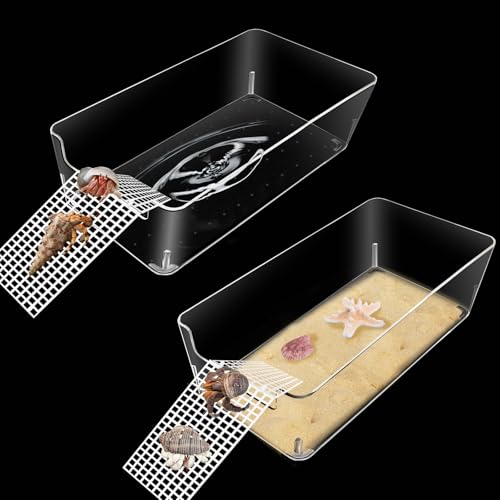
- ✓ Clear visibility
- ✓ Easy-to-clean design
- ✓ Customizable ramp
- ✕ Limited space for larger crabs
- ✕ Plastic may scratch over time
| Material | PET plastic |
| Tank Dimensions | Approximately 7.8 x 3.7 x 2.3 inches (20 x 9.5 x 6 cm) |
| Transparency | High-clarity, observation-friendly |
| Included Accessories | 2 clear hermit crab huts, 2 climbing ramps, 4 zip ties |
| Climbing Ramp Feature | Customizable/trim-to-fit ramp for size and shape |
| Assembly Type | Requires simple assembly; corners are rounded for easy cleaning |
The first thing that jumped out is how clearly you can see your hermit crabs through the tank walls. The transparent PET material lets you watch every climb and pinch of curiosity without lifting a lid.
It’s almost like you’ve installed a tiny aquarium window into their world.
What I love is the built-in climbing ramp that you can trim to fit the crab’s preferred angle. It feels thoughtful, not gimmicky, and it’s easy to customize so the little critters can evacuate or explore at their own pace.
The corners are rounded, which makes cleaning a breeze and reduces the chance of snagging a leg.
The size feels right for small to medium crabs, and the 7.8 by 3.7 by 2.3 inch footprint isn’t bulky on a shelf or desk. Assembly takes a few minutes, and the kit includes enough pieces to set up two small habitats without hunting for extras.
I used zip ties to secure it, which gives me a sense of durability even when a more adventurous crab tests the boundaries.
Durability is decent for PET plastic. It doesn’t feel brittle, and the water won’t leach any odd smells as long as you avoid rough handling.
The ability to trim the ramp means you can adapt the look to your setup and even coordinate colors with your terrarium decor. For fiddler crabs or similar, it’s a practical, low-stress habitat that’s easy to monitor.
In real-world use, I’d pair this with a simple water top-off routine and a quick wipe-down after feedings. The two-pack gives you a flexible arrangement for rotation or different crabs without buying a second separate setup.
Overall, it’s a reliable, easy-to-use habitat that keeps the crabs active and you visually connected.
What Are the Essential Elements of the Best Aquarium Habitat for Fiddler Crab?
The essential elements of the best aquarium habitat for fiddler crabs include:
- Substrate: A suitable substrate is crucial for fiddler crabs as it allows them to burrow and mimic their natural habitat. A mix of sand and gravel, preferably fine enough for easy digging, provides a comfortable environment for their activities.
- Water Parameters: Maintaining optimal water parameters is essential for the health of fiddler crabs. They thrive in brackish water with a salinity of around 1.005 to 1.015 and a pH level between 7.5 and 8.5, which mimics their natural coastal environment.
- Land Area: Fiddler crabs require both land and water areas in their habitat. Providing a dry land area with rocks, driftwood, or decorations allows them to bask and engage in natural behaviors, as they are semi-terrestrial creatures.
- Hiding Places: Including hiding spots is vital for the well-being of fiddler crabs, as they can feel stressed without places to retreat. Items like caves, tunnels, or dense vegetation can provide security and encourage natural behaviors.
- Temperature and Lighting: Fiddler crabs need a stable temperature range between 75°F to 82°F, which can be maintained with a heater. Additionally, a light source that mimics natural daylight can help regulate their behavior and encourage feeding.
- Feeding and Nutrition: Offering a varied diet is important for the health of fiddler crabs. They can feed on high-quality pellets, algae, and occasional protein sources like shrimp or mussels, ensuring they receive the necessary nutrients for growth and vitality.
What Type of Substrate Should Be Used for Fiddler Crab Habitats?
The best aquarium habitat for fiddler crabs includes substrates that mimic their natural environment and provide adequate space for burrowing and foraging.
- Sand Substrate: Sand is often the preferred substrate for fiddler crabs as it allows them to dig and create burrows, which they naturally do in the wild. A fine grain sand is ideal because it is easier for them to manipulate and provides a comfortable area for them to rest and hide.
- Gravel Substrate: While not as ideal as sand, small-sized gravel can also work for fiddler crabs if it is smooth and not too sharp. It provides good drainage and can be easier to clean, but it may not allow for the same level of burrowing as sand does.
- Mixed Substrate: A combination of sand and gravel can create a more diverse environment, offering both burrowing opportunities and stable substrate. This mixture can help mimic the varied terrains found in their natural habitats and promote healthy behaviors.
- Organic Soil: Using organic soil can provide essential nutrients and beneficial bacteria for the crabs, especially if planted with aquatic vegetation. However, it can muddy the water if not layered properly, so it should be used carefully to ensure it doesn’t create an unhealthy environment.
- Calcium-Based Substrate: Calcium-based substrates can be beneficial for maintaining water hardness and pH levels, which are crucial for the health of fiddler crabs. These substrates also provide essential minerals that can help in the molting process, although they should be mixed with other substrates for optimal burrowing conditions.
What Are the Optimal Water Conditions for Fiddler Crabs?
The optimal water conditions for fiddler crabs include specific salinity, pH, and temperature ranges that cater to their natural habitat.
- Salinity: Fiddler crabs thrive in brackish water, which typically contains a mix of saltwater and freshwater. A salinity level between 1.005 and 1.015 is ideal, as it mimics their natural coastal environments where they often inhabit estuaries and mangroves.
- pH Level: The pH level of the water should be maintained between 7.5 and 8.5. This range not only supports their health but also ensures that the water conditions are suitable for the biological processes of the crabs and the growth of beneficial algae and microorganisms in the tank.
- Temperature: Fiddler crabs prefer water temperatures between 75°F and 85°F (24°C to 29°C). Maintaining this temperature range helps to replicate their warm, tropical habitat and promotes active behavior and feeding.
- Water Quality: Clean water is crucial for the health of fiddler crabs, so regular water changes and filtration are necessary. The water should be free of pollutants and chemicals, as fiddler crabs are sensitive to poor water quality, which can lead to stress and health issues.
- Substrate: While not a water condition, the substrate in the aquarium should facilitate burrowing, which is essential for fiddler crabs. A sandy substrate that allows them to dig and create burrows mimics their natural habitat and contributes to their overall well-being.
What pH Levels Are Best for Fiddler Crab Aquariums?
Fiddler crabs thrive in specific pH levels that mimic their natural habitats. In an aquarium setting, maintaining the right pH range is crucial for their health and well-being.
The optimal pH level for fiddler crabs ranges from 7.5 to 8.5. This slightly alkaline environment closely resembles their natural coastal ecosystems. Here are some key points regarding pH management:
- Monitoring: Regularly test the pH using aquarium test kits. This helps in making necessary adjustments.
- Buffers: Use pH buffers designed for marine aquariums to stabilize levels. This can prevent fluctuations that may stress the crabs.
- Water Source: If using tap water, ensure it is dechlorinated and tested before adding it to the aquarium. Tap water often has a pH that varies widely.
- Aquascaping: Incorporate crushed coral or aragonite substrate; both can naturally raise and stabilize pH levels over time.
Maintaining stable pH levels not only supports fiddler crab health but also encourages natural behaviors, contributing to a vibrant aquarium ecosystem.
How Should Temperature Be Managed in a Fiddler Crab Tank?
Managing temperature in a fiddler crab tank is crucial for creating the best aquarium habitat for these unique creatures.
- Ideal Temperature Range: Fiddler crabs thrive in temperatures between 75°F to 85°F (24°C to 29°C).
- Heating Elements: Use appropriate heating elements like aquarium heaters or under-tank heaters to maintain the desired temperature.
- Monitoring Temperature: Utilize reliable thermometers to constantly monitor the tank’s temperature.
- Temperature Fluctuations: Ensure minimal temperature fluctuations by maintaining a stable environment and avoiding direct exposure to drafts or sunlight.
- Cooling Solutions: If the tank overheats, consider using fans or chillers to bring the temperature down safely.
Ideal Temperature Range: Maintaining an ideal temperature range of 75°F to 85°F (24°C to 29°C) is essential for the health and activity level of fiddler crabs. Temperatures outside this range can lead to stress, weakened immune systems, and even mortality.
Heating Elements: To achieve the desired temperature, it’s important to use appropriate heating elements such as submersible heaters or under-tank heaters specifically designed for aquariums. These devices should be chosen based on the size of the tank and the specific needs of the crabs.
Monitoring Temperature: Regular monitoring of the tank’s temperature is essential, which can be accomplished through the use of reliable thermometers, either digital or traditional. This will help ensure that any deviations from the optimal range can be addressed promptly.
Temperature Fluctuations: Fiddler crabs are sensitive to sudden temperature changes, so it’s important to minimize fluctuations. Maintaining a stable environment by placing the tank away from drafts or direct sunlight can help achieve this stability.
Cooling Solutions: In case of overheating, utilizing cooling solutions like fans or chillers can help regulate the tank’s temperature. This is especially important in warmer climates or during summer months when ambient temperatures may rise significantly.
What Types of Plants and Decor Are Ideal for Fiddler Crab Habitats?
Water features, especially shallow areas with gentle flow, are beneficial as they help maintain water quality and provide a drinking source. Fiddler crabs require access to both land and water, and having a well-designed water feature mimics their natural coastal habitats.
How Crucial Are Hiding Spots for Fiddler Crab Well-being in the Aquarium?
The substrate, whether sand or gravel, should be fine enough for fiddler crabs to dig into, allowing them to create burrows that serve as personal hiding spots. This behavior is instinctual and crucial for their psychological well-being, mimicking their natural habitat.
Driftwood adds complexity to the habitat, providing not just hiding spots but also surfaces for algae growth, which can serve as a food source. The shade created by driftwood can help regulate temperature and create microhabitats within the aquarium.
Decorative items like hollow logs or ceramic pots are beneficial as they offer varied shapes and sizes for the crabs to explore. These structures encourage the fiddler crabs to engage in natural behaviors, reducing stress and promoting a healthier, more active lifestyle.
What Tank Mates Can Safely Coexist with Fiddler Crabs in a Shared Habitat?
The best aquarium habitat for fiddler crabs includes compatible tank mates that can coexist peacefully.
- Small Fish: Small species like guppies or neon tetras can thrive alongside fiddler crabs without posing a threat. Their small size and peaceful nature make them ideal companions, allowing for a harmonious environment.
- Snails: Various snail species, such as nerite or mystery snails, can coexist with fiddler crabs as they primarily remain at the bottom of the tank. These snails help in cleaning algae and detritus, ensuring the tank remains clean without competing for space or resources.
- Freshwater Shrimp: Species like cherry shrimp or ghost shrimp can be suitable companions, provided they are large enough to avoid being seen as food. They occupy different niches within the aquarium, helping to maintain a balanced ecosystem while adding diversity.
- Other Crabs: Certain smaller crab species, such as red claw crabs, can sometimes coexist with fiddler crabs if given ample space and hiding spots. However, it’s essential to monitor their interactions to prevent territorial disputes.
- Plants: While not a “mate,” live plants like Java moss or anubias provide hiding spots for both the crabs and other tank inhabitants. They enhance the tank’s aesthetics and contribute to water quality, creating a more natural habitat for all species involved.
What Maintenance Practices Are Necessary for Sustaining a Fiddler Crab Aquarium?
To maintain a healthy and thriving environment for fiddler crabs, several key practices must be implemented in their aquarium habitat.
- Regular Water Quality Testing: Monitoring the water parameters such as pH, salinity, ammonia, nitrite, and nitrate levels is crucial for the health of fiddler crabs. These crabs thrive in brackish water, so maintaining appropriate salinity levels and ensuring that ammonia and nitrite are kept at zero will prevent stress and illness.
- Routine Water Changes: Performing regular partial water changes, typically 10-20% weekly, helps to reduce toxic buildup and maintain optimal water conditions. This practice also replenishes essential minerals and trace elements that can be depleted over time.
- Substrate Maintenance: Fiddler crabs require a substrate that allows for burrowing, such as sand or fine gravel. Regularly sifting through the substrate to remove waste and uneaten food is essential to prevent harmful bacteria and maintain a clean environment for the crabs.
- Feeding Schedule: Providing a balanced diet with appropriate feeding frequency is important for the health of fiddler crabs. They benefit from a mix of high-quality pellets, algae, and occasional protein sources, ensuring they receive adequate nutrition without overfeeding, which can lead to water quality issues.
- Temperature Control: Maintaining a stable water temperature between 75°F and 85°F is ideal for fiddler crabs. An aquarium heater can be used to achieve this, and it is also essential to monitor the temperature regularly to avoid fluctuations that can stress the crabs.
- Tank Mates Compatibility: Choosing the right tank mates is vital for a peaceful aquarium environment. Fiddler crabs can be territorial, so selecting non-aggressive species that occupy different levels of the tank can help reduce conflicts and create a harmonious habitat.
- Regular Cleaning of Equipment: Ensuring that all equipment, such as filters and heaters, are clean and functioning properly is critical for maintaining water quality. Regularly inspecting and cleaning these devices will help prevent malfunctions and ensure the aquarium runs smoothly.