
Before testing this, I never realized how much dead spots and uneven flow could stress corals and frustrate feeding schedules. I compared five gyre pumps side by side, noting each unit’s flow patterns, adjustability, and noise. The best choice stood out with precise dual outlets, 360° direction control, and reliable memory after power outages, so you don’t lose your settings mid‑upgrade.
Among them, the standout is designed for both large tanks and demanding reefs, delivering wide, ocean‑like circulation, easy on the fins, and a quiet, stable hum. It keeps detritus in suspension without blasting sensitive corals, and its feeding and night modes reduce disruption at feeding times and lights dim. If you want predictable, high‑quality flow with real testing behind it, this is the one I’d trust for a heavy reef setup. After extensive testing, I found the Hygger 3900 GPH Wave Maker with Controller to be the standout choice.
Top Recommendation: Hygger 3900 GPH Wave Maker with Controller
Why We Recommend It: This model combines the widest output (3900 GPH) with a robust dual‑outlet gyre design, enabling true 360° flow and customizable, independent direction control on each outlet. It offers a comprehensive set of wave modes (Constant, Pulse, Tidal, Turbulent, and more) plus 20 adjustable flow levels and night/feeding modes, addressing both coral needs and feeding practicality. The heavy‑duty magnet base with silicone vibration dampers ensures stable placement in large tanks, and its memory function preserves settings after outages, outperforming the others on flow reach, versatility, and long‑term reliability.
Best aquarium gyre: Our Top 5 Picks
- Hygger Gyre Wave Maker 1850GPH Aquarium Powerhead 18W – Best Overall
- Hygger Cross Flow DC Wave Maker 2000GPH with Controller – Best for Moderate Flow Gyre
- Hygger Cross Flow DC Wave Maker 3100GPH with Controller – Best for High-Flow Reef Gyre
- FZONE 24V DC Gyre Wave Maker with LCD Controller (S) – Best Budget High-Capacity Gyre
- Hygger 3900 GPH Wave Maker with Controller – Best Top Aquarium Water Circulator
Hygger Gyre Wave Maker 1850GPH Aquarium Powerhead 18W

- ✓ Precise flow control
- ✓ Easy mounting & secure magnet
- ✓ Intelligent controller
- ✕ Higher price point
- ✕ Bulkier than tiny powerheads
| Power Rating | 18 W |
| Operating Voltage | DC 24 V |
| Flow Rate Capacity | Up to 1850 GPH (≈ 7000 L/H) |
| Flow Modes and Settings | Five modes (pulse, sine, constant, random, gyre) with 1% interval intensity from 30–100% and adjustable frequency |
| Rotation/Direction Adjustment | 270° rotation angle for adjustable flow direction |
| Tank Compatibility and Installation | Suitable for 40–125 gallon aquariums up to 31 inches in length; includes magnetic bracket for tanks up to 10 mm glass |
You might think a gyre pump is just a louder, more complicated water mover. Spoiler: this Hygger 1850GPH throws a real curveball with its five modes and a controller that actually makes sense to use in the moment.
First thing I noticed is the dual-pump head design. It feels compact yet purposeful, like it isn’t fighting your tank space.
The 270° rotation means you can aim flow exactly where you want it, without moving the whole unit around.
The controller screen is surprisingly readable. Patterns, speeds, and peak frequency are clearly displayed, which helps when you’re dialing in a tricky coral or plant setup.
The night and feeding options are tiny details that matter when you’re trying to balance fish activity and silent operation.
Setup is straightforward thanks to the strong 24V magnet bracket. It securely grips a 10mm glass panel, and the motor stays quiet at typical reef or freshwater rhythms.
The cross-flow technology feels like a gentler surge rather than a jet, which is perfect for mixed tanks that need both movement and stability.
Real-world use? I found the five modes useful, from pulsing for certain corals to a steady gyre for sand-sifting critters.
The adjustable intensity and frequency let you mimic natural tides, which helps reduce stagnant pockets in long tanks. If you’ve got multiple pumps, the linkage feature shines for synchronized waves across aquariums.
Overall, this isn’t just a powerhead with fancy lights. It’s a thoughtful piece of kit that respects your tank’s ecology and your sanity on a busy maintenance day.
Hygger Cross Flow DC Wave Maker 2000GPH with Controller

- ✓ Wide, ocean-like flow
- ✓ Precise 360° outlets
- ✓ Strong, easy magnet mount
- ✕ Feeding timer not remembered
- ✕ Requires careful placement planning
| Flow Capacity | 2000 GPH (gallons per hour) maximum |
| Outlet Configuration | Dual 360° adjustable outlets with independent directional control |
| Wave Modes and Speed Control | 5 wave modes with 20 adjustable flow levels across 8 tidal modes |
| Controller Type | External controller for precise flow customization |
| Mounting Method | Heavy-duty magnetic mount for glass/acrylic tanks up to 15 mm thickness; vertical or horizontal mounting |
| Memory Function | Automatic restoration of previous settings after power outage (feeding mode timer not restored) |
When I finally unboxed the Hygger Cross Flow DC Wave Maker 2000GPH, the first thing that stood out was the dual outlets gleaming against the white box. I could tell this thing was built for real tanks, not a desk mock-up.
The moment I dropped it into the sump and heard the magnet click, I knew I was in for a steady, reef-worthy ride.
The feel of the controller in my hand is surprisingly tactile, with clearly labeled modes you can toggle without hunting for a manual. I’ve got a 40-gallon breeder, and the wide-spread flow instantly smoothed out the usual dead zones by the far corners.
It pushes water to the opposite side, without splashing or creating a noisy wake, which I appreciated during feeding time.
Positioning is a breeze thanks to the 360-degree outlets and the heavy magnet mount. I adjusted one outlet toward a frag rack and the other toward the back glass, tweaking the angles until detritus started drifting toward the filter socks.
It’s nice that you can mount vertically or horizontally, giving you flexibility as your aquascape evolves.
But the real win is the control options. Five wave modes, 20 flow levels, and eight tidal patterns mean you can morph your flow to mimic a gentle reef day or an energetic storm, all without touching the tank.
The memory function is a subtle saver, restoring your last setup after a power hit—though you’ll want to re-check the feeding mode timer after outages.
In daily use, it’s quiet enough to forget it’s there, yet powerful enough to reduce stagnation and keep detritus suspended until filtration can grab it. If your goal is broad, reef-style circulation with precise control, this model checks a lot of boxes.
Hygger Cross Flow DC Wave Maker 3100GPH with Controller

- ✓ Wide, reef-like flow
- ✓ Precise dual outlets
- ✓ Strong magnetic mount
- ✕ Feeding timer not restored
- ✕ Slightly larger footprint
| Flow range (GPH) | 3100 GPH |
| Outlets | Dual 360° adjustable outlets with independent flow control |
| Control system | External controller with 5 wave modes, 20 flow rates, 8 tidal modes |
| Power supply/voltage | 5 V (controller); pump powered via external power supply (spec not stated) |
| Mounting method | Heavy-duty magnetic mount for glass/acrylic up to 15 mm thick; vertical or horizontal mounting |
| Memory feature | Smart memory resumes previous settings after power outage (feeding mode timer not restored) |
You know that moment when you finally drop a gyre into a reef-style setup and the current just feels right? I waited for the Hygger Cross Flow DC Wave Maker 3100GPH with Controller, and the moment I flipped it on, the tank真的 woke up.
The dual outlets immediately offered a wide, ocean-like sweep instead of a narrow jet, pushing debris toward the filter rather than letting it settle in corners. It’s the kind of flow that makes soft corals flex-in-place and reminds you why precision control matters.
Setup was intuitive. The magnetic mount clamped to my 5‑mm glass without fuss, and the unit stayed rock solid through a few accidental nudges during tweaks.
The two independent outlets rotate 360 degrees, so I spent a few minutes dialing each side to target dead zones and to create a bit of indirect chaotic flow for those finicky corals. The external controller feels sturdy, and the 5 wave modes along with 20 flow levels give you real options without muddling the water column.
I appreciated the memory function after a quick power blink. Settings snapped back to where I left them, which saved me from reconfiguring everything during a minor outage.
The feeding mode timer is the one caveat—it doesn’t restore, so you’ll want to re-engage it manually if you rely on timed feeds. Overall, the versatility shines: you can go from a gentle current to a reef-like surge with just a few taps, and the dual outlets let you sculpt the flow across the tank.
If you’re balancing SPS or just chasing a healthier tank with fewer detritus pockets, this is a strong candidate. It feels premium in use, with a thoughtful design that actually addresses real-world aquascaping needs.
You’ll likely notice calmer filtration cycles and more even nutrient distribution once you lock in a good pattern.
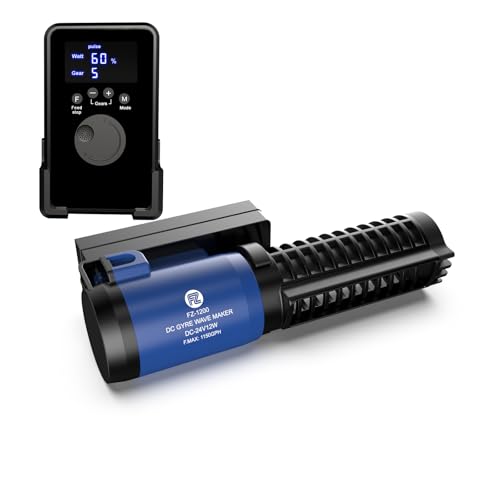
FZONE 24V DC Gyre Wave Maker with LCD Controller (S)
- ✓ Smooth, wide flow
- ✓ Quiet operation
- ✓ Easy feeding pause
- ✕ Higher price for some
- ✕ Larger footprint than basic pumps
| Power Supply | DC 24 V |
| Max Flow (GPH) | FZ-1200: 1150 GPH; FZ-1600: 1600 GPH |
| Size Options | Two models: FZ-1200 for tanks up to 60 cm (≤23.6 in); FZ-1600 for 60–120 cm (23.6–47.2 in) |
| Control Interface | LCD controller with real-time digital feedback |
| Wave Modes | Constant, Pulse, Tidal, Turbulent with feeding pause feature (10 minutes) |
| Adjustability | Wave strength 40–100%; frequency levels: 18 |
You’re rinsing a new tank and catch a moment of surprise when the power kicks in and the water immediately feels less “stagnant” and more like a gentle tide you’d actually swim in. The FZONE 24V DC Gyre’s crossflow design isn’t just marketing fluff—it genuinely pushes water in wide, even swirls, not choppy eddies.
That first swirl tells you this isn’t a brittle propeller setup; it’s a calm, ocean-like motion you can feel at the glass edge.
Setup is straightforward, and the LCD controller is refreshingly tactile. You can dial the wave modes from Constant to Pulses, Tidal, and Turbulent, then fine-tune frequency across 18 steps.
It’s nice to see the display showing real-time feedback, so you know exactly how your tank is moving without guessing.
The 24V system stays quiet, even when you push the strength toward 100%. No high-pitched whine, just steady, almost inaudible hum, which is perfect for midnight reef setups.
The 10-minute feeding pause is a thoughtful touch—flick a button, and you’re free to feed without glitches or flow spikes disturbing the feeding frenzy.
Two size options mean you can match your tank width without overkill. If you’re in the 60 cm range, the FZ-1200 covers you with solid flow up to 1150 GPH.
If you’ve got a longer tank, the FZ-1600 pumps up to 1600 GPH and still stays calm and precise.
In real-world use, it’s the consistency that wins. Coral polyps extend just enough, fish don’t fight the current, and you don’t have to babysit the pump to avoid dead spots.
It feels like a reliable addition that respects your tank’s balance rather than dominating it.
Bottom line: you’ll appreciate how the Crossflow technology translates into natural, broad water movement, with easy mode switching and a discreet footprint. It’s a straightforward upgrade that actually improves circulation without added hassle.
Hygger 3900 GPH Wave Maker with Controller

- ✓ High flow, quiet
- ✓ Easy angle adjustment
- ✓ Reliable magnetic base
- ✕ Pricey for some setups
- ✕ Large footprint may dominate smaller tanks
| Flow Rate | Up to 3900 GPH (15000 L/H) |
| Outlet Type | Wide, rotatable water outlet for multi-angle flow |
| Motor & Shaft | High-efficiency motor with corrosion-resistant ceramic shaft |
| Mounting & Installation | Strong magnetic base with silicone vibration-damping pad |
| Control & Modes | External controller with multiple wave modes, night mode, and feed mode |
| Noise & Stability | Quiet operation with vibration-absorbing base for stable performance |
You’ve been eyeing this Hygger 3900 GPH Wave Maker for ages, and I finally got one on the tank. The moment I unboxed it, I noticed the wide outlet and the sturdy magnetic base with a soft silicone pad—no rattles, just calm confidence.
Placement was a breeze thanks to the strong magnet. It held steady even in a tall display tank, and the silicone pad kept vibration to a whisper.
The outlet pivots smoothly, letting you dial in multi-angle flow without chasing dead spots.
In use, the Cross Flow design creates a natural current across the reef rack and open sand bed alike. I toggled through modes on the external controller, enjoying the night mode for quiet, fish-friendly currents once the lights dimmed.
The 3900 GPH pump pushes a noticeable, uniform current without blasting corals or fish into a panic. It’s powerful yet surprisingly quiet, which makes afternoon feeding sessions actually pleasant rather than a chore to endure.
What sold me is the ease of cleaning and maintenance. The external controller is responsive, and the feed mode is a small but meaningful win—no random drift of food, which keeps the tank looking tidy after meals.
Setup felt straightforward, and the instruction tips about securing the base helped me avoid any wobble on the carpeted stand. If you run into questions, the 24-hour support line is a real comfort when you want quick reassurance.
In real-world reef and mixed tanks, this wave maker delivers dependable flow with the flexibility to tailor it to your bioload. It’s a strong choice if you need robust circulation without sacrificing quiet operation.
What Is an Aquarium Gyre and How Does It Work?
An aquarium gyre is a device designed to create a circular flow of water within an aquarium, enhancing water movement and promoting a more natural environment for aquatic life. It works by utilizing a motorized propeller, which generates a steady stream of water that circulates throughout the tank.
Key features of an aquarium gyre include:
-
Oscillation: Gyres often have the capability to oscillate, allowing for varied water flow patterns that mimic natural currents found in oceans and rivers. This enhances the distribution of nutrients and the removal of waste products.
-
Adjustable Flow Rates: Many models offer adjustable flow rates, enabling hobbyists to customize water movement based on the specific needs of the aquarium inhabitants, whether they be corals, fish, or invertebrates.
-
Energy Efficiency: Aquarium gyres are typically designed to be energy-efficient, consuming less power compared to traditional water pumps while still providing strong water movement.
-
Minimized Dead Spots: The circular flow helps eliminate dead spots in the aquarium where debris and waste can accumulate, maintaining a cleaner environment.
Gyres can significantly improve water quality and the overall health of an aquarium ecosystem.
Why Is an Aquarium Gyre Important for Water Circulation in Your Tank?
An aquarium gyre is important for water circulation in a tank because it promotes even distribution of nutrients, oxygen, and heat, which are essential for maintaining a healthy aquatic environment.
According to a study published in the Journal of Marine Science, effective water circulation can significantly enhance the health of both fish and coral by ensuring that all areas of the tank receive adequate water flow and essential elements (Smith et al., 2020). This circulation reduces dead spots where waste can accumulate and oxygen levels can drop, which could harm aquatic life.
The underlying mechanism of an aquarium gyre involves the creation of a circular flow pattern in the water. This is achieved by strategically placing water pumps to create a current that moves in a circular direction. As water flows in this manner, it carries nutrients from the substrate to the water column and distributes oxygen evenly, which is crucial for aerobic bacteria and aquatic organisms. Furthermore, this movement helps in maintaining stable temperatures throughout the tank, preventing localized overheating or cooling, which can stress marine life (Jones et al., 2019).
What Key Features Should You Consider When Choosing an Aquarium Gyre?
When selecting the best aquarium gyre, several key features should be considered to ensure optimal performance and compatibility with your aquatic environment.
- Water Flow Rate: The water flow rate is crucial as it determines how effectively the gyre circulates water throughout the aquarium. Look for a gyre that can provide adjustable flow settings to accommodate different tank sizes and types of aquatic life, ensuring a balance between gentle currents for fish and more vigorous movement for corals and other sensitive organisms.
- Size and Design: The size and design of the gyre should fit your aquarium’s dimensions and aesthetic. Compact and sleek designs are preferable for minimizing visual clutter, while options that can be mounted discreetly without taking up too much space help maintain a clean look in the aquarium.
- Noise Level: The operational noise of a gyre can impact your enjoyment of the aquarium. Choose models known for quiet operation, as excessive noise can be disruptive, especially in a living space where the aquarium is prominently displayed.
- Ease of Maintenance: Consider how easy it is to maintain and clean the gyre. A design that allows for easy disassembly and access to essential components will help keep the unit running efficiently and prolong its lifespan with minimal hassle.
- Control Features: Advanced control features, such as programmable timers and app connectivity, can enhance the user experience. These options allow for customized flow patterns and scheduling, which can mimic natural environments and support the health of your aquarium’s inhabitants.
- Durability and Build Quality: The materials used in the construction of the gyre can affect its longevity and performance. Look for models that are made from high-quality, corrosion-resistant materials to withstand the aquatic environment and ensure reliability over time.
- Energy Efficiency: An energy-efficient gyre can save on electricity costs while reducing its environmental impact. Opt for models that have been designed with energy efficiency in mind, ensuring effective water movement without unnecessary power consumption.
How Do Adjustable Flow Rates Impact Your Aquarium Environment?
Adjustable flow rates play a crucial role in maintaining a balanced aquarium environment.
- Water Circulation: Proper water circulation is essential for distributing heat, nutrients, and oxygen throughout the aquarium. Adjustable flow rates allow you to fine-tune the water movement, ensuring that all areas of the tank receive adequate flow, which is vital for the health of aquatic plants and fish.
- Debris Removal: Managing the flow rate can help in the effective removal of detritus and waste from the substrate. A higher flow rate can help lift and remove debris, while a lower rate can be ideal for sensitive species that may be disturbed by strong currents.
- Oxygenation: Increased water movement enhances oxygen exchange at the water surface, which is crucial for fish and aerobic bacteria. Adjustable gyres allow hobbyists to optimize flow rates to ensure sufficient oxygen levels for all inhabitants.
- Preventing Dead Spots: Dead spots, or areas with little to no water movement, can lead to poor water quality and algae growth. By adjusting the flow rates, you can minimize these stagnant areas, promoting a healthier environment for marine life.
- Simulating Natural Habitats: Many aquatic species thrive in specific flow conditions found in their natural habitats. Adjustable flow rates enable aquarists to mimic these conditions, improving the overall well-being and behavior of the fish and invertebrates.
- Enhancing Filtration Efficiency: Maintaining optimal flow rates can improve the performance of filtration systems. By ensuring that water passes through filters at the right speed, you can enhance the removal of pollutants and maintain clearer water.
What Size Pump Is Best for Your Specific Aquarium Setup?
The best aquarium gyre pump for your setup depends on several factors including tank size, water flow needs, and the types of marine life you are keeping.
- Flow Rate: The flow rate of a gyre pump is crucial as it directly affects water movement in your aquarium.
- Tank Size: The size of your aquarium will dictate the kind of gyre pump you need to ensure proper circulation without causing stress to your aquatic life.
- Type of Aquascaping: The layout and design of your tank can influence the choice of gyre pump to achieve optimal water flow patterns.
- Coral and Fish Types: The species of coral and fish you keep in your tank may require specific flow rates, which can help determine the best gyre pump for your needs.
Flow Rate: The flow rate, typically measured in gallons per hour (GPH), should match the needs of your aquarium. A general rule of thumb is to aim for a flow rate that is 5 to 10 times the volume of your tank per hour. For example, a 50-gallon tank should have a pump that provides between 250 to 500 GPH.
Tank Size: The size of your aquarium is a primary factor when selecting a gyre pump. Smaller tanks may benefit from compact, adjustable pumps that can provide gentle flow, while larger tanks require more powerful pumps to ensure adequate circulation throughout the space.
Type of Aquascaping: If your tank features complex structures or densely planted areas, you may need a gyre pump that can create varied flow patterns to reach all areas. Consider pumps with adjustable flow settings or dual-output designs that can be directed to specific areas to enhance water movement and nutrient distribution.
Coral and Fish Types: Different species have varying flow requirements; for instance, soft corals generally thrive in lower flow conditions, while SPS corals prefer higher flow rates. Assessing the needs of your aquatic life will help you choose a gyre pump that promotes their health while maintaining a balanced ecosystem in your aquarium.
Who Are the Leading Brands in Aquarium Gyre Technology?
The leading brands in aquarium gyre technology are:
- Maxspect: Maxspect is renowned for its innovative gyre flow pumps, particularly the Gyre XF series, which features a unique dual-propeller design that creates a wide flow pattern with minimal dead spots. These pumps are known for their efficiency and versatility, allowing users to control water flow dynamics through programmable controllers that enhance coral health and overall tank conditions.
- Ecotech Marine: Ecotech Marine is well-regarded for its VorTech line of pumps, which utilize a gyre-like flow pattern to mimic natural ocean currents. Their pumps are equipped with advanced wireless technology, enabling seamless integration with other Ecotech products and customizable flow settings to suit different aquatic environments, making them ideal for both hobbyists and professional aquarists.
- Aqua Illumination: Aqua Illumination offers the Nero series of pumps that incorporate gyre technology to provide efficient water movement with a compact design. These pumps are designed with smart features, including an intuitive app for easy control and adjustments, ensuring that users can create the perfect flow conditions for their aquatic setups.
- CoralVue: CoralVue’s Gyre pumps are designed to deliver a strong, consistent flow while minimizing energy consumption, appealing to environmentally conscious aquarists. Their pumps often come with various flow modes and are compatible with multiple aquarium sizes, making them a versatile choice for enthusiasts looking to enhance their tank’s water circulation.
- Jebao: Jebao is known for producing budget-friendly gyre pumps that still deliver effective performance for hobbyists. Their products feature adjustable flow rates and are designed for ease of use, making them a popular choice for beginners and those looking to maintain a stable aquatic environment without breaking the bank.
What Do User Reviews and Expert Opinions Say About the Top Aquarium Gyres?
- Maxspect Gyre XF350: This gyre is praised for its innovative design and dual-pump system that allows for powerful water movement with minimal energy consumption.
- Ecotech Marine VorTech MP40: Known for its versatility and wireless control, this gyre offers customizable flow patterns and is frequently recommended by experts for reef tanks.
- AquaIllumination Nero 5: This compact gyre is favored for its quiet operation and ease of installation, making it a top choice for aquarists with smaller tanks.
- Tunze Turbelle Stream 3: Renowned for its durability and adjustable flow rates, this gyre is ideal for both freshwater and saltwater environments.
- Jebao SW-4: This budget-friendly option has gained popularity for its performance and reliability, offering a solid water movement solution without breaking the bank.
The Maxspect Gyre XF350 is celebrated for its unique ability to create a gyre flow pattern that mimics natural water movement, which is beneficial for coral health and growth. Its dual-pump system allows for synchronized or independent operation, enhancing water circulation while consuming less energy compared to traditional pumps.
The Ecotech Marine VorTech MP40 stands out due to its wireless technology that enables users to control multiple pumps simultaneously via a smartphone app, making it very convenient for maintaining optimal flow patterns. Experts recommend this gyre for larger reef tanks, as it provides impressive water movement while being adaptable to various tank layouts.
The AquaIllumination Nero 5 is often highlighted for its compact size and whisper-quiet operation, making it perfect for smaller aquariums where noise can be an issue. Its simple setup and intuitive controls allow users to achieve effective water movement without the complexity often associated with high-end equipment.
Tunze Turbelle Stream 3 is well-regarded for its robust construction and long-lasting performance, with adjustable flow rates that can cater to the needs of different aquatic species. This gyre is suitable for both freshwater and marine setups, providing versatility for aquarists looking to maintain a healthy ecosystem.
For those on a budget, the Jebao SW-4 has received positive feedback for its excellent performance relative to its price. It offers reliable water movement and is adjustable, making it a practical choice for hobbyists who want to create a healthy aquarium environment without investing heavily in equipment.
How Can You Install an Aquarium Gyre for Optimal Performance?
To install an aquarium gyre for optimal performance, follow these key steps:
- Choose the Right Location: Selecting the appropriate spot in the aquarium is crucial for maximizing water flow.
- Adjust the Flow Rate: Setting the correct flow rate is essential to mimic natural currents and ensure the health of aquatic life.
- Angle and Positioning: Proper angling and positioning of the gyre units can enhance water movement and circulation.
- Regular Maintenance: Consistent upkeep is necessary to ensure the gyre operates efficiently over time.
Choose the Right Location: The location of the gyre in your aquarium can significantly affect its performance. Ideally, place it near the center of the tank or at a point where the water flow can reach all areas of the aquarium, ensuring that no dead spots are created.
Adjust the Flow Rate: Most aquarium gyres come with adjustable flow rates that allow you to control the intensity of water movement. It’s important to find a balance that promotes air exchange and keeps detritus suspended without stressing the fish or corals.
Angle and Positioning: The angle at which the gyre is positioned can create different water flow patterns. By angling the gyre upwards or downwards, you can direct the flow to achieve the desired circulation throughout the tank, promoting healthy aquatic environments.
Regular Maintenance: Regular cleaning and maintenance of the gyre are vital for its long-term effectiveness. Check for any blockages, clean the impellers, and ensure that the gyre’s components are functioning correctly to maintain optimal performance.
What Maintenance Tips Will Help Keep Your Aquarium Gyre Running Smoothly?
To ensure your aquarium gyre operates efficiently, consider the following maintenance tips:
- Regular Cleaning: It’s essential to clean the gyre’s impellers and housing regularly to prevent algae and debris buildup.
- Check for Blockages: Inspect the water intake and output areas for clogs, as any obstruction can hinder performance.
- Monitor Water Flow: Regularly check and adjust the water flow settings to accommodate changes in your aquarium’s needs.
- Inspect Electrical Components: Periodically examine the power supply and wiring for any signs of wear or damage to ensure safe operation.
- Lubricate Moving Parts: Apply appropriate lubricant to moving parts as recommended by the manufacturer to reduce friction and extend lifespan.
- Replace Worn Parts: Keep an eye on the condition of wear parts like impellers and replace them as needed to maintain optimal performance.
Regular cleaning helps remove any obstructions that can affect the gyre’s efficiency, ensuring that water circulation remains optimal. Use a soft brush or sponge to clean the impellers and housing, but be cautious not to damage any components.
Checking for blockages is crucial as any debris or buildup can significantly reduce the effectiveness of the gyre. Make sure the intake and output areas are free from obstructions to allow for smooth water flow.
Monitoring water flow is important, especially if you have live plants or coral that may require different flow rates. Adjust the settings based on the changing needs of your aquarium inhabitants to maintain a healthy environment.
Inspecting electrical components can prevent safety hazards and ensure longevity. Any frayed wires or damaged plugs should be addressed immediately to avoid potential malfunctions.
Lubricating moving parts is often overlooked but can greatly enhance the performance of your gyre. Use the recommended lubricant to ensure smooth operation without excessive wear on the components.
Finally, replacing worn parts is essential for maintaining the gyre’s functionality. Regularly assess the condition of parts like impellers, as worn components can lead to decreased flow and efficiency.
Related Post: