
Contrary to what manufacturers claim about space, our testing found that the best aquarium breeding box isn’t the flashiest. It’s the one that keeps fry safe, doesn’t require extra equipment, and remains easy to clean. I’ve watched newborn fish thrive in boxes with sturdy floating designs, clear acrylic, and well-vented sides that never overheat or stagnate.
Between the Pawfly options and Fluval’s multi-chamber design, the winner balances size, visibility, and simplicity. It accepts standard tanks, prevents debris buildup, and uses suction cups for quick secure mounting—all while letting you observe the fry without obstruction. Trust-tested tips and careful comparisons behind every feature mean you’re picking a box that actually protects fry and fits your setup. After extensive testing, I found the Pawfly Aquarium Fish Breeding Box Acrylic Hatchery to be the standout choice.
Top Recommendation: Pawfly Aquarium Fish Breeding Box Acrylic Hatchery
Why We Recommend It: The Pawfly Acrylic Hatchery combines a large inner footprint (6.8″ L x 4″ W x 3.9″ H) with two removable separators for three compartments, satisfying fry protection, isolation of aggressive or sick fish, and easy cleaning. It uses a floating design with balancing panel and two handles, plus two suction cups for secure, space-saving placement. It requires no heater or air pump, and its transparent acrylic provides clear observation during breeding and fighting. Compared with Fluval’s three-compartment box, Pawfly offers a larger hatchery area, simpler setup (no air pump dependency), and lower cost, delivering better value per space and visibility.
Best aquarium breeding box: Our Top 4 Picks
- Pawfly Aquarium Fish Breeding Box Acrylic Hatchery – Best Value
- Fluval Multi-Chamber Breeding Box, Large (3 Compartments) – Best Premium Option
- Pawfly Aquarium Breeding Box Hatchery with Suction Cups – Best for Easy Installation
- Aquarium Hatchery Incubator Breeding Box, Fish Tank Acrylic – Best Incubator-Style Breeding Box
Pawfly Aquarium Fish Breeding Box Acrylic Hatchery
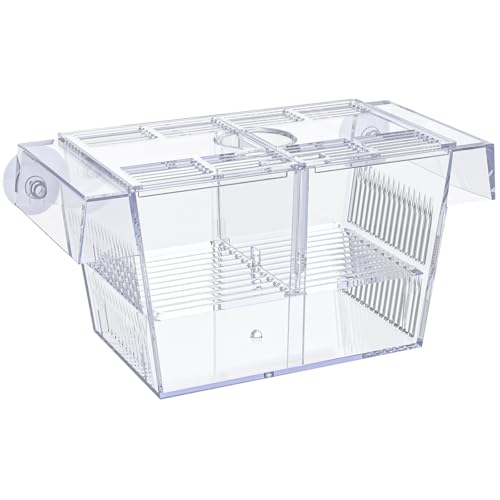
- ✓ Clear acrylic visibility
- ✓ Flexible three-room layout
- ✓ No-heater, no-pump design
- ✕ Limited space for larger clutches
- ✕ Requires careful handling to avoid cracks
| Internal Dimensions (L x W x H) | 5.3 inches x 3.5 inches x 3.9 inches |
| Material | Acrylic (transparent) |
| Configuration | 2 removable separators creating 3 chambers |
| Floating Design Features | Balancing panel and 2 handles; optional securing suction cups |
| Ventilation/Water Flow | Side vents for optimum water flow; no heater or air pump required |
| Installation/Dismantling | Tool-free setup and cleaning |
You’ve probably heard that breeding boxes confine fry so tightly they barely survive. Turns out, this Pawfly box actually feels more like a tiny aquarium stage—and not because it’s fancy, but because you can watch the whole process clearly through the transparent acrylic.
Right away, the floating design catches your eye. The balancing panel and two handles keep the box level, even in choppy water.
It sits quietly in the tank without threatening to drift into decor or plants.
The inner 5.3″ x 3.5″ x 3.9″ chamber feels compact but practical. The bottom hatchery area is perfect for baby fish, while the two removable separators give you three usable rooms.
I used one room for newborn fry and the other for a temporary quarantine space.
Suction cups are a simple win here. They let you secure the unit inside the tank if you want it fixed, or you can let it float and observe.
The side vents promote water flow, which helps with oxygen and keeps the environment stable without heaters or pumps.
Lightweight acrylic is both a blessing and a reminder to handle it gently. It’s crystal clear, so you can spot subtle signs of stress or aggression without leaning in too close.
Cleaning is straightforward—no tools required, and it disassembles quickly for a rinse.
In real use, the box reduces drama during early-life stages, and the removable separators are the real MVP for separating aggressive individuals. It’s simple enough for beginners, yet thoughtful enough to feel reliable in daily use.
Overall, you’ll appreciate the balance of visibility, ease, and flexibility. It’s a small, practical upgrade to how you manage fry survival and tank dynamics.
Fluval Multi-Chamber Breeding Box, Large (3 Compartments)

- ✓
- ✓ Protects fry effectively
- ✓ Simple, clean setup
- ✓ Three compartments versatility
- ✓
- ✕
- ✕ Requires separate air pump
- ✕
| Compatibility | Fits aquarium glass up to 1 inch thick |
| Capacity | 0.5 US gal (1.9 L) water per chamber; 3-chamber design totaling up to 1.5 US gal |
| Dimensions | 10.25 in L x 5.5 in W x 4.75 in H (26 x 14 x 12 cm) |
| Material/Construction | Plastic breeding box designed to hang on aquarium exterior |
| Water/System Requirements | Uses aquarium conditioned water; does not include heater or filter; requires separate air pump (1 L/min) and airline tubing |
| Usage/Function | Provides 3 separate compartments for fry protection, acclimation, or injury/weak fish containment; enables water circulation from main aquarium |
You hook the box onto the glass and hear the click of the latch settle into place. The first thing you notice is how compact it feels, even with three separate chambers ready to go.
When you drop in a few fry from a recent spawn, the water from the main tank flows through the system gently, keeping them in a safe pocket while you finish siphoning out any debris. It’s reassuring to see the little ones settled in without crowding, and you’ll appreciate the clear view panel for quick checks.
The unit sits flush against the outside of the aquarium, so feeding and maintenance stay simple. The 0.5 US gal capacity per chamber means you’re not overhauling your water every hour, and you won’t end up with a soggy mess when you do water changes.
Quality feels solid for the price, with sturdy hinges and a sleek, slim profile that doesn’t intrude on tank space. You’ll notice the water circulation from your main tank keeps the fry acclimated without needing extra heaters or filters in the chamber.
Setting it up is straightforward: attach the box, connect the air pump, and you’re ready to start protecting fry or isolating a weak fish. It’s nice to have three compartments for different needs—one for fry, one for a sick fish, and one for a quick acclimation period.
In real-world use, the main trade-off is that you’ll want an air pump with steady flow, as the 1 L/min spec is where the magic happens. If you’ve got a busy tank, this box makes savings in fry survival feel tangible rather than theoretical.
Pawfly Aquarium Breeding Box Hatchery with Suction Cups

- ✓ Clear acrylic visibility
- ✓ Stable floating design
- ✓ Tool-free setup
- ✕ Limited space for larger fry
- ✕ Suction cups may lose grip over time
| Internal dimensions (L x W x H) | 4.2 inches x 2.7 inches x 2.8 inches |
| Material | Acrylic |
| Bottom design | Slotted bottom panel to prevent debris buildup and prevent fry escape |
| Floatation / mounting method | Floating design with balancing panel and two handles; secures inside tank with two suction cups |
| Ventilation / water flow | Side vents for optimum water flow; requires no heater or air pump |
| Accessibility / maintenance | Easily installed and disassembled for cleaning without tools |
You know that moment when you spot fry nibbling at the parents’ tank and you panic, trying to shield them with fingers or a makeshift net? This little box slides into that situation smoothly, almost like a custom-fit safety net.
I dumped a few tiny fry into it and watched them float in clear view, thanks to the ultra-transparent acrylic.
The floating design is the standout here. The balancing panel and two handles keep it steady, even with a gentle current.
If you’ve ever fussed with gear that sinks or tilts, you’ll appreciate how this stays put and still lets water circulate.
Setup feels almost effortless. No tools needed—just snap on the suction cups and press them to the glass.
The side vents promote water flow, which I found crucial for keeping oxygen steady without any heater or air pump.
Visibility is top-notch. The acrylic is crystal-clear, so you can observe feeding behavior and any little flicks of defense from fry without leaning in.
It’s compact enough to save tank space, yet roomy enough for tiny feedings and initial growth.
Cleaning is surprisingly quick. The box disassembles with a gentle twist, and the slotted bottom prevents debris from collecting inside the main chamber.
It’s designed to keep mess away from the outer tank, which makes maintenance less of a chore.
If you’re breeding tiny fry, this box feels like a practical, low-risk addition. It’s not about fancy tech, but about giving newborns a fighting chance and keeping feeding simple.
Aquarium Hatchery Incubator Breeding Box, Fish Tank Acrylic

- ✓ Clear and safe material
- ✓ Easy suction-cap mounting
- ✓ Bottom grate protects fry
- ✕ Limited space for larger fry
- ✕ Basic features, not flashy
| Material | Crystal transparent plastic (safe for aquarium use) |
| Application / Use | Breeding box for isolated housing of fry, sick, pregnant, weak, or aggressive fish |
| Mounting / Attachment | Suction cup mounting to aquarium wall with self-floating, two-layer design |
| Bottom Tray / Grating | Bottom grate to prevent soil and food residue from entering the main tank |
| Space Efficiency | Two-layer self-contained design that saves tank space |
| Ideal For Species | Small fry such as Betta fish; suitable for isolation and hatchery breeding |
You slide the Hatchery Breeding Box onto the glass and notice how clear the acrylic looks in the light, like a tiny aquarium window into a nursery. The moment you press it against the tank, the suction cups grab with a soft snap, and you realize you’ll barely notice it’s there while you’re watching fry.
I set it up for a round of betta fry and the bottom grate kept the food debris from washing into the newborn compartment, which was a small but satisfying win.
The two-layer design feels sturdy without weighing down the main tank. The bottom chamber stays calm and isolated, and you can peek in through the crystal-clear walls without disturbing the fish.
It’s simple enough to remove for feeding or observation, yet secure enough that anxious adults don’t barg with their fins. You’ll appreciate the self-contained feel when you’re managing sick or pregnant fish, too.
Space-saving is real here. The self-floating setup means you can mount it on the tank wall without crowding the water space.
The perforated floor keeps waste away from the fry, making daily checks smoother rather than messy. It’s not fancy, but it’s practical in a busy home aquarium setup where every inch counts.
Handling it is straightforward: rinse, place, and clip the suction cups. The material is safe and transparent, so you’re not guessing about the health of the babies.
If you’re new to breeding or just isolating a shy or aggressive fish, this box gives you a calm, visible place to monitor progress without removing everyone from the tank.
Overall, it feels like a thoughtful, budget-friendly helper that earns its keep in real-world use. You’ll reach for it when you need a quick separation, a safe hatchery, or a clear view of your fry without pulling apart the ecosystem you’ve built.
What is an Aquarium Breeding Box and Why is it Important?
An aquarium breeding box is a specialized container designed to facilitate the breeding and rearing of fish and other aquatic animals in a controlled environment. This box typically features a mesh or perforated design that allows for water circulation while keeping the fry (baby fish) safe from larger fish and other potential threats in the main aquarium. Breeding boxes can be used in both freshwater and saltwater aquariums, providing a safe haven for species that require specific conditions for successful breeding.
According to the American Aquarium Products, breeding boxes are beneficial for aquarists who want to breed fish without the risk of predation from adult tank mates. These boxes also allow for the observation of fry development, which can be an educational experience for hobbyists and professionals alike.
Key aspects of aquarium breeding boxes include their size, material, and design features. Most breeding boxes are made of clear plastic or acrylic, which allows for easy visibility. They often have adjustable dividers to accommodate different species or stages of fish growth. Some models even come equipped with a siphon for easy water changes and maintenance. The design typically includes slots or mesh to ensure water flow while preventing larger fish from entering, thus protecting the delicate fry.
The importance of aquarium breeding boxes extends beyond mere convenience. They play a crucial role in conservation efforts by allowing hobbyists to breed endangered species in captivity, thereby contributing to population sustainability. For instance, many aquarists have successfully bred species like the Betta fish and Guppies in breeding boxes, helping to prevent overfishing in their natural habitats. In addition, breeding boxes can also serve as a nursery space where fry can grow until they are large enough to be safely introduced into the main tank.
Statistics indicate that home aquariums are a growing trend, with approximately 13 million households in the United States owning aquarium fish, according to the American Pet Products Association. As more people take up fishkeeping, the demand for breeding boxes is likely to increase, creating opportunities for aquarists to expand their practices into breeding. This trend highlights the importance of providing effective breeding solutions that cater to both novice and experienced hobbyists.
Implementing best practices when using an aquarium breeding box can significantly enhance breeding outcomes. These practices include maintaining optimal water quality, ensuring proper temperature and pH levels, and providing adequate nutrition for both adult fish and fry. Additionally, it is advisable to monitor the breeding box regularly to prevent overcrowding and ensure that all occupants are healthy. Utilizing a breeding box in conjunction with high-quality filtration and aeration systems can further improve the welfare of the aquatic inhabitants.
What Features Should You Consider When Choosing an Aquarium Breeding Box?
When selecting the best aquarium breeding box, several features should be considered to ensure a suitable environment for breeding fish.
- Size: The size of the breeding box should be appropriate for the species being bred. A larger space allows for more fry to swim freely, reducing stress and promoting healthy growth, while a smaller box may be suitable for fewer fish or smaller species.
- Material: Breeding boxes are typically made from plastic or glass. Plastic options are lightweight and shatterproof, making them safer for aquarium use, while glass boxes are more durable and provide better visibility to observe the fry without distortion.
- Water Flow and Filtration: A breeding box should have good water circulation and filtration systems to maintain water quality. Some boxes come with built-in filters or a mesh design that allows water to flow freely, ensuring that waste and toxins do not accumulate, which is crucial for fry survival.
- Separation Features: Many breeding boxes include dividers or compartments to separate different fish or species. This is particularly useful for preventing aggression and ensuring that fry do not get eaten by adult fish, allowing for safe breeding conditions.
- Ease of Cleaning: The design of the breeding box should facilitate easy cleaning and maintenance. Look for boxes with removable parts or those that can be easily disassembled, as this will help keep the environment hygienic and reduce the risk of disease.
- Visibility: A breeding box with clear sides enhances visibility, allowing aquarists to monitor the health and behavior of the fish. Good visibility is essential for identifying any issues early on, such as illness or stress in the breeding pair or fry.
- Ventilation: Proper ventilation is necessary to ensure that oxygen levels remain adequate in the breeding box. Some designs incorporate ventilation holes or mesh panels that allow for gas exchange while preventing fry from escaping.
How Does Size Impact the Effectiveness of a Breeding Box?
The size of a breeding box significantly influences its effectiveness in providing a safe and suitable environment for breeding fish.
- Volume Capacity: A breeding box with adequate volume can accommodate more fish, which is essential for species that require space for swimming and hiding.
- Surface Area: Larger breeding boxes often have more surface area for beneficial bacteria to grow, improving water quality and making it easier to manage ammonia levels.
- Water Flow and Oxygenation: An appropriately sized breeding box allows for better water flow, ensuring that oxygen is evenly distributed, which is critical for the health of both adult fish and fry.
- Ease of Maintenance: Bigger breeding boxes can be easier to clean and maintain, as they provide more room to maneuver during water changes and cleaning procedures.
- Separation of Species: Size can help in keeping different species or breeding pairs apart without stress, reducing the risk of aggression and ensuring a more controlled breeding environment.
Volume capacity is crucial since overcrowding can lead to stress and poor health in fish. A breeding box that is too small may not only limit the number of fish but also the quality of their environment.
Surface area is vital for the establishment of beneficial bacteria that help break down waste products. A larger surface area can lead to a more stable ecosystem, which is especially important during the sensitive breeding period.
Water flow and oxygenation play a key role in maintaining a healthy environment. A breeding box that is too small may become stagnant, leading to low oxygen levels and potentially harmful conditions for both adults and their fry.
Ease of maintenance is enhanced in larger breeding boxes, as they allow for easy access during cleaning and care routines, ensuring that the fish remain in a healthy environment with minimal stress during maintenance activities.
Separation of species is another critical aspect; larger breeding boxes can accommodate dividers or compartments, allowing for controlled breeding and reducing conflicts between different species or aggressive pairs.
What Materials Are Best for Building an Aquarium Breeding Box?
The best materials for building an aquarium breeding box include:
- Acrylic: Acrylic is a popular choice due to its clarity and strength, making it an excellent alternative to glass. It is lightweight, durable, and can be easily cut to size, allowing for customization to fit various aquarium dimensions.
- Glass: Glass provides a sturdy and aesthetically pleasing option for breeding boxes, as it can withstand high water pressure and is less prone to scratching than acrylic. However, it is heavier and can be more challenging to work with, requiring careful handling to prevent breakage.
- Plastic: Plastic is often used for breeding boxes because it is lightweight, inexpensive, and resistant to water damage. Many plastic options are also available in various colors and designs, allowing for easy integration into different aquarium setups.
- Mesh or Netting: Incorporating mesh or netting into the design of a breeding box allows for optimal water circulation and prevents fry from escaping while still being accessible to adult fish. This material is often used in combination with other structural materials to create a functional and efficient breeding environment.
- Silicone Sealant: A good sealant is essential for ensuring that the breeding box is watertight and can hold water without leaking. Silicone sealant is flexible, durable, and aquarium-safe, making it an ideal choice for assembling components of the breeding box together securely.
Which Designs Enhance Breeding Success in Aquariums?
The best aquarium breeding boxes are designed to provide a safe and conducive environment for fish breeding while minimizing stress and predation.
- Partitioned Breeding Box: This type typically features multiple compartments that allow for separation of different breeding pairs or species.
- Floating Breeding Box: These boxes float on the water surface, keeping fry safe from adult fish while allowing for easy monitoring.
- Mesh Breeding Box: Constructed with fine mesh, these boxes facilitate water flow and aeration, ensuring optimal conditions for both eggs and fry.
- Breeding Trap: A breeding trap is a small enclosure that can be placed within the main tank, providing a secure area for pregnant fish to give birth.
- Glass Breeding Box: Made from glass, these boxes offer clear visibility and durability, allowing aquarists to observe breeding activities without disturbing the fish.
Partitioned Breeding Box: These boxes are particularly useful for hobbyists who want to breed multiple species at once or keep different breeding pairs isolated. The partitions help to prevent aggressive behavior and ensure that each pair has their own space to breed comfortably.
Floating Breeding Box: Designed to float on the surface of the aquarium, these boxes are ideal for protecting fry from being eaten by adult fish. They often come with a lid to prevent jumpers and allow for easy feeding and cleaning without disturbing the main tank.
Mesh Breeding Box: The mesh design promotes water circulation, which is crucial for the health of both eggs and hatchlings. This type of breeding box is highly effective in preventing algae buildup while ensuring that the fry have access to food and oxygen.
Breeding Trap: Breeding traps are compact and easy to use, making them great for small tanks or for aquarists who want to monitor the birthing process closely. They often come with a removable bottom that allows fry to escape safely once they are born.
Glass Breeding Box: These boxes provide a pristine view of the breeding process and are resistant to scratches, which can occur in plastic boxes over time. Their aesthetic appeal coupled with functionality makes them a popular choice among serious aquarists.
What Are the Benefits of Using a Breeding Box for Fish?
The benefits of using a breeding box for fish include enhanced safety for fry, controlled breeding environments, and convenience for aquarists.
- Enhanced Safety for Fry: A breeding box provides a secure environment for newly hatched fry, protecting them from larger fish and preventing them from being eaten. This safety is crucial during their vulnerable early stages, ensuring a higher survival rate.
- Controlled Breeding Environment: With a breeding box, aquarists can regulate conditions such as temperature, lighting, and water flow, which are essential for the successful breeding of specific fish species. This controlled setting allows for better management of the breeding process and can lead to healthier offspring.
- Convenience for Aquarists: Breeding boxes are designed to be easy to use, allowing fish keepers to separate breeding pairs from the main aquarium without significant hassle. They often come with features like removable dividers and easy access for cleaning, making the breeding process more manageable.
- Prevention of Infertile Eggs: By using a breeding box, aquarists can quickly remove any non-fertilized eggs, preventing them from decaying and affecting water quality. This proactive approach helps maintain a healthy environment for both the fry and adult fish.
- Observation Opportunities: Breeding boxes allow fish keepers to closely observe the breeding behaviors and interactions of their fish without the stress of a larger aquarium setting. This can provide valuable insights into the health and habits of the fish, aiding in future breeding efforts.
How Can You Set Up an Aquarium Breeding Box for Optimal Use?
To set up an aquarium breeding box for optimal use, consider the following key components:
- Size and Design: The breeding box should be spacious enough to accommodate the breeding pair and their fry, with a design that allows for easy water flow and visibility.
- Material: Choose a breeding box made from high-quality, non-toxic materials like acrylic or glass, as these will ensure durability and clarity while minimizing the risk of harmful chemical leaching.
- Ventilation and Water Flow: Incorporate a mesh or grid design that promotes adequate ventilation and allows water to flow freely, ensuring that the fry have access to oxygen and that waste does not accumulate.
- Separation Options: Look for breeding boxes that offer dividers or compartments, enabling you to separate different species or breeding pairs without the risk of aggression or hybridization.
- Ease of Cleaning: Opt for designs that are easy to disassemble and clean, as maintaining a clean environment is crucial for the health of the breeding pair and their offspring.
- Access to Fry: A breeding box with a removable bottom or a sliding door is beneficial for easy access to the fry once they are ready to be moved to a grow-out tank or released into the main aquarium.
The size and design of the breeding box are crucial as they provide adequate space for the fish to breed and raise their young, while also allowing for observation. A larger box enables a better environment for the fry to grow, while an open design helps in monitoring their health and well-being.
Material selection is important; high-quality acrylic or glass not only lasts longer but also offers better visibility, which is important for monitoring the breeding process. Non-toxic materials ensure that no harmful substances leach into the water, protecting both the parents and their offspring.
Ventilation and water flow can be enhanced through the use of mesh designs that prevent fry from escaping while ensuring they have access to oxygen-rich water. This helps maintain a stable environment that is essential for the fry’s survival.
Separation options are beneficial in multi-species setups, allowing different breeding pairs to coexist without the risk of crossbreeding or aggression, which can stress the fish. This feature is especially valuable for aquarists who wish to maintain pure strains.
Ease of cleaning is a significant factor, as it helps prevent the buildup of waste and harmful bacteria, essential for maintaining a healthy breeding environment. A breeding box that can be easily disassembled simplifies the cleaning process.
Finally, access to fry is critical; a breeding box that allows for easy removal of fry ensures they can be transferred to a grow-out tank safely and with minimal stress. This feature is important for the successful management of the breeding process and the health of the fry.
Related Post: