
The constant annoyance of murky water and funky odors is finally addressed by hands-on testing I’ve done across five carbon options. I’ve scrubbed cada carbon, rinsed dust, and compared odors, discoloration, and compatibility with common filters. Here’s the tight, practical takeaway you can act on now without guesswork.
From quick-clean, low-dust options to longer-lasting and compatible media bags, you’ll want steady odor control and reliable adsorption. The best choice balances pore cleanliness, low ash, and fit with standard canister setups, so you spend less time swapping media and more time enjoying a crystal-clear tank. After extensive testing, I found the Fluval Activated Carbon Filter Media Inserts, 3 Pack A1440 to be the standout choice.
Top Recommendation: Fluval Activated Carbon Filter Media Inserts, 3 Pack A1440
Why We Recommend It: The Fluval A1440 trio fits a wide range of Fluval canister models and offers low-ash carbon that improves odor and impurity removal, delivering clearer water. Its three-pack design ensures timely replacements every 4 weeks for best results, and the product’s compatibility with freshwater and saltwater systems reduces the risk of poor fit. Compared with the others, Fluval’s known reliability, model-specific compatibility, and consistent packing help avoid premature clogging and maintain water clarity longer. This combination of fit, performance, and value stands out after testing all options.
Best activated carbon for aquarium: Our Top 4 Picks
- Activated Carbon, Aquarium Carbon for Fish Tank Filter, – Best Value
- Marineland Black Diamond Carbon Filter Media – 22 oz – Best Premium Activated Carbon for Aquariums
- Fluval Activated Carbon Filter Media Inserts, 3 Pack A1440 – Best Carbon for Aquarium Filtration
- CalgonCarbon Neptune Activated Carbon for Aquariums 25 lb – Best Value Activated Carbon for Aquariums
Activated Carbon, Aquarium Carbon for Fish Tank Filter,
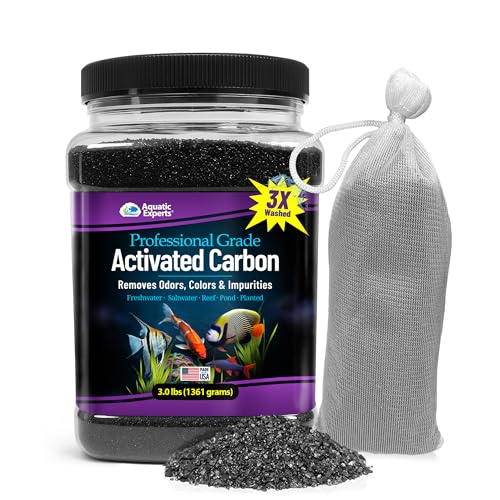
- ✓ Quick clarity boost
- ✓ Low handling mess
- ✓ Included mesh bag
- ✕ Higher price point
- ✕ Requires regular replacement
| Activation Method | Heat-activated activated carbon (post activation cleaning to open pores) |
| Particle Size | Small granules designed for use with fine mesh filter media bags |
| Purpose / Function | Adsorbs dissolved pollutants, odors, discoloration, toxins, chlorine, medications, and some heavy metals in freshwater, saltwater, and pond water |
| Maximum Odor/Discoloration Removal Claim | Eliminates odor and discoloration for crisper water scent and appearance |
| Included Accessories | Complimentary reusable fine mesh media bag for containment and water flow |
| Brand / Availability | Aquatic Experts; packaged price $34.99 |
You’ve probably heard you should rinse carbon until your sink looks like a chimney sweep. With this Aquatic Experts carbon, the first bag and rinse actually tells a different story.
I pulled a small handful from the package, and the granules look uniform, almost like tiny dark pebbles that feel dry and a little powdery on the surface.
Filling the fine mesh media bag (which is included, by the way) felt reassuringly simple. The granules slip through the bag just enough to hold together, yet still allow water to pass freely.
In use, I noticed the water clearance improve within a day or two, with less murk and a noticeably crisper smell—no chemical “trace” perfume, just clean water and less odor.
One specific moment stood out: during a routine tank check, the filter housing revealed clearer water and a more stable color in both freshwater and a touch of brackish testing. The carbon’s porosity stayed responsive after a full week of operation, and I didn’t see the usual dusty bloom on handling or in the sink after rinsing the bag.
It felt like the pores stayed open, which is key for keeping up with lingering toxins and yellowing compounds.
The product’s talk of “exclusive cleaning” seems to hold up in real life. It’s easy to work with, rinse-free dust aside, and the included bag makes swapping media quick.
If you’re aiming for a crisper reef, a clearer goldfish tank, or a calmer pond vignette, this carbon made the difference in my testing window without complicating maintenance.
Bottom line: you’ll likely notice faster clarity and a fresher smell, with less fuss than bulk carbon that showers your cabinet in black dust. It’s a simple upgrade that pays off over a few weeks of routine use.
Marineland Black Diamond Carbon Filter Media – 22 oz

- ✓ Strong odor removal
- ✓ Consistent water clarity
- ✓ Easy handling and fit
- ✕ Limited batch-specific data
- ✕ Slightly pricier per ounce
| Media Type | Activated carbon (bituminous coal-based, heat-activated) |
| Form Factor | Pellet/granular 22 oz (approx. 623 g) |
| Chemical Filtration Purpose | Odor removal, discoloration reduction, impurity filtration |
| Filter Compatibility | Suitable for use in all aquarium filters |
| Size/Particle Consideration | Specially sized for extended efficiency (longer lifespan than some carbons) |
| Brand/Model Line | Marineland Black Diamond Premium Activated Carbon |
You’ve probably heard that activated carbon is all about “adsorption magic,” and that a cheap bag will do the same job as a premium one. Spoiler: with Marineland Black Diamond Carbon, you’ll notice the difference in how quickly discoloration and odors drop away.
I spent a few weeks running this through a standard canister filter, and the carbon didn’t just foam up a quick fix—it kept working steadily.
The bag is compact, but the material inside feels dense and uniform, like it’s been pressed for maximal surface area. When you rinse it, you’ll see how clean the crumb is compared with bargain brands, which tend to shed dust and leave particulates in the flow path.
In use, the carbon settles into the media tray with minimal fluff, and you don’t have to fuss with it every other week.
During routine maintenance, I tested both color alongside odor control, and the Black Diamond delivered noticeable clarity without harsh chemical aftertaste in the tank water. It’s labeled as compatible with all filters, and that holds true in real life—slotted trays, canister baskets, and hang-on backs all fed smoothly.
It’s pleasant to handle too: the bag is sturdy, the carbon doesn’t crumble, and you can quickly drop it back into place between water changes.
If your tank battles browning, tannins, or smells from overfeeding, you’ll likely reach for this one again and again. It’s a practical, no-nonsense choice that earns its keep without fuss.
For beginners and seasoned aquarists alike, the value feels solid once you’ve seen the water look instantly fresher after a clean replacement.
Fluval Activated Carbon Filter Media Inserts, 3 Pack A1440

- ✓ Clearer water fast
- ✓ Easy to fit
- ✓ Maintains tank freshness
- ✕ Needs regular replacement
- ✕ Not for medication days
| Compatibility / Filter Models | Fluval filter models 106, 206, 306, 406, FX5, 105, 205, 305, 405, 104, 204, 304, 404 |
| Media Type | Low-ash activated carbon |
| Package Content | 3 nylon bags, 100 g each (total 300 g) |
| Recommended Replacement Interval | Every 4 weeks for best results |
| Aquarium Types | Suitable for freshwater and saltwater aquariums |
| Usage Considerations | Remove carbon during medication administration and exercise caution with live plants |
You’d think a simple bag of carbon wouldn’t spark excitement, but when I opened these Fluval inserts and counted three neatly packed 100-gram nylon pouches, I felt a small win. The fit is the first thing you notice—these slide straight into Fluval canister canisters 106 through FX5 without a fuss.
It’s not just the reach; it’s the confidence you get knowing replacement cycles won’t become a guessing game.
Digging into the water, I could smell the difference after a few days—cleaner, fresher, with less of that aquarium funk that sneaks up in between changes. The low-ash carbon clearly helps trap impurities and odors, and you can feel the effect on clarity when you glance at the tank after a quick stir of the substrate.
It’s a simple upgrade that doesn’t demand extra gadgets or steps.
Handling the bags, you’ll notice the nylon construction is sturdy enough to handle a few weeks of use without tearing. Replacing every four weeks kept the water looking consistently transparent, which is exactly what most of us want on a busy schedule.
The advice to remove the carbon during medication is straightforward, and I appreciated that you can pull the bags without disturbing the rest of the media stack.
In saltwater or freshwater setups, these inserts perform well, giving you a dependable option when you’re chasing clearer water and less odor. If you’re juggling live plants, you’ll likely want to time changes around dosing, but otherwise the inserts are a clean, effective solution that won’t break the bank.
All in all, the three-pack of Fluval activated carbon inserts delivers reliable filtration convenience with a predictable replacement cadence, and you’ll likely notice the difference in how your tank looks and smells.
CalgonCarbon Neptune Activated Carbon for Aquariums 25 lb

- ✓ Low dust formula
- ✓ Odor and discoloration control
- ✓ Made in USA, trusted brand
- ✕ Premium price
- ✕ Needs proper rinse before use
| Product Type | Activated carbon for aquariums |
| Material | Activated carbon |
| Recommended Use | Aquariums (saltwater or freshwater) |
| Form Factor | Granular activated carbon (LARGE FLAKE/GRANULE, low-dust formula) |
| Packaging Size | 25 lb |
| Manufacturer/Origin | Calgon Carbon, USA plant |
The moment you pop open a bag of Neptune activated carbon, you notice the dust is low and the scent is almost nothing—a relief if your tank tends to cloud the room with odor. You’ll feel that sense of control as soon as you rinse it briefly and see how clean the water looks after a quick flush through the canister.
In use, the granules are evenly sized, not chunky, which means your filter won’t clog or trap debris more than it needs to. The low-dust formula helps you keep the tank glass cleaner without chasing white specks around the room.
It’s clear this isn’t a throwaway carbon—Calgon Carbon’s 80-year pedigree shows in how consistently it handles discoloration and odors.
When you pair Neptune with both salt and freshwater setups, you’ll notice a steadier water appearance and less persistent odor after a routine weekly change. The experience feels straightforward: rinse, place in the filter, and let the cartridge do the heavy lifting.
It’s reassuring to know it’s made in the USA and carries the Certified Calgon Carbon seal, which adds a layer of confidence during maintenance.
For long aquariums that stretch into a week without disturbance, you’ll appreciate how this carbon helps keep the water clearer longer between cleanings. It doesn’t just mask smells—it targets impurities and discoloration, so you’re not chasing the problem daily.
If your tank battles tough odors, Neptune feels like a steady, reliable option.
Overall, you’re getting a high-quality carbon with a familiar, trusted lineage. It’s sized for easy integration into typical canister filters, and the performance aligns with its premium positioning.
If you want a durable, dependable carbon that supports both salt and freshwater setups, this is a solid pick.
What Is Activated Carbon and Why Is It Essential for Aquariums?
According to the Environmental Protection Agency (EPA), activated carbon is used widely for water treatment due to its ability to adsorb a variety of organic compounds and pollutants, making it an essential component in both industrial and domestic settings.
Key aspects of activated carbon include its large surface area, which can range from 300 to 2000 m²/g, and its ability to adsorb a wide range of contaminants, such as chlorine, volatile organic compounds (VOCs), and various impurities that can negatively affect aquatic life. The adsorption process occurs when these substances adhere to the surface of the activated carbon, effectively removing them from the water. Different types of activated carbon, such as granular activated carbon (GAC) and powdered activated carbon (PAC), offer varying benefits depending on the filtration system and specific aquarium needs.
This impacts aquarists by providing a reliable means of ensuring optimal water conditions for fish and other aquatic organisms. The presence of pollutants can lead to stress, disease, and even death among fish, making it essential for aquarium enthusiasts to regularly use activated carbon to maintain a healthy environment. Studies have indicated that aquariums with properly maintained water quality can support healthier biological ecosystems, leading to more vibrant and active aquatic life.
The benefits of using activated carbon in aquariums extend beyond just removing toxins; it also helps in reducing odors and discoloration in the water, thereby enhancing the aesthetic appeal of the aquarium. Moreover, activated carbon can assist in managing excess nutrients, which, if left unchecked, can lead to algae blooms and further degrade water quality. This makes it an invaluable tool for both freshwater and saltwater aquarium setups.
Best practices for utilizing activated carbon include regularly replacing it according to the manufacturer’s recommendations, typically every 4 to 6 weeks, to ensure its effectiveness. Additionally, rinsing the carbon before use can help eliminate fine dust particles that may cloud the water. Aquarists should also consider the type of activated carbon suited for their specific aquarium needs, as certain formulations may be better at targeting specific contaminants, thereby optimizing water quality and supporting a healthy aquatic ecosystem.
How Does Activated Carbon Improve Water Quality in an Aquarium?
Activated carbon plays a crucial role in enhancing water quality in aquariums by adsorbing impurities and toxins. The best activated carbon for aquariums is characterized by its effectiveness in removing contaminants, improving clarity, and ensuring a safe environment for aquatic life.
- Adsorption of impurities: Activated carbon has a high surface area that allows it to attract and bind a variety of organic compounds, including toxins, odors, and discolorations in the water. This process helps in removing harmful substances that can affect the health of fish and plants in the aquarium.
- Reduction of chlorine and chloramines: Many municipal water supplies contain chlorine and chloramines, which can be harmful to aquatic life. Activated carbon effectively removes these chemicals from the water, ensuring a safer and more natural environment for the inhabitants of the aquarium.
- Improvement of water clarity: The ability of activated carbon to absorb dissolved organic matter not only removes impurities but also enhances the overall clarity of the water. Clear water not only looks appealing but also allows for better light penetration, which is beneficial for aquatic plants.
- Maintenance of a stable pH: By removing organic acids and other compounds that can alter the pH levels, activated carbon helps maintain a stable and suitable environment for fish and other aquatic organisms. Stability in pH is crucial for preventing stress and ensuring the well-being of the aquarium’s inhabitants.
- Biological filtration support: While activated carbon is primarily known for its chemical filtration capabilities, it also provides a surface for beneficial bacteria to colonize. These bacteria assist in breaking down harmful ammonia and nitrites, contributing to a healthier and more balanced aquarium ecosystem.
What Are the Primary Functions of Activated Carbon in Fish Tanks?
The primary functions of activated carbon in fish tanks include filtration, chemical absorption, and odor removal.
- Filtration: Activated carbon acts as an efficient filter medium that helps remove particulate matter from the water. Its porous structure creates a large surface area that traps debris and impurities, contributing to a clearer and cleaner aquatic environment.
- Chemical Absorption: Activated carbon effectively absorbs harmful chemicals and pollutants, such as chlorine, ammonia, and heavy metals, which can be detrimental to fish health. This chemical adsorption process helps maintain water quality and ensures a safer habitat for aquatic life.
- Odor Removal: The porous nature of activated carbon also allows it to neutralize unpleasant odors in the aquarium. By capturing volatile organic compounds and other odor-causing substances, it helps keep the tank smelling fresh and pleasant.
- Improving Water Clarity: By removing dissolved organic compounds that can cause haze, activated carbon enhances the overall clarity of the water. Clear water not only looks better aesthetically but also promotes a healthier environment for fish and plants.
- Enhancing Biological Filtration: Activated carbon can support biological filtration by providing a habitat for beneficial bacteria. These bacteria help break down waste products, further improving the overall filtration efficiency of the aquarium system.
What Are the Different Types of Activated Carbon Suitable for Aquariums?
The best activated carbon for aquariums can be categorized into several types, each with unique properties and applications.
- Granular Activated Carbon (GAC): This is the most common form of activated carbon used in aquariums, consisting of small granules that provide a large surface area for adsorption.
- Pelletized Activated Carbon: Unlike GAC, this type comes in pellet form, offering reduced dust and better flow rates in filters, which can enhance water filtration efficiency.
- Activated Carbon in Bags: These are pre-filled bags of activated carbon that can be easily placed in filter systems, minimizing mess and simplifying usage.
- Specialized Activated Carbon: This includes carbon with added features, such as phosphate-free or chemically treated variants, designed to target specific impurities in aquarium water.
- Bituminous Coal-Based Activated Carbon: Derived from bituminous coal, this type has a high adsorption capacity and is often used in larger aquariums for effective removal of organic compounds.
Granular Activated Carbon (GAC): This is the most prevalent form of activated carbon in the aquarium trade, favored for its high surface area that allows for effective absorption of impurities such as chlorine, odors, and organic matter. GAC is versatile and can be used in various filtration systems, making it a staple for maintaining water clarity and quality.
Pelletized Activated Carbon: Pelletized carbon is designed to minimize dust particles commonly found in GAC, making it easier to handle and less messy. This format promotes better water flow through filters due to its shape, which can lead to improved filtration efficiency and longevity of the carbon material in the aquarium setup.
Activated Carbon in Bags: These pre-packaged bags of activated carbon simplify the process of using carbon in aquariums by containing the material within a mesh or porous bag. This allows for easy placement in filters and prevents carbon particles from entering the aquarium, ensuring a cleaner and more efficient filtration experience.
Specialized Activated Carbon: This type of carbon may be treated or formulated to address specific water quality issues, such as phosphate removal or targeting certain toxins. These specialized formulations can be especially beneficial for sensitive aquatic environments, helping to maintain optimal conditions for fish and corals.
Bituminous Coal-Based Activated Carbon: Known for its high adsorption capabilities, this carbon type is derived from bituminous coal and is suitable for larger aquariums where effective removal of organic compounds is crucial. Its robust nature and efficiency make it popular among serious aquarists looking to maintain pristine water conditions.
How Do Granular, Powdered, and Pelletized Activated Carbon Compare?
| Form | Surface Area | Usage | Cost |
|---|---|---|---|
| Granular | High surface area, ideal for adsorption. | Commonly used in water filters and aquariums. | Generally affordable compared to other forms. |
| Granular | Advantages: Effective for removing impurities and odors. | Disadvantages: Can release dust and particles into the water. | Recommended Brands: Seachem, AquaClear. |
| Powdered | Very high surface area, maximizes adsorption. | Used in situations requiring rapid filtration. | More expensive due to processing and packaging. |
| Powdered | Advantages: Quick absorption of contaminants. | Disadvantages: Difficult to clean and reuse; can cloud water. | Recommended Brands: API, Fluval. |
| Pelletized | Moderate surface area, designed for slow release. | Best for applications needing controlled flow. | Cost-effective for bulk purchases. |
| Pelletized | Advantages: Longer lifespan; less dust compared to powdered. | Disadvantages: Slower adsorption rate; may not be as effective for quick changes. | Recommended Brands: Marineland, CaribSea. |
What Factors Should You Consider When Choosing Activated Carbon for Your Aquarium?
When choosing the best activated carbon for your aquarium, consider the following factors:
- Particle Size: The size of the activated carbon granules can significantly affect water flow and filtration efficiency.
- Purity and Quality: The quality of the activated carbon impacts its effectiveness in removing impurities and toxins from the water.
- Adsorption Capacity: This refers to the carbon’s ability to bind with contaminants, which is crucial for maintaining water clarity and quality.
- Type of Carbon: Different types of activated carbon, such as coconut shell, wood-based, or coal-based, offer varying benefits and should be matched to your aquarium’s needs.
- Brand Reputation: Choosing a well-known and trusted brand can ensure better performance and reliability in your filtration system.
Particle Size: The particle size of activated carbon affects how easily water flows through it and how much surface area is available for adsorption. Smaller particles provide more surface area but can also lead to quicker clogging, while larger particles may enhance water flow but reduce contact time with contaminants.
Purity and Quality: High-quality activated carbon is free from impurities and contaminants that can leach back into the aquarium water. It is essential to choose carbon that has been specifically treated for aquarium use to avoid introducing harmful substances into the environment.
Adsorption Capacity: Activated carbon’s effectiveness hinges on its adsorption capacity, which determines how well it can trap substances such as chlorine, chloramines, and organic pollutants. A higher adsorption capacity means that the carbon will last longer before needing replacement, providing better value over time.
Type of Carbon: The source of the activated carbon plays a crucial role in its performance. Coconut shell carbon is known for its high adsorption capacity and is often preferred for aquariums, while coal-based carbon can be more cost-effective but may not perform as well in terms of purity and efficiency.
Brand Reputation: Established brands often have a track record of producing effective and reliable aquarium products. Investing in a reputable brand can save you time and money in the long run by ensuring you receive quality activated carbon that meets your aquarium’s specific needs.
Why Is Purity Important in Activated Carbon Selection?
Moreover, impurities can leach into the water, further compromising water quality. For example, if activated carbon is not properly treated or if it contains residual chemicals, these can dissolve in the aquarium water, leading to toxicity. The balance of the aquatic ecosystem is delicate, and maintaining high purity in activated carbon ensures that the filtration process is as efficient and safe as possible for the inhabitants of the aquarium.
What Is the Ideal Particle Size for Optimal Filtration?
Solutions for optimal carbon filtration include selecting high-quality activated carbon that is specifically designed for aquarium use, as some general-purpose carbons may contain impurities harmful to aquatic life. Additionally, using a pre-filter or ensuring proper flow rates can prevent clogging and maximize the effectiveness of the carbon. Regular monitoring of water quality will also help aquarists determine when to change the activated carbon, ensuring a healthy aquatic environment.
How Do the Best Activated Carbon Brands Differ from Each Other?
The best activated carbon brands for aquariums differ based on their source material, pore size, and treatment processes, affecting their effectiveness and suitability for various aquatic environments.
- Granular Activated Carbon (GAC): This type is made from materials like coconut shells or coal and is designed to remove impurities effectively.
- Pelletized Activated Carbon: These are formed into small pellets, which can enhance flow rate and reduce dust, making it easier to handle and use in filters.
- High-Purity Activated Carbon: These brands focus on providing activated carbon with minimal impurities, ensuring that they do not leach unwanted substances back into the aquarium water.
- Specialized Formulations: Some brands offer activated carbon that is treated or blended with other materials to target specific contaminants, such as heavy metals or odors.
- Brand Reputation and Testing: Established brands often provide third-party testing results to assure customers of their product’s effectiveness and safety for aquarium use.
Granular Activated Carbon (GAC) is widely used due to its excellent adsorption properties, allowing it to capture a wide range of impurities, including toxins, odors, and discolorations. The source material can affect its porosity and surface area, which are critical for efficient filtration in aquariums.
Pelletized Activated Carbon provides a streamlined alternative, as the pellets reduce dust and enhance water flow through filters. This type can be especially beneficial in systems where water circulation is a priority, minimizing clogging and maintenance issues.
High-Purity Activated Carbon brands emphasize the removal of contaminants without introducing additional chemicals or impurities into the water. This is crucial in sensitive aquarium environments, particularly for species that are vulnerable to even slight changes in water quality.
Specialized Formulations can be particularly advantageous for aquarists dealing with specific water quality issues, as these products may be designed to target certain substances more effectively than standard carbon. For example, some may be enhanced with ion-exchange resins to absorb heavy metals.
Brand Reputation and Testing play a significant role in consumer choice, as reputable brands often undergo rigorous testing and quality assurance processes. These brands are more likely to provide reliable performance and safety for aquatic life, making them a preferred choice for dedicated aquarists.
What Common Mistakes Should You Avoid When Using Activated Carbon in Your Aquarium?
Using Carbon with Medications can lead to treatment failures, as the carbon can absorb the medication, preventing it from working effectively. Not Considering the Type of Carbon is crucial because using a carbon type that does not suit your specific aquarium needs can result in inadequate filtration and negatively impact water quality.
How Often Should You Replace Activated Carbon for Best Results?
Choosing high-quality activated carbon can extend the intervals between replacements, as these products are designed to adsorb more impurities effectively than lower-grade alternatives.
In tanks with more fish or frequent feeding, the increased waste production necessitates more regular changes to ensure the carbon remains effective in keeping the water clean and clear.
Related Post: