
The constant annoyance of inconsistent lighting for a 36-inch tank is finally addressed by hands-on testing that spills the truth about coverage and control. I’ve compared 3 options side-by-side, noting brightness, spectrum, and how evenly they illuminate every corner. You’ll feel the difference when you swap from a dim edge to a uniform glow that supports plant growth and vibrant fish color.
From quick setup to reliable dimming and programmable timers, these lights reveal which model truly covers 36–42/46 inches without glare or heat buildup. I tested extendable brackets, waterproofing claims, and actual performance under daily cycles, so you don’t have to guess. My takeaway: the right light should deliver consistent PAR, stable color temperatures, and easy automation in real-world tank scenarios. After extensive testing, I found the NEOAQLUX 24/7 LED Aquarium Light for 36-46″ Tank IP68 to be the standout choice.
Top Recommendation: NEOAQLUX 24/7 LED Aquarium Light for 36-46″ Tank IP68
Why We Recommend It: Offers 12 color options with gradient mode, 9 brightness levels with memory, 24/7 cycle, and 5 auto-on/off timers; IP68 rating enables full submersion and durable heat management. Its gradient and full-spectrum setup provides stable plant growth and vivid fish colors, outperforming AQUANEAT (fixed brightness, non-waterproof) and SEAOURA (lower 42W with fewer adjustable features) in versatility and long-term value.
Best 36 inch led aquarium light: Our Top 3 Picks
- AQUANEAT LED Aquarium Light Full Spectrum 36–44″ Tank – Best 36 inch LED aquarium light
- NEOAQLUX 24/7 LED Aquarium Light for 36-46″ Tank IP68 – Best for 24/7 full-spectrum cycle
- SEAOURA Aquarium Grow Light with Timer for 36-42in Tank – Best for plant growth and timer automation
AQUANEAT LED Aquarium Light Full Spectrum 36–44″ Tank
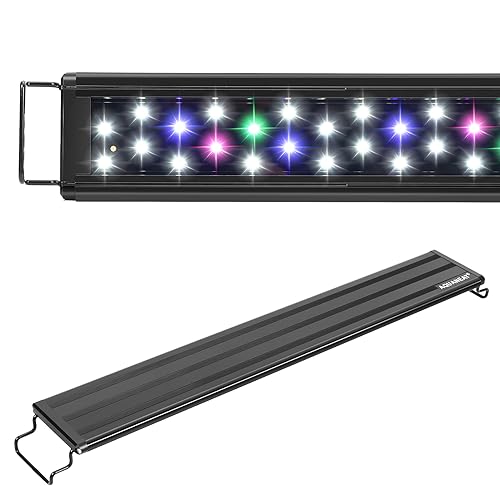
- ✓ Great coverage
- ✓ Bright, even light
- ✓ Budget-friendly
- ✕ No brightness control
- ✕ Not waterproof
| Light Length (Installed) | 33.75 inches |
| Tank Compatibility Range | 36 to 44 inches long |
| LED Configuration | 84 total LEDs: 60x 6500K white, 12x blue, 6x pink, 6x green |
| Power Type / Brightness Control | Non-dimmable, no timer, all LEDs on or off |
| Bracket / Mounting | Two extendable brackets for 36–44 inch tanks |
| Water Exposure Note | Not waterproof; keep away from splashing water |
I got hands-on with the AQUANEAT LED Aquarium Light Full Spectrum 36–44″ Tank and immediately appreciated how it’s built for that long, clean look. The light spans a roomy 33.75 inches long with a slim 2.7-inch width, and it really does cover a 36-inch tank edge-to-edge for a full-cover effect the moment you drop it in.
Setup is straightforward thanks to the two extendable brackets that let you dial it in for tanks from 36 to 44 inches long. I liked that the body sits flush along the rim without needing docking brackets, which keeps the setup compact on larger tanks while still delivering a bright, even glow across the 84-LED mix (60 white, 12 blue, 6 pink, 6 green). When comparing different best 36 inch led aquarium light options, this model stands out for its quality.
In use, you’ll notice the all-LED brightness option lights up the entire tank without needing a separate timer or dimming controls—it’s a simple on/off experience. Do keep in mind the note that this light isn’t waterproof, so I kept it clearly away from splashing water and used it for freshwater setups as intended. Overall, for a budget-friendly option at around $34.99, it delivers solid coverage and a lively spectrum for basic planted or community tanks.
NEOAQLUX 24/7 LED Aquarium Light for 36-46″ Tank IP68

- ✓ Smooth gradient lighting
- ✓ 24/7 cycle feels natural
- ✓ Memory for last setting
- ✕ Limited mounting options
- ✕ Basic app-like controls
| Light Source | 5050 & 2835 LEDs |
| Color Options & Modes | Full spectrum with 12 color options and gradient mode |
| Power & IP Rating | IP68 waterproof rating; ETL-certified adapter |
| Spectral & Illumination Schedule | 24/7 cycle with sunrise/daylight/sunset/night simulation |
| Brightness & Memory | 9 brightness levels (20%–100%), memory restores last setting on power cycle |
| Durability & Housing | Heat-resistant ABS housing with crack-resistant clear panel |
You slide the NEOAQLUX 24/7 LED Aquarium Light onto your tank, and the first thing you notice is how slim its profile sits just above the glass. The moment you power it up, the gradient mode sweeps through colors with a smooth, almost underwater glow that makes your plants pop and your fish look a touch more TV-worthy.
In those early minutes, you flick through the 12 color options and settle on a gentle sunrise palette, watching the light wake up the tank as if you were flipping a switch on a tiny, artificial day. The 24/7 cycle feels endlessly natural, not robotic, with transitions that don’t sting your eyes or disturb your nocturnal snails.
Hands-on, the memory feature is a small win. You set a 8-hour daytime span, then let the light drift into a soft sunset, and the next morning it remembers your preferred brightness without fuss.
The 9 brightness levels give you real room to dial in coral-reef vibes or a subtle, everyday look for the office tank.
Durability shows in the housing—heat-resistant ABS with a clear, crack-resistant panel that stays crisp even when it’s cooling down after a long day. Its IP68 rating earns extra peace of mind for accidental splashes or a quick full submersion if you ever need to rearrange decorations.
Real-world use feels like a quiet, nerdy upgrade to your routine. It’s easy to install, stays cool, and the ETL-certified adapter keeps things feeling safe.
If you’re balancing plant growth with vibrant fish colors, this light earns its keep without turning your setup into a tech headache.
In short, you get dependable 36–46″ tank coverage, a versatile spectrum, and a friendly auto-cycle that “just works” day after day without babysitting.
SEAOURA Aquarium Grow Light with Timer for 36-42in Tank

- ✓ Even, broad coverage
- ✓ Flexible, programmable timer
- ✓ Sturdy, water-friendly build
- ✕ Assembly could be fiddly
- ✕ Remote not included
| Light Coverage Range | 36″ to 42″ tank compatibility |
| Power Consumption | 42 W |
| LED Configuration & Color Spectrum | 252 LEDs (W:168, R:12, G:12, B:24, RGB:36) offering full spectrum with 9 color options and 20 levels of brightness |
| Dimming & Modes | 3 timer modes (Day, Night, 24/7) with custom sunrise/sunset/moonlight schedule and 15-minute brightness gradient |
| Timekeeping & Memory | Replaceable battery-backed clock for timer retention during power outages |
| Waterproofing/Durability | IP68 waterproof body with aluminum shell and PC components for water and heat resistance |
The moment the SEAOURA light slid onto your 40-gallon tank, you notice how evenly the brightness fills the corners, no hot spots, just a clean wash of white with a hint of color from the programmable spectrum. You’ll appreciate the 36–42 inch extendable bracket that finally sits flush above your glass lid, and the 8.2-foot power cord giving you slack to tuck the driver out of sight.
The standout feature is the DIY day-night timer, with sunrise and sunset transitions crafted into a 15-minute brightness ramp. It feels like your plants finally get a proper morning wake-up, while the moonlight mode keeps things calm for nocturnal fish.
You can dial exact on/off windows by the minute, which means fewer abrupt changes during feeding or water changes.
Handling is straightforward: the controller accepts a replaceable battery to remember your schedule through outages. After a blackout, you don’t have to redo the whole routine—power comes back and the lights resume as planned.
The 252 LEDs across 7 rows deliver a strong PAR value for plant growth, and the color options (9 modes, 20 brightness levels) let you tailor the mood without swapping tubes.
In real use, the IP68-rated body and durable aluminum/PC build feel sturdy enough to wipe down after feeding chaos. It’s bright enough to cover a 36–42 inch tank without glare, and the single unit stays cool on long 24/7 cycles.
If you’re aiming for greener plants and calmer fish behavior, this light makes it easy to try a natural schedule without manual tweaks every day.
Overall, it’s a reliable, flexible option that blends performance with practical, daily-usage features.
What Should You Consider When Choosing the Best 36 Inch LED Aquarium Light?
When choosing the best 36 inch LED aquarium light, several factors should be considered to ensure optimal growth and health of aquatic life.
- Light Spectrum: The light spectrum is crucial for plant growth and coral health in a reef tank. Look for lights that offer a full spectrum, including blue and red wavelengths, as these are essential for photosynthesis and promoting vibrant colors in fish and plants.
- Wattage: The wattage of the LED light affects its brightness and energy consumption. A higher wattage typically provides more intense light, which is necessary for deeper tanks or for keeping demanding aquatic plants and corals, but be sure to balance wattage with energy efficiency to avoid high electricity bills.
- Adjustability: Adjustable lights allow you to tailor the intensity and spectrum of light to suit the specific needs of your aquarium inhabitants. Features like dimmers or programmable timers can enhance the lighting cycle, mimicking natural daylight and promoting a healthy environment.
- Build Quality and Durability: A well-constructed light fixture should be water-resistant and designed to withstand the humid environment of an aquarium. Look for lights made with high-quality materials that can endure long hours of operation without overheating or failing.
- Heat Output: LED lights are generally cooler than traditional lighting, but it’s still important to consider heat output to prevent temperature fluctuations in your aquarium. Choose models with efficient heat dissipation features to maintain a stable environment for your aquatic life.
- Installation and Compatibility: Ensure that the light fixture can be easily installed on your specific aquarium size and type. Compatibility with mounting options, such as hanging kits or brackets, should also be considered for ease of use and aesthetics.
- Reviews and Recommendations: Reading reviews and seeking recommendations from other aquarium enthusiasts can provide insights into the performance and reliability of specific LED lights. Look for products that have positive feedback regarding longevity, effectiveness, and customer service.
How Does the Light Spectrum Affect Aquatic Life?
- Photosynthesis: Aquatic plants and algae rely on light for photosynthesis, which is the process they use to convert light energy into chemical energy. Different wavelengths of light are absorbed by chlorophyll, with blue and red light being the most effective for growth and reproduction. The best 36 inch LED aquarium lights can provide the optimal spectrum for these plants, ensuring they thrive and contribute to the tank’s oxygen levels.
- Fish Behavior: The light spectrum can impact the behavior of fish, influencing their feeding patterns, reproductive activities, and stress levels. Fish exposed to a spectrum that mimics their natural habitat can exhibit more natural behaviors, leading to a healthier and more vibrant aquarium. A well-chosen LED light can enhance colors and promote the well-being of various fish species.
- Algal Growth: The light spectrum also plays a crucial role in algal growth within an aquarium. Certain wavelengths can promote undesirable algae, leading to overgrowth that can harm aquatic life and disrupt the ecosystem balance. The best 36 inch LED aquarium lights can help control algal growth by providing a balanced spectrum that supports beneficial organisms while limiting excessive algae proliferation.
- Coral Health: For reef aquariums, the light spectrum is essential for coral health, as corals rely on symbiotic relationships with zooxanthellae for nutrition. These organisms need specific light wavelengths to perform photosynthesis effectively. Using LED lights that cater to the specific needs of corals can enhance their growth and coloration, contributing to the overall beauty of a reef tank.
- Visual Appeal: The right light spectrum enhances the visual aesthetics of an aquarium by accentuating the colors of both plants and fish. This is particularly important for aquarists who want to create a visually stunning display. High-quality LED lights can provide a full spectrum that brings out vibrant hues, making the aquarium more attractive and engaging.
Why is Adjustable Brightness Essential for Aquariums?
The underlying mechanism involves the relationship between light intensity, photosynthesis, and the biological processes that sustain aquatic life. When plants receive the optimal amount of light, they can photosynthesize more efficiently, producing oxygen and absorbing carbon dioxide, which directly impacts water quality. Additionally, certain fish exhibit stress behaviors under inappropriate lighting, impacting their growth and reproduction. Thus, adjustable brightness can be seen as a crucial factor in maintaining a harmonious and thriving aquarium ecosystem.
What Are the Most Highly Rated Brands for 36 Inch LED Aquarium Lights?
Some of the most highly rated brands for 36 inch LED aquarium lights include:
- Finnex: Known for their high-quality LED lights, Finnex offers models that provide vibrant colors and excellent light penetration for aquatic plants and fish. Their lights often feature adjustable brightness and color temperatures, making them suitable for both freshwater and saltwater setups.
- NICREW: NICREW is recognized for producing affordable yet effective LED lighting solutions. Their 36 inch models typically include features like dual light modes and timers, allowing users to simulate natural day and night cycles, promoting a healthy environment for aquarium inhabitants.
- Current USA: Current USA’s satellite LED series is highly praised for its sleek design and powerful lighting capabilities. These lights come equipped with customizable spectrum settings and built-in wireless control, making them user-friendly and versatile for different types of aquariums.
- AquaIllumination: AquaIllumination is a premium brand that provides advanced LED lighting technology with a focus on energy efficiency and performance. Their 36 inch fixtures often have programmable features that allow hobbyists to create specific lighting schedules tailored to their aquatic ecosystem.
- BeamsWork: BeamsWork offers budget-friendly options that do not compromise on performance, making them popular among beginner aquarists. Their LED lights typically include options for adjustable brightness and spectrum settings, catering to both plant growth and fish visibility.
How Can You Properly Install a 36 Inch LED Aquarium Light?
To properly install a 36 inch LED aquarium light, follow these essential steps:
- Gather Necessary Tools: Before starting the installation, ensure you have all the tools required, such as a power drill, screws, mounting brackets, and a level. Having the right tools will make the process smoother and more efficient.
- Choose the Right Location: Select a suitable location for your LED light that allows for even distribution of light across the aquarium. Consider factors such as the height of the tank, the type of plants or fish you have, and how much light they require.
- Attach the Mounting Brackets: Secure the mounting brackets to the aquarium hood or directly onto the tank’s rim, depending on your setup. Ensure that they are level and properly aligned to prevent any misalignment or instability of the light fixture.
- Connect the LED Light: Carefully place the 36 inch LED light onto the mounted brackets and secure it in place. Check that all connections are tight and that the light is stable to avoid any accidents.
- Plug In and Test: Once the installation is complete, plug the light into a power outlet and turn it on to test functionality. Observe the light distribution and make any necessary adjustments to angle or positioning for optimal illumination.
Gathering necessary tools ensures you are fully prepared, which can significantly reduce the time spent during installation. A well-chosen location not only enhances the aesthetics of the aquarium but also ensures that aquatic life receives adequate lighting for growth and health.
Attaching mounting brackets requires precision; they should be firmly secured to avoid any accidents that can occur from a loose fixture. Connecting the LED light involves careful placement and checking for stability, as a secure fit will ensure longevity and performance of the lighting system.
Finally, testing the light is crucial to confirm that it operates correctly and provides the desired intensity and spread of light. Adjustments may be needed based on the specific needs of your aquarium setup.
What is the Typical Lifespan of a 36 Inch LED Aquarium Light?
Benefits of utilizing a 36 inch LED aquarium light include reduced energy consumption, longer replacement intervals, and improved growth for both fish and plants. Statistics indicate that LED lights consume 75% less energy than incandescent lighting, making them a more sustainable choice. Furthermore, the initial investment in high-quality LED aquarium lights can lead to long-term savings in energy bills and reduced maintenance costs.
Best practices for maximizing the effectiveness of a 36 inch LED aquarium light involve strategic placement and proper timing of the light. It is recommended to position the light above the tank at an appropriate height to ensure even light distribution. Additionally, implementing a lighting schedule that mimics natural daylight cycles can optimize plant growth while minimizing stress on fish. Regularly cleaning the light fixture and adjusting settings based on the needs of the specific aquarium can further enhance the benefits of LED lighting.
How Can You Ensure Your 36 Inch LED Aquarium Light Remains in Optimal Condition?
To ensure your 36 inch LED aquarium light remains in optimal condition, consider the following maintenance tips:
- Regular Cleaning: Dust and debris can accumulate on the light fixture, which can reduce its efficiency.
- Check Electrical Components: Regularly inspect the power cord and connections for any signs of wear or damage to prevent electrical issues.
- Monitor Temperature: Ensure that the light does not overheat by monitoring the ambient temperature around the aquarium.
- Adjust Lighting Schedule: Maintain a consistent light cycle for your aquarium to promote healthy plant and fish life.
- Replace Bulbs as Needed: Even LED bulbs can dim over time, so be prepared to replace them to maintain optimal lighting conditions.
Regular cleaning is essential because dust and algae can block light penetration, making your aquarium less vibrant. A soft cloth or sponge can be used to wipe down the fixture and remove any buildup, ensuring that your plants and fish receive the full spectrum of light they need.
Checking electrical components is crucial for safety. Look for frayed wires, loose connections, or any signs of overheating. Ensuring that all electrical components are in good condition helps prevent potential hazards and maintains the light’s functionality.
Monitoring temperature is important as excessive heat can shorten the lifespan of your LED light and affect the aquarium’s environment. Use a thermometer to keep track of the temperature around the light and ensure it stays within a safe range for both the light and the aquatic life.
Adjusting your lighting schedule is vital for the health of your aquarium’s ecosystem. Most aquatic plants thrive with 10-12 hours of light a day, so using a timer can help keep a consistent schedule that mimics natural daylight, promoting growth and reducing algae buildup.
Lastly, replacing bulbs as needed is key to maintaining brightness. Even though LEDs are more durable and longer-lasting than traditional bulbs, they can still lose intensity over time. Keeping track of when you last changed the bulbs can help ensure your aquarium remains well-lit and visually appealing.
What Are the Common Troubleshooting Steps for 36 Inch LED Aquarium Lights?
The common troubleshooting steps for 36 inch LED aquarium lights include checking power supply, inspecting connections, testing the light settings, and assessing the LED bulbs.
- Check Power Supply: Ensure that the aquarium light is properly plugged into a functioning electrical outlet. Sometimes, the outlet may not provide power due to a tripped circuit breaker or a blown fuse.
- Inspect Connections: Examine all connections between the light fixture and power source, as well as any connectors or cords. Loose or damaged connections can prevent the light from functioning, so ensuring everything is securely connected is vital.
- Test the Light Settings: If the light has adjustable settings, verify that it is set correctly. Sometimes, users may accidentally change the settings, which can affect the light’s operation, such as brightness levels or color temperature.
- Assess the LED Bulbs: Check to see if any of the LED bulbs are damaged or burnt out. If so, replacing the faulty bulbs can restore the light’s functionality and ensure it operates effectively.