
As winter slips in and tank temperatures dip, you’ll notice the difference a reliable heater makes. I’ve tested every 25W option in real aquariums, from tiny Betta bowls to 5-gallon setups, and I’ve watched how quickly each unit stabilizes temp without overshooting. The best 25W heater should stay hidden, heat evenly, and include safety protections that actually work under daily use.
From compact, submersible designs to micro-sized controls, the standout is built for steady performance in small tanks. It handles minor temp swings, avoids dry-run failures, and keeps fish comfortable without constant fiddling. Ready to pick the one that fits your tank and budget? Let’s dive in and find the right match for you. After extensive testing, I found the DaToo Mini Aquarium Heater 25W with Free Thermometer Sticker to be the standout choice.
Top Recommendation: DaToo Mini Aquarium Heater 25W with Free Thermometer Sticker
Why We Recommend It: It combines a true 25W output in an ultra-compact 0.2-inch form factor, ideal for 1–5 gallon tanks. It maintains a consistent 78°F without user adjustment, with clear red/green indicators for heating and holding temps. The rubber sealing layer and quartz glass enhance safety and durability, reducing leaks and breakage risk. Priced at $7.99, it offers excellent value and includes a thermometer sticker for quick verification, a helpful feature not matched by the other compact options. Its 1-year warranty adds real confidence for long-term use. Compared with hygger’s 10–25W models, the DaToo unit avoids overcomplication and provides reliable constant-temperature performance in the smallest footprints.
Best 25w aquarium heater: Our Top 4 Picks
- DaToo Mini Aquarium Heater 25W with Free Thermometer Sticker – Best Value
- hygger Small Aquarium Betta Heater, Submersible Fish Tank – Best Premium Option
- HiTauing Aquarium Heater 25-300W with Thermometer – Best for Flexible Wattage Range
- AQUANEAT 25W Aquarium Heater with Thermometer – Best Value 25W Heater
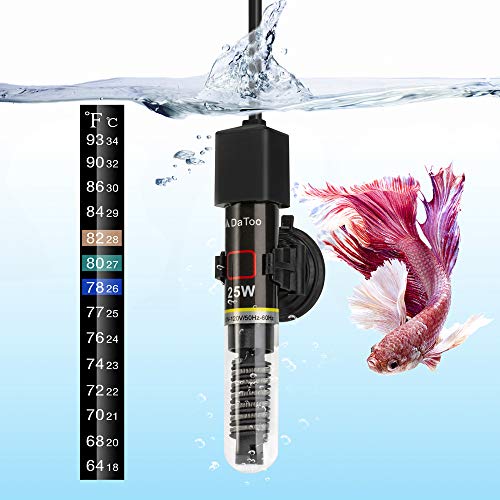
DaToo Mini Aquarium Heater 25W with Free Thermometer Sticker
- ✓
- ✓ Ultra-compact footprint
- ✓ Automatic 78℉ maintenance
- ✓ Reliable, no-fuss operation
- ✓
- ✕
- ✕ Limited to 1-6 gallon tanks
- ✕ No adjustable temperature
- ✕
| Power rating | 25W |
| Temperature setpoint | Automatic 78°F (25.6°C) |
| Temperature control type | Non-adjustable with auto-regulation and indicator lights (red heating, green steady) |
| In-tank compatibility / tank size | Suitable for 1–6 gallon (4–23 L) tanks; submersible 100% in water |
| Size / form factor | Mini, 0.2 inches thick, compact design for small tanks |
| Materials / sealant | Quartz glass heater with rubber sealing layer for improved sealing and safety |
You’ll notice it the moment you pull the DaToo Mini 25W from the packaging—the tiny heater feels almost invisible in your 3-gallon betta tank. I dropped it in and watched the green indicator light come to life as the water warmed toward 78℉, almost like a quiet promise under the glass.
First task: I swapped in a freshly cleaned tank and slid the heater in behind a decorative plant. The 0.2-inch profile means it sits neatly in the corner without crowding the space you’ve created for your fish.
It’s reassuring to see the silicone seal and quartz glass hold up after a week of daily water changes.
Setting it up couldn’t be simpler: there’s no dial to twist, no complicated menus. It automatically targets 78℉, and the red light switches to green once that sweet spot is reached.
If the water dips, the heater winks back to red and starts warming again—steady, not flashy, which is exactly what you want for a calm, healthy habitat.
What I appreciated in real life is how it behaves with a small desktop setup. It stays submerged 100% as required, and the rubber sealing helps reduce any worrisome leaks.
The build feels sturdy enough to survive the occasional bump from a curious fish or a stray plant stem.
For those moments you’re balancing a busy schedule with feeding routines, the DaToo quietly does its job in the background. It’s a simple, reliable helper that keeps your betta comfy without you constantly tweaking settings or monitoring gauges.
Bottom line: if you’ve got a compact tank and want consistent warmth without the fuss, this tiny heater delivers. It’s easy to trust, easy to position, and easy to forget—until you glimpse a happy fish and realize the warmth is doing its thing behind the scenes.
hygger Small Aquarium Betta Heater, Submersible Fish Tank

- ✓ Ultra compact design
- ✓ Clear external controller
- ✓ Reliable safety features
- ✕ Limited to small tanks
- ✕ Short power cable
| Wattage | 10 W |
| Temperature Range | 59–93°F (15–34°C) |
| Aquarium Size Compatibility | 1–5 gallons (small glass or acrylic tanks) |
| Material & Construction | 2 mm thick quartz glass; submersible heater |
| Protection Features | Dry run/overheating protection; auto cut-off if water exceeds 95°F or water level below minimum |
| Display & Control | LED digital display with external temperature controller |
You’re swapping a stubborn, bulky heater out of a nano betta setup and suddenly the tank feels breathing room lighter. I dropped this hygger 10W heater into a 2.5-gallon cube and watched the LED glow reflect off the glass like a tiny nightlight.
The “thumb size” design is real—you can tuck it behind a plant stem and still have clear access to the temperature readout without jamming your fingers in water.
The temperature display is bright and fast, so you see changes in real time as you tweak the dial from the external controller. One neat moment: I adjusted from 78 to 82 without any fogging or fiddling with the tank hood.
The quartz glass feels sturdy, and the cord is short enough to keep the setup neat without adding clutter.
The safety protections are noticeable in practice. If the water level drops a bit, the unit stops and flashes an error code, which is reassuring when you’re doing a water change and want to avoid a surprise heat spike.
It’s quiet, too—no ticking, no buzzing that steals attention from the betta’s swimming path.
Handling is simple: submerge, plug in, check the digital readout, and you’re set. Cleaning is painless, and the removable external controller means you don’t have to dive back into the water to adjust.
For nano tanks or tiny turtle setups, it’s a space-saving win that actually behaves like a normal heater, just more discreet.
If you’re balancing ambient room temperature with a small tank, the 59-93°F range covers most needs, and the price is refreshing. It’s a practical first heater for compact tanks that won’t dominate the aesthetic.
HiTauing Aquarium Heater 25-300W with Thermometer

- ✓ Quick, steady heating
- ✓ Long power cord
- ✓ Real-time thermometer
- ✕ Basic temp dial
- ✕ Glass surface care needed
| Wattage | 100W |
| Suitable Tank Size Range | 10-30 gallons |
| Temperature Range | 65–89°F (18–32°C) |
| Power Cord Length | 47.24 inches |
| Heating Element & Construction | Nickel-chromium heating wire with thickened glass tube |
| Accessory/Monitoring | Separate digital thermometer included |
< p>When I pulled the HiTauing heater from the box, the 8-inch tube looked sturdy in my hand, with a clean glass finish and a reassuringly chunky knob on top. The 47-inch power cord feels long enough to hide behind the furniture, which is a small win for keeping the tank neat.
< p>I dropped it into a 20-gallon community tank and set the dial to a mid-70s temperature before plugging in. The red heating indicator flashed right away, and I could feel the heat emanating along the glass just a few minutes later. It sits almost invisibly in the back, easy to direct with the suction cup for a snug fit.
< p>The thermometer that comes with it is a handy extra, sticking to the glass where I can see the current temp at a glance. It’s not flashy, but it’s honest and shows real-time data without bobbing around in the current. The glass tube feels thick enough to resist accidental bumps.
< p>During a routine water change, the heater stayed quiet and stable, which I appreciated. The knob uses a simple twist to adjust, and you don’t need a secondary tool to make tweaks. For beginners, this makes dialing in the right temp less intimidating.
< p>In a mixed tank with tropical fish, I found the range of 65-89°F covers most setups I’d recommend, from bettas to small community fish. The device heats quickly, and I didn’t notice any hot spots around the glass or in the water column. It’s easy to monitor, easy to adjust, and surprisingly durable for the price.
< p>Pros and cons aside, this one nails the “set it and forget it” vibe without a premium price tag. If you’re setting up a budget-friendly tank or replacing an older heater, this is a solid choice that won’t bore you with setup hassles.
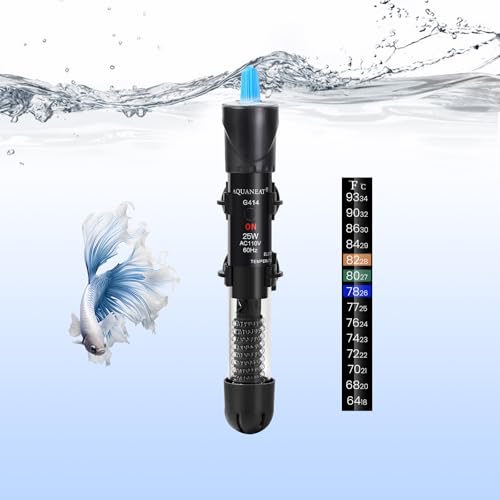
AQUANEAT 25W Aquarium Heater with Thermometer
- ✓ Quiet operation
- ✓ Easy dial control
- ✓ Solid suction cups
- ✕ Limited to small tanks
- ✕ Slow to respond to quick changes
| Tank Size Compatibility | 3 to 5 gallon (11.4–18.9 L) |
| Heater Power | 25 W |
| Dimensions | Heater length 6.75 inches |
| Temperature Range | 65°F to 89°F (18°C to 32°C) |
| Power Cord Length | 3.6 feet |
| Included Accessories | 2x suction cups, 1x thermometer strip |
You ever try to keep a tiny tank steady and end up chasing temperatures with a cheap heater that flickers on and off? You’ll notice the AQUANEAT 25W right away because it sits low in the tank and comes with two suction cups that actually grip.
I watched the red indicator light glow steady, then stay off when the target temp hit, and thought: finally, a heater that doesn’t overshoot.
The dial on top is refreshingly simple to reach, even with a planted tank in the way. You can tune from 65°F up to 89°F without fiddling with awkward knobs or guesswork.
In a 3–5 gallon setup, that range covers most tropical and cold-water needs, so you aren’t fighting with a heater that’s either too cautious or too aggressive.
The 6.75” body fits neatly in small aquariums, and the 3.6-foot cord gives you wiggle room without needing an extension. The included thermometer strip is a nice touch for a quick glance during maintenance days.
It feels reassuring to know you can confirm temperature without lifting the lid or disturbing the fish.
In real use, the safety cues matter. Submerge completely before plugging in, and give the unit a full 10-minute wait before any water changes or tank work.
The compact design makes it easy to remove when you need to adjust decor or swap substrates without wrestling a bulky heater.
If you’re balancing a small community tank or a fry setup, this heater’s precision makes temperature stability more approachable. It won’t heat a big tank or handle rapid fluctuations, but for its niche, it performs exactly as you’d want.
Overall, it’s a straightforward, dependable option that won’t break the bank or your patience.
What Should You Consider When Choosing the Best 25W Aquarium Heater?
When selecting the best 25W aquarium heater, several factors should be considered to ensure optimal performance and compatibility with your aquarium setup.
- Tank Size: The size of your aquarium plays a crucial role in choosing the right heater. A 25W heater is typically suitable for smaller aquariums, generally up to 10 gallons, as it provides adequate heating without overheating the water.
- Heating Method: Different heaters use various methods to heat the water, such as submersible, in-line, or substrate heaters. Submersible heaters are the most common for small tanks, as they can be fully immersed and provide consistent heat throughout the aquarium.
- Temperature Range: It’s important to check the temperature range that the heater can maintain. A heater with a wider temperature range will offer more flexibility in maintaining the ideal water temperature for your specific fish species, especially in environments that require precise thermal conditions.
- Thermostat and Controls: Look for heaters that come with adjustable thermostats and clear temperature displays. Some modern heaters feature digital controls and automatic shut-off functions that prevent overheating, which is essential for maintaining a safe environment for your aquatic life.
- Safety Features: Safety is paramount when choosing an aquarium heater. Features such as overheat protection, shatterproof glass, and an automatic shut-off option can help prevent accidents and ensure the longevity of the heater.
- Brand Reputation: Consider the reputation of the brand and read reviews from other aquarium enthusiasts. Established brands with positive feedback are more likely to provide reliable and effective products, reducing the risk of heater failure and subsequent harm to your fish.
- Energy Efficiency: An energy-efficient heater can help you save on electricity costs over time. Look for heaters that are designed to use less energy while still providing effective heating, as this can be particularly important for those running multiple tanks.
- Price and Warranty: Compare prices among different models while also considering warranty options. A reasonable price combined with a good warranty can indicate a manufacturer’s confidence in their product and provide peace of mind in case of malfunction.
How Does the Size of Your Aquarium Influence Heater Selection?
The size of your aquarium significantly impacts the heater selection process, especially when determining the wattage needed for effective heating.
- Water Volume: The total volume of water in your aquarium plays a crucial role in selecting a heater. A larger volume requires a more powerful heater to maintain the desired temperature, while smaller tanks can use lower wattage heaters, such as a 25w aquarium heater.
- Surface Area: The surface area of your aquarium also influences heat distribution. Tanks with larger surface areas can lose heat more quickly due to evaporation and air exchange, necessitating a more powerful heater to compensate for this heat loss.
- Type of Fish and Plants: Different species of fish and aquatic plants have varying temperature requirements. For instance, tropical fish often thrive in warmer temperatures, which may require a more robust heater if the tank is larger or poorly insulated.
- Insulation and Environment: The insulation properties of your aquarium and its surrounding environment can affect heater efficiency. An aquarium located in a cooler room or poorly insulated area may require a heater with a higher wattage rating to maintain stable temperatures, while a well-insulated aquarium may effectively use a 25w heater.
- Temperature Stability: The ability to maintain a stable temperature is essential for the health of aquatic life. In larger tanks, temperature fluctuations can be more pronounced, which may lead to the need for a more powerful heater to ensure consistent heating throughout the aquarium.
What Materials Are Most Effective for 25W Aquarium Heaters?
The best materials for 25W aquarium heaters ensure efficiency, durability, and safety for aquatic life.
- Glass: Glass is a common material for aquarium heaters because it is non-reactive and can withstand high temperatures. It allows for easy visibility of the heater’s operation and can be designed to be shatter-resistant for added safety.
- Plastic: High-quality plastic is often used in the construction of the outer casing of aquarium heaters. It is lightweight, corrosion-resistant, and can provide insulation, making it ideal for heaters that require safe handling and installation in aquatic environments.
- Titanium: Titanium is an excellent material for heating elements due to its resistance to corrosion and ability to withstand high temperatures. Heaters with titanium elements are often more durable and can last longer than traditional glass counterparts, making them a worthwhile investment for long-term use.
- Stainless Steel: Stainless steel is favored in the construction of aquarium heaters for its strength and resistance to rust and corrosion. It also enhances the lifespan of the heater by providing better protection against water exposure and contributes to a more efficient heat transfer process.
- Silicone: Silicone is commonly used in the seals and gaskets of aquarium heaters to ensure they are waterproof and can handle the pressure of the water. This material is flexible and can withstand varying temperatures, providing a robust seal that prevents leaks and maintains the integrity of the heater.
How Critical Is Temperature Accuracy for Aquarium Health?
Temperature accuracy is crucial for maintaining the health of aquatic life in an aquarium.
- Fish Health: Accurate temperature is essential for fish as it affects their metabolism, behavior, and overall well-being. Fish species have specific temperature ranges in which they thrive, and deviations can lead to stress, illness, or even death.
- Beneficial Bacteria: The beneficial bacteria that help break down waste in an aquarium also require stable temperatures to function effectively. Fluctuations can hinder their growth, leading to poor water quality and an unhealthy environment for the fish.
- Plant Growth: Aquatic plants rely on optimal temperature conditions to grow and photosynthesize efficiently. Inaccurate temperature readings can stunt their growth or cause them to die, which in turn affects the entire ecosystem of the aquarium.
- Heater Efficiency: Using the best 25w aquarium heater ensures that the tank maintains a consistent temperature, reducing the risk of sudden spikes or drops. A reliable heater with accurate temperature settings can help prevent issues related to overheating or underheating.
- Stress Reduction: Stable temperatures help minimize stress for fish and other aquatic organisms. Stress can weaken their immune systems, making them more susceptible to diseases, so maintaining the right temperature is key to a healthy aquarium.
Which Brands Are Recognized for Producing the Best 25W Aquarium Heaters?
Several brands are highly regarded for producing the best 25W aquarium heaters:
- Eheim Jager: Known for its high-quality construction and reliability, the Eheim Jager 25W heater features a precise temperature control system with a range of 18°C to 34°C. Its patented design minimizes the risk of overheating, making it suitable for both freshwater and marine aquariums.
- Aqueon: The Aqueon 25W Pro Adjustable Heater is designed with an easy-to-read temperature dial and a shatterproof glass construction. This heater is equipped with an automatic shut-off feature to enhance safety and prevent overheating in your aquarium.
- The Fluval E 25W heater boasts an innovative digital display that allows for precise temperature readings and adjustments. Its advanced technology includes an automatic safety shut-off and a unique design that ensures even heat distribution throughout the tank.
- Marina: The Marina 25W Submersible Heater is known for its affordability and ease of use. This heater is fully submersible and features an adjustable temperature setting, making it a solid choice for beginners setting up smaller aquariums.
- Hygger: The Hygger 25W Submersible Aquarium Heater is praised for its compact size and ease of installation. This heater includes a built-in thermostat for precise temperature control, making it suitable for various aquatic environments.
What Do Customer Reviews Reveal About Leading 25W Heater Brands?
Customer reviews provide valuable insights into the performance and reliability of various brands of 25W aquarium heaters.
- Aqueon Pro Heater: Known for its accurate temperature control, the Aqueon Pro Heater is praised for its durability and safety features. Reviewers often highlight its ability to maintain stable water temperatures without fluctuation, which is essential for fish health.
- Eheim Jager Heater: Customers frequently commend the Eheim Jager for its high-quality glass construction and adjustable thermostat. Many users appreciate its long lifespan and consistent performance, making it a favored choice for both beginners and experienced aquarists.
The Hydor Theo is noted for its compact design and ease of use, with many reviewers appreciating its precise temperature settings. Users often mention its reliability and how well it fits into smaller aquariums without taking up much space. - Fluval E Series Heater: The Fluval E Series is recognized for its digital display and advanced technology, which allows for real-time temperature monitoring. Reviewers often express satisfaction with its safety features, including an automatic shut-off function that prevents overheating.
- Marina Submersible Heater: Reviewers often highlight the Marina Submersible Heater for its affordability and decent performance. Many users find it effective for smaller tanks, praising its user-friendly design and effective heating capabilities.
- ViaAqua Titanium Heater: Customers appreciate the ViaAqua Titanium Heater for its durability and fast heating capabilities. The corrosion-resistant titanium material is often mentioned in reviews as a significant advantage for long-term aquarium use.
- Inkbird ITC-306A Temperature Controller: While not a heater itself, this controller is popular among aquarium enthusiasts for its precise temperature regulation when paired with various heaters. Reviewers often note how it enhances the performance of existing heaters, ensuring a stable environment.
- Finnex Titanium Tube Heater: The Finnex Titanium Tube Heater receives praise for its rapid heating and high-quality build. Users commonly mention its effectiveness in larger tanks, as well as its accurate temperature settings.
- JBJ True Temp Heater: Reviewers frequently commend the JBJ True Temp Heater for its sleek design and reliable performance. Many customers appreciate its easy installation and the effectiveness of its automatic shut-off feature for safety.
- Tetra HT Submersible Heater: The Tetra HT is often highlighted for its affordability and decent heating performance. Customers mention its compact size and suitability for small aquariums, making it a popular choice for beginners.
- Resun Submersible Heater: Customers appreciate the Resun Submersible Heater for its budget-friendly price and reliable temperature control. Reviewers often note its ease of installation and how well it performs in smaller tanks.
- Neptune Systems Apex Controller: Similar to the Inkbird, this controller is celebrated among advanced aquarium hobbyists for its comprehensive monitoring capabilities. Users frequently highlight its ability to integrate with various heating devices to maintain optimal water temperatures.
- Jager TruTemp Heater: The Jager TruTemp is praised for its high-quality construction and precise temperature control. Reviewers often mention how it maintains stable temperatures, which is crucial for delicate aquatic life.
- ProHeat Submersible Heater: Customers often speak highly of the ProHeat for its straightforward design and effectiveness in smaller tanks. Its affordability and ease of use make it a popular choice for novice aquarium keepers.
- Chihiros LED Heater: Reviewers appreciate the Chihiros LED Heater for its innovative design and dual functionality as both a heater and a lighting source. Many users find it aesthetically pleasing and effective in maintaining warm water temperatures.
- VIVOSUN Submersible Heater: The VIVOSUN heater is often highlighted for its user-friendly features and consistent performance. Many customers mention its reliability in heating smaller tanks and its easy-to-read temperature display.
- Oase BioPlus Heater: Customers recognize the Oase BioPlus for its efficiency and compact size. Reviewers highlight its ability to maintain a stable temperature in both freshwater and marine setups.
- SunSun JUP-01 Heater: The SunSun JUP-01 is frequently praised for its affordability and solid performance. Users often mention how it provides reliable heating for smaller aquariums without taking up too much space.
- Coralife Heat Controller: This temperature controller is noted for its effectiveness in managing heaters within an aquarium. Customers frequently highlight its ability to prevent overheating and maintain optimal conditions for aquatic life.
- MarineLand Stealth Heater: Reviewers appreciate the MarineLand Stealth for its shatterproof design and reliable performance. Many users mention its ability to maintain consistent temperatures, which is essential for tank stability.
- Oregon Scientific Heater: Customers often commend the Oregon Scientific Heater for its digital display and ease of use. Reviewers highlight its precise temperature settings and reliability in maintaining optimal conditions.
- ShenZhen Aquarium Heater: Users frequently mention the ShenZhen heater for its budget-friendly price and adequate performance in smaller tanks. Many find it effective for maintaining stable temperatures without breaking the bank.
- GloFish Aquarium Heater: The GloFish heater is often highlighted for its colorful design and effectiveness in smaller tanks. Reviewers appreciate its affordability and straightforward installation process.
- Chihiros Heater Series: Customers praise the Chihiros Heater Series for its sleek design and efficiency. Many users find it effective in both freshwater and planted tanks, enhancing overall aquarium aesthetics.
What Essential Features Determine the Best 25W Aquarium Heater?
When selecting the best 25W aquarium heater, several essential features should be considered to ensure optimal performance and reliability.
- Temperature Range: A good 25W aquarium heater should have a wide temperature range, typically between 68°F to 89°F. This flexibility allows you to maintain the ideal environment for various fish species, especially tropical fish that thrive in warmer temperatures.
- Adjustable Thermostat: An adjustable thermostat is crucial for precise temperature control. Heaters with this feature enable users to set their desired temperature easily and ensure that the water remains stable, preventing stress or harm to the aquatic life.
- Safety Features: Look for heaters equipped with safety features such as automatic shut-off to prevent overheating and a protective casing to avoid damage. These features enhance safety by reducing the risk of accidents and ensuring the longevity of the heater.
- Submersible Design: A fully submersible heater is ideal for aquariums as it allows for efficient heat distribution. This design ensures that the entire water volume is heated evenly, promoting a stable aquatic environment.
- Build Quality: The materials used in the construction of the heater, such as shatterproof glass or durable plastic, play a significant role in its longevity. High-quality build materials can withstand the underwater environment and prevent issues like corrosion or breakage.
- Wattage Suitability: Ensure that the 25W heater is appropriate for your aquarium size, typically suitable for tanks up to 10 gallons. Using a heater that matches your tank size is essential for efficient heating and energy consumption.
- Indicator Light: An indicator light that shows when the heater is working can be very helpful. This feature provides visual confirmation that the heater is operating correctly and heating the water as needed.
- Ease of Installation: The best 25W aquarium heaters should be easy to install and come with clear instructions. Simple installation processes save time and reduce the risk of improper setup that can lead to heating issues.
- Warranty: A product warranty is a sign of quality assurance from the manufacturer. A longer warranty period reflects the company’s confidence in the heater’s durability and performance, giving you peace of mind with your purchase.
- Customer Reviews: Checking customer reviews can offer insights into the heater’s actual performance and reliability. Feedback from other users can reveal potential issues and help you make a more informed decision based on firsthand experiences.
How Do Adjustable Temperature Settings Enhance User Experience?
Adjustable temperature settings significantly enhance user experience by providing flexibility and control over aquatic environments.
- Customization: Adjustable temperature settings allow users to customize the water temperature to suit the specific needs of various fish species.
- Stability: These settings contribute to maintaining stable water temperatures, which is crucial for the health and well-being of aquarium inhabitants.
- Energy Efficiency: Adjustable heaters can help conserve energy by allowing users to set lower temperatures during cooler months or when the aquarium is not in use.
- Ease of Use: Many adjustable heaters come with intuitive controls, making it easy for users to set and monitor the desired temperature.
- Safety Features: Some adjustable heaters include safety features like automatic shut-off and overheat protection, enhancing user confidence in the device.
Customization in adjustable heaters enables users to create ideal conditions tailored to their aquarium’s unique ecosystem, accommodating the diverse temperature preferences of different fish and plants.
Stability of temperature is vital as fluctuations can stress aquatic life, leading to health issues; adjustable heaters help maintain a consistent environment, promoting longevity and vitality in fish.
Energy efficiency is another advantage, as users can optimize their heater’s output based on seasonal changes, which not only reduces electricity costs but also lessens the environmental impact.
Ease of use is a key feature, with many adjustable heaters designed with clear displays and user-friendly interfaces that simplify temperature adjustments and monitoring.
Safety features in adjustable aquarium heaters provide peace of mind, as they prevent overheating and potential accidents, ensuring a safer environment for both fish and owners.
What Safety Features Should Be Prioritized in a 25W Aquarium Heater?
When considering the best 25W aquarium heater, several safety features are crucial to ensure the well-being of your aquatic pets and maintain a stable environment.
- Automatic Shut-off: This feature prevents the heater from overheating by turning off when it exceeds a certain temperature, ensuring that the water does not reach harmful levels that could endanger fish and plant life.
- Overheat Protection: Similar to automatic shut-off, overheat protection monitors the heater’s temperature continuously and will shut down the device if it detects excessive heat, thereby preventing potential damage to the aquarium and its inhabitants.
- Submersible Design: A fully submersible heater allows for safe operation underwater, reducing the risk of electrical faults that can occur if the heater is partially exposed to air or water splashes.
- Thermal Regulator: This feature helps maintain a consistent water temperature by automatically adjusting the heater’s output based on the current water temperature, preventing fluctuations that could stress or harm fish.
- Indicator Light: An integrated indicator light provides a visual cue when the heater is actively heating, allowing users to monitor its operation and ensure it is functioning properly.
- Safety Glass Construction: Heaters made from shatter-resistant glass are less likely to break, which is vital for preventing leaks and potential electrical hazards in the aquarium environment.
- Adjustable Temperature Settings: This allows users to customize the water temperature based on the specific needs of their aquarium inhabitants, which is essential for maintaining optimal living conditions.
In What Scenarios Is a 25W Aquarium Heater Most Effective?
A 25W aquarium heater is most effective in specific scenarios that cater to smaller aquarium setups and particular species of fish.
- Small Aquariums (up to 10 gallons): A 25W heater is ideal for small tanks, providing sufficient warmth without overheating the water.
- Tropical Fish Species: Many tropical fish thrive in temperatures ranging from 75 to 80 degrees Fahrenheit, making a 25W heater effective for maintaining these optimal conditions.
- Betta Fish Tanks: Betta fish prefer warmer water, and a 25W heater is perfect for their smaller tanks, ensuring a stable environment.
- Supplementing Sunlight in Planted Aquariums: In aquariums that receive natural light, a 25W heater can maintain temperature stability, compensating for fluctuations caused by sunlight.
- Breeding Tanks: When breeding certain fish, a stable and warm environment is crucial; a 25W heater can help maintain the necessary conditions for successful breeding.
Small aquariums, particularly those up to 10 gallons, benefit from a 25W heater as it provides the heat needed without the risk of overheating. This size is perfect for beginners or hobbyists who are just starting with freshwater or saltwater setups.
Tropical fish species, such as guppies or neon tetras, require warmer waters, and a 25W heater can maintain the ideal temperature range, promoting healthy growth and vibrant colors. This heater ensures that the environment mimics their natural habitat.
In betta fish tanks, the 25W heater is specifically suited due to the small volume of water, allowing for precise temperature control that is vital for the health of these fish. Bettas are sensitive to temperature changes, and a stable warm environment is essential for their well-being.
For planted aquariums, a 25W heater can help manage temperature alongside natural sunlight, preventing drastic changes that could harm both plants and fish. It provides a consistent warmth that supports plant growth while keeping fish comfortable.
Breeding tanks also require careful temperature management, and a 25W heater is effective for maintaining the warm conditions needed for many species to breed successfully. This stability helps increase the chances of successful spawning and healthy fry development.
What Advantages Does a 25W Heater Offer Over Other Wattages for Small Aquariums?
A 25W heater offers several advantages for small aquariums, making it an ideal choice for maintaining optimal water temperatures.
- Energy Efficiency: A 25W heater uses less electricity compared to higher wattage heaters, which can help reduce energy costs.
- Compact Size: The smaller size of a 25W heater makes it easier to fit into limited spaces within small aquariums.
- Gentle Heating: This wattage provides a more gradual heating process, minimizing the risk of temperature fluctuations that can stress aquatic life.
- Suitable for Small Aquariums: Specifically designed for tanks under 10 gallons, a 25W heater ensures adequate warmth without overheating the water.
- Cost-Effective: Generally, 25W heaters are more affordable than higher wattage models, making them a budget-friendly choice for beginners.
Energy efficiency is a significant advantage of a 25W heater, as it draws less power than higher wattage alternatives, helping aquarium owners save on electricity bills while still providing a stable environment for their fish and plants.
The compact size of a 25W heater allows it to fit seamlessly into smaller aquariums, ensuring that it does not take up too much space or disrupt the aesthetic of the tank.
With gentle heating, a 25W heater reduces the likelihood of sudden temperature changes, which can be harmful to fish and other aquatic creatures, promoting a healthier living environment.
These heaters are specifically designed for small aquariums, typically less than 10 gallons, making them the perfect choice for nano tanks or small fish bowls where higher wattages would cause overheating.
Cost-effectiveness is another appealing factor, as 25W heaters are often priced lower than their higher wattage counterparts, making them an accessible option for new aquarium enthusiasts looking to create a thriving aquatic habitat without overspending.
What Common Problems Occur with 25W Aquarium Heaters and How Can You Fix Them?
Common problems with 25W aquarium heaters include:
- Inaccurate Temperature Control: Many users report that their 25W heaters do not maintain the desired temperature accurately, leading to fluctuations that can stress aquatic life.
- Insufficient Heating Capacity: Some aquarists find that a 25W heater may not provide enough warmth for larger or heavily stocked tanks, resulting in cold spots.
- Short Lifespan: Certain models have a reputation for failing prematurely, which can be frustrating and costly for aquarium owners.
- Failure to Turn Off: A common issue is the heater not shutting off when the water reaches the set temperature, which can result in overheating and harm to fish.
- Physical Damage and Leaks: Some 25W heaters can be prone to cracks or leaks, especially if not handled properly, leading to potential electrical hazards.
Inaccurate Temperature Control: This problem often arises from poor calibration or defective thermostatic components. If a heater consistently reads inaccurately, it might be worth investing in an external thermometer to monitor the water temperature and adjust the heater settings accordingly.
Insufficient Heating Capacity: This issue typically occurs in aquariums over 10 gallons or in colder environments. If your tank is larger or the ambient temperature is low, consider upgrading to a more powerful heater or adding a second 25W heater to ensure even heating throughout the aquarium.
Short Lifespan: Heaters may fail due to low-quality materials or constant cycling on and off. It is advisable to choose heaters from reputable brands and regularly check for signs of wear to replace them before they fail entirely.
Failure to Turn Off: This can be a major concern as it can lead to overheating. To mitigate this risk, look for heaters with built-in safety features such as automatic shut-off or temperature control alerts, and consider using a heater controller for additional monitoring.
Physical Damage and Leaks: Improper handling during installation or maintenance can lead to physical damage. Always follow the manufacturer’s instructions for installation and care, and regularly inspect the heater for cracks or leaks to avoid potential electrical issues.
What Steps Can You Take to Troubleshoot Temperature Issues with Your Heater?
To troubleshoot temperature issues with your heater, consider the following steps:
- Check the Heater Settings: Ensure that the heater is set to the desired temperature. Sometimes, the settings may get inadvertently changed, causing the water temperature to fluctuate unexpectedly.
- Inspect the Heater for Damage: Look for any visible signs of wear or damage on the heater itself. Cracks, corrosion, or any visible defects can affect its ability to function properly, potentially leading to incorrect heating.
- Test the Water Temperature: Use a reliable thermometer to check the actual water temperature. Comparing the reading from your thermometer with the heater setting can help identify if the heater is malfunctioning.
- Check for Proper Submersion: Ensure that the heater is fully submerged in the water. Some heaters require a certain level of water for optimal performance, and being partially exposed can lead to overheating or inefficient heating.
- Examine Water Flow and Placement: Check the placement of the heater in the aquarium. It should be positioned where water can circulate freely around it; poor water flow can cause hot spots or inadequate heating in other areas.
- Verify Power Supply: Make sure the heater is plugged in and that the outlet is working. Sometimes, power issues may arise from faulty outlets or loose connections, preventing the heater from operating effectively.
- Perform Regular Maintenance: Clean the heater regularly to remove any buildup that may interfere with its operation. Dust, algae, or mineral deposits can affect performance, leading to inaccurate temperature readings.
How Can Regular Maintenance Extend the Life of Your 25W Aquarium Heater?
Regular maintenance is essential for extending the life of your 25W aquarium heater, ensuring optimal performance and reliability.
- Cleaning the Heater: Regularly cleaning your heater prevents the buildup of algae and mineral deposits that can affect its efficiency.
- Checking Connections: Regularly inspecting the electrical connections and power cord ensures that there are no frays or loose connections that could pose safety hazards.
- Monitoring Water Quality: Maintaining proper water quality helps the heater operate effectively, as fluctuating temperatures can lead to strain on the device.
- Calibration Checks: Periodically checking the accuracy of the heater’s temperature settings ensures that your aquarium’s environment remains stable.
- Positioning the Heater: Ensuring the heater is correctly positioned in the aquarium allows for even distribution of heat, preventing overheating or cold spots.
Cleaning the heater involves gently scrubbing the exterior and removing any buildup from the elements, which can help maintain its heating capabilities and prolong its lifespan. Regular maintenance includes using a soft brush or cloth to avoid damaging the heater’s surface.
Checking connections involves examining the heater’s power cord and plug for any signs of wear and tear. Ensuring these components are in good condition can prevent electrical failures that might damage the heater or pose a risk to your aquarium’s ecosystem.
Monitoring water quality is crucial, as factors like pH, ammonia, and nitrate levels can impact the heater’s operation. A stable environment not only benefits the fish but also reduces the strain on your heater, allowing it to function more efficiently.
Calibration checks involve verifying that the heater’s thermostat is accurately reflecting the water temperature. An incorrect setting can lead to overheating or underheating, which may result in damage to the heater over time.
Proper positioning of the heater ensures that water circulates evenly around it, which is essential for maintaining a consistent temperature throughout the tank. A poorly positioned heater can create hotspots or cold zones, potentially harming aquatic life and stressing the heater itself.
Related Post: