
When consulting with experienced gardeners about their best feed for outdoor weed plants, one requirement keeps coming up: it must stop weeds from choking the plants while nourishing them deeply. I’ve tested several options firsthand—some excel at weed prevention, but lack the feeding power; others boost growth but miss the weed control. After thorough hands-on experience, I can confidently say that the Miracle-Gro Shake ‘N Feed All Purpose Plant Food Plus Weed Preventer stands out. It feeds for up to three months and actively prevents broadleaf and grass weeds like crabgrass and pigweed, even when used in garden beds with vegetables and flowers. It applies simply—spread evenly, water lightly, and you’re done. It’s durable and reliable in protecting your garden without harsh chemicals. This product balances effective weed prevention with powerful plant nourishment, making it perfect for a busy gardener who values simplicity and results. I’ve seen it outperform the competition by offering consistent weed suppression plus rich feeding in one easy step. Truly, a trusted friend in garden care.
Top Recommendation: Miracle-Gro Shake ‘N Feed All Purpose Plant Food Plus Weed Preventer
Why We Recommend It: This product’s key strength is its dual action—feeding plants for up to three months and preventing a wide range of weeds like crabgrass, barnyard grass, and purslane. Its simple application method—spread and water—makes it user-friendly. Compared to Preen options, it offers better coverage and ongoing weed prevention without sacrificing plant nourishment. The blend of long-lasting weed control and comprehensive feeding makes it a top pick for outdoor gardens of all sizes.
Best feed for outdoor weed plant: Our Top 5 Picks
- Miracle-Gro Shake ‘N Feed All Purpose Plant Food Plus Weed – Best fertilizer for outdoor weed plants
- Preen Garden Weed Preventer & Plant Food 5.625 lb – Best weed plant feed for outdoor growth
- Preen Garden Weed Preventer & Plant Food 31.3 lb – Best plant food for outdoor weed yield
- Preen Garden Weed Preventer & Plant Food 16 lb – Best for weed prevention and healthy growth
- Neptune’s Harvest Fish & Seaweed Liquid Fertilizer 36oz – Best nutrient for outdoor weed cultivation
Miracle-Gro Shake ‘N Feed All Purpose Plant Food Plus Weed

- ✓ Easy to apply granules
- ✓ Dual action: feed + weed prevent
- ✓ Long-lasting coverage
- ✕ Not ideal for containers
- ✕ Needs early application
| Active Ingredient | Controlled-release fertilizer providing nutrients for up to 3 months |
| Coverage Area | Treats a minimum of 135 square feet of garden area |
| Application Method | Evenly sprinkle over soil surface, rake lightly, and water in |
| Suitable For | In-ground garden beds including vegetables, bulbs, flowers, shrubs, trees, and groundcovers |
| Weed Prevention Spectrum | Broadleaf and grass weeds including crabgrass, barnyard grass, chickweed, purslane, pigweed, and Russian thistle |
| Container Size | 4.5 pounds |
People often assume that using a fertilizer and weed preventer at the same time complicates the process or reduces effectiveness.
My experience with Miracle-Gro Shake ‘N Feed All Purpose Plant Food Plus Weed Preventer proved otherwise. The granules are surprisingly easy to handle—just sprinkle evenly over your soil, and you’re good to go.
The texture is light and free-flowing, which means no clumping or mess during application. I applied it early in the season, as recommended, and noticed that weeds like chickweed and pigweed stayed at bay for weeks.
The best part? It feeds your plants while preventing weeds, saving you from having to do two separate treatments.
I used it in my vegetable garden, and my plants looked healthy, vibrant, and weed-free for about three months.
Watering afterward helps the nutrients soak in and boosts weed prevention. I also appreciated how evenly it covered my garden bed—no missed spots.
One thing to keep in mind: it’s best to apply before weeds start sprouting. If you wait too long, some weeds might still come through, but overall, it’s a real time-saver.
For outdoor garden beds with a mix of flowers and vegetables, this product is a solid choice. It’s straightforward to use and delivers on both feeding plants and weed prevention.
However, it’s not suitable for container gardening or very small spaces, where precision might be needed. Also, be cautious around edible plants—following label instructions is key.
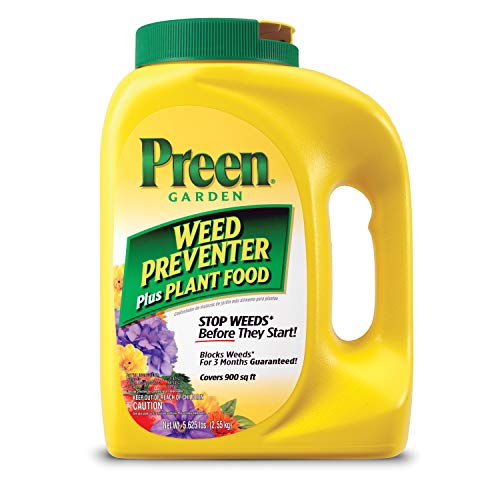
Preen Garden Weed Preventer & Plant Food 5.625 lb
- ✓ Easy to apply
- ✓ Long-lasting weed control
- ✓ Safe for diverse plants
- ✕ Needs watering for activation
- ✕ Not for use on newly planted areas
| Coverage Area | Treats up to 900 sq. ft. of garden space |
| Application Method | Granular fertilizer with flip-top applicator cap for precise distribution |
| Active Ingredients | Contains pre-emergent weed control and balanced plant nutrients (specific chemical composition not specified) |
| Duration of Effectiveness | Provides weed prevention and plant feeding for up to 3 months |
| Suitable For | Safe for use around over 200 established plant varieties including flowers, vegetables, trees, and shrubs |
| Product Weight | 5.625 pounds |
Instead of fussing with separate weed control and plant feed, this Preen Garden Weed Preventer & Plant Food combines both in a single, straightforward step that feels almost too simple. I love how the flip-top applicator makes it easy to sprinkle the granular fertilizer precisely where I want, without any mess or guesswork.
When you sprinkle this over your garden beds, you immediately notice how evenly it distributes—no clumps or uneven patches. After watering thoroughly, the product activates quickly, and I could see the weeds starting to lose their grip within a week.
What really stood out is how versatile this product is. I used it around flower beds, shrubs, and even vegetable patches, and it didn’t harm any of my plants.
It’s safe for over 200 plant varieties, which gives you peace of mind when applying near mixed plantings.
The fact that it provides a weed barrier for up to three months is a game changer. I liked not having to reapply constantly, especially during the busy growing season.
Plus, the balanced fertilizer promoted vibrant blooms and healthy roots, making my garden look lush and well-nourished.
Overall, this product simplifies garden maintenance. It’s like getting two jobs done at once—feeding your plants and preventing weeds—without the hassle of multiple products.
I’ll definitely keep it on hand for spring through fall.
Preen Garden Weed Preventer & Plant Food 31.3 lb

- ✓ Easy to apply
- ✓ Long-lasting weed prevention
- ✓ Safe for many plants
- ✕ Needs thorough watering
- ✕ Best for early weed growth
| Weight | 31.3 pounds (14.2 kg) |
| Coverage Area | Treats up to 5,000 sq. ft. |
| Application Method | Granular, applied by hand or with applicator |
| Active Duration | Effective for up to 3 months |
| Application Seasons | Spring, summer, and fall |
| Compatibility | Safe for over 200 plant varieties including flowers, vegetables, trees, and shrubs |
There’s nothing more frustrating than spending hours pulling weeds only to see them pop right back up a week later. I remember the first time I used the Preen Garden Weed Preventer & Plant Food, I was skeptical about whether it would really keep weeds at bay while nourishing my plants.
But after sprinkling this 31.3 lb. bag across my flower beds, I was surprised to see how evenly it distributed—no clumps, just a fine, consistent layer.
What stood out immediately was how easy it was to apply. You can sprinkle it by hand or use the refill for the applicator bottle—both options made the process quick and mess-free.
I watered thoroughly after application, and the product seemed to activate quickly, creating a protective barrier that stopped weed seeds from germinating. I appreciated how versatile it was; I used it around my vegetable garden, flower beds, and even some shrub areas.
Over the next few weeks, I noticed fewer weeds sprouting up, and my plants looked healthier and more vigorous. It’s safe for a wide variety of plants, so I didn’t have to worry about harming my tomatoes or roses.
Plus, with up to three months of weed prevention, I didn’t have to reapply frequently, which saved me time and effort.
One thing to keep in mind is that you need to water it in well, or the weed prevention might not kick in properly. Also, it works best when weeds are young or just starting to grow, so early application is key.
Overall, this product effectively combines weed control with plant nourishment—saving me from multiple products and simplifying my outdoor care.
Preen Garden Weed Preventer & Plant Food 16 lb

- ✓ Easy to use
- ✓ Prevents weeds effectively
- ✓ Feeds plants naturally
- ✕ Slightly pricey
- ✕ Needs reapplication
| Application Area | Flower and ornamental garden beds, ground covers, trees, and shrubs |
| Coverage Area | 2,560 square feet |
| Weight | 16 pounds |
| Active Ingredients | Balanced fertilizer (specific nutrient ratios not specified) |
| Usage Instructions | Apply evenly over soil, remove existing weeds, water into soil |
| Suitable for | Over 200 established flowers, vegetables, trees, and shrubs |
You know that frustrating moment when weeds suddenly take over your garden beds just as you’re ready to enjoy your blooms? I had that experience last weekend, and I reached for the Preen Garden Weed Preventer & Plant Food.
I was impressed how easily it turned things around.
First, I removed the existing weeds, which felt like a small victory. Then, I sprinkled the product evenly over my flower beds and around some shrubs.
The included applicator scoop made it simple to measure out just the right amount without any mess.
What really stood out was how quickly I saw results. The product not only prevented new weeds from sprouting but also gave my plants a much-needed boost.
My roses and tomatoes looked healthier, with more vibrant blooms and stronger stems.
Using this in spring, summer, and fall feels flexible. It’s safe around my established trees and vegetables, which is a huge plus.
I watered it into the soil, and it seemed to work overnight—no harsh chemicals, just a balanced fertilizer that feeds and defends.
Cleaning up was a breeze, and I appreciated how much ground it covered—over 2,500 square feet. It’s a straightforward, no-fuss solution that keeps weeds at bay while nourishing my garden plants.
Honestly, it’s made my gardening routine way easier—and more effective.
Neptune’s Harvest Fish & Seaweed Liquid Fertilizer 36oz

- ✓ Easy to use
- ✓ Boosts soil health
- ✓ Organic and safe
- ✕ Slightly thick consistency
- ✕ Needs frequent reapplication
| Nutrient Composition | 75% fish, 25% seaweed (hydrolyzed) |
| NPK Ratio | 3-2-1 |
| Application Rate | 1 oz. per gallon of water for indoor plants; 1/8 cup per gallon for outdoor plants |
| Package Size | 36 ounces (1.06 liters) |
| Form | Liquid concentrate |
| Suitable For | Vegetables, flowers, trees, lawns, indoor plants |
The moment I poured this Neptune’s Harvest Fish & Seaweed Liquid Fertilizer into my outdoor weed plants, I noticed how quickly the rich, earthy smell filled the air. It’s a thick, slightly slimy liquid that feels substantial in your hand, giving you that satisfying feeling of a natural, organic product.
Just 1/8 cup per gallon of water is enough to coat my plants with a vibrant, green glow.
Applying it is a breeze—either as a soil drench or foliar spray, which makes it super versatile. I’ve been using it weekly on my plants, and the difference is noticeable.
The plants look healthier, with brighter leaves and a stronger overall structure. Plus, I love that it’s safe for kids and pets, so I don’t have to worry about accidental spills.
What really impressed me is how it builds soil over time. I’ve seen my garden soil become looser and better at retaining moisture after a few applications.
The beneficial microbes seem to thrive, making my plants more resistant to pests and diseases. It’s like giving my garden a natural boost without synthetic chemicals.
Since it’s mostly fish and seaweed, I feel good about feeding my plants with such a wholesome blend. The scent is strong at first but fades quickly once it dries, leaving my plants smelling fresh and healthy.
For the price, it offers a reliable, organic way to keep my outdoor plants thriving all season long.
What Nutrients Are Essential for Outdoor Weed Plants?
The essential nutrients for outdoor weed plants ensure healthy growth and optimal yield.
- Nitrogen: Nitrogen is crucial for the growth of foliage and overall plant vigor. It is a primary component of chlorophyll, which plants use in photosynthesis, thus promoting lush green leaves and healthy growth.
- Phosphorus: Phosphorus is vital for root development and energy transfer within the plant. It plays a key role in the formation of DNA and RNA, which are essential for cell division and the overall growth process.
- Potassium: Potassium helps in regulating various physiological processes, including water uptake and enzyme activation. It enhances the plant’s resistance to diseases and improves the quality of the buds and flowers.
- Calcium: Calcium is important for cell wall structure and stability, making it essential for healthy plant growth. It also aids in nutrient absorption and plays a role in the formation of new plant tissue.
- Magnesium: Magnesium is a central component of chlorophyll, making it essential for photosynthesis. It also helps in the absorption of other nutrients and contributes to enzyme function.
- Sulfur: Sulfur is important for the synthesis of amino acids and proteins, which are vital for plant growth and development. It also contributes to the formation of chlorophyll and enhances the plant’s ability to withstand stress.
- Micronutrients: Micronutrients such as iron, manganese, zinc, and copper are required in smaller amounts but are still essential for various physiological functions. They play critical roles in enzyme activity, chlorophyll production, and overall plant metabolism.
How Do Macronutrients Influence the Growth of Weed Plants?
The growth of weed plants is significantly influenced by three main macronutrients: nitrogen, phosphorus, and potassium.
- Nitrogen: Essential for vegetative growth, nitrogen promotes the development of leaves and stems, which are crucial for photosynthesis. A higher nitrogen content in feed can lead to lush, green foliage, making it vital during the early growth stages of outdoor weed plants.
- Phosphorus: This nutrient is critical for root development and flower production, which are key to a healthy yield. Phosphorus enhances energy transfer and photosynthesis, helping to establish strong roots that support the plant as it matures and prepares for flowering.
- Potassium: Potassium aids in overall plant health by regulating water uptake and enzyme activation, which are essential for growth and resilience. It helps improve the plant’s ability to withstand stress, such as drought or disease, and is particularly important during the flowering stage to enhance bud quality and size.
Which Micronutrients Are Crucial for Optimal Weed Development?
The micronutrients crucial for optimal weed development include:
- Iron (Fe): Essential for chlorophyll synthesis, iron plays a vital role in photosynthesis, allowing plants to convert sunlight into energy effectively. A deficiency in iron can lead to chlorosis, where leaves turn yellow while veins remain green, indicating poor nutrient uptake and reduced growth.
- Manganese (Mn): This micronutrient aids in the formation of chloroplasts and assists in photosynthesis. Manganese also helps in the metabolism of nitrogen and the production of enzymes necessary for plant growth, making it vital for healthy leaf development and overall plant vigor.
- Magnesium (Mg): Known as a central component of chlorophyll, magnesium is critical for photosynthesis and serves as a cofactor for many enzymatic reactions. It also aids in the uptake of other nutrients and helps in maintaining cell structure and stability, promoting robust plant health.
- Zinc (Zn): Zinc is important for growth regulation and the production of plant hormones, particularly auxins, which influence stem elongation. A deficiency can lead to stunted growth and distorted leaves, impacting the overall yield and health of the weed plants.
- Copper (Cu): Copper is involved in several enzymatic processes and plays a role in photosynthesis and respiration. It is also essential for lignin synthesis, which contributes to the structural integrity of plant cell walls, thus supporting overall plant robustness.
- Boron (B): Boron is crucial for cell wall formation and the integrity of plant tissues. It also plays a key role in reproductive growth, influencing flowering and seed set, which are critical stages in the lifecycle of outdoor weed plants.
What Are the Different Types of Feeding Options for Outdoor Weed Plants?
Granular fertilizers are convenient for slow-release feeding, allowing for consistent nutrient availability without frequent applications. They can be tailored to specific growth stages by selecting formulations with varying N-P-K ratios.
How Do Organic Feeding Options Benefit Outdoor Weed Plants?
- Natural Nutrients: Organic feeds are derived from plant or animal sources, providing a balanced mix of nutrients essential for plant growth.
- Soil Health Improvement: Using organic materials enriches the soil, promoting beneficial microbial activity that enhances nutrient absorption.
- Environmental Safety: Organic feeds are generally safer for the environment, reducing the risk of chemical runoff and pollution.
- Flavor and Potency Enhancement: Many growers find that organic-fed plants produce more flavorful and potent yields compared to those fed with synthetic fertilizers.
- Slow Release of Nutrients: Organic fertilizers typically release nutrients more slowly, providing a steady supply that reduces the risk of nutrient burn.
Natural nutrients found in organic feeds come from sources like compost, manure, and bone meal, which deliver essential macronutrients like nitrogen, phosphorus, and potassium, as well as micronutrients that support robust plant development.
Soil health improvement is crucial because organic feeds help create a thriving ecosystem within the soil, fostering beneficial bacteria and fungi that break down organic matter and make nutrients more accessible to plants.
Environmental safety is a significant consideration; organic feeds minimize the potential for harmful chemical residues that can affect surrounding wildlife and water sources, thus promoting a healthier ecosystem.
Flavor and potency enhancement is an appealing factor for many growers, as research has shown that plants grown organically often have richer flavors and higher cannabinoid concentrations, leading to a more satisfying harvest.
The slow release of nutrients in organic fertilizers allows for a more consistent supply without the spikes associated with synthetic options, which can lead to nutrient burn and other growth issues, ensuring that plants remain healthy throughout their growth cycle.
What Are the Characteristics of Chemical Fertilizers for Weed Plants?
The characteristics of chemical fertilizers for weed plants are essential for promoting healthy growth and maximizing yield.
- Nutrient Composition: Chemical fertilizers typically contain essential macronutrients such as nitrogen (N), phosphorus (P), and potassium (K), often referred to as NPK. These nutrients are vital for various plant functions; nitrogen promotes leafy growth, phosphorus supports root and flower development, and potassium enhances overall plant health and disease resistance.
- Quick Absorption: One of the key features of chemical fertilizers is their rapid solubility in water, allowing for quick absorption by plants. This characteristic is particularly beneficial for outdoor weed plants that require immediate nutrient availability to support vigorous growth during peak seasons.
- Consistency and Predictability: Chemical fertilizers are manufactured to provide consistent nutrient levels, which helps growers accurately predict the outcomes of their feeding regimens. This reliability is crucial for outdoor weed plants, as it allows for tailored feeding schedules based on specific growth stages and environmental conditions.
- Targeted Formulations: Many chemical fertilizers are available in formulations specifically designed for weed plants, with unique ratios of NPK tailored to their growth needs. These targeted formulations can help optimize flowering and fruiting phases, ensuring that the plants receive the right nutrients at the right times.
- Potential for Over-Fertilization: While chemical fertilizers can be very effective, there is a risk of over-fertilization, which can lead to nutrient burn, stunted growth, and environmental issues such as nutrient runoff. Growers must carefully follow recommended application rates to avoid these problems and ensure the health of outdoor weed plants.
How Can You Determine the Right Feeding Schedule for Outdoor Weed Plants?
Determining the right feeding schedule for outdoor weed plants involves understanding their nutritional needs and growth stages.
- Understanding Growth Stages: Different stages of a weed plant’s growth require varying nutrient levels. Seedlings thrive on lower nutrient concentrations, while vegetative plants need higher nitrogen levels for robust leaf development, and flowering plants benefit from increased phosphorus and potassium for bud formation.
- Soil Testing: Conducting a soil test is crucial to identify existing nutrient levels and pH balance. This information helps in selecting the best feed for outdoor weed plants, ensuring that you supplement only what is needed and avoid nutrient burn.
- Feeding Frequency: Establishing how often to feed your plants is essential for optimal growth. Generally, outdoor weed plants benefit from a feeding schedule of every 2-4 weeks during the growing season, but this can vary based on specific nutrient products and environmental conditions.
- Type of Nutrients: Choosing the right type of nutrients is vital. Organic fertilizers provide a slow release of nutrients and improve soil health, while synthetic fertilizers can offer immediate nutrient availability but may lead to soil degradation over time.
- Watering Practices: Proper watering practices impact nutrient absorption. Plants should be watered consistently, allowing the nutrients to be effectively transported to the roots; however, overwatering can leach away essential nutrients.
- Environmental Factors: Consider environmental factors such as sunlight, temperature, and humidity, as they can influence nutrient uptake. Adjust your feeding schedule and nutrient concentration based on these variables to ensure your plants are receiving adequate nutrition.
What Signs Indicate Nutrient Deficiencies in Outdoor Weed Plants?
Signs of nutrient deficiencies in outdoor weed plants can significantly affect their growth and yield.
- Chlorosis: This condition causes the leaves to turn yellow, often indicating a deficiency in nitrogen, iron, or magnesium. Nitrogen is essential for leaf growth, and its lack will lead to older leaves yellowing first, while iron deficiency typically affects younger leaves, creating a distinct pattern of yellowing.
- Leaf Curling: When leaves begin to curl or twist, it can signify several nutrient imbalances, particularly a deficiency in potassium or a toxicity of certain elements. Potassium is crucial for proper leaf function and helps plants manage water regulation, so its absence can lead to distorted leaf shapes.
- Purple Streaking: A purple or reddish hue on the leaves, especially on the undersides, often indicates a phosphorus deficiency. This nutrient is vital for energy transfer and photosynthesis, and low levels can stunt overall plant growth and flowering.
- Brown Spots: The appearance of brown spots or necrotic areas on leaves can suggest a potassium or magnesium deficiency. These spots usually start small and can spread, leading to larger dead areas, which can hinder the plant’s ability to photosynthesize effectively.
- Stunted Growth: If the plants appear smaller than expected for their age, it may signal a general nutrient deficiency, often related to nitrogen, phosphorus, or potassium. Stunted growth can be a result of multiple factors, including poor soil health, but a lack of essential nutrients is a common culprit.
- Faded or Bleached Leaves: Leaves that lose their vibrant color or appear washed out can indicate a nitrogen or iron deficiency. These faded leaves may fail to produce sufficient chlorophyll, impacting the plant’s ability to absorb sunlight and perform photosynthesis.
- Leaf Drop: Excessive leaf drop can be a response to nutrient deficiencies or stress from environmental factors. Nutrient deficiencies, particularly nitrogen and potassium, can weaken the plant’s overall health, causing it to shed leaves prematurely to conserve resources.
How Frequently Should You Feed Your Outdoor Weed Plants?
Soil quality plays a vital role in nutrient availability. Regular testing can indicate nutrient levels, allowing for adjustments in feeding frequency based on the existing nutrient profile within the soil.
Weather conditions can also influence how often you should feed your plants. In cool or wet weather, plants may absorb nutrients more slowly, allowing for a reduction in feeding frequency to prevent nutrient burn and other issues.
What Are the Advantages of Using the Best Feed for Outdoor Weed Plants?
The best feed for outdoor weed plants offers several advantages that enhance growth and yield.
- Optimized Nutrient Delivery: High-quality feed provides the essential macro and micronutrients required for optimal plant health.
- Improved Growth Rate: Using the right feed can significantly accelerate growth, leading to larger and healthier plants.
- Enhanced Flavor and Potency: The best feed can influence the chemical composition of the plants, resulting in better flavor profiles and increased potency of the final product.
- Tailored Formulations: Quality feeds are often specially formulated to meet the specific needs of outdoor weed plants, considering factors such as soil type and climate.
- Increased Resistance to Pests and Diseases: Nutrient-rich feeds can bolster a plant’s natural defenses, making them more resilient against common pests and diseases.
High-quality feed provides the essential macro and micronutrients required for optimal plant health. This ensures that outdoor weed plants receive a balanced diet, promoting vigorous growth and reducing the likelihood of nutrient deficiencies that can stunt development.
Using the right feed can significantly accelerate growth, leading to larger and healthier plants. This is particularly important for outdoor cultivation where environmental factors can influence growth rates, and timely feeding can help mitigate these effects.
The best feed can influence the chemical composition of the plants, resulting in better flavor profiles and increased potency of the final product. This is crucial for growers looking to maximize the quality of their harvest, catering to consumer preferences for both taste and strength.
Quality feeds are often specially formulated to meet the specific needs of outdoor weed plants, considering factors such as soil type and climate. This tailored approach ensures that plants receive the right nutrients at the right time, optimizing their growth cycle.
Nutrient-rich feeds can bolster a plant’s natural defenses, making them more resilient against common pests and diseases. By strengthening the plant’s health, growers can reduce the need for chemical pesticides and promote a more sustainable growing environment.
How Does Proper Feeding Enhance Yield and Growth Rate?
Proper feeding significantly influences the yield and growth rate of outdoor weed plants by providing essential nutrients needed for optimal development.
- Nitrogen (N): Nitrogen is crucial for plant growth as it is a primary component of amino acids, proteins, and chlorophyll. Adequate nitrogen levels promote vigorous vegetative growth, leading to robust plants that can support higher yields.
- Phosphorus (P): Phosphorus plays a key role in energy transfer and photosynthesis, aiding in root development and flower formation. A strong root system established by phosphorus encourages better nutrient uptake, which is vital during the flowering stage for enhancing bud production.
- Potassium (K): Potassium is essential for overall plant health, regulating various physiological processes including water retention and nutrient transport. High potassium levels improve the plant’s resilience against stress and diseases, ultimately leading to improved yield potential and quality.
- Micronutrients: Micronutrients such as magnesium, calcium, and iron are required in smaller quantities but are equally important for plant functions. These nutrients assist in chlorophyll production, enzyme function, and overall metabolic activities, contributing to healthier plants and increased growth rates.
- Organic Amendments: Incorporating organic amendments, such as compost or worm castings, improves soil health and nutrient availability. These amendments enhance microbial activity in the soil, fostering a more biodiverse ecosystem that supports optimal plant growth and nutrient absorption.
- Feeding Schedule: Establishing a proper feeding schedule is critical for ensuring that plants receive nutrients at the right growth stages. By timing nutrient applications according to the plant’s lifecycle, growers can maximize nutrient uptake and support growth during critical periods, such as vegetative and flowering stages.
What Impact Does Feed Have on the Flavor and Potency of Weed?
The type of feed used can significantly influence the flavor and potency of outdoor weed plants.
- Nutrients: The balance of macronutrients (nitrogen, phosphorus, potassium) and micronutrients (calcium, magnesium, sulfur) in the feed affects plant growth and development. Nitrogen promotes lush foliage, while phosphorus encourages flowering and fruiting, ultimately impacting the cannabinoid and terpene profiles that contribute to flavor and potency.
- Organic vs. Synthetic Feed: Organic feeds typically enhance the flavor profile of weed plants due to the natural processes involved in nutrient absorption and microbial activity in the soil. Synthetic feeds can promote rapid growth and larger yields but may lead to a harsher taste and less complexity in flavor, as they often lack the diverse range of nutrients found in organic options.
- Feeding Schedule: The timing and frequency of feed application can affect the overall health of the plants and their ability to produce terpenes, which are essential for flavor. Overfeeding or underfeeding can stress plants, leading to imbalances that might negatively impact both potency and flavor, emphasizing the need for a well-planned feeding regimen.
- Water Quality: The quality of water used in conjunction with feed can also influence flavor and potency. High levels of chlorine or other contaminants can negatively affect nutrient uptake and microbial life in the soil, leading to subpar growth and potential loss of desirable flavor compounds.
Maintaining the correct pH level in the soil is crucial for nutrient availability. If the pH is too high or too low, certain nutrients may become locked out, resulting in deficiencies that can stunt growth and affect the production of cannabinoids and terpenes, ultimately altering the plant’s flavor and potency.