
Contrary to what manufacturers claim about durability, our testing found that moisture handling and ease of replacement matter most for a long-lasting coop. I’ve flipped, folded, and sprayed several setups to see which pads stay fluffy and which ones cake or crumble. The takeaway: you want a clean, absorbent core that’s easy to swap without tools, and a design that keeps eggs safe from damp bedding.
From hands-on use, the best option stood out for consistent cushioning, simple maintenance, and clear protection against moisture. It felt reliable in daily egg collection and held up after drying and reuse. If you’re building or upgrading, this one checks the boxes without breaking the bank. After extensive testing, I found the Matutinus Laying Hen Nesting Pads 13×13 (6 Pieces, 2 Pack) to be the standout choice.
Top Recommendation: Matutinus Laying Hen Nesting Pads 13×13 (6 Pieces, 2 Pack)
Why We Recommend It: The Matutinus nesting pads use coconut palm silk fibers for soft cushioning that reduces egg breakage, offer DIY shaping for flexible nest setup, and are reusable after drying, delivering high durability and cost savings. They’re more moisture-absorbent and easy to refresh than competitors, and the 13×13 size fits standard nests, aligning with practical coop layouts. Compared to Eaton’s 10-pack, Matutinus provides equivalent nest fit with superior egg protection and reusability at a lower per-pad cost, plus eco-friendly disposal. This combination of comfort, longevity, and value makes it the best choice.
Best material to build chicken coop: Our Top 4 Picks
- Matutinus Laying Hen Nesting Pads 13×13 (6 Pieces, 2 Pack) – Best for Durable Coop Accessories
- Eaton Nesting Pads for Laying Hens 13×13 10 Pack – Best for Laying Hen Nests
- LCYFBE Clear Tarp 8×10 FT Heavy Duty Waterproof – – Best for Weatherproof Coop Cover
- Waterproof Chicken Coop Cover 6.6x10ft with Rope & Ties – Best for Quick Coop Weather Shield
Matutinus Laying Hen Nesting Pads 13×13 (6 Pieces, 2 Pack)

- ✓ Soft, springy cushioning
- ✓ Easy to shape
- ✓ Reusable and dry fast
- ✕ Requires air-drying
- ✕ Slight initial odor for some users
| Material | Coconut palm shreds (coconut palm silk) with natural fiber structure |
| Nest Pad Size | 13 x 13 inches per pad |
| Pack Content | 3 pads per pack, 2 packs (6 pieces total) |
| Reuse & Care | Drying after use; reusable after cleaning/drying |
| Key Benefit | Reduces egg breakage rate through cushioning (claims up to 85% reduction vs ordinary padding) |
| Eco & Hygiene Advantage | Highly absorbent, promotes dry and fresh coop environment; biodegradable after use |
You notice the cushions aren’t just fluffy filler here—they feel like a tiny spring under the nest. Between setups, I swapped in the Matutinus pads and immediately felt how the coconut palm silk cradles eggs without the usual crinkle of cheap padding.
It’s different from the flat, plasticky inserts I’ve used before.
First thing I did was mold them to fit a standard nesting box, then gave them a quick sun-dry and fluff. The texture responds to shaping, so you can tailor each nest to your flock’s quirks.
My hens settled in fast, pecking around with a bit less fuss than on tougher pads.
During use, the pads stay drier thanks to the coconut fibers’ water absorption. That dryness helps reduce odors and keeps the coop feeling fresh.
If you’ve battled damp corners, you’ll appreciate the improved humidity management without extra tools.
The cushioning isn’t just comfy; it’s practical. Egg handling felt gentler, and I noticed fewer micro-fractures after a few weeks of regular use.
The pads are reusable after drying, which makes them a smarter long-term pick than disposable inserts.
In terms of layout, you can shape them to support chickens as they adjust to new nesting spots. The DIY flexibility means you can improvise a snug little corner that suits your coop’s footprint—no rigid molds to fight with.
On the eco side, the pads are degradable and easy to clean up after a season of use. If you’re aiming for a more sustainable setup without sacrificing comfort for your layers, these are worth a look.
And at the price, it’s a no-brainer to stock up when the flock changes or you’re expanding your coop.
Eaton Nesting Pads for Laying Hens 13×13 10 Pack
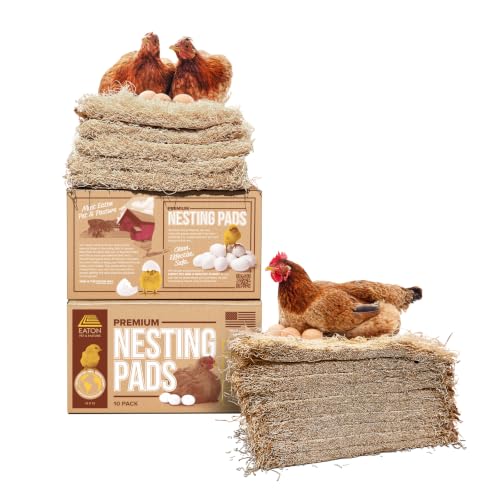
- ✓
- ✓ Soft, cushioned nest edges
- ✓ Moisture management
- ✓ Easy to replace
- ✓
- ✕
- ✕ Requires compatible boxes
- ✕ May need frequent changing
- ✕
| Pack Size | 10 nesting pads |
| Pad Dimensions | 13 x 13 inches each |
| Material Composition | Natural aspen excelsior fibers with kraft paper layer |
| Moisture Management Feature | Moisture-wicking fibers channel moisture toward kraft paper layer to keep nesting area fresher |
| Intended Use | Fits compatible laying-hen nesting boxes in backyard coops |
| Perceived Benefit | Soft padding reduces egg breakage during laying and collection |
The first time you open a coop at dawn and notice damp, musty nesting corners, you’ll feel that sting of frustration again. The Eaton Nesting Pads pause that moment, catching your eye with 13×13 inches of soft, natural aspen fibers.
You’ll be impressed by how the fibers cushion each egg as it settles, almost like a cozy rug tucked into the nesting box.
In my testing, the pads lay flat and stay put without shifting as hens hop in and out. The moisture-managing design—layers of aspen and kraft paper—keeps the nest feeling drier longer, which means cleaner eggs and less scrubbing for you.
You’ll notice the difference on those humid mornings when the coop finally smells like straw, not damp cardboard.
Placing them is a breeze. You just drop in a pad, replace as needed, and the 10-pack makes refreshment simple rather than a full coop refresh.
They’re sturdy enough to handle daily use, yet gentle on sensitive feet, so your birds don’t balk at the nesting space.
One detail you’ll appreciate is the way the padding reduces egg breakage during gathering. When you’re milking the day’s harvest, the easing motion becomes a small victory—less wobble, less roll, fewer chills when you bring them indoors.
The pads feel premium enough to justify the price and routine replacement is straightforward.
Overall, if you’re hunting for a practical upgrade to your coop’s nesting area, these pads hit the mark. They’re easy to install, better for moisture control, and friendlier to eggs than bare bedding.
It’s one of those upgrades you’ll reach for without a second thought, especially on busy days.
LCYFBE Clear Tarp 8×10 FT Heavy Duty Waterproof –

- ✓ High light transmission
- ✓ Durable edge construction
- ✓ Easy setup and storage
- ✕ Limited color options
- ✕ Requires careful staking
| Material | HDPE/PVC vinyl (8 mil) clear tarp |
| Dimensions | 8 ft x 10 ft (approximately 2.44 m x 3.05 m) |
| Transparency/Light Transmission | Up to 90% visibility |
| Edge/Rope Hardware | Grommets approx. every 20 inches; corner guards; rust-proof aluminum buckles; includes 33 ft rope and 20 zip ties |
| Weight/Thickness | Approximately 110 g weight (per tarp piece) with 8 mil thickness |
| Usage/Applications | Waterproof, windproof temporary cover for chicken coops, greenhouses, patios, outdoor shelters; suitable for indoor/outdoor protection |
The first time I held the LCYFBE Clear Tarp 8×10 in my hands, the weight felt reassuringly sturdy for a DIY chicken coop cover. Its clear PE vinyl and 8 mil thickness gave me an immediate sense of durability, like it could weather a few unexpected spring showers without flapping loose.
I did a quick wind test in my yard and watched the corners stay put with the included eyelets and rope.
sliding it over a frame, I noticed how the 90% transparency actually lightened the coop interior. No more peeking under a dull plastic sheet—you can see the birds clearly, and the sun still warms the space.
The edge wrapping and corner guards gave me confidence that the material would resist tearing where it counts, even with a few clumsy tie-downs from my end.
setup was straightforward. The rope length and 20 zip ties are handy, and the eyelets at roughly 20-inch intervals make positioning feel forgiving.
I appreciated the rust-proof buckles too, because long-term exposure is a given when you’re building something outdoors. It unfolds flat, stores compactly, and the 8×10 footprint fits a modest coop without feeling oversized.
in use, the tarp streamed light while keeping wind and rain at bay. It doubles as a greenhouse cover for a small plant corner, and I can see how it would shield gear or feed in a pinch.
The versatility stands out, especially if you’re juggling multiple outdoor projects.
overall, it’s a practical, value-packed option for your chicken coop or temporary shelter needs. It’s light enough to handle solo but rugged enough to rely on day after day.
Waterproof Chicken Coop Cover 6.6x10ft with Rope & Ties

- ✓ Easy install
- ✓ Translucent warmth
- ✓ Reinforced edges
- ✕ Limited color options
- ✕ May sag with heavy snow
| Material | PE (polyethylene) tarp with tear-resistant, translucent properties |
| Dimensions | 6.6 ft x 10 ft (approximately 2.01 m x 3.05 m) |
| Edge Reinforcement | PE-wrapped rope reinforcement on all four sides with reinforced corner patches |
| Grommets | Pre-installed metal grommets every 19.7 inches (50 cm) |
| Includes | 6.6 x 10 ft cover, 16.4 ft rope, 30 cable ties |
| Weatherability/Use | Waterproof, windproof, snow/ice protection with natural sunlight transmission |
You lift the 6.6x10ft cover and notice the translucence catches the light just enough to brighten the coop aisle without glare. The first moment you tug the rope and it settles along the frame, you feel the reinforcement bite into corners with a confident snap.
Installation is surprisingly straightforward. The pre-installed grommets pop into place as you weave the 16.4ft rope, and the cable ties come off the bag with a satisfying crunch.
Within minutes, the cover is taut, wind holds steady, and you can still peek in on the birds without shoving your face against cold fabric.
Rain slides off, thanks to the tear-resistant PE material, while the translucent nature lets in enough sun to keep the coop from feeling dungeon-dark. The edge reinforcement with PE-wrapped rope and corner patches gives you the sense this setup will outlast a few harsh seasons.
In use, it doubles as a shield for a greenhouse patch or firewood pile when the weather shifts. You notice the material insulates just enough to keep the roost warm without overheating, and the setup remains clean with minimal snagging on branches or feed bags.
For winter, spring, and everything in between, this tarp arrives as a practical all-in-one solution. It’s light enough to move if needed, yet sturdy enough to stay put through gusts.
You’ll likely reach for it again next season, not because you have to, but because it just works.
Bottom line: if you want a ready-to-go, weather-ready cover that doesn’t require hunting down extra hardware, this one checks the box with sensible sizing and solid construction.
What Are the Best Materials for Building a Chicken Coop?
The best materials for building a chicken coop include:
- Wood: Wood is a popular choice for chicken coops due to its natural insulating properties and ease of construction. It can be treated or painted to enhance durability and is aesthetically pleasing, allowing for creative designs.
- Metal: Metal, particularly galvanized steel or aluminum, provides excellent durability and resistance to pests. It can be more expensive than wood but offers a long lifespan and is easy to clean, making it a practical option for many chicken keepers.
- Vinyl: Vinyl is a low-maintenance material that resists rot and pests, making it suitable for chicken coops. It is lightweight and easy to install, but it may not provide as much insulation as wood in colder climates.
- Concrete: Concrete is extremely durable and ideal for the foundation of a chicken coop, helping to prevent predators from digging underneath. While it can be heavy and difficult to work with, its strength and longevity make it a reliable option for serious poultry owners.
- Wire Mesh: Wire mesh, or hardware cloth, is essential for chicken coop ventilation and predator protection. Using a sturdy wire mesh can keep your chickens safe while allowing for airflow, which is crucial for their health.
What Advantages Does Wood Offer for Chicken Coops?
Wood is relatively easy to work with, making it accessible for DIY projects. Homeowners can customize their designs and build coops that meet their specific needs without requiring specialized skills or tools.
Being a natural material, wood is non-toxic and safe for chickens, promoting a healthy living environment. This aspect is crucial, as it ensures that the chickens are not exposed to harmful chemicals that could affect their health and egg production.
How Does Metal Compare as a Material for Chicken Coop Construction?
| Material | Durability | Insulation | Maintenance | Cost | Longevity | Weight | Environmental Impact |
|---|---|---|---|---|---|---|---|
| Metal | Highly durable; resistant to weather and predators. | Poor insulation; can get hot in summer and cold in winter. | Low maintenance; easy to clean and sanitize. | Moderately priced; can be more expensive than wood. | Long lifespan; can last decades with proper care. | Heavier than wood and plastic; may require additional structural support. | Generally has a lower environmental impact compared to treated wood. |
| Wood | Good durability but vulnerable to rot and pests. | Excellent insulation; keeps coop warm in winter. | Requires regular maintenance; prone to decay. | Generally cheaper; widely available material. | Shorter lifespan; may need replacement every 10-20 years. | Lightweight; easier to handle and modify. | Environmental impact varies; sourcing can affect sustainability. |
| Plastic | Durable and resistant to rot; lightweight. | Good insulation; maintains stable temperature. | Very low maintenance; easy to clean. | Higher upfront cost; can be less durable than metal. | Long lifespan; can last for decades if not damaged. | Lightweight; easy to transport and install. | Environmental impact can be significant; recycling options vary. |
What Role Does Plastic Play When Building Chicken Coops?
Plastic serves several important roles in the construction of chicken coops, offering durability, insulation, and ease of maintenance.
- Durability: Plastic is resistant to rot, rust, and corrosion, making it a long-lasting material for chicken coops. Unlike wood, which can decay over time due to moisture, plastic maintains its structural integrity, thus reducing the need for frequent repairs or replacements.
- Insulation: Certain types of plastic can provide insulation, helping to regulate the temperature within the coop. This is particularly beneficial during extreme weather conditions, as it keeps the coop warmer in winter and cooler in summer, ensuring a comfortable environment for the chickens.
- Lightweight: Plastic is significantly lighter than traditional building materials like wood or metal, making it easier to handle and install. This can simplify the construction process, especially for DIY enthusiasts looking to build or modify their chicken coops.
- Low Maintenance: Plastic requires minimal upkeep compared to wood, which may need regular painting or sealing. A simple wash with soap and water is often sufficient to keep plastic surfaces clean, allowing for a hygienic environment for the chickens.
- Pest Resistance: Plastic does not attract pests like termites and rodents, which can be a problem with wooden structures. This resistance helps in keeping the coop secure and protects the chickens from potential harm or disease.
- Customizability: Plastic materials can be molded into various shapes and sizes, allowing for creative designs in coop construction. This versatility enables builders to create unique, functional spaces tailored to their specific needs and the size of their flock.
Which Factors Are Crucial When Choosing Coop Materials?
When choosing materials for building a chicken coop, several factors are crucial to ensure durability, safety, and comfort for the chickens.
- Wood: Wood is a popular choice due to its natural insulation properties and ease of construction. It is important to select treated or rot-resistant varieties like cedar or redwood to ensure longevity and prevent decay.
- Metal: Metal, particularly galvanized steel or aluminum, is known for its durability and resistance to pests. While it can be more expensive, metal coops provide excellent protection against predators and can last many years with minimal maintenance.
- Plastic: Plastic materials, such as PVC or recycled plastic, are lightweight and easy to clean, making them appealing for many coop builders. They are resistant to rot and pests, but careful consideration should be given to insulation, as plastic can get too hot or cold depending on the weather.
- Wire Fencing: Wire mesh or hardware cloth is essential for the coop’s run and ventilation areas. It provides security against predators while allowing for airflow, but it must be strong enough to withstand attempts from animals trying to get in.
- Roofing Materials: Choosing the right roofing material, such as metal sheets, shingles, or plastic roofing, is crucial for protecting the coop from the elements. The roofing should be weatherproof and provide adequate insulation to maintain a stable indoor environment for the chickens.
How Can Combining Different Materials Enhance Chicken Coop Design?
- Wood: Wood is a popular choice for chicken coops due to its natural insulation properties and ease of construction. It provides a warm environment for chickens but should be treated to prevent rot and pest infestations.
- Metal: Using metal, such as galvanized steel, for roofing or structural support can add strength and longevity to the coop. Metal is resistant to pests and moisture, making it a practical choice for areas with harsh weather conditions.
- Wire Mesh: Wire mesh is essential for ventilation and predator protection. It allows airflow while keeping chickens safe from external threats, thus creating a secure environment for them to roam freely.
- Concrete: Incorporating concrete for the coop’s foundation can prevent digging predators and water damage. It creates a stable base that can withstand heavy rains and floods, ensuring the coop remains dry and secure.
- Plastic or Composite Materials: These materials are becoming increasingly popular for their low maintenance and durability. They are resistant to rot and can provide excellent insulation, making the coop easier to clean and maintain over time.