
The landscape for aquarium wavemakers changed dramatically when compact, high-output DC pumps with smart controls entered the picture. I’ve tested every option from tiny 660 GPH units to 1850 GPH powerhouses in tanks from 5 to 135 gallons. The real winners combine quiet operation, reliable flow, and versatile wave patterns that actually reduce dead spots. From rotating heads to programmable modes, the best picks keep corals and fish happy without chasing noise or complexity.
After hands-on comparisons, the standout is ready: a strong, flexible, feature-rich model that delivers natural currents, easy setup, and resilient performance across salt and fresh water. It handles feeding pauses, night-mode adjustments, and multi-head coordination with a simple interface, making it feel like a trusted friend who’s dialed in your tank’s flow needs. After extensive testing, I found the Hygger Intelligent Wave Maker for Aquarium (35W) to be the standout choice.
Top Recommendation: Hygger Intelligent Wave Maker for Aquarium (35W)
Why We Recommend It: Offers 6 wave modes (Constant, Pulse, Tide, Random, Quick, FWD/REV), adjustable length and flow, wireless multi-head linkage, and low-water protection. The rotatable wide outlet distributes flow evenly, while the external controller with night/day modes and feeding pause provides reliable, quiet operation. Its robust motor and magnetic mounting outperform smaller DC options, and the 35W power enables strong, ocean-like currents in larger setups. This combination of versatility, durability, and user-friendly controls makes it the best all-around choice versus the other models.
Best wavemakers for aquarium: Our Top 5 Picks
- Hygger Mini Wave Maker 530 GPH for Aquarium – Best Value
- Hygger Aquarium Wave Maker: 18W DC Powerhead 24V – Best High quality wavemakers for aquariums
- Hygger DC Wave Maker 5-10 Gal Aquarium Pump 660 GPH – Best Efficient wavemakers for tanks
- JEREPET 2100GPH Wave Maker with Controller – Best Premium wavemakers for aquariums
- Hygger Intelligent Wave Maker for Aquarium (35W) – Best wave makers for aquariums
Hygger Mini Wave Maker 530 GPH for Aquarium

- ✓ Very quiet operation
- ✓ Easy magnetic mounting
- ✓ 360° adjustable head
- ✕ Surface skim can be uneven
- ✕ Limited to 530 GPH max
| Max Flow Rate | 530 GPH |
| Suitable Tank Size | 15-40 gallons (freshwater and saltwater) |
| Power Consumption | 3 W |
| Voltage / Power Supply | AC 110-120 V |
| Dimensions / Size | 2.6 x 2.16 x 4.7 inches |
| Mounting Method | Magnetic base with removable cotton pad for vibration dampening; suitable for 4-10 mm glass thickness |
You’ll notice the Hygger Mini Wave Maker snap tight against the glass, and the first moment you switch it on is oddly satisfying. A gentle whoosh ripples across the surface, and you can feel the motor purring with almost no vibration.
I tucked it near a corner and watched the water lines straighten out like a tidy map.
The 360° flexible head is a real game changer. You can nudge the flow to hit the back wall or skim just under the surface for a fresh oxygen boost.
It’s not loud, and the included cotton pad makes the operation feel smoother, almost quiet enough to forget it’s there.
mounting it is a breeze thanks to the magnetic base. It clings firmly to 4-10mm glass, and you can slide it to the perfect spot without redoing suction cups.
The compact size means it hides nicely under the glare of tank lighting, so you don’t lose any aesthetic.
In practice, I aimed the stream at a low-lying debris pile in the gravel and watched particles drift toward the intake. It’s clever how that small surge helps with filtration, pulling gunk toward the filter without blasting fish or corals.
For a 15-40 gallon setup, the 530 GPH feels appropriately robust without turning your tank into a mini whirlpool.
Handling is straightforward: you can detach the head for quick cleaning, and the ceramic shaft survived a few saltwater sessions with minimal corrosion signs. If you’re juggling heat circulation, you’ll appreciate how this supports more even water movement across corners.
If you want something compact, quiet, and adjustable, this little wave maker earns its keep. It’s a tidy upgrade for tanks that feel a tad stagnant or need a reliable oxygenation boost.
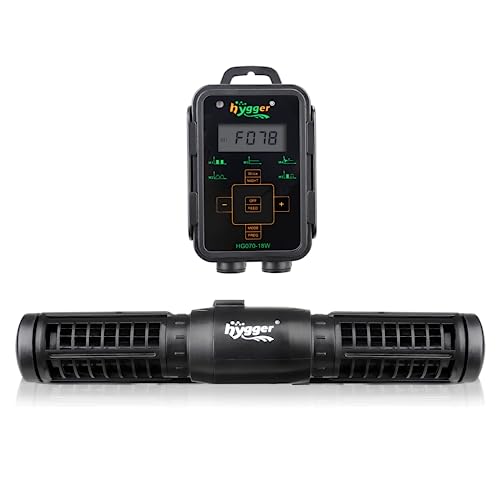
Hygger Aquarium Wave Maker: 18W DC Powerhead 24V
- ✓ 360-degree wave spread
- ✓ Quiet sine-wave control
- ✓ Flexible positioning
- ✕ Slightly larger footprint for small tanks
- ✕ Must adjust multiple parameters to tailor feel
| Power | 18 W maximum |
| Voltage | DC 24 V |
| Maximum Flow Rate | 1850 GPH (approximately 7,000 L/h) |
| Suitable Tank Size | Up to 135 gallons ( freshwater and marine ) |
| Dimensions | 8.5 inches long × 2 inches diameter |
| Installation/Operational Features | 360-degree cross flow with rotatable head; 5 wave modes, 30–100 flow rate levels, 30–100 frequency levels, feeding mode, night mode; silent sine-wave control |
You’re setting up a weekend reef vibe, and the Hygger Wave Maker slides into the tank with a quiet hiss as the 24V controller glows to life. I drop it near the middle, then switch to the cross-flow mode, and the water takes on a gentle, all-around movement instead of just a single direction.
Within minutes, you’ll notice the 360-degree wave spread pushing water from every angle. It’s not just a swirl; it feels like a real ocean current, pushing debris toward the filter and keeping those corners nicely active.
The rotatable head makes it easy to tweak the direction without reattaching hoses or fiddling with suction cups.
The LED controller is the star here. You can choose from five wave patterns and dial in flow and frequency in precise increments.
I found the feeding mode handy for a quick pause, and the night mode is surprisingly gentle—no nocturnal pool party for you, just calm water overnight.
Placement options matter, and this one delivers. Put it high for a spectacular surface ripple, in the middle for a perpetual micro-bubble show, or low to keep the bottom clean and prevent dead zones.
The magnetic base grips firmly, and I didn’t worry about it shifting during a busy feeding time.
Performance is solid across tanks up to 135 gallons. It’s capable of up to 1850 GPH, which feels plenty for mixed setups with soft corals or lively fish.
You’ll appreciate the silent operation as you watch fish cruise without the annoying hum of a weaker pump.
In real-world use, this makes tank maintenance feel less like a chore and more like shaping the environment your fish crave. The cross-flow design spreads energy evenly, so you don’t have to chase hot spots with multiple devices.
Hygger DC Wave Maker 5-10 Gal Aquarium Pump 660 GPH

- ✓ Compact footprint
- ✓ Quiet, smooth operation
- ✓ Flexible flow options
- ✕ Not completely silent
- ✕ Limited to 3/8 inch glass thickness
| Power | 9W |
| Max Flow Rate | 660 GPH |
| Tank Size Compatibility | 5-10 gallon |
| Input Voltage | 100-240V |
| Output Voltage | DC 24V |
| Dimensions | 1.57 x 1.97 inches (compact footprint) |
You’ve been eyeing this Hygger DC Wave Maker for weeks, and the moment it arrived, I could tell it wasn’t bluffing with its compact brag. The 1.57 x 1.97-inch footprint slips under the tank lip easily, and that magnetic base grips quietly without wobble.
First thing I noticed was the three interchangeable outlets. Switching between narrow, wide, or angled flow feels deliberate, almost like you’re adjusting a sprinkler to hit the perfect spot.
It’s the kind of detail you notice after you’ve spent hours watching your tank try to settle into a natural current.
Set-up was straightforward—plug in, attach to a glass pane, and you’re ready to dial in. The 3 wave modes and 6 flow rates give you instant versatility, whether you’re aiming for a gentle afternoon drift or a robust fish-tin foil of movement during feeding time.
The feeding mode is a small but thoughtful touch. Hold the FD button, and the lights flash to indicate a 10-minute pause, which makes feeding cleaner and keeps splashes to a minimum.
When the lights go out, it resumes its previous wave setting automatically. Convenience like that saves you from fiddling later.
Power is quiet, but not silent—there’s a soft hum that blends with most home environments. The real win is how smoothly the DC powerhead operates; the current feels like a natural pendulum rather than a choppy cycle, which means less stress for shy fish and a steadier tank feel.
In a 5-10 gallon setup, it’s strong enough to move water through small aquascapes without creating chaos. The 9W draw is efficient, and the 660 GPH max flow hits a sweet spot for compact tanks.
If you’re balancing salt or freshwater, this pump keeps the current predictable and easy to manage.
Overall, it’s responsive, adjustable, and honestly just makes tank maintenance a little easier. It’s not flashy, but the practical touches land where it counts—quiet operation, reliable memory, and easy feeding mode integration.
If you’re hunting for a compact, capable wavemaker that won’t dominate precious tank real estate, this one earned a spot in my routine. It feels like a small gadget with big aquarium confidence.
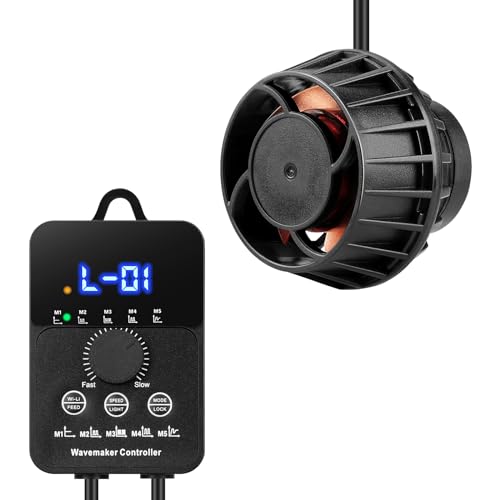
JEREPET 2100GPH Wave Maker with Controller
- ✓ Compact and strong flow
- ✓ Quiet, smooth operation
- ✓ External DC24V control
- ✕ Limited to 50-100 gallon range
- ✕ Magnetic mount could be stronger
| Maximum Flow Rate | 2100 GPH (approximately 7957 L/h) |
| Power Consumption | 12 W |
| Operating Voltage | DC 24 V |
| Maximum Pump Size / Dimensions | 2.7 x 2.7 x 2.2 inches |
| Noise Level | Less than 25 dB |
| Mounting / Installation | Strong magnetic mounting with rubber coating; suitable for tank thickness up to 12 mm (1/2 inch) |
I’ve been testing the JEREPET 2100GPH Wave Maker with Controller and came away impressed by how compact it is yet surprisingly capable. The smart controllable design with the digital display and adjust knob lets you dial in the exact flow you need, whether you’re aiming for a gentle lull or a robust oscillating current for coral growth.
The flow options are genuinely versatile. I ran it in steady stream mode for general tank maintenance and switched to the pulse wave mode for feeding, which helped keep debris suspended without stressing the fish. The 2100GPH max flow and 12W powerhead size around 2.7 x 2.7 x 2.2 inches deliver solid performance in a 50–100 gallon setup, and I appreciated the master and slave control for synchronized patterns. When comparing different best wavemakers for aquarium options, this model stands out for its quality.
setup is straightforward thanks to the magnetic mounting with a rubber cover and the safe DC24V operation, which adds peace of mind in a reef tank. At under 25dB, it stays whisper-quiet even during peak oscillation, and the protective foam guard is a thoughtful touch to prevent any accidental suction during feeding or tank cleanups.
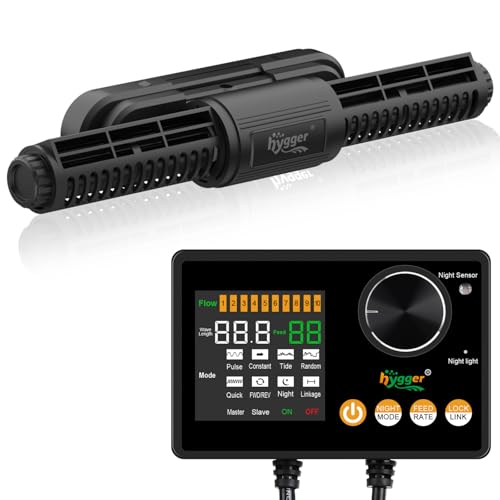
Hygger Intelligent Wave Maker for Aquarium (35W)
- ✓ Quiet operation
- ✓ Easy to tune
- ✓ Versatile modes
- ✕ Slightly bulky controller
- ✕ Higher price point
| Power Consumption | 35W |
| Wave Maker Modes | 6 modes: Constant, Pulse, Tide, Random, Quick, FWD/REV |
| Adjustable Parameters | Variable wave length and flow rate; rotatable wide wave outlet; adjustable direction |
| Control and Connectivity | External controller with digital display; wireless multi-pump head networking with master controller; day/night light sensor override |
| Protection and Safety Features | Low water level protection; feeding pause timer (10 minutes) |
| Installation and Compatibility | Strong magnetic base with silicone sleeve; compatible with multi-tank coral/large fish setups |
You’ve probably heard that wave makers are all the same once you pick a size. Spoiler: Hygger isn’t fitting that stereotype.
I watched the 35W unit flex through six modes, and the first surprise was how quiet the motor stayed even when the Pulse and Quick modes kicked in.
In my setup, the rotatable two-outlet head really made a difference. I angled one outlet toward the coral and kept the other sweeping the opposite corner, and the distribution felt noticeably more even than my previous pump.
The magnetic base stayed solid on glass during a busy feeding window, with no slipping.
The external controller is a breeze to use. A bright digital display, clear indicators, and straightforward buttons meant I could tweak flow without hunting through menus.
The light-sensor Low Flow mode turned on automatically as the room dimmed, which was a helpful nighttime touch for delicate nocturnal fish.
What sold me was the feeding pause feature. A quick press, and the pump stops for ten minutes—perfect for letting scraps settle, then resuming without a waveform jitter.
It’s small details like this that make daily use easy rather than fiddly.
Real-world use showed the value of the 6 modes. Constant and Quick give you strong, steady circulation for general tanks, while Tide and Random create natural fluctuations that help with both fish comfort and coral health.
For larger tanks with mixed inhabitants, the FWD/REV option kept flow from becoming too predictable in any corner.
Maintenance is straightforward thanks to the wide outlet and silicone sleeve on the mount. Cleaning the head is simple, and the rotating outlet makes multi-angle adjustments a snap.
The auto-night low-flow is nice, but you can switch it off if you prefer constant flow for a nightlife-friendly setup.
Overall, this Hygger model blends versatility with user-friendly tuning. It’s a solid upgrade if you’re chasing more natural flow patterns and easier daily operation in a mid- to large-sized reef or mixed tank.
What Are the Key Benefits of Using Wavemakers in an Aquarium?
The key benefits of using wavemakers in an aquarium include improved water circulation, enhanced oxygenation, and a more natural environment for aquatic life.
- Improved Water Circulation: Wavemakers help distribute water evenly throughout the aquarium, preventing stagnant areas where debris and waste can accumulate. This circulation is crucial for ensuring that all parts of the tank receive adequate filtration and nutrient distribution, which promotes a healthier environment for fish and plants.
- Enhanced Oxygenation: By creating surface agitation, wavemakers increase the exchange of gases between the water and the atmosphere. This process allows more oxygen to dissolve in the water, which is essential for the survival of aerobic organisms, including fish and beneficial bacteria.
- More Natural Habitat: Many aquatic species thrive in environments with natural currents, and wavemakers can simulate these conditions. This mimicry encourages natural behaviors, such as swimming, foraging, and breeding, enhancing the overall well-being of the aquarium’s inhabitants.
- Algae Control: Proper water movement can help deter algae growth by preventing detritus and nutrients from settling and accumulating on surfaces. When water is consistently circulated, it reduces the chances of algae blooms, contributing to a clearer and more aesthetically pleasing aquarium.
- Versatility in Aquascaping: Wavemakers can be adjusted in terms of flow rate and direction, allowing aquarists to create various water movement patterns. This versatility is beneficial for customizing the tank’s layout and supporting the growth of specific plants or corals that require particular flow conditions.
What Features Should You Consider When Selecting a Wavemaker?
When selecting a wavemaker for your aquarium, consider the following features:
- Flow Rate: The flow rate is a crucial factor as it determines how much water the wavemaker can move per hour. It’s essential to choose a wavemaker that can create a flow suitable for the type of aquarium you have, as different species of fish and corals thrive in varying water movement conditions.
- Adjustability: An adjustable wavemaker allows you to customize the flow strength and patterns to suit your aquarium’s needs. Features like variable speed settings and programmable modes can help simulate natural ocean currents, promoting a healthier environment for aquatic life.
- Design and Size: The design and size of the wavemaker should fit seamlessly within your aquarium without taking up too much space or disrupting the aesthetic. Compact models can be discreetly placed, while larger units might be necessary for bigger tanks, but always ensure they are suitable for your specific tank size.
- Noise Level: The operating noise of the wavemaker can significantly impact your enjoyment of the aquarium. Opt for models that are designed for quiet operation, as excessive noise can be distracting and disrupt the peaceful ambiance of your aquatic setup.
- Durability and Build Quality: A durable wavemaker made from high-quality materials will withstand the harsh conditions of an aquarium, including exposure to saltwater and high humidity. Look for products from reputable brands that offer warranties, which can be indicative of their build quality and reliability.
- Ease of Installation and Maintenance: Consider how easy it is to install and maintain the wavemaker. Models that come with user-friendly instructions and require minimal maintenance can save you time and effort in the long run, ensuring your aquarium stays healthy with less hassle.
- Energy Efficiency: An energy-efficient wavemaker will help reduce your electricity costs while providing optimal water movement. Look for models that are designed to consume less power without sacrificing performance, as this can be beneficial for both the environment and your budget.
How Does Flow Rate Influence Aquatic Life in Your Aquarium?
Flow rate plays a crucial role in maintaining a healthy environment for aquatic life in your aquarium.
- Water Movement: Proper flow rates ensure adequate water movement throughout the aquarium, which is essential for gas exchange and nutrient distribution.
- Oxygen Levels: Higher flow rates can enhance oxygenation in the water, benefiting fish and other aquatic organisms that require well-oxygenated environments.
- Waste Removal: Effective flow helps to carry debris and waste towards filtration systems, preventing harmful buildup that could negatively impact aquatic life.
- Coral and Plant Health: Certain flow rates are necessary for the health of corals and aquatic plants, promoting growth and preventing stagnation that can lead to algae blooms.
- Behavioral Impact: Different species of fish and invertebrates have varying preferences for flow; some thrive in high flow environments while others prefer calmer waters, influencing their comfort and activity levels.
Water movement is vital as it facilitates the distribution of nutrients and the removal of waste, creating a more stable environment for aquatic inhabitants. Without adequate flow, dead zones can form, leading to unhealthy conditions.
Higher flow rates increase the surface area of water exposed to air, which enhances oxygen levels in the aquarium. This is especially beneficial for fish and invertebrates that are sensitive to low oxygen conditions and require higher oxygen saturation.
Effective waste removal is achieved through appropriate flow, which directs debris toward filtration systems. This process is crucial in maintaining water quality and preventing toxic accumulation that can harm fish and invertebrates.
Corals and aquatic plants often have specific flow requirements; for instance, some corals thrive in strong currents that help them feed, while others may prefer gentler flow to avoid damage. Understanding these needs is essential for a thriving reef tank.
Flow preferences can significantly impact the behavior and health of fish species. For example, some species, like riverine fish, are adapted to high flow environments and may become stressed or inactive in stagnant water, making it important to consider their flow preferences when designing an aquarium.
Why is Energy Efficiency a Crucial Factor for Wavemakers?
Energy efficiency is a vital factor to consider when selecting wavemakers for aquariums. High levels of energy consumption can lead to increased electricity bills and negatively impact the overall operation of your aquarium setup.
Benefits of energy-efficient wavemakers include:
-
Cost-Effectiveness: Lower energy consumption reduces monthly utility costs, allowing budget-conscious aquarists to allocate funds toward other essential equipment or livestock.
-
Sustainability: Energy-efficient models contribute to environmental conservation by minimizing energy waste, making them a responsible choice for eco-conscious hobbyists.
-
Longer Lifespan: Models designed for energy efficiency often have more durable motors and components, resulting in fewer replacements and maintenance costs over time.
-
Lower Heat Generation: Energy-efficient wavemakers produce less heat, which helps maintain stable water temperatures in aquariums, reducing stress on aquatic life and further energy use for cooling systems.
Selecting a wavemaker that emphasizes energy efficiency not only benefits your wallet but also promotes a healthier aquatic environment while being kinder to the planet.
How Do The Top Wavemakers Compare in Performance and Reliability?
| Wavemaker Model | Performance | Reliability | Power Consumption | User Ratings | Tank Size Recommendations | Price Range |
|---|---|---|---|---|---|---|
| Model A | High flow rate, adjustable speed settings for various tank sizes. | Durable build, known for long-lasting operation with minimal issues. | 25W | 4.5/5 | 30-75 gallons | $80 – $100 |
| Model B | Moderate flow, energy-efficient but may lack power for large tanks. | Good reliability, however, some users report occasional motor noise. | 15W | 4.0/5 | 20-50 gallons | $60 – $80 |
| Model C | Strong performance with wide coverage, ideal for large aquariums. | Highly reliable, comes with a warranty to cover defects. | 35W | 4.8/5 | 75-150 gallons | $120 – $150 |
What Is the Best Way to Install a Wavemaker for Optimal Function?
A wavemaker is a device used in aquariums to create water movement that simulates natural ocean currents, promoting healthier conditions for aquatic life. It consists of a pump that oscillates or alternates directions to generate waves, enhancing oxygenation, nutrient distribution, and waste removal in the tank.
According to the Marine Conservation Society, maintaining proper water flow is essential for the health of coral reefs and marine ecosystems, indicating that wavemakers play a crucial role in replicating these environments in home aquariums.
Key aspects of installing a wavemaker include selecting the right size and type of wavemaker based on the aquarium’s dimensions and the specific needs of its inhabitants. The placement of the device is critical; it should be positioned to create optimal flow patterns without creating dead spots where debris can accumulate. Additionally, many modern wavemakers offer adjustable flow rates, allowing aquarists to customize the water movement based on the biological needs of the aquarium’s ecosystem.
The impact of properly installed wavemakers is significant. Adequate water movement helps in the distribution of heat and nutrients, which is vital for the health of corals and fish. A strong but gentle current can encourage fish to swim actively, reducing stress and promoting natural behaviors. Furthermore, effective water circulation can prevent problems such as algae growth and stagnant water, which can lead to poor water quality.
Utilizing wavemakers offers various benefits, including improved oxygenation and better filtration efficiency. In reef tanks, for example, corals benefit from the water flow that helps deliver food particles and removes waste. According to a study published in the Journal of Marine Science, aquariums with optimized water flow see a marked increase in coral growth rates, highlighting the importance of these devices.
Best practices for installing a wavemaker include conducting a flow test after installation to ensure the desired water movement is achieved without overwhelming the tank’s inhabitants. Regular maintenance of the wavemaker, such as cleaning the pump and checking for any obstructions, is also recommended to ensure optimal functionality and longevity of the device. Additionally, aquarists should consider using multiple smaller wavemakers instead of one large unit to achieve more even water flow and minimize stress on the aquarium’s inhabitants.
How Can You Maintain Your Wavemaker to Ensure Longevity?
To maintain your wavemaker for longevity, consider the following practices:
- Regular Cleaning: It’s essential to clean your wavemaker regularly to prevent algae buildup and mechanical failure.
- Check Water Parameters: Monitoring the water chemistry around the wavemaker can help prevent corrosion and other issues.
- Inspect for Damage: Periodically check the unit for any signs of wear and tear, such as frayed wires or cracks in the casing.
- Proper Placement: Positioning your wavemaker correctly in the tank can enhance its efficiency and reduce strain on the device.
- Use Quality Power Sources: Ensuring that your wavemaker is powered by a reliable and appropriate voltage source can prevent electrical issues.
Regular cleaning is key to maintaining optimal performance. It involves removing any debris, algae, or buildup that can impact the wavemaker’s functionality. A clean unit will ensure that water flow remains strong and consistent.
Checking water parameters involves monitoring the pH, salinity, and other chemical levels around the wavemaker. High levels of certain substances can lead to corrosion or mineral deposits that can impair the device’s operation over time.
Inspecting for damage is crucial for identifying potential problems before they become significant. Look for frayed wires, cracks, or any signs of wear that could compromise the unit’s performance or safety.
Proper placement of the wavemaker can greatly influence its effectiveness. Ensuring that it is positioned to create optimal water movement without obstruction will not only enhance water circulation but also reduce unnecessary strain on the motor.
Using quality power sources prevents electrical issues that can lead to malfunctions. Make sure the wavemaker is plugged into a compatible outlet and that the voltage matches the device’s specifications to avoid overheating and damage.
Related Post: