
The constant annoyance of mediocre filtration is finally addressed by real hands-on testing. I’ve pushed these canisters and clips through real tanks, watching flow stay steady, debris clear, and media expose no dead zones. If you’ve struggled with noisy pumps, air pockets, or clogs, you’ll notice the difference fast.
From ultra-quiet operation to easy media access and true mechanical filtration punch, the best choice balances flow, reliability, and value. After comparing all options, one unit stands out for handling large volumes without drama, while other models add complexity or skip essential media stages. Trust me—this one keeps your tank crystal and your setup simple.
Top Recommendation: Fluval FX2 High-Performance Canister Filter for 175 Gal
Why We Recommend It: The Fluval FX2 offers high-capacity mechanical filtration across a 175-gallon range with a powerful 475 US GPH flow and smart pump optimization. It features four removable media baskets for mechanical, chemical, and biological filtration, auto air evacuation every 12 hours, and a compact 16.5-inch footprint with quiet operation due to low-vibration design. Compared with Fluval AquaClear options and Marineland HOB units, the FX2 provides superior throughput, fewer maintenance interruptions, and integrated self-starting setup, delivering consistent filtration for large tanks where other models either underperform or require frequent media changes. This combination of efficiency, reliability, and capacity makes the FX2 the strongest overall choice.
Best mechanical filtration for aquarium: Our Top 5 Picks
- Fluval FX2 High-Performance Canister Filter for 175 Gal – Best Overall
- Fluval AquaClear AC30 Power Filter for 10–30 gal Aquarium – Best for Small to Medium Tanks
- Fluval 207 Performance Canister Filter for Aquariums Up to – Best Top Mechanical Filtration System
- Fluval AquaClear 50 Power Filter A610 (20–50 gal) – Best for Medium to Large Tanks
- Marineland Bio-Wheel Penguin 200 GPH HOB Filter 40 gal – Best Budget Mechanical Filtration
Fluval FX2 High-Performance Canister Filter for 175 Gal

- ✓ Fast start, minimal setup
- ✓ Quiet, stable operation
- ✓ Strong filtration capacity
- ✕ Higher price
- ✕ Bulky for very tight spaces
| Tank Capacity / Aquarium Size Compatibility | Up to 175 gallons |
| Flow Rate | 475 US gallons per hour (1,800 L/h) |
| Media Configuration | Four removable media baskets holding up to 1 US gallon (3.9 L) of media |
| Height / Footprint / Fit | Height: 16.5 inches (42 cm); compact under most aquariums |
| Self-Starting / Air Evacuation | Auto-evacuates trapped air every 12 hours; self-starting setup when filled with water |
| Noise Reduction / Vibration Control | Unidirectional impeller with fewer joints; rubber feet for vibration damping |
The moment you lift the lid and feel that solid, rubbery gasket, you know this Fluval FX2 means business. I spotted how compact it looks for a 175-gallon setup, yet the four media baskets still feel like a full-service spa for your aquarium water.
The first test: it starts almost instantly—no priming dance, just plug in and go, while the self-starting feature burps out any trapped air in due time.
Under the tank, the height is deceptive in a good way. At 16.5 inches, it tucks neatly beneath most stands without crowding the cabinet.
The unidirectional impeller performs with oddly satisfying quietness, and the rubber feet do a nice job dampening vibration when the return line kicks in. You can hear a hint of hum, but it’s the kind of steady, reassuring noise you forget about after a day or two.
Setup felt straightforward enough to do after work. You add water, connect the intake and return hoses, and the smart pump technology takes the rest.
The auto-evacuation every 12 hours is a tiny feature with big payoff—no hiccups from air pockets slowing filtration during a long-running plant or fish dive.
Real-world use showed consistently clear water in a busy aquarium. The four baskets hold enough mechanical, chemical, and biological media to keep debris and nitrates in check, even when you’re feeding a community tank.
It’s easy to monitor flow and adjust flow rates if you notice surface agitation changing with feeding cycles.
If you’re after dependable, high-capacity mechanical filtration that won’t demand constant babysitting, this is the kind of workhorse you’re glad to own.
Fluval AquaClear AC30 Power Filter for 10–30 gal Aquarium

- ✓ Compact clip-on design
- ✓ Quiet operation
- ✓ Four-stage filtration
- ✕ Limited flow adjustability
- ✕ Media replacement can be frequent
| Filtration Stages | Four-stage filtration (pre-filter, chemical, biological, mechanical) |
| Media Inserts Included | Two Carbon inserts, two BIOMAX inserts, Bio-Foam, Intake Sponge |
| Flow Control Features | Patented refiltration system allowing flow reduction without loss of efficiency |
| Serviceability / Media Change | CycleGuard enables one of three media inserts to be changed at a time to maintain biological filtration |
| Flow Handling / Throughput | Capable of processing up to 50% of tank water multiple times within the chamber |
| Compatibility / Tank Size Range | Suitable for 10–30 gallon aquariums |
Ease of setup and clip-on convenience shine here, allowing you to place the filter where you want without a bulky footprint.
Quiet operation with a sound-dampening cover keeps tank time peaceful and distraction-free.
The four-stage system covers mechanical, chemical, and biological needs in a compact package.
The CycleGuard and refiltration features help keep bacteria levels stable during maintenance.
The included media (two Carbon, two BIOMAX, Bio-Foam, Intake Sponge) gives you a solid starting point out of the box.
Overall, reliable filtration that respects small-tank limits and budget.
Fluval 207 Performance Canister Filter for Aquariums Up to
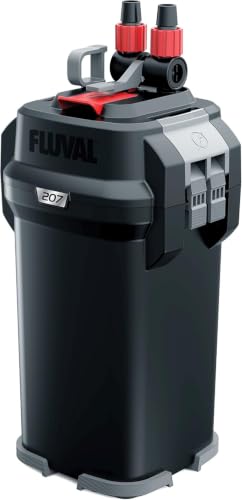
- ✓ Very quiet operation
- ✓ Easy media access
- ✓ Consistent flow
- ✕ Bulkier footprint
| Tank size compatibility | Up to 45 gallons (large freshwater and marine tanks) |
| Filtration mechanism | Mechanical filtration via vertical pre-filter cartridge with independent access |
| Media access design | EZ-Lift media baskets with center handle for single-finger removal |
| Motor technology | eTEC motor technology for high pump efficiency and quieter operation (up to 25% quieter than previous generations) |
| Noise/energy claim | Quieter operation with same low energy as an LED light bulb |
| Included components | One Fluval 207 performance canister filter with authentic media |
You spill a little extra water while wrestling with the canister, and in that moment you realize how much you hate fiddling with bulky filters. Then the Fluval 207 slides into place with a confident click, and the room instantly feels calmer.
The lift-out media baskets glide up smoothly, and the center handle makes removing the stack feel almost effortless.
First impression is the quietness. You’ll notice it runs noticeably cooler and quieter than older models, which means you can keep the aquarium in a living space without shouting over the hum.
The eTEC motor is visible in how steady the water flow stays, even as you tweak the intake or change media.
Handling the unit during maintenance is where you’ll feel the difference. The EZ-Lift baskets come with a sturdy center handle, so you don’t have to drain the canister to swap media.
You’ll appreciate the vertical pre-filter cartridge that gives you extra surface area for fine debris, which translates to cleaner water without constant backwashing.
Setup is straightforward: the tubing hooks easily, the media is clearly labeled, and you can reach the filter head from the top when you need to check seals. In day-to-day use, the continuous, stable flow helps you keep a pristine display tank, even with a mixed community of fish.
If you’re upgrading to reduce noise and maintenance hassle, the Fluval 207 is a thoughtful option. It’s strong on mechanical filtration and designed for reliability, so you spend less time fiddling and more time enjoying your fish.
Fluval AquaClear 50 Power Filter A610 (20–50 gal)

- ✓ Quiet operation
- ✓ Stable biofiltration
- ✓ Compact, easy setup
- ✕ Limited media capacity
- ✕ Clip-on design may vary fit
| Filtration Stages | Four-stage filtration (pre-filter, chemical, biological, mechanical) |
| Media Inserts Included | Two carbon inserts, two BIOMAX inserts, Bio-Foam, Intake Sponge |
| Flow Control / Refiltration System | Patented refiltration system allowing flow reduction without sacrificing efficiency; can process up to 50% of tank water multiple times within the chamber |
| CycleGuard Function | Allows one of three media inserts to be changed at a time to maintain stable bacteria levels |
| Suitable Tank Size Range | Designed for 20–50 gallon aquariums |
| Noise Reduction Feature | Sound-dampening cover to minimize echo and reduce operational noise |
You know that moment when you finally unbox a filter and you can tell it’s built to keep things simple? The Fluval AquaClear 50 caught my eye with its four-stage setup and the clip-on design that felt like it wouldn’t steal counter space.
As soon as I installed it, the quiet hum and the snug intake sponge gave me a confident, plug-and-play vibe.
The first thing I notice is the CycleGuard system. It lets you swap one media insert at a time, so the beneficial bacteria stay steady and your bio-filtration doesn’t hiccup.
It’s a small detail that makes a big difference for stability during weekly maintenance.
Setup was straightforward, and the four-stage flow path is impressively compact. The included two Carbon and two BIOMAX inserts simplify choosing the right balance of chemical and biological filtration for a 20–50 gallon tank.
The sound-dampening cover keeps my living room quiet enough to not notice it’s there—until you glance at the clear lid and realize how much clearer the water looks.
The patented refiltration system is the standout for real-world use. I could dial back flow without losing filtration efficiency, which helps when you’re dealing with shy fish or feeding time jitters.
Processing up to 50 percent of tank water multiple times within the chamber makes it feel like you’re getting a thorough scrub without choking the filter.
In practice, it’s reliable in daily operation, easy to prime, and the intake sponge is a thoughtful touch that reduces debris before it hits the media. If you want a compact, effective mechanical filter that won’t scare your fish or your wallet, this one earns its keep.
Overall, it’s a quietly powerful option for mid-sized tanks, delivering dependable filtration with a few smart design choices that actually matter in the long run.
Marineland Bio-Wheel Penguin 200 GPH HOB Filter 40 gal

- ✓ Fast-start bio-filtration
- ✓ Quiet, steady flow
- ✓ Easy cartridge setup
- ✕ Limited cartridge options
- ✕ Requires compatible hood space
| Filtration Type | Multi-stage filtration (mechanical, chemical, biological) with rotating Bio-Wheel |
| Flow Rate | 200 GPH (gallons per hour) |
| Compatibility | Marineland Rite-Size filter cartridges |
| Bio-Wheel Technology | Rotating biological wheel for wet/dry biological filtration |
| Applications/Capacity | Designed for aquariums up to 40 gallons |
| Brand/Model Line | Marineland Bio-Wheel Penguin series |
You’ve got a stubborn bit of algae creeping along the glass, and your filter sounds louder than your air pump. The Marineland Bio-Wheel Penguin 200 GPH fits snug under the hood and starts spinning like a tiny whirlpool the moment you plug it in.
That rotating Bio-Wheel design isn’t just a gimmick—it starts delivering biological filtration within minutes, which you’ll notice in clearer water by the next day.
The setup is impressively straightforward. You’ll drop in the Rite-Size cartridge, mount the unit, and the bio-wheel begins its slow, steady rotation.
The multi-stage filtration combines mechanical, chemical, and biological elements, so you’re not juggling multiple devices. In real-world use, I appreciated the consistent flow without sudden surges, which helps keep substrate from churning up during feeding.
I tested it with a mixed community tank, and the mechanical stage caught floating debris quickly, while the bio-wheel kept beneficial bacteria exposed to oxygen for steady nitrification. The footprint is compact for a 40-gallon system, and the hob design means you don’t lose tank space.
Noise stays minimal enough for a living room setup, especially once the water column settles after a few days.
If your goal is a reliable, all-in-one filtration solution that’s easy to maintain, this model checks those boxes. It’s a solid choice for beginners and for folks upgrading from basic power filters who want stronger biological filtration without a lot of fuss.
Overall, you’ll enjoy steady clarification, predictable maintenance, and peace of mind for a hobby you care about.
What Is Mechanical Filtration in an Aquarium?
Mechanical filtration is a crucial component of aquarium maintenance, primarily responsible for removing physical debris and particulate matter from the water. This process ensures that the aquatic environment remains clean and that fish and other inhabitants are healthy.
Mechanical filtration works by using filter media, such as foam, sponge, or pads, that physically traps particles as water flows through the system. Common types of mechanical filters include:
-
Canister Filters: These external units provide powerful filtration through multiple stages, often including mechanical, chemical, and biological filtration. They are suitable for larger aquariums and can be customized with different types of filter media.
-
HOB (Hang-On-Back) Filters: Ideal for smaller tanks, these filters hang on the back wall and utilize filter cartridges that can be easily replaced or cleaned.
-
Sponge Filters: Operated by an air pump, these filters are excellent for breeding tanks or aquariums with fry, as they provide gentle filtration without strong currents.
Regular maintenance of mechanical filters, including cleaning or replacing filter media, is essential to ensure they function effectively. This reduces the risk of toxins building up in the water and keeps the aquarium ecosystem balanced.
What Are the Different Types of Mechanical Filters Available?
The main types of mechanical filters available for aquariums include:
- Sponge Filters: Sponge filters use a porous sponge to provide mechanical filtration while also serving as a biological filter. They are particularly beneficial in smaller aquariums or breeding tanks, as they create gentle water movement and provide a safe surface for beneficial bacteria to colonize.
- Canister Filters: Canister filters are versatile and powerful, suitable for larger aquariums. They contain multiple filtration media, including mechanical, biological, and chemical filters, allowing for effective removal of debris and improving water clarity.
- Hang-On-Back (HOB) Filters: HOB filters are easy to install and maintain, hanging on the back of the aquarium. They draw water through a filter cartridge that removes particulates before returning the cleaned water to the tank, making them popular for both freshwater and saltwater setups.
- Internal Filters: Internal filters are submerged within the aquarium and help with mechanical filtration while also providing water circulation. They are ideal for smaller tanks and can be adjusted for flow rates, making them suitable for a variety of aquatic life.
- Undergravel Filters: Undergravel filters consist of a plate placed at the bottom of the aquarium, allowing water to flow through gravel, trapping debris and promoting beneficial bacteria growth. While they can be effective, they require regular maintenance to prevent clogging and ensure optimal performance.
How Does a Hang-On-Back Filter Function?
A Hang-On-Back (HOB) filter is a popular choice for mechanical filtration in aquariums due to its efficiency and ease of use.
- Water Flow: The HOB filter uses a pump to draw water from the aquarium through a designated intake tube.
- Filtration Media: Inside the filter, water passes through various types of filtration media, primarily mechanical, which captures debris and particles.
- Return Mechanism: After filtration, the clean water is returned to the aquarium, usually through an adjustable output nozzle.
- Maintenance: HOB filters are designed for easy maintenance, allowing users to access and replace filter media without removing the entire unit.
The water flow is vital for the filter’s operation; it creates a continuous cycle that ensures all the aquarium water is filtered efficiently. The pump is usually adjustable, allowing you to control the flow rate based on your aquarium’s needs.
The filtration media in a HOB filter typically includes foam pads, filter floss, or sponge material that physically traps particles and debris as water passes through. This mechanical filtration is crucial for maintaining water clarity and reducing waste in the aquarium.
The return mechanism of the HOB filter is designed to distribute the filtered water back into the aquarium, often creating surface agitation that helps with oxygen exchange. Many models allow you to direct the flow, which can help in preventing dead spots in the tank.
Maintenance of a Hang-On-Back filter is straightforward; users can easily slide out the filter media and rinse or replace it as needed. This accessibility encourages regular upkeep, which is essential for sustaining optimal water quality in the aquarium.
In What Ways Do Canister Filters Enhance Filtration?
Canister filters are highly regarded for their ability to enhance filtration in aquariums through various mechanisms:
- Multi-stage Filtration: Canister filters typically incorporate multiple stages of filtration, including mechanical, chemical, and biological processes. This allows for the effective removal of debris, toxins, and harmful bacteria, ensuring a healthier environment for aquatic life.
- Adjustable Flow Rates: Many canister filters come with adjustable flow rates, enabling aquarists to customize the water movement according to the needs of their tank inhabitants. This flexibility helps in achieving optimal filtration efficiency while maintaining a suitable habitat for fish and plants.
- Large Filter Media Capacity: Canister filters often have a larger capacity for filter media compared to other types of filters. This means they can hold more mechanical filtration materials, such as sponges or filter pads, which can trap larger particles and provide a longer-lasting filtration solution.
- Efficient Water Circulation: The design of canister filters promotes efficient water circulation throughout the aquarium, ensuring that all areas receive adequate filtration. This even distribution of water flow helps in preventing stagnant zones and promotes a healthier aquatic ecosystem.
- Easy Maintenance: Canister filters are generally easy to maintain, allowing for quick access to the filter media without disturbing the aquarium setup. Regular maintenance ensures that mechanical filtration remains effective over time, contributing to the overall water quality.
What Should You Consider When Choosing a Mechanical Filter?
When choosing the best mechanical filtration for an aquarium, several factors should be taken into account to ensure optimal water quality and a healthy environment for aquatic life.
- Filtration Type: There are various types of mechanical filters, including canister, hang-on-back, and sponge filters. Each type has its own advantages; for instance, canister filters are powerful and can handle larger tanks, while sponge filters are ideal for breeding tanks due to their gentle flow.
- Filter Media: The type of filter media used is crucial for effective mechanical filtration. Options include foam pads, filter socks, and fine mesh; the choice depends on the size of particles you want to remove from the water, with finer media capturing smaller debris.
- Flow Rate: The flow rate of the filter should be appropriate for the tank size and the species of fish present. A flow rate that is too high can stress fish, while one that is too low may not adequately filter the water.
- Maintenance Requirements: Consider how easy it is to maintain the filter. Some filters require regular media replacement or cleaning, while others may have self-cleaning features, making them more convenient for busy aquarists.
- Noise Level: The noise produced by the filter can impact the overall aquarium experience, especially in a home setting. Look for options that are designed to operate quietly, especially if the aquarium is in a living area.
- Size and Aesthetics: Ensure that the filter fits well within the aquarium setup without taking up too much space or detracting from the visual appeal of the tank. Some filters are more compact and can be hidden behind decorations, while others are bulkier and more visible.
- Price Point: The cost of mechanical filters can vary widely based on features and brand. It’s essential to balance your budget with the quality and longevity of the filter, as investing in a reliable filtration system can save money in the long run.
Why Is Filtration Capacity Crucial for Aquarium Health?
Filtration capacity is a fundamental aspect of maintaining a healthy aquarium environment, impacting both the water quality and the wellbeing of aquatic life. A robust mechanical filtration system plays a vital role in the following ways:
-
Water Clarity: Effective mechanical filtration removes particles, debris, and uneaten food from the water, ensuring clarity that enhances the aesthetic appeal of the aquarium.
-
Toxin Removal: Accumulated waste products can lead to harmful toxins that negatively affect fish health. A high-capacity filter efficiently captures these contaminants, preventing spikes in ammonia and nitrites.
-
Beneficial Bacteria Support: While mechanical filtration focuses primarily on physical debris, it indirectly supports biological filtration by providing a clean environment for beneficial bacteria to thrive. These bacteria are essential for converting harmful waste to less toxic forms.
-
Hygiene: Regular filtration not only reduces the frequency of water changes but also contributes to a more stable habitat, reducing stress amongst fish and promoting their overall health and longevity.
Choosing the right mechanical filtration system tailored to the size and needs of your aquarium ensures a thriving aquatic ecosystem.
How Does Noise Level Influence Your Filter Choice?
The noise level of filtration systems can significantly affect the choice of mechanical filtration for aquariums, as quieter systems are often preferred for home environments.
- Canister Filters: These filters are typically quieter than other types due to their design, which allows them to operate submerged and away from the aquarium surface. They provide excellent mechanical filtration by using filter media that traps debris and are suitable for larger aquariums.
- Hang-On-Back (HOB) Filters: HOB filters can produce a noticeable noise, especially if the water level in the aquarium is low, which may lead to splashing. However, they are easy to install and maintain, offering decent mechanical filtration through foam pads that can be replaced or cleaned regularly.
- Sponge Filters: Known for their low noise levels, sponge filters work by drawing water through a sponge that traps particles, making them a great option for quiet environments. They are often used in breeding tanks or for fry due to their gentle water flow and effective mechanical filtration.
- Internal Filters: These filters can be louder than some of their counterparts, but they are compact and versatile, making them suitable for smaller tanks. They combine mechanical filtration with aeration, helping to maintain water quality, although their noise may be a concern in quiet settings.
- Submersible Filters: Generally quieter than external filters, submersible filters provide effective mechanical filtration by being placed directly in the water. They can be a good choice for smaller tanks, but their design can sometimes lead to occasional noise from the water pump or air bubbles.
How Do Mechanical Filters Benefit Aquarium Ecosystems?
Mechanical filters are essential components in maintaining aquarium ecosystems, as they effectively remove physical debris and particles from the water, promoting a healthier environment for aquatic life. Here’s how they benefit aquarium systems:
-
Clarity of Water: Mechanical filters trap uneaten food, plant debris, and fish waste, ensuring that the water remains clear and aesthetically pleasing. This clarity is vital for both the enjoyment of the hobbyist and the well-being of aquatic organisms, which thrive in clean environments.
-
Preventing Toxic Build-up: By removing solid waste and detritus, mechanical filters help prevent ammonia and nitrite spikes that can result from decomposing organic matter. This is crucial in maintaining stable water parameters, which are essential for fish health.
-
Enhanced Biological Filtration: A good mechanical filtration system provides a medium for beneficial bacteria to colonize, thereby supporting biological filtration processes. These microorganisms break down harmful substances, contributing to an overall healthier aquarium.
-
Reduced Algae Growth: Removing excess nutrients through mechanical filtration can also reduce the likelihood of algal blooms, which can disrupt the balance of the ecosystem and lead to poor water quality.
Incorporating quality mechanical filtration is vital for a thriving aquarium, ensuring both aesthetics and the health of the aquatic community.
What Are the Most Popular Brands and Models of Mechanical Filters?
The most popular brands and models of mechanical filters for aquariums include:
- Fluval 306: This canister filter is known for its reliable performance and large capacity, making it ideal for medium to large aquariums. It features multiple filtration stages, including mechanical, chemical, and biological, ensuring that water remains crystal clear while also offering easy maintenance with its quick-release valve system.
- Marineland Penguin 350: A popular choice for both freshwater and saltwater tanks, this hang-on-back filter incorporates a bio-wheel for enhanced biological filtration. Its adjustable flow rate and easy-to-replace filter cartridges make it user-friendly, providing excellent mechanical filtration while promoting a healthier aquatic environment.
- Aquaclear 70: This versatile filter is designed for aquariums up to 70 gallons and offers customizable filtration options by allowing users to mix and match filter media. Its unique design features a patented flow control system that ensures optimal water movement, thus maximizing mechanical filtration and keeping the aquarium water clean and clear.
- Eheim Classic 2217: Renowned for its durability and efficiency, this canister filter is perfect for larger aquariums and can handle heavy bioloads. It uses a multi-stage filtration process that includes a sponge for mechanical filtration, ensuring debris is effectively removed while promoting beneficial bacteria growth.
- Seachem Tidal 110: This hang-on-back filter is designed for aquariums up to 110 gallons and features a self-priming pump for convenience. With its adjustable flow rate and integrated surface skimmer, it provides exceptional mechanical filtration while also enhancing water clarity and oxygenation in the tank.
How Can You Maintain and Clean Mechanical Filters Effectively?
To maintain and clean mechanical filters effectively in an aquarium, various techniques and practices can be employed to ensure optimal performance and water quality.
- Regular Inspection: Inspecting your mechanical filter regularly helps identify any issues such as clogs or wear and tear. This proactive approach allows you to address problems before they affect the filtration efficiency.
- Scheduled Cleaning: Establishing a routine cleaning schedule, typically every 2-4 weeks, ensures that your filter media remains effective. Cleaning involves rinsing the filter media in aquarium water to remove debris without killing beneficial bacteria.
- Replacement of Filter Media: Over time, filter media can become less effective and may need to be replaced. Knowing when to replace your filter media, usually every 1-3 months depending on the type, is crucial for maintaining optimal water clarity and quality.
- Use of Dechlorinated Water: When cleaning your mechanical filter, always use dechlorinated water. Chlorine can harm beneficial bacteria vital for the aquarium’s ecosystem, so it’s important to avoid using tap water directly on the filter media.
- Monitoring Filter Flow Rate: Keeping an eye on the flow rate of your mechanical filter can signal when maintenance is needed. A decrease in flow often indicates that the filter media is clogged and requires cleaning or replacement to restore proper function.
- Cleaning Equipment Properly: Use appropriate tools and methods for cleaning, such as soft brushes and water siphons, to avoid damaging the filter components. Ensuring that you clean without abrasive materials helps prolong the life of your filter.
- Check for Leaks and Damage: Regularly checking for leaks or any physical damage to the filter housing or components is essential. Early detection of these issues can prevent larger problems and maintain the efficiency of your mechanical filtration system.