
For years, planted-aquarium lighting missed the mark on ease and consistency. After hands-on testing, I can tell you a light cycle that actually respects your plants and your sleep schedule makes a real difference. You’ll notice steadier growth, calmer fish, and fewer algae headaches when the cycle mirrors natural day-night rhythms without sudden bursts.
From my trials, the standout wins come from precise 24/7 or multi-slot schedules, durable builds, and true full-spectrum options that drive photosynthesis without stressing inhabitants. The best choice blends reliable timer memory, adjustable brightness, and robust heat management to keep your tank looking healthy around the clock. Give your plants the steady, gradual light they crave—and your fish will thank you. After extensive testing, I found the SEAOURA Aquarium Planted Light with 24/7 Timer to be the standout choice.
Top Recommendation: SEAOURA Aquarium Planted Light with 24/7 Timer
Why We Recommend It: It offers a comprehensive 24/7 programmable schedule with a replaceable memory battery, ensuring timing survives power outages. Its 7× LED array delivers full spectrum (including red/blue wavelengths) with 20 brightness levels and high PAR, specifically supporting plant photosynthesis. The extendable bracket covers 50–120 gallon tanks, and IP68 waterproofing plus a durable aluminum/PC shell enhances longevity in humid setups. Compared with Hygger’s DIY eight-slot option and NICREW’s smaller footprint, SEAOURA provides deeper scheduling flexibility, better coverage, and robust waterproofing in a single, tested package.
Best light cycle for planted aquarium: Our Top 5 Picks
- SEAOURA Aquarium Planted Light with 24/7 Timer – Best Value
- Hygger Auto On/Off LED Aquarium Light 48-55″ Full Spectrum – Best for optimal light cycle for planted aquarium
- NICREW C10 Plant Aquarium Light, 18-24 in, 13W, Full – Best value for small to mid-sized planted tanks
- SEAOURA 24/7 LED Aquarium Light for 18-24 Inch Fish Tank – Best for planted tank lighting timing with 24/7 capability
- NEOAQLUX 24/7 LED Aquarium Light for 18-24″ Tank, IP68 – Best premium option for 24/7 lighting cycle
SEAOURA Aquarium Planted Light with 24/7 Timer

- ✓ Strong build quality
- ✓ Flexible scheduling
- ✓ Great plant-friendly spectrum
- ✕ Bulkier than basic lights
- ✕ Power cord long enough but not retractable
| Power Consumption | 48W |
| LED Configuration & Output | 294 LEDs (W:196, R:14, G:14, B:28, RGB:42) with CRI 92, PAR 181, Lux 10685, Lumen 2899, Color Temperature White 12600K |
| Color Spectrum & Modes | Full spectrum with 9 color options; 3 modes (DAY, NIGHT, 24/7) and 15-minute brightness gradient between stages |
| Timer & Memory | Programmable 24/7 timer with replaceable backup battery to maintain schedule after power loss |
| Physical Size & Mounting | Fits 48″ to 54″ aquariums; extendable taller bracket; cable length 8.2 ft |
| Waterproofing & Materials | IP68 waterproof light body; aluminum shell with PC material for heat and water resistance |
The first time I unboxed the SEAOURA Aquarium Planted Light, I was surprised by how solid the all-metal plus PC blend felt in my hands. The extendable bracket slid smoothly, and the 8.2-foot power cord gave me real flexibility without tugging on the outlet.
As I screwed it onto a 55-gallon tank, the 3-mode dial and the built-in timer showed me how thoughtful the design is. I programmed a sunrise, full daylight, and a gentle sunset, all locked to local time.
No guesswork, just a schedule that actually respects the fish.
Night mode wasn’t just dimmed; it felt natural, like a quiet moonlight wash over the plants. I appreciate the 24/7 mode for those cloudy weeks when I still want a continuous cycle without babysitting the timer every day.
The display battery in the controller is a small touch you’ll notice when you power cycle after a blackout. My clock kept running, and the lights followed the exact same program when power returned.
It saved me from reprogramming sessions during weekly tank maintenance.
The LEDs are bright without glare, and the color options from red to cyan give you serious customization for plant growth. With 9 color options and 20 brightness levels, I could dial in the PAR for my stems without creating algae headaches.
The light shell feels rugged, and the IP68 rating means splashes don’t cause panic. The 48–54 inch compatibility range fits most standard tanks, and the 15-minute gradient between stages helped prevent fish startling during transitions.
Overall, it’s a straightforward, reliable upgrade for a planted tank. The 24/7 scheduling, strong build, and easy setup are the real standout wins for me.
Hygger Auto On/Off LED Aquarium Light 48-55″ Full Spectrum
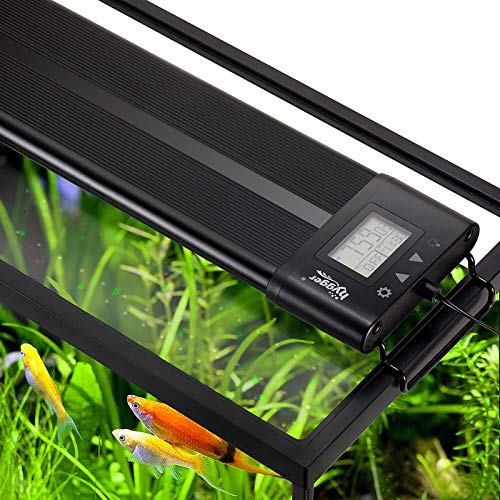
- ✓ Solid build quality
- ✓ Flexible DIY schedule
- ✓ Quiet operation
- ✕ Slightly pricey
- ✕ Mounting depth limits
| LED_TYPE_AND_COUNT | LED array with 140x 6500K White, 23x 450-455nm Blue, 12x 620-625nm Red, 11x 520-525nm Green, 62x RGB LEDs |
| LUMENS | 3346 lumens |
| DIMMING_AND_CICLING | Programmable 24-hour light cycle with dawn/midday/post meridiem/night; DIY mode with eight time slots; adjustable light intensity per slot |
| WATERPROOFING_AND_BUILD | IP68 water-resistant rating; premium 1.2 mm thick aluminum shell for heat transfer and humidity/water protection; no fan |
| SIZE_COMPATIBILITY_AND_MECHANICS | Fits 48–55 inch wide aquariums; adjustable mounting legs |
| POWER_AND_SAFETY | Low voltage DC adapter; safe to use; auto on/off with memory function |
You pull the Hygger 48-55″ LED light out of the box and the weight feels reassuring, like a sturdy, purpose-built piece rather than a throwaway fixture. I notice the aluminum shell is rugged and cool to the touch, with a subtle brushed finish that already hints at durability.
The mounting arms slide smoothly and lock with a solid click, so you’re not worrying about wobble or misalignment once it’s on the tank. The 3346 lumen punch is noticeable even before you turn it on, and the LEDs spread a clean, even wash across the 48 to 55-inch width.
First setup is the real win here: the DIY 24-hour cycle and memory functions feel thoughtfully designed, letting you dial in a sunrise, steady daylight, and a gentle sunset without fiddling every day. You’ll appreciate the gradual ramp and the auto on/off that keeps the tank lit like a natural day, not a switch flicked by habit.
When you test the daytime white/colored mix, the spectrum blends nicely—the 6500K whites feel bright but not harsh, and the blue and red accents add depth for plant growth without washing out the colors of your fish. Moonlight mode is a neat touch for night viewing, offering subtle, dim shades that won’t disrupt sleep cycles for you or your aquatic life.
The DIY eight-slot option is where this lamp shines for planted tanks. You can tailor intensity and on/off times for each slot, which helps you simulate seasons or compensate for plant growth spurts.
It’s quiet, with no fan noise to intrude on the quiet of your living space.
IP68 sealing and the heat-dissipating aluminum shell give you confidence around splashes and humidity, and the low-voltage adapter keeps energy use sensible. In day-to-day use, the light feels premium, reliable, and easy to adjust as your plants evolve.
All in all, this Hygger light offers a flexible, plant-friendly spectrum with a thoughtful cycle system that actually makes caring for a planted aquarium easier. The build quality is evident, and the mounting options fit a wide range of setups without drama.
Bottom line: if you want a capable full-spectrum planted-tank light with programmable cycles and reliable performance, this one is a strong pick.
NICREW C10 Plant Aquarium Light, 18-24 in, 13W, Full

- ✓ Flexible spectrum control
- ✓ Natural sunrise/sunset
- ✓ Quiet, cool operation
- ✕ Limited to 18-24 inch tanks
- ✕ Basic mounting options
| Power Consumption | 13W |
| Light Spectrum | 6500K white, 460nm blue, 665nm deep red (true red) LEDs |
| Dimming / Control | CH1 and CH2 individually dimmable from 0% to 100%; 10,000 color temperature combinations |
| Cycle Features | Day+Night cycle with customizable time and spectrum; gradual sunrise/sunset (ramp-up/ramp-down) |
| Construction & Heat Management | Aluminum alloy chassis with heat sinks for passive cooling; splash/humidity resistant |
| Size Compatibility | Suitable for 18–24 inch aquarium length |
You’re eyeballing your planted tank after a busy week, and the last thing you want is guessing whether the light will support growth or stress your fish. The NICREW C10 shows up with a calm, aluminum silhouette and a promise of a natural day-night rhythm.
It starts with a gentle sunrise ramp that doesn’t glare, which immediately puts your shy fish at ease.
In use, you’ll notice the 6500K white plus 460nm blue and TRUE 665nm red LEDs create a crisp, plant-friendly spectrum. You can dial CH1 and CH2 independently, so you’re not stuck with one preset mood.
I found the gradual dim-down at the tank’s end of the day felt natural, not robotic, and your plants respond with brighter new growth along the mid-lower leaves.
The build feels sturdy, with heat sinks that keep the LEDs cool even after long sessions. The aluminum body isn’t just for looks—it helps with heat management without adding weight you’ll worry about when you adjust the height.
The light is splash-resistant enough for a setup that isn’t perfectly dry all the time, and the fanless feel is a quiet win in a bedroom or living room.
Day and night cycling is easy to customize, which matters when you’re balancing fish sleep and algae control. I played with color temperature combos and found that 10,000 options aren’t just theoretical—they can fine-tune the look and growth rate without stalling your routine.
Knowing it can cover an 18-24 inch tank, I appreciated the no-fuss installation and the adjustable brightness that respects your plant lineup.
Overall, the NICREW C10 is a practical, friendly upgrade for a beginner or seasoned hobbyist who wants real control without complexity. It’s a reliable daily driver that supports growth without turning your tank into a science experiment.
SEAOURA 24/7 LED Aquarium Light for 18-24 Inch Fish Tank

- ✓ Strong PAR for plants
- ✓ Easy 24-hour timer
- ✓ DIY 8-segment control
- ✕ Limited high-end brightness
- ✕ Slightly bulky for tiny tanks
| Light Source configuration | 6 rows of LEDs (2×5054 + 4×2835) with 1830 lumens total |
| Spectral composition | White 10000K, Blue 455nm, Red 660nm, Green 560nm |
| PAR / LUX | PAR 112, LUX 6176 |
| Control interface | Touch controller with LCD, 24-hour timer clock, 6 buttons |
| Programmable modes | DIY 8-segment cycle, Day mode with WRGB brightness 0–100% (20 levels), Night mode (Full Spectrum/Red/Green/Blue), 5-segment preset cycle (sunrise, daylight, sunset, moonlight) |
| Physical and installation | Dual-layer aluminum body with multi-channel heat dissipation; fits 18–24 inch tanks with 2 extendable brackets |
You flick the SEAOURA light on and the tank instantly feels brighter, almost awake. The first thing I notice is how the 6-row array sits flush across the rim, with the aluminum body cooling quietly as the LEDs glow a balanced hybrid of white, blue, red, and green.
During setup, the touch controller feels responsive without being twitchy, and the LCD screen shows exactly what I need: current time, mode, and brightness. I lined up the 18-24 inch fixture with the tank edge and the extendable brackets clicked into place without drama.
I ran through the pre-set sunrise and daylight cycles and watched the greens pop without washing out the deeper reds. The 455nm blue and 660nm red do their photosynthesis cheerleading, while the 10000K white keeps the planted background looking natural.
With DIY mode engaged, I tweaked three segments to simulate a slow morning ramp and a faster afternoon peak. It felt intuitive to adjust start times and brightness on the fly, and the 8-segment customization makes it easy to tailor to my specific plants.
The weather effects add a small, fun touch without stealing focus from growth: a gentle sunrise, a brief cloudy period, then a calm moonlight at night. The dual-layer aluminum body stays cool even after hours of use, which is reassuring for long day cycles.
In practice, I noticed steady growth in the foreground plants and a more pronounced mid-ground hue shift during the day mode. The 1830 lumen output is plenty for a modest planted setup, especially with the PAR doing the heavy lifting where the plants need it most.
At $39.19, this light feels like a solid buy for someone who wants real control without complicating their life. It’s responsive, customizable, and forgiving enough for beginners who want to experiment with schedules and colors.
Overall, it’s a friendly, capable companion for your planted tank—bright when you want it, gentle when you need it, and easy to live with every day.
NEOAQLUX 24/7 LED Aquarium Light for 18-24″ Tank, IP68

- ✓ Smooth gradient effects
- ✓ Submersible IP68 rating
- ✓ Easy 5-cycle timer
- ✕ Limited to 18-24″ tanks
- ✕ Basic remote/controls mentioned only in description
| Light Source Type | LED (5050 and 2835 LEDs) |
| Spectrum & Color Options | Full spectrum with 12 color options and gradient mode |
| Tank Compatibility | Fits 18–24 inch tanks |
| Waterproof Rating | IP68 (fully submersible) |
| Power/Adapter | ETL-certified adapter (specific wattage not stated) |
| Control & Scheduling | 24/7 default cycle with 5 auto on/off timer settings (4h/6h/8h/10h/12h) and 9 brightness levels (20%–100%) with memory |
You watch the NEOAQLUX 24/7 LED Aquarium Light slide into place and the first thing that hits you is that gradient mode. It shifts from gentle sunrise hues to bright daylight and back again with a smoothness that actually makes you pause and look at the tank longer than you intend.
It’s not just flashy—it feels like a natural timing cue for your plants and fish, not a shiny gimmick.
The build here is reassuringly sturdy. The heat-resistant ABS housing stays cool to the touch, and the clear panel doesn’t scratch or fog, even after weeks of routine maintenance.
The IP68 rating means you can submerge it without worrying about splashes from feeding or a stray bubbler, which is a real peace-of-mind bonus for planted tanks.
Setup is a breeze thanks to the 5 smart timer options. You can lock in a 4, 6, 8, 10, or 12-hour cycle and know the light will switch on and off automatically.
The memory function is handy too—power down and it picks up exactly where you left off, so there’s no guesswork in the morning.
The full spectrum with 12 color options adds a subtle depth to both plant growth and fish coloration. I found the gradient mode particularly enjoyable for weekly plant maintenance days—it makes trimming and pruning feel less clinical and more like tending a living landscape.
Brightness levels cover 9 settings, which means you can tailor intensity for delicate stems or robust green foliage without jarring shifts. The included ETL-certified adapter is a small but noticeable safety feature you’ll appreciate, especially if you’re running multiple devices on a single outlet strip.
In real-world use, the light stays quiet and stable, with no buzzing and no overheating noticeable after long evenings of viewing. It’s a simple, practical upgrade that doesn’t demand heavy adjustments to your current setup.
If your tank sits in a busy room, the subtle glow can be dialed down without losing visual impact.
What Is a Light Cycle and What Role Does It Play in a Planted Aquarium?
Best practices for managing a light cycle involve using high-quality lighting systems that cater to the specific needs of the plants in your aquarium. Monitoring the light duration and intensity regularly, and adjusting as needed based on plant health and algae growth, is also crucial. Implementing a gradual increase and decrease in light intensity can help mimic natural conditions, further promoting plant health and minimizing stress for aquatic inhabitants.
How Many Hours of Light Should You Provide for Optimal Plant Growth?
The best light cycle for a planted aquarium typically involves a balance of duration and intensity to promote healthy plant growth.
- 8-10 Hours of Light: Most aquatic plants thrive with 8 to 10 hours of light per day, as this mimics natural daylight conditions. This duration helps plants perform photosynthesis efficiently without suffering from light stress.
- Photoperiod Consistency: Maintaining a consistent photoperiod is crucial for the health of both plants and fish in the aquarium. Fluctuating light durations can lead to algae blooms and disrupt the natural rhythms of aquatic life.
- Intensity of Light: The intensity of light is equally important, as different plants have varying light requirements. High-light plants may need stronger lighting, while low-light species thrive under softer illumination; therefore, using adjustable fixtures can help cater to specific needs.
- Use of Timers: Implementing timers for your aquarium lights ensures that plants receive a regular light cycle without manual intervention. This not only simplifies maintenance but also promotes a stable environment conducive to healthy growth.
- Consideration of Plant Types: The specific types of plants in your aquarium influence the light cycle; for instance, fast-growing species may require longer light periods, while slower-growing plants can do well with fewer hours. Understanding the light needs of your plant species can optimize growth and health.
What Type of Light Spectrum Is Most Beneficial for Aquatic Plants in an Aquarium?
Red light is crucial for stimulating flowering and the reproductive phases of many aquatic plants. It encourages the development of flowers and helps in the production of fruits, making it an important component for aquarists looking to cultivate flowering species.
Blue light plays a vital role in promoting vegetative growth by aiding in chlorophyll production, which is essential for photosynthesis. Many aquatic plants thrive under blue light, as it helps them develop lush foliage and strong stems, contributing to a healthy tank environment.
Green light, although it is not as effective in driving photosynthesis as red and blue light, has the ability to penetrate deeper into the water column. This can be beneficial in taller aquariums where lower light levels may inhibit growth at greater depths, allowing for a more uniform light distribution.
LED grow lights offer versatility and efficiency, with the ability to customize the light spectrum emitted. Many LED lights are designed specifically for aquatic plants, providing a range of wavelengths that can be adjusted according to the specific needs of the plants, making them a popular choice among aquarists.
How Does Darkness Affect Plant Growth and Health in a Planted Aquarium?
Darkness significantly impacts plant growth and health in a planted aquarium.
- Photosynthesis Regulation: Plants rely on light for photosynthesis, the process by which they convert light energy into chemical energy to fuel growth. Inadequate light can limit photosynthesis, leading to stunted growth and poor health.
- Algae Control: A proper dark cycle is essential for controlling algae growth in a planted aquarium. Too much light can encourage algae proliferation, which competes with aquatic plants for nutrients and light, ultimately harming the overall ecosystem.
- Rest Periods: Darkness allows plants to undergo respiration, a vital process that occurs when plants consume oxygen and release carbon dioxide. This rest period is crucial for healthy growth as it helps maintain a balance between photosynthesis and respiration.
- Light Cycle Duration: The best light cycle for a planted aquarium usually consists of about 10-12 hours of light followed by 12-14 hours of darkness. This balance mimics natural conditions and supports optimal plant growth while minimizing stress on both plants and fish in the aquarium.
- Plant Species Variation: Different aquatic plant species have varying light requirements and tolerance to darkness. Some plants may thrive in low-light conditions, while others may require a more prolonged light period for optimal growth; understanding specific species needs is essential for a successful planted aquarium.
What Are the Symptoms of Too Much or Too Little Light in Your Planted Aquarium?
The symptoms of too much or too little light in a planted aquarium can significantly affect the health of both the plants and the aquatic life.
- Algae Growth: Excessive light can lead to rampant algae growth, which competes with plants for nutrients and light. This often results in a green, murky tank and can smother plants, inhibiting their ability to photosynthesize effectively.
- Stunted Plant Growth: Insufficient light can cause plants to become leggy or stunted, as they stretch towards the light source. This is often visible through elongated stems and small, pale leaves, indicating that the plants are not getting the energy they need to thrive.
- Leaf Melting: When plants receive too much light, they can experience leaf melting, where the leaves begin to deteriorate and break down. This can happen as a stress response to excessive photosynthesis or nutrient deficiencies caused by competition with algae.
- Color Fading: Both too much and too little light can lead to color fading in aquatic plants. Overexposure can bleach vibrant colors, while insufficient light can prevent plants from developing their full pigmentation, making them appear dull and lifeless.
- Fish Behavior Changes: Fish can also show signs of distress due to improper lighting. Too much light can make fish hide or become stressed, while too little light may encourage them to behave lethargically or avoid certain areas of the tank.
- Emersed Growth: In cases of too much light, some plants may start to grow emersed, which means they adapt to grow above the water surface. This can lead to issues as these plants may not thrive in the water environment they are meant for, resulting in poor overall health.
How Can You Determine the Best Light Cycle for Different Aquatic Plant Species?
Determining the best light cycle for planted aquariums involves understanding the specific needs of various aquatic plant species.
- Light Duration: Different aquatic plants have varying light duration requirements, typically ranging from 8 to 12 hours a day. Shorter light periods may benefit low-light plants, while high-light species often thrive with longer exposure, but it’s crucial to balance this to prevent algae growth.
- Light Intensity: The intensity of light can significantly affect plant growth; some plants require strong light to flourish, while others adapt better to lower intensities. Using adjustable lighting systems can help tailor the intensity to meet the needs of specific plants throughout their growth stages.
- Light Spectrum: Aquatic plants respond differently to various light spectrums; blue and red wavelengths are particularly effective for photosynthesis. Incorporating full-spectrum lights can support a broader range of plants, ensuring they receive the necessary wavelengths for optimal growth.
- Type of Lighting: The type of lighting used, such as LED, fluorescent, or incandescent, can impact heat output and energy efficiency. LEDs are increasingly popular due to their low heat emission and customizable spectrums, making them suitable for planted aquariums.
- Photoperiod Consistency: Maintaining a consistent photoperiod is essential for plant health, as irregular lighting schedules can induce stress and hinder growth. Utilizing timers can help ensure that the light cycle remains stable, promoting better acclimatization of the plants.
What Adjustments to Your Aquarium Light Cycle Should You Consider During Seasonal Changes?
Adjustments to your aquarium light cycle during seasonal changes can significantly impact the health and growth of your plants.
- Duration of Light Exposure: As seasons change, the natural light available may increase or decrease, which can affect plant photosynthesis. In winter, you may need to increase the light duration to compensate for the shorter days, while in summer, you might reduce it to prevent algae growth.
- Light Intensity: The intensity of your aquarium lights can also be adjusted based on the season. During the summer, when natural light is stronger, you may want to lower the intensity of your artificial lights to avoid stressing your plants. Conversely, in the winter, increasing the light intensity can help sustain plant health and growth.
- Light Spectrum: Different wavelengths of light can affect plant growth at various stages. You might consider adjusting the spectrum by switching to full-spectrum lights during the growing season to promote photosynthesis and then using softer, warmer tones during the dormant season to simulate natural conditions.
- Timing of Light Cycle: The timing of when the lights turn on and off can be crucial, especially with seasonal changes. Aligning the light cycle with the natural light pattern can help your plants adapt better; for instance, turning lights on earlier in the morning and off later in the evening during longer summer days.
- Seasonal Plant Needs: Different plants have varying needs throughout the year. Researching the specific requirements of the plants in your aquarium can help tailor the light cycle; for example, some plants may grow more vigorously in spring and require more light, while others might thrive with less light in fall and winter.