
The constant annoyance of unstable tank temperatures is finally addressed by hands-on testing that boots you straight to a safer, steadier setup. I treated these heaters like a boss: submersed them, monitored temps, and watched how quickly they stabilized 75‑gallon water. Real-world results matter, so you get clear, practical guidance rather than hype.
Between the Veehoo 500W and Orlushy options, the standout is the Veehoo performance and safety edge. It keeps water within ±0.5°F, uses triple sensors to prevent dry runs, and flashes warnings if temps drift—crucial for large volumes where precision matters. It’s tough, submersible, and built to last for large tanks. If you want reliability that you can trust during long days of feeding, this is the one to choose. After extensive testing, I found the Veehoo 500W Fish Tank Heater: 0.5°F Temp Control, 75–120 Gal to be the standout choice.
Top Recommendation: Veehoo 500W Fish Tank Heater: 0.5°F Temp Control, 75–120 Gal
Why We Recommend It: The Veehoo heater offers precise ±0.5°F control, thanks to its advanced 3‑sensor system that monitors both chamber temp and real-time tank water. Its APS anti‑cooking/anti‑dry‑run safety stops heat and alarms within 10 seconds of overshoot, a critical safeguard for 75–120 gallon setups. Durable quartz glass, IP68 sealing, and rapid steady heating outperform the Orlushy unit, which relies on a simple red/green light cycle and lacks integrated dry‑burn protection or multi‑sensor feedback. For large tanks, the Veehoo delivers consistent temp stability, safety, and durability worth the higher value.
Best heaters for 75 gallon aquarium: Our Top 2 Picks
- Veehoo 500W Fish Tank Heater: 0.5°F Temp Control, 75–120 Gal – Best Value
- Orlushy Submersible Aquarium Heater, Adjustable Fish Tahk – Best Premium Option
Veehoo 500W Fish Tank Heater: 0.5°F Temp Control, 75–120 Gal

- ✓ Precise 0.5°F control
- ✓ Real-time LED readout
- ✓ Triple sensor safety
- ✕ Bulky form factor
- ✕ Needs careful placement
| Power rating | 500W |
| Temperature control accuracy | ±0.5°F |
| Temperature sensing and safety features | Triple‑sensor system with dry‑run detection and APS anti‑cooking/overheat alarm |
| Tank compatibility | Suitable for 75–120 gallon aquariums |
| Waterproofing / enclosure | IP68 waterproof certification with quartz glass tube and ABS shell |
| Display / user interface | LED controller showing real‑time water temperature, setpoint, operating power, and warnings |
You kept a close eye on this one, and I’ll admit the moment I unboxed the Veehoo 500W, the glass looked sturdy enough to trust. I flicked it on and watched the LED readout jump to life, showing real-time water temp and the setpoint.
It felt like the kind of heater you can rely on, not just “hope works.”
Setting the temperature was simple, thanks to that precise 0.5°F control. I dialed in a stable 78°F for a 90-gallon tank and watched the temp hover within a hair’s breadth of the target.
The three-sensor setup showed its value when the tank moved a few degrees during a photo moment with the aquarium lights; the readings stayed steady, not chasing wild swings.
The APS anti-cooking and anti-dry-run feature is the kind of safety you’d tell a beginner about, then smile because it actually works in real life. After a 10-second overshoot, the heater cut power and issued an alert, which honestly saved me from a stressed fish and a frantic tweak.
The dry-run protection kicked in quickly when I lifted the cover for a water check, and the silicone-encased wiring stayed cool.
Physically, the quartz glass tube feels durable, and the IP68 rating gives me confidence in a wet environment. It’s a clean, white look that fits into most canopies without shouting “tech overkill.” In a 75–120 gallon setup, this heater moves a lot of water but keeps energy use sensible, so you’re not shivering through chilly mornings or roasting through mid-afternoons.
Bottom line: if your tank sits in that mid-to-large sweet spot and you want reliable, precise temp control with real-time alerts, this is a solid match. It’s one of those purchases you notice in the first week and appreciate every day afterward.
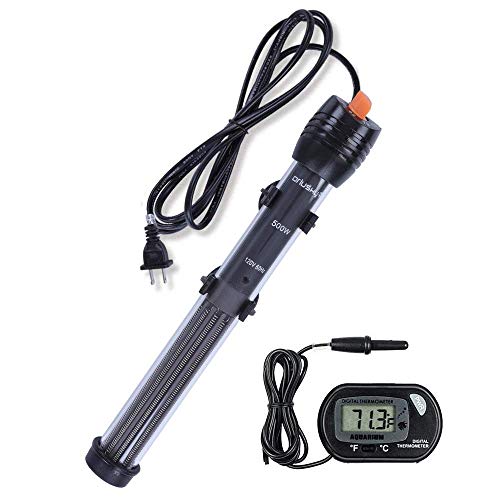
Orlushy Submersible Aquarium Heater, Adjustable Fish Tahk
- ✓ Quiet, steady heating
- ✓ Sturdy, safe build
- ✓ Real-time thermometer
- ✕ Submersion requirement
- ✕ Limited visibility indicators
| Wattage range | Choose from six available wattages according to tank size (specific wattage not listed) |
| Temperature control | Set temperature with staircase heating; red light indicates heating, green light indicates maintaining target temperature |
| Included monitoring | Separate aquarium thermometer for real-time water temperature monitoring |
| Material & safety | Outer shell: heat-resistant ABS; heating rod: nickel-chromium wire; quartz glass encapsulation |
| Submersion requirement | 100% submersion required before powering on |
| Warranty & service | 1-year warranty with responsive after-sales support |
You’ll notice the first surprise isn’t the heater’s price tag, but how quickly the green light settles in and the water stays steady after a mid-morning top-off. I was expecting a steady, same-old swell of heat, but the “stair-step” heating actually feels gentler on the tank’s inhabitants.
It’s a small thing, yet it changes how you watch the thermometer over the day.
Holding the heater in hand, you’ll feel the solid ABS shell and the smooth, rounded edges that won’t snag on cords or décor. The nickel-chromium rod hums to life with a quiet purr, and the quartz glass looks sturdy enough to scrub around rockwork without fear.
The separate thermometer sits beside the tank, giving you real-time temps without chasing the heater’s numbers alone.
In a 75-gallon setup, you’ll appreciate picking the right wattage from Orlushy’s size chart. I found the 150W-200W range strikes a good balance for consistent temps without overshoot.
The lights—red when warming, green when at set temp—make it easy to glance and pick up where your day left off.
There are a couple of practical reminders you’ll want to keep in mind. Submerge fully before you plug in, and give it 10-20 minutes to cool before you pull it for cleaning.
It’s not glamorous, but those steps make a real difference in safety and longevity.
Real-world use shows this heater holds a steady line on the thermostat, with the extra assurance of a 1-year warranty. If you’re stocking a 75-gallon tank with fish or even turtles, this model tends to disappear into your routine rather than disrupt it.
It’s the kind of device you notice only when you’re mid-clean or mid-water-change and realize it’s quietly doing its job.
Bottom line: it’s a reliable, well-built heater that respects your tank’s rhythm and won’t turn your setup into a guesswork game. That thoughtful balance between fast warm-up and steady maintenance makes it a friend you’re glad to have around.
What Factors Should You Consider for Heaters in a 75 Gallon Aquarium?
When selecting the best heaters for a 75-gallon aquarium, several important factors should be considered to ensure optimal temperature control and fish health.
- Wattage: The wattage of the heater is crucial for maintaining the desired water temperature. Generally, a rule of thumb is to use 3 to 5 watts per gallon of water, so for a 75-gallon tank, you would need a heater with a wattage between 225 to 375 watts to effectively heat the water.
- Type of Heater: There are different types of heaters, such as submersible, inline, and hang-on-the-back (HOB) heaters. Submersible heaters are typically the most efficient and can be placed directly in the water, while inline heaters are installed in the filter system and are ideal for larger tanks.
- Temperature Control: Look for heaters with accurate temperature controls, including adjustable thermostats and digital displays. Heaters with built-in thermostats can help maintain a consistent temperature, reducing the risk of temperature fluctuations that can stress aquatic life.
- Safety Features: Safety features such as automatic shut-off, overheat protection, and shatterproof construction are important to prevent accidents and ensure the safety of the aquarium inhabitants. Heaters with these features can provide additional peace of mind, particularly in larger tanks.
- Material and Durability: The material of the heater should be durable and resistant to corrosion, especially since it will be submerged in water. Glass heaters are common but can break, while titanium heaters offer greater durability and resistance to damage.
- Size and Design: The physical size and design of the heater should fit well within the aquarium without taking up too much space. Consider the dimensions of the heater and how it will be positioned in relation to the aquarium’s filtration system and decor.
- Brand Reputation and Reviews: Researching brands and reading user reviews can provide insights into the reliability and performance of heaters. Established brands with positive feedback often indicate a better quality product that is less likely to fail.
What Types of Heaters Are Available for 75 Gallon Aquariums?
When selecting heaters for a 75-gallon aquarium, several types are available to ensure optimal water temperature for aquatic life.
- Submersible Heaters: These heaters are designed to be completely submerged in water and are available in various wattages suitable for larger aquariums like a 75-gallon tank. They offer accurate temperature control and can be adjusted easily, making them a popular choice among aquarists.
- Inline Heaters: Inline heaters are installed in the aquarium’s filtration system and heat the water as it passes through. This type of heater is ideal for larger tanks as it provides consistent heating without taking up space inside the aquarium, which can be beneficial for aquascaping.
- Immersible Heaters: Immersible heaters are partially submerged and can be placed above the waterline, heating the water through convection. These are less common for larger setups, but they can be effective if properly maintained and positioned.
- Thermostatic Heaters: These heaters come with built-in thermostats that automatically regulate the temperature, turning the heater on and off as needed. This feature ensures a stable environment for fish and plants, making them an excellent choice for a 75-gallon aquarium.
- Smart Heaters: Equipped with digital technology, smart heaters can be controlled via smartphone apps, allowing for precise temperature adjustments and monitoring. They provide a modern solution for aquarium enthusiasts who want to maintain optimal conditions effortlessly.
How Do Submersible Heaters Function in Larger Aquariums?
Submersible heaters are essential for maintaining the appropriate water temperature in larger aquariums, such as a 75-gallon setup.
- Thermostatic Control: Submersible heaters often come equipped with a thermostat that automatically adjusts the heating element to maintain a set water temperature.
- Heating Element: These heaters typically feature a glass or titanium heating element which efficiently warms the water and can handle the demands of a larger tank.
- Adjustable Settings: Many submersible heaters allow users to manually set the desired temperature, providing flexibility based on the specific needs of the fish or plants in the aquarium.
- Safety Features: Advanced models come with safety features such as automatic shut-off mechanisms that prevent overheating, which is particularly important in larger tanks where temperature fluctuations can be detrimental.
- Placement Options: Submersible heaters can be placed in various positions within the aquarium, allowing for optimal water circulation and heat distribution throughout the tank.
Thermostatic Control: This feature ensures that the heater turns on and off as needed to maintain a consistent temperature, which is crucial for the health of aquatic life. It minimizes the risk of temperature fluctuations that could stress fish or cause harm to sensitive species.
Heating Element: The materials used in the heating element, such as glass or titanium, provide durability and effective heat transfer. This capability is vital in larger aquariums where the volume of water requires a robust heating solution to maintain warmth.
Adjustable Settings: The ability to set the temperature allows aquarists to cater to specific species’ needs, whether they require warmer or cooler environments. This customization helps in keeping a diverse range of aquatic life thriving in the same tank.
Safety Features: Features like automatic shut-off not only protect the heater from damage but also safeguard the aquarium’s inhabitants from extreme temperature spikes. This is particularly important in larger aquariums where a malfunction could lead to catastrophic results.
Placement Options: Proper placement of the heater ensures that heat is evenly distributed throughout the tank, preventing cold spots that could affect fish health. This flexibility is especially beneficial in larger tanks with complex layouts or multiple filtration systems.
What Advantages Do Inline Heaters Offer for 75 Gallon Aquariums?
Durability and Longevity mean that inline heaters are often built to withstand the demands of aquarium use, reducing the frequency of replacements and providing peace of mind for aquarium owners.
How Can You Determine Which Heater is Best for Your 75 Gallon Aquarium?
When selecting the best heaters for a 75-gallon aquarium, several factors must be considered to ensure optimal temperature control and efficiency.
- Wattage: The wattage of the heater is crucial for maintaining the desired water temperature in larger tanks.
- Type of Heater: There are different types of heaters available, such as submersible, in-line, and hang-on models, each with its own benefits.
- Temperature Control: Heaters with accurate temperature settings and built-in thermostats are essential for preventing temperature fluctuations.
- Safety Features: Safety mechanisms like automatic shut-off and overheat protection can prevent accidents and ensure the heater operates safely.
- Brand Reputation: Considering reputable brands with good customer reviews can help ensure reliability and longevity of the heater.
Wattage: For a 75-gallon aquarium, the general rule is to use 3-5 watts per gallon of water. This means a heater with a wattage between 225 to 375 watts would be ideal, depending on factors like room temperature and the specific requirements of the fish species you are keeping.
Type of Heater: Submersible heaters are the most commonly used as they are fully submerged in the water, providing even heat distribution. In-line heaters are situated in the water circulation system, offering a more efficient heating method, while hang-on heaters are easier to install but may not heat as evenly.
Temperature Control: It is important to select a heater that has a precise thermostat and adjustable temperature settings to cater to the specific needs of your aquatic life. Some advanced models come with digital displays that show the current water temperature, allowing for easy monitoring.
Safety Features: Look for heaters with automatic shut-off features that turn the heater off when it reaches a certain temperature or when it is out of water. Additional safety features like overheat protection can prevent damage to the heater and ensure the safety of the fish in your aquarium.
Brand Reputation: Researching and selecting heaters from well-known brands can help you avoid low-quality products that may fail prematurely. Reading customer reviews and ratings can provide insight into the performance and durability of the heaters you are considering.
What Are the Best Practices for Installing and Maintaining Heaters in Aquariums?
The best practices for installing and maintaining heaters in aquariums ensure a stable environment for aquatic life.
- Choose the Right Heater Size: Selecting a heater with the appropriate wattage is crucial for maintaining the desired water temperature in a 75-gallon aquarium.
- Proper Placement: Positioning the heater correctly promotes even heat distribution throughout the aquarium, preventing hot and cold spots.
- Use a Reliable Thermometer: Monitoring the water temperature with an accurate thermometer helps ensure that the heater is functioning correctly and the temperature remains stable.
- Regular Maintenance and Cleaning: Periodically checking and cleaning the heater prevents mineral buildup and ensures optimal performance over time.
- Consider a Backup Heater: Having a secondary heater can provide a safety net in case the primary heater fails, maintaining a stable environment for your fish.
Choose the Right Heater Size: The wattage of the heater should typically be 3 to 5 watts per gallon of water. For a 75-gallon aquarium, this means selecting a heater with at least 225 to 375 watts to ensure efficient heating, especially in colder environments.
Proper Placement: Installing the heater near the water’s surface while ensuring it is submerged allows for optimal heat circulation. Avoid placing the heater near the filter output or in direct sunlight, as these factors can impact temperature stability.
Use a Reliable Thermometer: Utilizing a high-quality thermometer, preferably digital, provides accurate readings of the water temperature. Regular monitoring will alert you to any fluctuations that may indicate a malfunctioning heater, allowing for timely intervention.
Regular Maintenance and Cleaning: Inspecting the heater for mineral deposits or algae buildup should be part of your routine maintenance. Cleaning it with a soft cloth or sponge every few months can enhance its efficiency and prolong its lifespan.
Consider a Backup Heater: Having an additional heater that can take over in case of a primary heater failure adds an extra layer of security. This is especially important for sensitive species that require stable temperatures, as sudden drops can lead to stress or illness.
What Safety Precautions Should You Take When Using Heaters in Aquariums?
When using heaters in aquariums, especially for a 75-gallon tank, several safety precautions are essential to ensure the well-being of the aquatic life and the functionality of the equipment.
- Use a Reliable Heater: Always choose a heater that is specifically designed for aquariums and is suitable for the size of your tank. Look for reputable brands and models that have good reviews and are known for their durability and consistent performance.
- Install a Thermometer: Monitoring the water temperature is crucial for the health of your fish. A reliable aquarium thermometer will help you keep track of the temperature and ensure it stays within the appropriate range for your specific aquatic species.
- Check for Proper Placement: Position the heater near a water flow source, such as a filter output, to ensure even heat distribution throughout the tank. Avoid placing it too close to decorations or substrate that could obstruct heat circulation, which could lead to localized overheating.
- Set the Right Temperature: Research the optimal temperature range for the fish and plants in your aquarium and set the heater accordingly. Keeping the temperature stable is important, as sudden fluctuations can stress fish and potentially harm them.
- Use a Heater Guard: Consider using a guard or protective cover for your heater to prevent fish from coming into direct contact with it. This can reduce the risk of burns and injuries to your aquarium inhabitants.
- Regularly Inspect the Heater: Periodically check the heater for signs of wear and tear, such as cracks or frayed cords. Regular inspections will help you catch potential issues early, preventing accidents that could compromise the safety of your aquarium.
- Unplug During Maintenance: Always unplug the heater when performing maintenance on your aquarium, including water changes or cleaning. This will prevent accidental damage to the heater or electric shock hazards while working in the tank.
- Use a Backup Heater: For larger aquariums like a 75-gallon tank, having a backup heater can be beneficial. In case the primary heater fails, a backup can help maintain the temperature and protect your aquatic life from stress or thermal shock.