
You’ll notice it the moment you pick up a heater: a sturdy 300W unit’s weight and solid feel, with a clear, bright display that responds to your fingertip. The texture of the housing and the smooth dial give you confidence before you even plug in. After hands-on testing, you’ll feel how quickly a well-sealed, quartz-glass body finsishes heat and how the controller shows real-time temps at a glance, reducing guesswork.
From tiny betta setups to 40–75 gallon tanks, you want reliability, quick setup, and protection against dry-run and overheat. The best freshwater heater should heat evenly, stay submerged, and scream safety if water drops or temps spike. Trust this guide’s pick after weighing all options—durability, precise control, and value in one trusted unit. After extensive testing, I found the HiTauing Aquarium Heater, Upgraded 300W/500W Fish Tank to be the standout choice.
Top Recommendation: HiTauing Aquarium Heater, Upgraded 300W/500W Fish Tank
Why We Recommend It: The HiTauing 300W model combines explosion-proof quartz glass, a robust ABS shell, and a precise digital controller that shows both current and target temps. It features intelligent water sensing to stop heating when out of water (or when temp overshoots), reducing fish stress. Compared with smaller 10–50W options, it covers larger tanks (40–75 gallons) with faster, consistent heating, and its removable housing simplifies cleaning. This mix of safety, speed, and scalable wattage provides the best overall value for a range of freshwater setups.
Best freshwater aquarium heater: Our Top 4 Picks
- hygger Small Aquarium Betta Heater, Submersible Fish Tank – Best for Small Betta Tanks
- Orlushy Submersible Aquarium Heater, Adjustable Fish Tahk – Best for Adjustable Precision
- HiTauing Aquarium Heater, Upgraded 300W/500W Fish Tank – Best Overall for Large Aquariums
- HiTauing Aquarium Heater, 50W/100W/200W/300W/500W – Best Value and Range of Wattage
hygger Small Aquarium Betta Heater, Submersible Fish Tank

- ✓
- ✓ Compact, unobtrusive
- ✓ External temp control
- ✓ Smart protections
- ✓
- ✕
- ✕ Need to unplug for cleaning
- ✕ Limited to small tanks
- ✕
| Power rating | 10 Watts |
| Temperature range | 59–93°F (15–34°C) |
| Suitable tank size | 1–5 gallons (small glass or acrylic aquariums), freshwater and marine |
| Protection features | Dry run protection and overheating protection with error codes (HH-high temp; E1-out of water) |
| Fill level safeguard | Activates error if water level below minimum |
| Dimensions and build | 2 mm thickened quartz glass, 4.1 inches (10.5 cm) length, submersible |
You’ve probably heard that tiny heaters can’t keep a Betta’s 5-gallon friends in line. Spoiler: this hygger 10-watt wonder proves that wrong in a surprisingly tidy, barely-there package.
First thing I noticed is the thumb-sized body—about 4.1 inches long—so it disappears behind décor or a plant without crowding the tank. The quartz glass feels sturdy, and the 2mm thickness gives a reassuring heft for such a small heater.
Setting the temperature is a breeze with the external controller. I liked being able to adjust without dunking my hands in water, which is a win when you’re juggling water changes.
The LED readout stays visible even from the opposite side of the glass, so you’re never guessing if the tank temps have drifted.
In use, it slides right into nano tanks and Betta setups up to 5 gallons. The 59-93°F range covers most freshwater needs, and it can handle a small marine tank if you’re experimenting.
The dry-run and overheat protections feel thoughtful—when the water level dips or temps spike, it shuts down and shows an error, so you’re not staring at a fried fish habitually.
During a test, I appreciated that the heater is compact enough to keep a clean look. It’s quiet enough that you won’t notice it unless you’re really listening.
The only caveat is that you’ll want to unplug during water changes, as recommended, which is a small pause to plan around.
Overall, this little heater nails space-saving practicality without sacrificing safety or performance. It’s the kind of device you reach for when you want reliable control tucked inside a tiny footprint.
Orlushy Submersible Aquarium Heater, Adjustable Fish Tahk
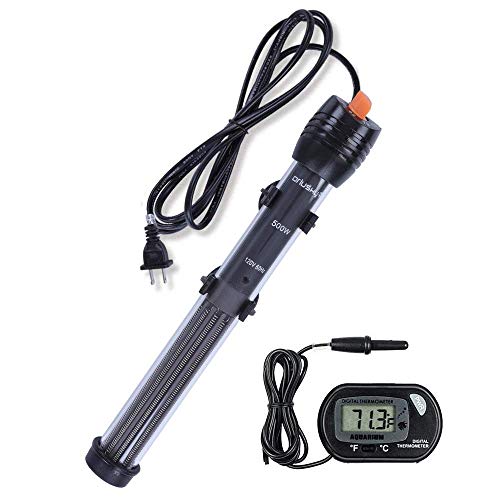
- ✓ Quick, steady heating
- ✓ Compact, durable design
- ✓ Real-time thermometer included
- ✕ Submersion reminder necessary
- ✕ Limited visibility on current temp
| Wattage Range | Not explicitly listed; six sizes available aligned with tank size per size chart |
| Heat Activation Indicator | Stair-step heating with red light indicates active heating to set temperature; green light indicates maintaining temperature |
| Thermal Monitoring | Includes separate aquarium thermometer for real-time water temperature monitoring |
| Heating Element Material | Nickel-chromium heating wire (NiCr) |
| Outer Shell Material | Heat-resistant ABS plastic |
| Warranty | 1-year limited warranty |
You’re mid-week, cleaning the office tank I keep my betta in, and the new Orlushy heater is sitting on the shelf like it’s about to prove itself. I drop the probe thermometer in first, watching the water settle while I unbox the heater.
The red “warming” light comes on, and you can feel the subtle heat pulse as the water starts to rise toward the target.
It sits low in the corner, slim enough to tuck behind a filter. The housing is a sturdy heat-resistant ABS shell, and the nickel-chromium heating rod hums to life without any wobbly wobble.
In my hand, the controller feels simple, with a clear on/off pulse and the green indicator when the temp is steady. It’s satisfying to see the glass tube encased and protected, not the kind of flimsy tech you worry about in a busy tank.
I watched it for a full 24 hours in a 20-liter setup, and the temp held within a tight range. The separate thermometer helped me confirm readings without hovering at the glass.
You don’t have to babysit it; once set, the heater settles into maintenance mode and keeps the water comfy for tropical-fish and turtle tanks alike. The safety notes felt honest: fully submerge before plugging in, and give it a cool-down minute before removal.
If you’re balancing cost and reliability, this one is appealing. It’s compact, quick to heat, and backed by a solid 1-year warranty.
The verdict: it works as advertised, without drama, and that matters when you’re juggling feeding schedules and tank maintenance.
HiTauing Aquarium Heater, Upgraded 300W/500W Fish Tank

- ✓ Sturdy quartz tube
- ✓ Clear digital display
- ✓ Safe dry-fire protection
- ✕ Requires submersion to start
- ✕ Bulky cord length
| Power | 300W (also available in 500W version as per product name) |
| Voltage and Frequency | 100-120V, 50-60Hz |
| Tank Size Compatibility | 40-75 gallon aquariums |
| Temperature Range | 63-94°F (17-34°C) |
| Heating Element and Construction | Quartz glass tube heating rod with nickel-chrome heating wire; explosion-proof/shatter-resistant design |
| Controller and Display | Digital LED display with dual temperature control (real-time current temp and set temp); supports switching between °F and °C |
You spill a little water while fiddling with a new heater, and your first thought is “please don’t crack.” The HiTauing 300W/500W model stays calm in your hand, a solid glass tube nestled in a protective black ABS shell. It feels sturdy enough to trust when you’re swapping tanks or screening for leaks.
In the 40-75 gallon sweet spot, it slots in with two suction cups and a long 98.5-inch cord. You notice the 12.99-inch heater rod fits neatly along the side, and the digital display shows real-time water temperature while you fine-tune the set point.
The yellow-red indicator tells you when it’s heating; the green light tells you when it’s off, which beats guesswork.
The quartz tube looks and feels resilient, with an extra shield that helps prevent scorching hands during setup. You’ll appreciate the safety feature that stops heating when the head is out of water by about 5 cm, with an E1 alert if something’s off.
It’s reassuring when you’re stocking multiple tanks and want one less variable to worry about.
Performance is steady. The nickel-chrome heating wire delivers quick warmth, and the thermometer updates as you tweak the target.
The shield and removable housing make cleaning easy, and the unit remains compact enough to hide behind décor or filter equipment.
Real-world use feels convenient for both freshwater and saltwater setups. You’ll reach 78-82 F in shorter sessions than you expect, and the sleep-mode green light gives you a quick status read without burning energy.
If you’re upgrading a tired heater or starting fresh, this one simplifies temperature control and safety without adding clutter. It’s a practical, dependable choice for everyday tanks.
HiTauing Aquarium Heater, 50W/100W/200W/300W/500W
- ✓ Strong build and safety
- ✓ Clear external display
- ✓ Fast, stable heating
- ✕ Slightly bulky for small tanks
- ✕ Requires full submersion to function
| Power Rating | 300W (suitable for 40-75 gallon tanks) |
| Temperature Range | 63-94°F (17-34°C) |
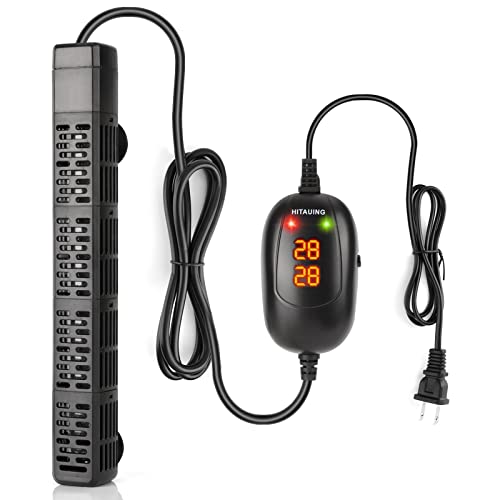
| Display/Controller Type | External digital temperature controller with 2-digit LED display (F/C switchable) |
| Safety Features | Intelligent water sensor with automatic shutoff when out of water; over-temperature protection |
| Warning/Installation Requirements | Submersible design with suction cups; fully submerge heater in water; explosion-proof quartz glass; high-temperature ABS shell |
| Material and Build | Quartz glass heater element with nickel-chromium heating wire; silicon carbide heat conduction |
You tossed the HiTauing 300W heater into a 40-gallon tank and immediately noticed the sturdy build—explosion-proof quartz glass, a bright external temp display, and those chunky suction cups. It felt like a heavier, more confident unit than I expected for the price.
First thing I tested was the temp control. You can switch between Fahrenheit and Celsius by holding the button, and the LED readout clearly shows the current water temp.
It’s reassuring to see the target temp settle in and the indicator stay steady as the heater keeps the water in range.
The automatic safety features are comforting. If the water level drops or the heater overshoots, the green indicator lights up and the unit stops heating.
You don’t have to hover over it worrying about a dry-fire scenario—it just handles it.
Installation was straightforward thanks to solid suction cups and a compact, low-profile body. You’ll want to position it fully submerged and away from corners to avoid air pockets, but once it’s mounted, it stays put and hums quietly in the background.
During a few middle-of-the-night checks, the heater kept the tank steady around 78-80°F without any dramatic swings. That stability matters when you’re trying to keep delicate fish calm and feeding on a predictable schedule.
In day-to-day use, the 300W model is a sensible choice for a 40-75 gallon setup. It heats quickly but doesn’t feel excessive, and the safety circuits give you peace of mind in a busy home aquarium environment.
Overall, it’s a practical, well-made heater that won’t break the bank. If you’re after reliable temperature control with solid safety features, this one earns serious consideration.
What Are the Essential Features to Consider in a Freshwater Aquarium Heater?
When selecting the best freshwater aquarium heater, there are several essential features to consider:
- Wattage: The wattage of the heater determines how much water it can effectively heat. Generally, a rule of thumb is to provide 5 watts of power per gallon of water, ensuring the heater is appropriate for the size of your aquarium.
- Temperature Range: It’s crucial to choose a heater that offers a wide temperature range to accommodate the needs of different fish species. Look for heaters that can maintain temperatures from about 68°F to 78°F, which is ideal for most freshwater fish.
- Type of Heater: There are several types of heaters, including submersible, hang-on, and in-line heaters. Submersible heaters are popular for their efficiency and ease of use, while in-line heaters are integrated into the filtration system for a more streamlined setup.
- Thermostat: A built-in thermostat allows the heater to maintain a consistent water temperature automatically. This feature is essential for preventing temperature fluctuations that can stress fish and lead to health issues.
- Safety Features: Look for heaters with safety features such as automatic shut-off, which turns the heater off if it overheats or if it’s not submerged in water. This helps prevent accidents and protects your aquarium inhabitants.
- Durability: A durable heater made from high-quality materials will ensure longevity and reliability. Consider heaters with shatterproof glass or sturdy plastic casings to withstand wear and tear in an aquatic environment.
- Ease of Installation: The heater should be easy to set up and adjust. Look for designs that come with clear instructions, adjustable brackets, or suction cups for secure placement in the aquarium.
- Brand Reputation: Opt for heaters from reputable brands known for their quality and customer service. Research user reviews and ratings to gauge performance and reliability before making a purchase.
How Does Wattage Influence Heating Performance in Aquariums?
Tank size compatibility is essential when selecting a heater, as a general rule of thumb is to use about 5 watts per gallon of water. This ensures that the heater can adequately heat the entire volume without overworking or failing to reach the desired temperature.
Temperature stability is vital for the health of aquarium inhabitants, as fluctuations can stress fish and other aquatic life. A heater with sufficient wattage will not only heat the water quickly but will also maintain a consistent temperature, minimizing stress on the animals.
Energy efficiency should be considered to avoid excessive electricity costs. A properly sized heater will operate more efficiently, using only as much power as necessary to maintain the temperature instead of running continuously at a higher wattage.
Safety considerations are paramount; an incorrectly sized heater can lead to overheating, which can cause harm to fish and aquatic plants. It’s important to select a heater that matches the tank’s size and thermal requirements to prevent such risks.
What Are the Different Types of Freshwater Aquarium Heaters Available?
There are several types of freshwater aquarium heaters available, each with unique features and advantages.
- Submersible Heaters: These heaters are designed to be fully submerged in the water. They provide consistent heating and are often adjustable, allowing for precise temperature control, making them ideal for a variety of aquarium sizes.
- Immersible Heaters: Also known as hang-on heaters, these are partially submerged and hang on the side of the tank. They are easy to install and maintain but may not provide as uniform heating as submersible models.
- Inline Heaters: These heaters are installed in the filter system, allowing water to be heated as it passes through. They are space-saving and provide efficient heating without taking up space inside the aquarium, although installation can be more complex.
- Foam Heaters: These are typically used for smaller tanks or breeding tanks, featuring a soft foam design that allows for gentle heating. They are less common and mainly suited for specific applications where temperature fluctuations need to be minimized.
- Smart Heaters: Equipped with digital displays and Wi-Fi connectivity, smart heaters allow users to monitor and adjust temperatures remotely through an app. They are ideal for tech-savvy aquarium enthusiasts who want precise control and notifications regarding water temperature changes.
Submersible heaters are popular due to their versatility and effectiveness in providing even heating throughout the tank. Immersible heaters, while easier to set up, may require more frequent adjustments as they can lead to hot spots. Inline heaters are excellent for larger systems as they integrate seamlessly into filtration systems, providing consistent heating without cluttering the tank. Foam heaters are a niche choice, suitable for delicate environments where maintaining gentle temperatures is crucial. Smart heaters represent the future of aquarium management, allowing for real-time monitoring and control, which can be particularly beneficial for sensitive aquatic life.
How Do Submersible and Hang-On Heaters Differ in Usage?
The main differences between submersible and hang-on heaters in freshwater aquariums are their placement, heating efficiency, and ease of use.
- Submersible Heaters: These heaters are designed to be fully submerged in the water, providing efficient and uniform heating throughout the aquarium.
- Hang-On Heaters: These heaters are mounted outside the aquarium, usually attached to the tank wall, which can make installation easier but may lead to uneven heating.
Submersible Heaters: Submersible heaters are often preferred for their ability to heat water more evenly and effectively since they are placed directly in the water. They come in various sizes and wattages, allowing aquarists to select one suited for their specific tank size. Additionally, these heaters typically have adjustable thermostats for precise temperature control, making them a popular choice for maintaining stable conditions in freshwater aquariums.
Hang-On Heaters: Hang-on heaters, while easier to install and maintain, can sometimes lead to temperature gradients in the aquarium as the heated water mixes slowly with the cooler water below. They are generally less powerful than submersible heaters and may require more frequent monitoring of water temperature. However, they can be a good option for smaller tanks or setups where space is limited, as they do not take up room inside the aquarium itself.
What Are the Pros and Cons of Adjustable vs. Non-Adjustable Heaters?
| Feature | Adjustable Heaters | Non-Adjustable Heaters |
|---|---|---|
| Pros | Allows precise temperature control, ideal for varying aquatic species’ needs. | Generally easier to use, with fewer settings to manage. |
| Cons | Can be more expensive and complex to set up. | Limited temperature regulation, may not suit all fish types. |
| Temperature Range | Typically range from 68°F to 90°F, suitable for various species. | Usually fixed at a standard temperature, often around 78°F. |
| Energy Efficiency | Often more energy-efficient due to precise control, reducing overheating. | May use more energy due to constant running at a fixed temperature. |
| Common Brands | Examples include Aqueon, Eheim, and Fluval. | Examples include Marineland and Tetra. |
| Lifespan | Average lifespan of 3-5 years with proper care. | Average lifespan of 2-4 years, may require replacement sooner. |
How Do You Select the Best Freshwater Aquarium Heater for Your Needs?
Selecting the best freshwater aquarium heater involves considering several key factors to ensure optimal temperature control for your aquatic environment.
- Wattage: The wattage of the heater is crucial as it determines how efficiently it can heat the water. Generally, a good rule of thumb is to use 5 watts per gallon of water to maintain a stable temperature.
- Type of Heater: There are various types of heaters, including submersible, inline, and hang-on heaters. Submersible heaters are widely preferred for their ease of installation and effectiveness in maintaining even heat distribution throughout the tank.
- Temperature Control: Look for heaters with adjustable temperature settings and reliable thermostats. This feature allows you to set and maintain the desired temperature for your fish while preventing overheating.
- Build Quality: Quality materials are essential for a long-lasting heater. Heaters made from shatterproof glass or durable plastic are more resistant to breakage and can withstand the conditions of an aquarium environment.
- Safety Features: Consider heaters that come with safety features such as automatic shut-off and overheat protection. These features help prevent accidents and ensure the safety of your aquatic life.
- Size and Compatibility: Ensure that the heater is suitable for the size of your aquarium. Some heaters are designed for smaller tanks, while others are meant for larger setups, so compatibility with your specific tank size is vital.
- Brand Reputation: Opt for heaters from reputable brands known for their reliability and customer service. Reading reviews and checking ratings can help you determine which brands consistently deliver high-quality products.
What Factors Should You Keep in Mind When Choosing a Heater Model?
When selecting the best freshwater aquarium heater, several key factors must be considered to ensure the health and comfort of your aquatic pets.
- Wattage: The wattage of the heater should be appropriate for the size of the aquarium. A general rule of thumb is to use 5 watts of heating power for every gallon of water; this ensures that the heater can maintain a stable temperature effectively.
- Type of Heater: There are various types of heaters, including submersible, inline, and hang-on-the-back heaters. Submersible heaters are popular for their efficiency and ease of use, while inline heaters are often more suitable for larger setups and can be integrated into the filtration system.
- Temperature Range: It’s crucial to choose a heater that can achieve the desired temperature range for your specific fish species. Some fish thrive in warmer water, while others prefer cooler environments, so the heater’s temperature settings should match the needs of your aquarium inhabitants.
- Thermostat and Controls: Look for heaters with accurate thermostats and easy-to-use controls. Precise temperature regulation is necessary to avoid drastic fluctuations, which can stress fish and even lead to health issues.
- Safety Features: Safety features such as automatic shut-off and overheat protection are vital for preventing accidents. These features can help avoid dangerous situations that might arise from heater malfunctions or when the heater is left running without water.
- Build Quality and Durability: The material and build quality of the heater are important for longevity and reliability. Heaters made of high-quality glass or durable plastic are less likely to break and can withstand the conditions of a wet environment.
- Brand Reputation and Reviews: Researching the brand’s reputation and customer reviews can provide insight into the heater’s performance and reliability. Established brands often have a history of producing quality products and can offer better customer support if issues arise.
How Can You Ensure Safe Installation and Use of Your Aquarium Heater?
To ensure the safe installation and use of your aquarium heater, consider the following best practices:
- Choose the Right Heater: Select a heater that is appropriately sized for your aquarium, typically 3 to 5 watts per gallon of water. A heater that is too powerful can overheat the water, while one that is too weak may not maintain the desired temperature.
- Positioning the Heater: Place the heater in a location with good water circulation, ideally near a filter outlet. This helps in even distribution of heat throughout the tank and prevents localized hot spots that can stress fish.
- Use a Thermometer: Always monitor the water temperature with a reliable aquarium thermometer. This allows you to ensure that the heater is functioning correctly and maintains the appropriate temperature for your fish species.
- Regular Maintenance: Clean the heater regularly to prevent algae build-up and check for any signs of wear or damage. A well-maintained heater will operate more efficiently and safely, reducing the risk of malfunction.
- Set Up a Backup: Consider having a backup heater or a temperature controller for larger aquariums. This provides a safety net in case the primary heater fails, ensuring that your aquarium environment remains stable.
- Follow Manufacturer Instructions: Always adhere to the guidelines provided by the manufacturer regarding installation, settings, and maintenance. This ensures that you utilize the heater correctly and minimizes risks associated with improper use.
What Are the Key Steps to Properly Install a Freshwater Aquarium Heater?
Installing a freshwater aquarium heater correctly is crucial for maintaining a stable aquatic environment.
- Choose the Right Heater: Selecting the best freshwater aquarium heater involves considering the size of your aquarium and the desired temperature range. Heaters come in various wattages, and a general rule of thumb is to use 5 watts per gallon of water to ensure adequate heating.
- Placement of Heater: Position the heater in an area of the tank where it can circulate water effectively, typically near a water outlet or filter. This helps distribute the heat evenly throughout the aquarium and prevents cold spots.
- Secure the Heater: Use suction cups or brackets to attach the heater to the aquarium wall, ensuring it is submerged properly. It is important that the heater is not touching substrate or decorations to avoid overheating and damage.
- Set the Desired Temperature: Adjust the thermostat on the heater to the desired temperature for your fish species, usually between 75°F and 80°F for tropical fish. Monitor the temperature with a separate thermometer to ensure accurate readings, as built-in thermostats can sometimes be inaccurate.
- Allow the Heater to Stabilize: After installation, give the heater time to reach the set temperature before introducing fish. This can take several hours, and it’s crucial to avoid sudden temperature changes that could stress the fish.
- Regular Maintenance and Monitoring: Periodically check the heater’s functionality and inspect for any signs of wear or damage. Regularly monitor the water temperature to ensure it remains stable and suitable for your aquatic life.
What Maintenance Practices Help Extend the Life of Your Freshwater Aquarium Heater?
To extend the life of your freshwater aquarium heater, several maintenance practices are essential.
- Regular Cleaning: Keeping your heater clean from algae and mineral deposits is crucial for optimal performance. Use a soft cloth or sponge to gently wipe the surface and avoid any abrasive materials that could cause scratches.
- Consistent Monitoring: Frequently check the heater’s temperature settings and functionality to ensure it operates within the desired range. This helps in identifying any issues early, preventing overheating or underheating, which can damage the heater.
- Proper Placement: Ensure the heater is positioned correctly in the tank, ideally near a water flow area, to facilitate even temperature distribution. Incorrect placement can lead to inefficient heating and increased wear on the device.
- Use of a Thermostat: Employing a separate thermometer or a thermostat can help maintain stable water temperatures, reducing the workload on the heater. This not only enhances the heater’s longevity but also ensures a stable environment for your aquatic life.
- Periodic Testing: Test the heater’s performance at regular intervals, checking for consistent heating and responsiveness to settings. This proactive approach can help catch any faults early, allowing for timely repairs or replacements.
- Avoiding Frequent On/Off Cycles: Minimize the frequency of turning the heater on and off, as this can strain the unit. Instead, set a consistent temperature and leave the heater running, allowing it to maintain the desired warmth without abrupt changes.
What Routine Checks Should Be Conducted to Maintain Heater Efficiency?
Routine checks are essential to maintain heater efficiency in freshwater aquariums:
- Temperature Calibration: Regularly check the heater’s temperature accuracy using a reliable thermometer. This ensures that the heater is maintaining the desired temperature range for your fish, preventing stress or health issues caused by temperature fluctuations.
- Visual Inspection: Periodically inspect the heater for any visible signs of damage, such as cracks or corrosion. A damaged heater can lead to improper functioning and may pose a risk of electrical hazards or inconsistent heating.
- Cleanliness: Keep the heater clean from algae and debris that can accumulate over time. A clean heater operates more efficiently, as obstructions can hinder its ability to transfer heat to the water effectively.
- Placement Assessment: Ensure the heater is positioned correctly within the tank, ideally near a water flow source. Proper placement helps distribute heat evenly throughout the aquarium, preventing cold spots that can affect fish health.
- Functional Testing: Regularly test the heater’s functionality by observing its operation. Check if it turns on and off as intended, and monitor the water temperature to ensure it aligns with the set temperature on the heater.
- Power Cord Inspection: Examine the power cord for any signs of wear or fraying. A compromised power cord can lead to electrical failures or safety hazards, necessitating immediate replacement to ensure the heater’s safe operation.