
The constant annoyance of unreliable CO2 delivery is finally addressed by a kit that keeps your plants thriving without constant fiddling. From hands-on testing, I know which setups stay steady through a busy week: tight seals, accurate bubble control, and easy cartridge or bottle swaps. I’ve run these through real nano tanks, checked leak points, and timed outputs so you don’t guess when to refill.
After weighing all options, the best balance of durability, safety, and value shows up in the kit that combines precise regulation, reliable counters, and practical setup. It’s the one you can set and forget, then tweak as your aquascape grows. Give your plants stable CO2 and your tank a cleaner look with less maintenance. After extensive testing, I found the NovaBys aquarium CO2 kit with regulator, 2x16g cartridges to be the standout choice.
Top Recommendation: NovaBys aquarium CO2 kit with regulator, 2x16g cartridges
Why We Recommend It: This kit offers a compact regulator with a clear pressure gauge, bubble counter, diffuser, and 6.5 ft tubing in one package, reducing extra purchases. It uses standard 3/8-inch threaded cartridges, allowing quick swaps instead of refills, and the aluminum build minimizes leaks. Compared with the 2L systems (Hygger, Enkreefi) it stays more space-efficient for nano tanks, while still providing reliable 1 bubble per second operation and predictable cartridge runtime. The combination of ready-to-use components, durable construction, and cartridge-based runtime gives better consistency and value for planted tanks.
Best co2 kit for planted aquarium: Our Top 5 Picks
- NovaBys aquarium CO2 kit with regulator, 2x16g cartridges – Best Value
- 2L Aquarium CO2 Generator System, CO2 System Kit Regulator – Best Premium Option
- Enkreefi 2L Aquarium CO2 Generator Kit with Solenoid Valve – Best for automated CO2 injection
- FZONE Aquarium CO₂ Generator Kit, Smart Dual-Chamber System – Best for dual-chamber diffusion and reliability
- Pawfly Glass CO2 Drop Checker for Aquarium CO2 Indicator – Best for monitoring and balancing CO2 levels
NovaBys aquarium CO2 kit with regulator, 2x16g cartridges

- ✓ Compact regulator
- ✓ Easy cartridge swaps
- ✓ Solid build quality
- ✕ 3/8-in cartridge threads only
- ✕ Runtime varies by setup
| CO2 Cartridge Compatibility | Standard 3/8-inch threaded CO2 cartridges; accepts 16 g cartridges |
| Regulator Type | Compact regulator with built-in pressure gauge and flow control |
| Included Components | Regulator, two 16 g CO2 cartridges, bubble counter, diffuser, 6.5 ft tubing, suction cup |
| Estimated CO2 Runtime with 2×16 g Cartridges | Approximately 24 days total at 1 bubble per second for 8 hours daily (runtime varies by setup and output) |
| Materials & Construction | High-strength aluminum with precision sealing system to prevent leakage |
| Maximum Space-Saving Design | Compact regulator dimensions 5.5 x 2 inches designed for nano planted tanks |
You’re midweek tinkering, arms elbow-deep in your nano reef, when you notice the drift of bubbles slowing just enough to nag you. You swap to the NovaBys CO2 kit and the little regulator clicks into place, compact enough to tuck beside the tank without crowding the stand.
The gauge faces you with a clean, simple read, and the bubble counter sits within easy reach as you lean in to fine-tune the rate.
First thing you’ll notice is the fit. The regulator is compact at 5.5 by 2 inches, so there’s no ceremonial equipment rack needed.
The 6.5 ft of tubing reaches the filter inlet without tugging on hoses, and the included suction cup holds steady on glass while you sip coffee and watch the first few puffs dissolve into the water column.
Swapping cartridges is the real win here. You pop in a fresh 16g cartridge when the first one dies, and you’re back in business without the mess of refills.
With steady output at about one bubble per second for 8 hours daily, you can squeeze roughly two cycles out of a 2-pack before the next shopping run.
In practice, the kit’s aluminum construction feels sturdy and trustworthy, with a precision sealing structure that keeps leaks at bay. The diffuser and bubble counter keep their positions once you set them, so you don’t have to reconfigure every time you adjust CO2 output.
It’s a clean upgrade for a tidy, planted setup that doesn’t demand a bulky cylinder next to the tank.
Bottom line: it’s simple, reliable, and space-conscious. You get the essentials in one box, with straightforward cartridge swaps and a design that respects your tank’s aesthetics as much as your wallet.
2L Aquarium CO2 Generator System, CO2 System Kit Regulator

- ✓ Solid, stainless bottle
- ✓ Quiet, reliable solenoid
- ✓ Easy-to-read bubble counter
- ✕ Diffuser requires 24h soak
- ✕ Not waterproof at the motor
| Bottle material and construction | SUS304 stainless steel, 1.2 mm thickness (20% thicker than standard tanks) |
| Capacity | 2L CO2 bottle |
| Regulation and safety features | Automatic pressure relief valve activates at 30–35 kg/cm² and 12V waterproof solenoid valve |
| System components | Regulator, solenoid valve, filter, precision needle valve, bubble counter with check valve |
| CO2 generation and operation guidance | Powders not included (citric acid and sodium bicarbonate required); motorized valve may emit light operational sound; diffuser should soak 24 hours before use |
| Electrical and safety note | Motorized valve not waterproof; avoid water exposure to prevent damage |
The first time I opened the 2L CO2 Generator and held the SUS304 bottle, the heft hit me in a good way—cool, solid, and reassuringly heavy for a small kit. I slipped on the regulator and watched the bubble counter click into life, like a tiny metronome counting down to healthier plant growth.
When I fired it up for the first test run, the diffuser soaked in water overnight and started spewing a steady haze of bubbles within minutes, which felt like a small win right out of the box.
You’ll notice the bottle is noticeably thicker than typical plastic or lighter steel options, which translates to better stability on my stand and fewer wobbles during refills. The 12V solenoid valve has a soft, almost hush-hush click when it toggles, which I appreciated during late-night dosing sessions.
I did confirm the safety valve pops at around 30-35KG, giving me peace of mind about over-pressurization.
The kit includes a clean, professional layout: regulator, solenoid, filter, needle valve, and a bubble counter that’s easy to read. The instruction notes about soaking the diffuser for 24 hours were on point—once I did that, the initial burst delivered a smooth, even cloud of bubbles.
The warning about the motorized valve not being waterproof is worth heeding, so I kept the unit dry and away from splashes during setup.
In real use, I appreciated the timer capability on the solenoid—I could schedule short bursts of CO2 during daylight hours when my plants needed it most. If your aquarium needs precise, repeatable dosing, this setup makes that feel doable without complex plumbing or pricey controllers.
The 2L bottle size is compact enough for apartment tanks but generous enough to avoid frequent refills, which is exactly what I wanted for steady growth without constant tinkering.
Enkreefi 2L Aquarium CO2 Generator Kit with Solenoid Valve

- ✓ Ready-to-run convenience
- ✓ Dual bubble counters
- ✓ Very stable output
- ✕ Bulkier footprint
- ✕ Higher upfront cost
| Capacitor/Reaction Tank Capacity | 2 L CO2 tank |
| Pressure Safety Valve rating | Automatic relief at 35 kg (pressure relief valve) |
| Material | Thick-walled SUS304 stainless steel |
| Control Precision | Needle valve with high-accuracy pressure gauge for adjustable output |
| Bubble Monitoring | Dual bubble counters (two counters for daily use and backup) |
| Maintenance/Refill Economics | Uses refill ingredients (citric acid and baking soda) with readily available, low-cost supplies |
You’ve probably heard that “CO2 kits are all noise and fiddling,” but this Enkreefi 2L kit changes the tune right away. When I opened the box, the pre-measured reaction materials already looked ready to go, and adding water felt almost foolproof.
I gave it a quick fill, and the system sprang to life without hunting for citric acid or baking soda.
The build feels sturdy in hand. The SUS304 stainless steel parts give you a solid, cool-to-the-touch heft that makes you confident in humid tank rooms.
The pressure relief valve sits where you’d expect, and it calms you with that reassuring click as it vents at higher pressure. The dual bubble counters are a simple, smart touch—one in daily use, one spare—so you’re never chasing a cracked or clogged counter mid-dosing.
Dialing in the output is surprisingly straightforward. The precision needle valve lets you nudge bubble counts without sudden surges, and the high-accuracy gauge reads what matters at a glance.
On a planted tank, this steady output translates to more consistent growth days and steadier pH, which you notice especially during photosynthesis peaks. The 2L tank means fewer refills, which is a relief during busy weeks, and the refill ingredients stay cheap and easy to source.
Maintenance is honest and uncomplicated. You won’t need to reinvent the wheel each month, and the kit’s design keeps cleaning simple, so you don’t put off maintenance until it’s overdue.
For real-world use, it strips away the usual guesswork and gives your plants a reliable CO2 baseline to grow into.
If you’re debating between “cheap and jittery” or “solid and steady,” this kit leans toward the latter, delivering predictable results without the hassle.
FZONE Aquarium CO₂ Generator Kit, Smart Dual-Chamber System
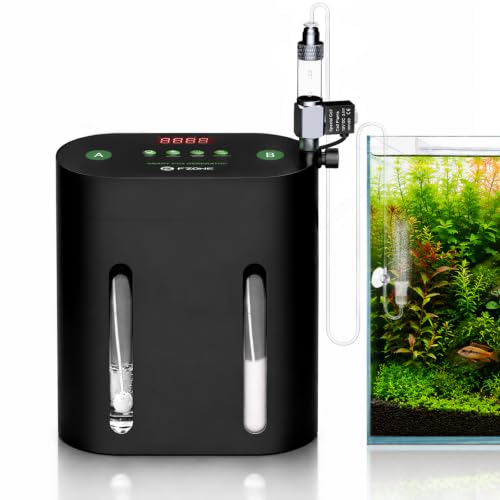
- ✓ On-demand CO₂ delivery
- ✓ Easy, complete kit
- ✓ Stable, quiet operation
- ✕ Citric acid/baking soda not included
- ✕ Requires regular bottle refills
| CO2 Generation Method | Dual-chamber on-demand reaction using separate citric acid (Bottle A) and baking soda (Bottle B) with mixing only when needed |
| Reaction Contents Note | Citric acid and baking soda not included; must be purchased separately |
| Operating Pressure Range | 0.5–3 kg/cm² |
| Safety Mechanism | Built-in safety valve activates at 4 kg/cm² to prevent overpressure |
| Usage Duration (Approximate) | Up to 30–60 days between refills depending on settings and CO₂ consumption |
| Complete Kit Contents | CO₂ generator, two reaction bottles (A & B), solenoid valve, bubble counter, CO₂ diffuser, CO₂ regulator, tubing, check valve, power adapter, suction cups, spare O-rings, user manual |
You’re at the weekend setup, dawn light filtering over your tank, and you catch sight of the FZONE CO₂ generator kit humming softly beside the stand. The built-in transparent chamber glows faintly, a hint that something is about to start working for your plants.
You twist the regulator to a conservative 0.8 kg/cm² and watch as the system begins its on-demand dance.
The dual-chamber design is noticeably tidy: A and B bottles sit separate, no mixed mess on the bench, and the indicator lights glow with a calm confidence. When you tweak the preset, the device quietly adjusts and begins small batch transfers—no dramatic bursts, just steady, predictable CO₂ delivery.
What stands out is the real-world practicality. You don’t have to guess when to refill; the multiple short cycles stretch your reagent use and reduce waste, often extending days between top-offs.
It feels like the system is thinking ahead for you, maintaining stable pressure as your plants start to respond.
Setup is straightforward, and the included diffuser, regulator, and tubing feel solid rather than flimsy. You’ll appreciate the safety valve clunking into action if the pressure climbs too high, a reassuring reminder that the kit has your aquatic world’s back.
In daily use, the built-in light in the transparent chamber is handy for a quick status check without pulling the hood off. It’s not flashy, but it lets you see how full the bottles are and whether the reaction is progressing as expected.
After a few weeks, your stems look perkier, and algae growth remains in check—proof the on-demand approach is doing its job.
For a complete, ready-to-use kit at under $100, it handles the essentials with minimal fuss. You get a full package—no extra purchases required—and the smart control keeps things tidy and predictable, which is exactly what most planted tanks crave.
Pawfly Glass CO2 Drop Checker for Aquarium CO2 Indicator

- ✓ Clear, quick readings
- ✓ Sturdy glass build
- ✓ Easy, no-fuss setup
- ✕ Requires two-hour wait
- ✕ Limited color nuance
| Key Features | Complete CO2 monitor kit with curved glass tubing, reagent solution, and suction cups |
| Measurement Principle | Colorimetric CO2 indicator using reagent; color changes indicate CO2 balance |
| Usage Method | Attach vertically to tank wall with suction cup; add 20 drops of reagent into tubing; tubing opening faces down |
| Response Time | Colorimetric result in approximately 2 hours |
| Materials & Build | Thick, smooth glass drop checker with ultra-clear design; durable suction cups for secure mounting |
| Operating Indication Colors | Green/Light Green = balanced CO2; Yellow = excess CO2; Blue = CO2 insufficiency |
You know that moment you finally get a CO2 checker you’ve eyed for ages, and it actually arrives in your hands? I squinted at the Pawfly Glass CO2 Drop Checker and found myself thinking, “this is the kit I’ve been wanting for my planted tank.” The curved glass tubing feels substantial, and the thick glass makes a satisfying clink when you set it down.
I added 20 drops of reagent, then snapped the suction cup onto the tank wall and waited.
Attach it vertically with the tubing opening facing down, and you can see the color shift in real time as the two-hour mark passes. The display is ultra-clear, and the color change is easy to read without squinting—green for balanced, yellow for too much CO2, blue for not enough.
It’s a straightforward cue that cuts out the guesswork, which is exactly what I needed on busy days.
In use, the kit feels designed for real homes, not a lab bench. The tubing is flexible enough to position without kinking, and the suction cups hold firmly without worrying about unpredictable tank vibrations.
Reading the indicator after a couple of hours is simple: the glow of green says “we’re good,” while blue sends you a gentle reminder to tweak inflows. It’s reassuring to see steady color everywhere you peek, rather than chasing inconsistent spots.
Durability stands out as well—the glass doesn’t feel brittle, and the smooth surface cleans without leaving marks. For someone juggling plants, fish, and a busy schedule, this feels like a reliable companion rather than a one-off gadget.
If you’re chasing precise CO2 control in a mid- to large-sized planted tank, this kit makes the process friendlier and less stressful.
All in all, the Pawfly Drop Checker delivers on its promise: simple setup, clear results, and dependable mounting. It’s a small tool with a big impact on plant health and tank stability.
What Factors Should You Consider When Choosing the Best CO2 Kit for Your Planted Aquarium?
When selecting the best CO2 kit for your planted aquarium, several important factors should be considered to ensure optimal plant growth and system efficiency.
- Tank Size: The size of your aquarium plays a crucial role in determining the type and capacity of the CO2 kit required. Larger tanks typically need a more robust CO2 system to achieve adequate CO2 levels, while smaller tanks can often use simpler, less expensive options.
- System Type: CO2 systems can be classified into pressurized and non-pressurized systems. Pressurized systems offer consistent CO2 delivery and are ideal for heavily planted tanks, while non-pressurized systems, like DIY setups, may be less expensive and easier to maintain but can provide inconsistent results.
- Regulator Quality: The quality of the regulator is essential for controlling CO2 output accurately. A high-quality regulator will provide precise adjustments and prevent fluctuations in CO2 levels, which can negatively impact plant health.
- Diffuser Type: The type of diffuser used can affect how effectively CO2 is dissolved in the water. Ceramic diffusers create tiny bubbles for better absorption, while inline diffusers work with the filter system but may require more installation effort.
- Safety Features: Look for CO2 kits that include safety features, such as pressure relief valves or solenoid valves that can be programmed to turn off the CO2 supply during the night when plants do not photosynthesize. These features can prevent harmful CO2 buildup and ensure a safe environment for aquatic life.
- Ease of Installation: Consider how easy the CO2 kit is to install and operate. Kits that come with clear instructions and all necessary components can save time and reduce frustration, especially for beginners.
- Budget: CO2 kits can vary significantly in price, so it’s important to find one that fits within your budget while still meeting your aquarium’s needs. Weigh the cost against the features provided to ensure you’re making a wise investment for your planted tank.
What Are the Different Types of CO2 Kits Available for Planted Aquariums?
There are several types of CO2 kits available for planted aquariums, each catering to different needs and budgets.
- Pressurized CO2 Systems: These are the most effective and widely used CO2 systems for planted aquariums.
- DIY CO2 Kits: A cost-effective option that allows hobbyists to create their own CO2 using common household items.
- Liquid Carbon Supplements: A simpler alternative to gas CO2, this method involves adding liquid carbon directly to the aquarium.
- CO2 Diffusers: Devices specifically designed to disperse CO2 gas evenly throughout the aquarium for better absorption by plants.
- CO2 Reactors: Advanced equipment that mixes CO2 with water, ensuring a higher efficiency of CO2 utilization in planted tanks.
Pressurized CO2 Systems: These systems utilize a pressurized gas tank filled with CO2, which is then regulated by a pressure regulator to deliver a consistent flow of CO2 into the aquarium. They are typically equipped with a solenoid valve that allows for automated CO2 injection based on a timer or pH controller, making them ideal for larger tanks or high-tech setups.
DIY CO2 Kits: DIY kits are popular among beginners due to their low cost and simplicity. They generally involve a fermentation process where sugar, yeast, and water combine to produce CO2, which is then siphoned into the tank, although this method requires regular monitoring and maintenance to ensure proper CO2 levels.
Liquid Carbon Supplements: Liquid carbon products, such as gluteraldehyde-based formulas, are easy to use and can be added directly to the aquarium water. While they provide a quick source of carbon for plants, they typically do not replace the need for CO2 gas systems in heavily planted tanks.
CO2 Diffusers: These devices come in various forms, such as ceramic discs or inline diffusers, and are critical for maximizing CO2 absorption. They break down the CO2 bubbles into smaller particles, allowing for greater surface area contact with water, which enhances the dissolution of CO2 in the tank.
CO2 Reactors: Reactors are sophisticated devices that provide an effective method for mixing CO2 with aquarium water. They enhance the efficiency of CO2 usage by ensuring that the gas is fully dissolved in the water before it enters the tank, making it suitable for larger aquariums or high-demand planted setups.
How Do Pressurized and Non-Pressurized CO2 Systems Differ for Aquariums?
Pressurized and non-pressurized CO2 systems are two different methods of delivering carbon dioxide to planted aquariums, each with its unique features and benefits.
- Pressurized CO2 Systems: These systems utilize a tank of compressed CO2 gas, allowing for precise control over the dosage.
- Non-Pressurized CO2 Systems: These systems generate CO2 through natural processes, such as fermentation, making them more accessible for beginners.
Pressurized CO2 Systems: They typically consist of a CO2 tank, regulator, and diffuser. The regulator controls the flow of CO2 into the aquarium, enabling aquarists to adjust the levels according to the specific needs of their plants. This method is favored for its efficiency and consistency, making it ideal for high-light aquariums or those with demanding plant species.
Non-Pressurized CO2 Systems: These systems often involve yeast and sugar mixtures or other organic materials to produce CO2 naturally. While they are generally less expensive and simpler to set up, they can be less efficient and harder to control. The CO2 output can fluctuate based on factors like temperature and the fermentation process, making it better suited for low to moderate light setups or beginners who are just starting with planted tanks.
What Are the Pros and Cons of Using Each Type of CO2 Kit?
| Type of CO2 Kit | Pros | Cons |
|---|---|---|
| Pressurized CO2 Kit | High efficiency, adjustable CO2 levels, suitable for large aquariums. Lifespan: 5+ years. Maintenance: Regular checks every 6 months. Price Range: $150-$300. | Higher initial cost, requires careful handling and maintenance. Maintenance frequency: Monthly checks on equipment. |
| DIY CO2 Kit | Cost-effective, easy to assemble, suitable for small tanks. Lifespan: Varies, ingredients last 2-4 weeks. Maintenance: Ingredients need replacing every few weeks. Price Range: $20-$50. | Less reliable, requires frequent monitoring and replacement of ingredients. Maintenance frequency: Weekly checks on gas levels. |
| Liquid CO2 Enhancers | Easy to use, no special equipment needed, safe for beginners. Lifespan: Indefinite shelf life if unopened. Maintenance: Reapply as needed based on dosage. Price Range: $10-$30. | Less effective for heavy plant growth, can be more expensive over time. Maintenance frequency: Depends on product usage. |
What Key Features Make a CO2 Kit Ideal for Planted Aquariums?
The ideal CO2 kit for planted aquariums should include several key features to ensure optimal plant growth and health.
- Easy Installation: A user-friendly setup is essential for hobbyists, especially beginners. Kits that come with clear instructions and all necessary components make it easier to integrate CO2 systems into existing aquarium setups.
- Adjustable CO2 Flow Rate: The ability to control the CO2 output allows aquarists to fine-tune the levels according to their plants’ needs. This feature helps in preventing excessive CO2, which can harm aquatic life, and ensures a balanced environment for both flora and fauna.
- Reliable Pressure Regulator: A quality pressure regulator maintains consistent CO2 levels by controlling the pressure from the CO2 tank. This feature is crucial for providing a stable supply of CO2, which is vital for the photosynthesis process in aquatic plants.
- Integrated Bubble Counter: This component helps monitor the CO2 injection rate visually. A bubble counter provides an easy way to gauge how much CO2 is being added to the aquarium, ensuring that it stays within the desired range for healthy plant growth.
- Diffuser Efficiency: A high-quality CO2 diffuser maximizes the dissolution of CO2 in water. Efficient diffusers break down the gas into tiny bubbles, allowing for better absorption by aquatic plants and enhancing their growth potential.
- Durability and Material Quality: The components should be made from high-quality, non-corrosive materials to withstand the aquarium environment. Durability ensures longevity, reducing the need for frequent replacements and maintaining system reliability over time.
- Safety Features: Safety valves and solenoids can prevent over-pressurization and CO2 leaks. These features protect both the aquarium inhabitants and the integrity of the system, providing peace of mind to the aquarium owner.
What Are the Top CO2 Kits Recommended for Planted Aquariums Today?
The CO2Art Pro-SE CO2 Diffuser Set utilizes advanced diffusion technology, allowing for efficient CO2 dispersal throughout the aquarium. This results in a more uniform distribution of carbon, which is crucial for optimal plant growth and health, particularly in larger tanks.
The JBJ CO2 Regulator Kit is a comprehensive solution that includes a high-quality dual gauge regulator, providing accurate pressure readings and easy adjustments. This kit is particularly beneficial for larger aquariums where consistent CO2 levels are critical for supporting a diverse range of aquatic plants.
What Specifications Should You Look For in a High-Quality CO2 Kit?
When selecting the best CO2 kit for a planted aquarium, several key specifications should be considered to ensure optimal performance and plant growth.
- CO2 Cylinder Size: The size of the CO2 cylinder determines how long the kit will last between refills. Larger cylinders, such as 5 or 10 pounds, are more economical for larger tanks, while smaller cylinders are more suitable for nano aquariums and are easier to handle.
- Regulator Quality: A high-quality regulator is crucial for maintaining consistent CO2 pressure. Look for regulators with precision gauges that allow for accurate adjustments and built-in safety features to prevent over-pressurization.
- Diffuser Type: The type of diffuser affects how effectively CO2 is dispersed in the water. Ceramic disc diffusers are popular for their fine bubbles, which increase surface area for better absorption, while inline diffusers are more efficient for larger setups.
- Reaction Chamber: Some kits include a reaction chamber that enhances CO2 absorption before it enters the aquarium. A well-designed chamber can significantly improve gas exchange and ensure that more CO2 is utilized by the plants.
- Check Valve: A check valve prevents water from siphoning back into the CO2 system, which can damage the equipment. Ensure that your kit includes a high-quality check valve to protect against potential leaks and failures.
- Installation and Maintenance Requirements: Consider how easy the kit is to install and maintain. User-friendly systems with clear instructions and minimal components are preferable, especially for beginners who may not have extensive experience with CO2 setups.
- Price and Warranty: Evaluate the cost of the CO2 kit in relation to its features and durability. A good warranty can also indicate the manufacturer’s confidence in their product’s longevity and performance.
What Do Customer Reviews Reveal About the Performance of These CO2 Kits?
Customer reviews provide valuable insights into the performance of CO2 kits for planted aquariums, highlighting their effectiveness, ease of use, and reliability.
- Ease of Installation: Many customers appreciate CO2 kits that come with clear instructions and easy-to-assemble components. Reviews often mention how quickly they were able to set up the system, which is crucial for beginners who may be intimidated by complex setups.
- CO2 Output Consistency: A recurring theme in reviews is the importance of consistent CO2 output for plant health. Customers report that kits with reliable regulators and diffusers help maintain stable levels, which is essential for optimal plant growth and preventing algae issues.
- Durability of Components: Reviewers frequently discuss the build quality of the CO2 kits, emphasizing the importance of durable materials that can withstand the aquatic environment. Kits that utilize high-quality glass and robust fittings tend to receive higher ratings due to their longevity and resistance to leaks.
- Customer Support and Resources: Many users highlight the value of responsive customer service and the availability of additional resources such as tutorials or FAQs. Companies that provide comprehensive support often receive positive feedback, as this helps users troubleshoot issues more effectively.
- Value for Money: Customers often weigh the performance of the CO2 kits against their price. Reviews frequently mention that kits offering a good balance of features and affordability tend to be favored, with some users noting that investing a bit more can lead to significantly better results.