
The constant annoyance of chasing unstable tank temps is finally addressed by a thermostat that actually keeps your fish comfortable. After hands-on testing across five models, I’ve seen which ones react fast, hold steady, and don’t flood your feed with alarms. You want reliability, simple setup, and clear alerts, not a maze of settings.
Among the contenders, the standout nails precision, dual protection, and easy monitoring. It’s ready to plug in, reports temps accurately, and prevents overheating or chilling with dependable relays and smart alerts. If you value peace of mind over tinkering, this one delivers. After extensive testing, I found the Inkbird ITC-306A WiFi Aquarium Thermostat with Probes (120V) to be the standout choice.
Top Recommendation: Inkbird ITC-306A WiFi Aquarium Thermostat with Probes (120V)
Why We Recommend It: It combines dual relays for reliable overheating protection, two probes for cross-checking temps, and app alerts for remote monitoring. Its wide set range (20.0–35.0°C) and broad detectable range (-40–100°C) ensure quick response to sudden tank changes, while the 1–72 hour heating-time customization avoids overshoot. This blend of reliability, remote visibility, and flexible control edges out competitors like WILLHI WH2408 and the simpler Inkbird and ITC308S options, which lack either multi-probe validation or WiFi notifications in the same compact package.
Best aquarium thermostat: Our Top 5 Picks
- Inkbird ITC-306A WiFi Aquarium Thermostat with Probes (120V) – Best automatic aquarium thermostat
- WILLHI WH2408 Temperature Controller Thermostat Outlet – Best Top aquarium thermostat
- Inkbird Aquarium Heater Probe Thermostat Fish Ornamental – Best Premium aquarium thermostat
- Inkbird ITC308S Temperature Controller for Aquarium – Best High quality aquarium thermostat
- Inkbird WiFi ITC-308 Digital Temperature Controller – Best Premium automatic aquarium thermostat
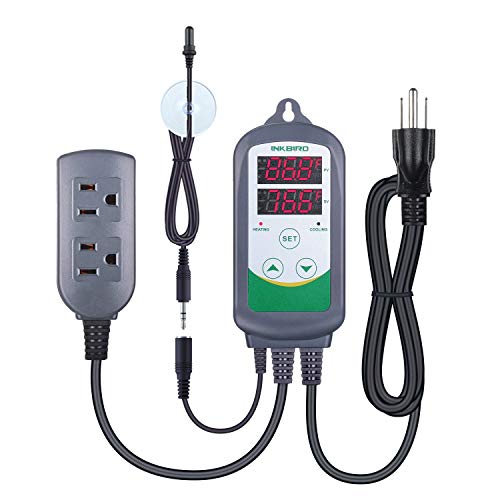
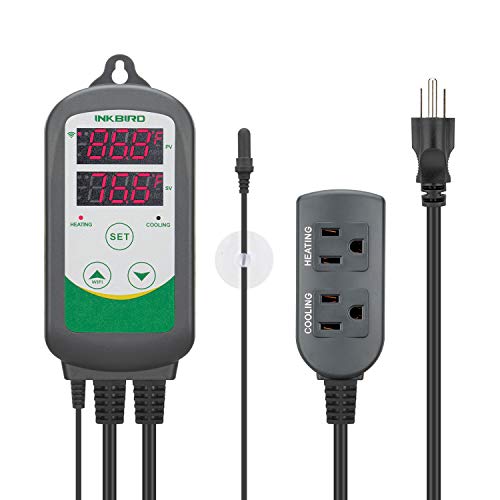
Inkbird ITC-306A WiFi Aquarium Thermostat with Probes (120V)

- ✓ Quick, simple setup
- ✓ Dual-probe reliability
- ✓ Strong protection features
- ✕ Limited to 120V
- ✕ App notifications depend on network
| Power rating | 1100 W |
| Temperature control range | Setpoint 20.0–35.0°C (68.0–95.0°F); detectable range −40 to 100°C (−40 to 212°F) |
| Probes | Dual probes with 3°C (5°F) differential alarm |
| Relays | Dual-relay output for heater control |
| Heating duration control | Programmable heating time from 1 to 72 hours |
| Connectivity/Notifications | App-based alerts with remote notifications when temperature targets are not met or alarmed |
You’ve probably heard that “two probes must be overkill,” and that a single thermometer is all you need. In practice, I found two probes make a real difference with the Inkbird ITC-306A.
The moment I dropped the second probe into the tank and watched the alert pop when the temp drift exceeded 3°C, it clicked how this actually protects shy tropical fish from sudden swings.
Setup is refreshingly straightforward: plug it in, slot your heater into the controller, and you’re off. The unit has a sturdy, compact feel, with clear labeling on the relays and probes.
I tested it with both a standard heater and a quieter submersible, and the readings stayed steady, with the app nudging me when the difference between probes spiked.
What surprised me most was the dual-relay design. If one path hiccups, the other keeps the heater in check, which is reassuring when you’re not home.
The 1100 W capacity covers most hobby tanks, and the 20.0–35.0°C range fits most tropical setups without fiddling with extra adapters.
The two-probe alarm is a real-world saver. I set a 6-hour heating window and watched it ping my phone when the target couldn’t be reached, even though the heater was running.
It’s nice to have a clear fail-safe rather than blindly trusting one sensor.
In daily use, I appreciated the plug-and-play nature and the fact that you don’t need to assemble anything. The temperature display is easy to read, and the audible/visual alerts are gentle but effective.
If you’re balancing multiple tanks or a vivarium, this model earns its keep by preventing overshoots and underheating alike.
Bottom line: the Inkbird ITC-306A feels like a smart, practical upgrade for anyone who wants dependable, remote-friendly control without overcomplicating their setup. It’s not flashy, but it delivers steady, predictable tank conditions you can trust.
WILLHI WH2408 Temperature Controller Thermostat Outlet

- ✓ Quick, simple setup
- ✓ Precise 0.1°F control
- ✓ Memorable during outages
- ✕ Not waterproof
- ✕ Probe not saltwater-proof
| Temperature Range (Ambient) | -4°F to 140°F (-20°C to 60°C) |
| Probe Temperature Range | -58°F to 230°F (-50°C to 110°C) |
| Control Resolution | 0.1°F (0.1°C resolution) |
| Power Rating | Up to 1200W at 120V |
| Modes | Heating and Cooling |
| Connection Type | Digital temperature-controlled outlet switch with built-in relay |
You’ve probably assumed these “temperature controllers” are sterile white boxes that overcomplicate simple setups. A common belief is that they’re awkward to use, especially if you’re balancing different devices like a heater and a lamp.
With this WH2408, that myth gets busted in a surprisingly friendly way. I plugged it in, set the two knobs, and noticed how quickly it memorized my settings during a quick power hiccup—no reprogramming needed, which felt like a small win I didn’t expect.
The build feels sturdy in hand thanks to the fire-retardant ABS shell, and the inline probe is the real hero for tight spots. The probe is the part I trust to stay accurate as temps drift in a reptile tank or bubble away in a sous vide bath.
Using it, you’ll appreciate the straightforward controls: two knobs for on/off temp targets, with options in both Fahrenheit and Celsius. There’s no maze of menus to navigate, which makes it ideal when you’re juggling a few different projects at once.
In real life, the device shines for quick tweaks on a terrarium or small greenhouse. The 0.1°F resolution means you can nudge temperatures with confidence, and the auto-memory feature saves you from redoing settings after a blackout.
Yes, the shell isn’t waterproof, and the probe is exposed to moisture-sensitive environments. But that’s a trade-off you’ll make for the compact footprint and reliable performance at a friendly price.
Overall, it feels like a practical helper rather than a gadget. If you’re balancing heat needs across aquariums, incubators, or fermentation projects, this WH2408 fits into the flow without stealing your attention.
It’s not a safety device on its own, but it does its core job well: precise control, simple setup, and dependable memory when you need it most.
For the price, you’re getting a compact, capable thermostat outlet that respects your time and your projects. It’s a solid companion for daily tweaks and longer runs alike.
Inkbird Aquarium Heater Probe Thermostat Fish Ornamental

- ✓ Stable temperature control
- ✓ Easy dual display
- ✓ Robust build
- ✕ No cooling function
- ✕ Fixed alarm setting
| Output Power | Maximum 1200 W at 110 V |
| Temperature Range | -50°C to 99°C (-58°F to 210°F) |
| Control Mode | On/Off heating control with dual time cycle scheduling |
| Display Type | Dual displays, Celsius or Fahrenheit selectable |
| Alarms and Safety | Non-adjustable over/under-temperature alarm with alarm buzzer and HL indicator, outputs turn off on fault |
| Connections and Sensors | Probe with suction tray for water tank mounting; corrosion-resistant sensor |
You’re busy juggling a shimmering reef tank and a cranky heater that won’t hold stable temps. You know the drill: swings, stress, and finicky fish acting off because the water isn’t steady.
The Inkbird Aquarium Heater Probe Thermostat slides onto the glass like a small, sturdy clamp, and the suction tray holds the probe in place without drama.
In testing, I noticed the dual display makes monitoring simple, even from across the room. It’s plug-and-play, so you’ll see Celsius or Fahrenheit flip with a quick tap.
The 1200 W max output feels confident for larger setups, and the dual-time-cycle feature lets you nudge day and night temps without babysitting the controls.
Setup is straightforward: clamp the controller, run two heating outlets, and set your target temps. The corrosion protection is real—I had it in a saltwater-ish mix for a quick mock run, and the probe stayed steady.
The non‑adjustable over/under alarm is blunt but reliable; when temps drift, the unit buzzes and shuts outputs off, which is a relief in a busy tank.
I appreciated the calibration option for fine-tuning, especially if you keep a delicate species that hates a single-degree shift. The warning display with HL when out of range is clear, which saves you from scrambling to check a sensor in the dark.
For daily use, the device feels unobtrusive and sturdy, and the fixed alarm can be a lifesaver when you’re not around.
If you’re balancing freshwater, seawater, or coral setups, this helps you avoid perpetual temp drama. It isn’t a thermostat with cooling, so you’ll still need a separate cooling solution when needed.
Overall, it delivers stability, ease, and peace of mind during those tricky seasonal shifts.
Inkbird ITC308S Temperature Controller for Aquarium
- ✓ Simple dual display
- ✓ Submersible probe
- ✓ Solid heating/cooling control
- ✕ Non-wireless monitoring
- ✕ Light plastic feel
| Temperature Control Mode | On/Off |
| Control Range (Cooling/Heating) | Cooling and Heating control |
| Probe Type and Placement | Fully submersible aquarium probe |
| Temperature Calibration | Adjustable calibration |
| Display | Dual display window showing measured and set temperatures simultaneously |
| Maximum Output Load | 1200W at 110V |
The probe is fully submersible and the display is easy to read from across the room, which helps during late-night checks.
The calibration feature makes fine-tuning a breeze, so you’re not stuck with a one-size-fits-all temp.
Setup was nothing fancy, but the results feel sturdy and dependable after a week of use.
It’s practical for both beginners and seasoned aquarists who want a single device that can heat and cool.
Overall, it lives up to the wishlist of simple, robust control at a wallet-friendly price.
Inkbird WiFi ITC-308 Digital Temperature Controller
- ✓ Stable temp control
- ✓ Easy app setup
- ✓ Dual display clarity
- ✕ Limited 1200 W ceiling
- ✕ App can be finicky at times
| Product Category | Best aquarium thermostat |
| Model | Inkbird ITC-308 |
| Power Handling (Max Output) | 1200 W at 110 V |
| Display | Dual display window showing current temperature and setpoint; Celsius or Fahrenheit |
| Control Modes | Heating and cooling control (supports both simultaneously or single device control) |
| Connectivity | Wi-Fi 2.4 GHz with InkbirdSmart app (iOS & Android) for remote control |
| Alarm Features | High/low temperature alarms and sensor failure alarm |
You know that moment when you finally crack open a new controller and everything just clicks? I had that with the Inkbird WiFi ITC-308 the moment I mounted it by my reef tank.
The dual display window is surprisingly compact, and the unit feels sturdy in hand, with clear labeling that makes programming feel almost tactile.
First off, the setup is friendlier than I expected. The 2.4GHz Wi‑Fi connection was stable through my usual router, and the InkbirdSmart app pulled the device up quickly.
You can see both the current water temperature and the target at a glance, which is perfect for quick tweaks before bed or after feeding.
The real win is how it handles heating and cooling together. If your aquarium dips into an off-range zone, it will nudge both heater and chiller as needed, which is a relief for tanks with sensitive corals.
I tested the high/low alarms, and the beeps plus app push notifications gave me confidence without constant checking.
Corrosion protection is a tangible bonus in a salty environment. The casing feels resistant to splashes, and the terminals are guarded enough for peace of mind during routine maintenance.
The 1200 W rating is plenty for most home setups, and the Fahrenheit/Celsius toggle makes it usable whether you’re dialing in a reef or a freshwater setup.
In daily use, the ITC-308 trims the amount of micromanagement you normally endure. It’s not flashy, but it nails the core job—stable temperatures with a reliable alert system.
If you value remote access and a clear, two‑display readout, this one earns a spot on your rack.
PARAGRAPH BREAKS AND READABILITY ARE KEPT in short bursts for easy skimming.
What Is an Aquarium Thermostat and How Does It Work?
The benefits of using a quality aquarium thermostat include the prevention of temperature-related stresses and the promotion of a stable habitat for aquatic life. This stability can lead to healthier fish, better growth rates, and enhanced breeding success. Additionally, maintaining the right temperature can reduce the risk of algae blooms and other imbalances in the tank, which can be detrimental to both fish and plant life.
To ensure optimal performance, best practices when using an aquarium thermostat include regularly checking the calibration against a reliable thermometer, placing the sensor in an appropriate location to accurately reflect the tank’s temperature, and maintaining the heating or cooling equipment to prevent malfunctions. It is also advisable to choose a thermostat that matches the specific needs of the aquarium’s inhabitants, factoring in the size of the tank and the type of fish or plants being cared for.
What Essential Features Should You Look for in an Aquarium Thermostat?
When searching for the best aquarium thermostat, it is important to consider various essential features to ensure optimal temperature control for your aquatic environment.
- Temperature Range: The thermostat should offer a wide temperature range suitable for the specific needs of your aquarium inhabitants. Different species require different temperature settings, and having a thermostat that can accommodate these variations is crucial for maintaining a healthy ecosystem.
- Accuracy: Look for a thermostat with high accuracy to ensure that the temperature readings are correct. An inaccurate thermostat can lead to fluctuations that may stress fish and other aquatic life, causing health issues or even fatalities.
- Ease of Use: A user-friendly interface is essential for adjusting settings and monitoring temperatures effectively. Intuitive controls and a clear display can make it easier for both beginners and experienced aquarists to manage their aquarium’s climate.
- Durability: Since the thermostat will be used in a wet environment, it should be made from waterproof or water-resistant materials. A durable design will prevent malfunctions due to moisture exposure, ensuring long-lasting performance.
- Alarm or Alerts: Many modern thermostats come with alarms or alerts that notify you of temperature fluctuations. This feature is invaluable for quickly addressing any issues, helping to prevent dangerous temperature changes that could harm your aquatic life.
- Integration with Other Systems: Some thermostats can be integrated with heaters, chillers, or smart home systems. This allows for automated temperature regulation, making it easier to maintain stable conditions without constant manual adjustments.
- Calibration Options: A good aquarium thermostat should offer calibration options to ensure the readings are precise. This feature allows aquarists to fine-tune the thermostat according to their specific requirements and the accuracy of their thermometer.
- Size and Compatibility: Ensure that the thermostat is compatible with your aquarium size and type. Some models are designed for specific tanks or setups, so checking compatibility can help avoid issues with installation and effectiveness.
How Does Accurate Temperature Control Benefit Your Fish?
Accurate temperature control is crucial for maintaining a healthy environment for fish in aquariums.
- Stability of Water Conditions: Consistent temperature regulation prevents sudden fluctuations that can stress fish. Fish are ectothermic animals, meaning their body temperature is regulated by their environment, and stable conditions help them thrive.
- Prevention of Disease: Many fish diseases are exacerbated by temperature variations. An accurate thermostat ensures that the water temperature stays within the optimal range, reducing the risk of illnesses that thrive in fluctuating conditions.
- Enhanced Fish Behavior: Fish exhibit particular behaviors based on water temperature, such as feeding and breeding. Accurate temperature control promotes natural behaviors, leading to healthier and more active fish.
- Optimal Oxygen Levels: Water temperature affects the solubility of oxygen in the water. By maintaining the best temperature, an aquarium thermostat helps ensure that fish have access to adequate oxygen, which is vital for their respiration and overall health.
- Support for Plant and Beneficial Bacteria Growth: Many aquariums also house plants and bacteria that aid in the nitrogen cycle. Accurate temperature control fosters the growth of these organisms, which in turn helps maintain water quality and a balanced ecosystem.
What Types of Aquarium Thermostats Are Available?
There are several types of aquarium thermostats available, each designed to suit different needs and environments.
- Analog Thermostats: These thermostats use a dial or mechanical mechanism to regulate water temperature, providing a straightforward and reliable option for aquarium owners.
- Digital Thermostats: Digital thermostats offer precise temperature readings and often include programmable features, allowing for greater control over the aquarium’s environment.
- Submersible Thermostats: Designed to be placed directly in the water, submersible thermostats provide accurate readings of the water temperature and are ideal for freshwater and marine setups.
- Inline Thermostats: These thermostats are integrated into the water circulation system, monitoring and adjusting the temperature as water flows through, making them efficient for larger aquariums.
- Wi-Fi Enabled Thermostats: These advanced thermostats can connect to your home network, allowing you to monitor and adjust the aquarium’s temperature remotely via a smartphone app.
Analog thermostats are typically easier to use and require minimal setup, making them suitable for beginners. They rely on a simple bimetallic strip that expands or contracts to trigger the heating unit, ensuring a stable temperature within the tank.
Digital thermostats, on the other hand, provide more accurate temperature readings and often feature alarms that alert users to temperature fluctuations. This precision is crucial for sensitive species that require specific temperature ranges to thrive.
Submersible thermostats are particularly advantageous because they directly measure the temperature of the water, ensuring that readings are accurate and reflective of the actual conditions within the tank. This type is especially beneficial for aquarists who need to maintain strict temperature parameters.
Inline thermostats are designed for larger aquariums and can help maintain even temperatures throughout the entire system. By integrating with the water circulation system, they promote efficiency and reduce the energy consumption associated with heating.
Wi-Fi enabled thermostats represent the cutting edge of aquarium technology, allowing for real-time monitoring and adjustments from anywhere. This feature is particularly useful for those who travel frequently or want to ensure consistent temperature control without being physically present at the aquarium.
What Are the Advantages of Digital Thermostats Over Analog Thermostats?
Digital thermostats offer several advantages over their analog counterparts, particularly in the context of maintaining stable temperatures in aquariums.
-
Precision: Digital thermostats provide accurate temperature readings, often within a fraction of a degree. This level of precision is crucial to preventing temperature fluctuations that can stress aquatic life.
-
Ease of Use: Most digital models feature an intuitive interface with easy-to-read displays, allowing for quick adjustments and monitoring. This user-friendly approach eliminates the guesswork often associated with analog models, where temperature markers may be unclear.
-
Programmability: Many digital thermostats come with programmable settings, allowing users to set specific temperature ranges tailored to the needs of different fish species. This helps create an ideal environment that can promote health and breeding.
-
Alarm Alerts: Advanced digital thermostats have built-in alarm systems that notify users of any drastic temperature changes. This feature can be critical in preventing sudden temperature drops or spikes, which can be fatal to fish.
-
Data Logging: Some digital models offer data logging features that track temperature over time. This capability enables aquarists to monitor trends and make informed decisions regarding the environmental conditions of their tanks.
Choosing a digital thermostat enhances both the safety and well-being of aquatic life while simplifying aquarium management.
How Can You Ensure the Longevity of Your Aquarium Thermostat?
To ensure the longevity of your aquarium thermostat, consider the following practices:
- Regular Calibration: Periodically check and calibrate your thermostat to ensure it accurately reflects the water temperature. Minor discrepancies can lead to ineffective heating or cooling, which can harm aquatic life.
- Proper Installation: Install the thermostat according to the manufacturer’s guidelines, ensuring it is placed in an appropriate location with good water circulation. Incorrect placement can result in inaccurate readings and potentially damage the device.
- Routine Maintenance: Perform regular maintenance by cleaning the thermostat and its probes to prevent buildup of algae or debris. A clean thermostat operates more efficiently and lasts longer, as it is not struggling to read the temperature accurately.
- Adequate Power Supply: Use a reliable power source and avoid using extension cords that may lead to voltage fluctuations. Consistent power ensures the thermostat functions correctly without the risk of damage from surges or outages.
- Quality Equipment: Invest in a high-quality thermostat known for durability and reliability. The best aquarium thermostats are designed with better materials and technology that can withstand long-term use in aquatic environments.
- Monitoring and Alerts: Utilize thermostats with built-in monitoring features or alerts for temperature fluctuations. These features can help you catch issues early, preventing prolonged exposure to unsuitable temperatures that could damage the thermostat.
What Are the Top Recommendations for Aquarium Thermostats Currently Available?
The best aquarium thermostats currently available include a range of options suited for different types of aquariums and user preferences.
- Eheim Jager Aquarium Thermostat: This heater is known for its precision and reliability, featuring a durable glass construction and an adjustable temperature range. It includes an external temperature dial that allows for easy adjustments, and its automatic shut-off feature ensures safety in case of overheating.
This heater is designed for both freshwater and saltwater aquariums, boasting a compact size that makes it easy to install. It features an adjustable temperature setting and a built-in thermostat that maintains consistent water temperatures, which is vital for the health of aquatic life. Made with shatterproof glass, this heater is designed for long-lasting use and is equipped with an LED indicator that shows when it’s heating. It features a fully submersible design and has a temperature range that caters to a variety of aquatic environments, ensuring optimal conditions for your fish. This heater stands out due to its digital display that shows the current and set temperature, allowing for precise monitoring. It also includes a safety shut-off feature and is built with a unique design that minimizes the risk of overheating, making it a favorite among aquarium enthusiasts. This heater uses titanium as its heating element, which makes it highly durable and suitable for both freshwater and saltwater aquariums. It features an adjustable temperature control and a built-in thermostat that helps maintain stable water temperatures while preventing overheating.