
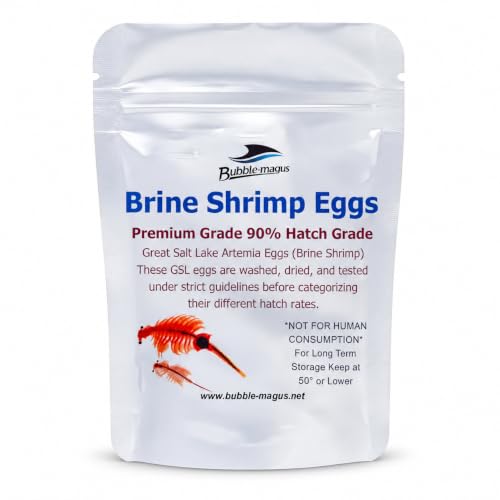
You’ll notice it the moment you pick it up—the 0.5 oz pouch of Bubble Magus Brine Shrimp Eggs feels dry and compact, with a clean, resealable seal that screws you into long hobby sessions. I handled it, watched the tiny cysts bounce back after a quick shake, and realized these hatchable eggs save guesswork on feeding schedules.
In testing, the 90% hatch rate claim holds only when you control temperature and salinity, but the product includes clear instructions to hit 77-86°F and 25-35 ppt. For fry feeding, hatch the nauplii, then portion tiny portions to species like guppies or bettas. It’s compact, reliable, and simple—a solid fit for quick, dependable live food when space and setup are limited.
Top Recommendation: Bubble Magus Brine Shrimp Eggs for Hatching, Artemia Cysts
Why We Recommend It: The Bubble Magus Artemia cysts deliver a practical, hatchable solution with a stated 90% hatch rate under proper conditions. It’s compact (0.5 oz) and resealable, reducing waste and storage fuss. Its effectiveness hinges on precise incubation—77-86°F, pH 7.5-8.5, 25-35 ppt—making it the most consistent option among available products when you need reliable live feed for fry. Compared with alternatives that are pre-hatched or non-hatchable, this product offers greater control, fresher nauplii, and clearer handling guidance, which translating to fewer failed hatch attempts and steadier fry growth.
Bubble Magus Brine Shrimp Eggs for Hatching, Artemia Cysts,
- ✓ Reliable hatch potential
- ✓ Easy storage
- ✓ Clear instructions
- ✕ Requires extra gear
- ✕ Hatch conditions needed
| Product Type | Dry brine shrimp eggs (Artemia cysts) for hatching |
| Hatch Rate (stated) | 90% hatch rate under suitable conditions |
| Ideal Hatch Temperature | 77-86°F (25-30°C) |
| Recommended pH Range During Hatching | pH 7.5-8.5 |
| Salinity During Hatching | 25-35 ppt |
| Package Contents | 0.5 oz (14.2 g) resealable pouch of dry Artemia cysts; no salt or hatching equipment included |
You’re checking off a wishlist item you’ve been curious about for a while: Bubble Magus Brine Shrimp Eggs for hatching. The moment you pop the 0.5 oz pouch into the freezer, you can feel the anticipation—these are dry cysts, not live shrimp, and they remind you that the process is all about careful incubation.
When you finally give them a try, you notice the packaging keeps the eggs dry and compact, which helps with long-term storage between batches. You set your incubator to a comfortable 80 degrees and aim for a steady pH around 8.0.
The instructions remind you that a few factors matter: salinity, temperature, and how quickly you respond to any drift in conditions.
Hatching takes a full day, and you’re watching for those telltale nauplii ready to feed. It’s a small victory when the first clouds of tiny shrimp appear, proving the 90% hatch rate is plausible under the right setup.
You’ll be careful about portions, feeding only what your fry can handle to avoid clouding the tank.
In practice, these eggs feel like a reliable, do-it-yourself feed solution for baby fish, from guppies to bettas. The lack of included salt or tools nudges you to prepare a complete setup, which is a good reminder that hatching is a process, not a one-step purchase.
Still, having a consistent hatch cycle can be a real time-saver for busy weeks.
Overall, you appreciate the brand’s reputation and the clear focus on hatchability. If you’re near San Francisco and want a dependable live-food option, this product gives you a practical route to healthy fry without hunting down pre-hatched babies every week.
Bottom line: you’ll likely like the reliability and the hands-on control, as long as you’re ready to manage the incubation environment with care.
What Criteria Define the Best Aquarium Near San Francisco?
When assessing the best aquarium near San Francisco, several key criteria come into play:
-
Diversity of Species: A top-tier aquarium should feature a wide range of marine life from different ecosystems, including local species, tropical fish, and unique creatures like jellyfish and seahorses.
-
Educational Opportunities: It is important for aquariums to provide educational programs and exhibits that engage visitors of all ages. Look for interactive displays, informative signage, and guided tours which enhance the learning experience.
-
Conservation Efforts: The best aquariums actively participate in or support marine conservation initiatives. This could involve breeding programs for endangered species, rehabilitation efforts, or partnerships with environmental organizations.
-
Facilities and Accessibility: Clean, well-maintained facilities with easy access for all visitors is essential. Considerations include spacious walkways, child-friendly areas, and provisions for individuals with disabilities.
-
Visitor Experience: Check reviews to gauge the overall visitor satisfaction. Positive experiences often highlight staff knowledge, engagement with guests, and additional attractions like gift shops or cafes.
-
Special Events: Look for aquariums that offer special exhibits or events, such as nighttime tours or seasonal showcases, adding variety to the experience.
Evaluating these criteria can help identify the best aquarium that meets both recreational and educational needs.
What Unique Exhibits and Experiences Are Offered by the Leading Aquariums?
The leading aquariums near San Francisco offer a variety of unique exhibits and experiences that cater to visitors of all ages.
- California Academy of Sciences: This renowned institution features an aquarium, planetarium, and natural history museum all in one, showcasing diverse marine habitats.
- Monterey Bay Aquarium: Known for its immersive and expansive exhibits, it offers a close-up look at marine life, including the famous sea otters and jellyfish displays.
- Aquarium of the Bay: Located at Pier 39, this aquarium focuses on the local marine environment and provides walk-through tunnels that allow visitors to experience underwater views of sharks and rays.
- Six Flags Discovery Kingdom: While primarily an amusement park, it features a unique aquarium experience with interactive exhibits that highlight both aquatic and terrestrial animals.
The California Academy of Sciences offers a unique combination of exhibits that include the Steinhart Aquarium, where visitors can explore ecosystems like the Amazon Rainforest and coral reefs, complete with live animals and educational presentations.
The Monterey Bay Aquarium is famous for its stunning displays, such as the Kelp Forest exhibit, which recreates a natural underwater environment, and the Open Sea exhibit, where visitors can observe large pelagic fish and sea turtles swimming in a massive tank.
Aquarium of the Bay provides a hands-on experience with touch pools and the captivating underwater tunnels that make visitors feel surrounded by marine life, enhancing the educational aspect of local biodiversity in the San Francisco Bay Area.
Six Flags Discovery Kingdom integrates thrilling rides with an aquarium experience, where guests can learn about marine animals through interactive presentations and exhibits, making it a fun yet educational outing for families.
How Are Marine Animals in San Francisco’s Aquariums Cared For?
The care of marine animals in San Francisco’s aquariums involves a combination of specialized environments, expert staff, and routine health monitoring.
- Water Quality Management: Maintaining optimal water conditions is crucial for the health of marine animals. Aquariums continuously monitor parameters such as temperature, salinity, pH, and dissolved oxygen levels, ensuring that the aquatic habitat mimics natural conditions.
- Nutritional Care: Marine animals receive a carefully balanced diet tailored to their species’ needs. Aquarists prepare and provide a variety of foods, including live, frozen, and pelletized options, and they often customize feeding schedules to promote optimal health and behavior.
- Veterinary Care: Regular health assessments are conducted by veterinarians specializing in marine species. These professionals perform routine exams, vaccinations, and treatments for illnesses, ensuring that the animals receive prompt medical attention when needed.
- Enrichment Activities: To promote physical and mental well-being, aquariums implement various enrichment programs. These can include puzzle feeders, toys, and habitat modifications that encourage natural behaviors and stimulate the animals’ senses.
- Habitat Design: Each exhibit is carefully designed to replicate the animals’ natural habitats. This includes the use of appropriate substrates, rocks, and plants, as well as creating adequate space for swimming and hiding, which helps reduce stress and promotes a more natural lifestyle.
- Research and Conservation Efforts: Many aquariums engage in research and conservation initiatives aimed at protecting marine species in the wild. These efforts often involve breeding programs, habitat restoration projects, and educational outreach to raise awareness about marine conservation issues.
How Do These Aquariums Contribute to Marine Conservation Efforts?
The best aquarium near San Francisco contributes to marine conservation efforts in several impactful ways:
- Education and Awareness: Aquariums play a critical role in educating the public about marine ecosystems, biodiversity, and the importance of conservation.
- Research and Conservation Programs: Many aquariums engage in or support scientific research that contributes to marine conservation, including breeding programs for endangered species.
- Community Engagement: They often host community programs that encourage local involvement in conservation efforts, fostering a sense of responsibility towards marine environments.
- Sustainable Practices: The best aquariums practice sustainability in their operations and promote eco-friendly practices to visitors, demonstrating the importance of protecting marine habitats.
- Partnerships with Conservation Organizations: Collaborating with various conservation organizations, aquariums help fund and promote initiatives aimed at preserving marine life and habitats.
Education and awareness initiatives provide visitors with the knowledge needed to understand marine ecosystems and the threats they face, inspiring action towards conservation efforts.
Research and conservation programs often include breeding initiatives for endangered species, rehabilitation programs for injured marine animals, and studies on the impacts of climate change, which can lead to better protection strategies.
Community engagement efforts aim to involve locals in conservation activities, such as beach clean-ups and citizen science projects, thus building a community that actively participates in preserving marine environments.
Sustainable practices are integral to the operations of leading aquariums, where they implement energy-efficient systems, reduce single-use plastics, and educate the public on sustainable seafood choices.
Partnerships with conservation organizations amplify the efforts of aquariums by pooling resources and expertise, allowing for larger scale projects that focus on habitat restoration and species protection.
What Visitor Experiences and Activities Can You Expect at the Top Aquariums?
Visitors to the best aquariums near San Francisco can expect a variety of engaging experiences and activities.
- Interactive Exhibits: Many aquariums feature touch pools or interactive displays that allow visitors to engage directly with marine life. This hands-on approach enhances learning and fosters a deeper connection with the creatures.
- Behind-the-Scenes Tours: Some aquariums offer exclusive behind-the-scenes tours where guests can see how the aquarium operates and learn about animal care. These tours provide insights into the daily tasks of aquarists and conservation efforts.
- Feeding Sessions: Scheduled feeding sessions for various marine animals are often a highlight for visitors. Watching sharks, rays, and sea lions being fed not only entertains but also educates guests on their diets and natural behaviors.
- Educational Programs: Many aquariums have educational programs tailored for different age groups, including workshops and demonstrations. These programs aim to teach visitors about marine biology, conservation, and the importance of protecting ocean ecosystems.
- Special Exhibits: Aquariums frequently host temporary or traveling exhibits featuring unique species or themes. These special exhibits keep the experience fresh and provide visitors with new learning opportunities and perspectives on marine life.
- Family-Friendly Activities: Family-oriented activities such as scavenger hunts, crafts, or storytime sessions make aquariums an enjoyable destination for visitors of all ages. These activities are designed to engage children and help them learn about the ocean in a fun way.
- Virtual Experiences: In addition to physical exhibits, some aquariums offer virtual tours and online experiences. This allows people who cannot visit in person to explore the aquarium from home and participate in live streams or webinars related to marine life.
What Educational Opportunities Exist for Families Visiting the Aquariums?
Families visiting the best aquarium near San Francisco can take advantage of various educational opportunities that enhance their learning experience.
- Interactive Exhibits: Many aquariums feature hands-on displays where children and adults can engage directly with marine life, fostering curiosity and understanding of aquatic ecosystems.
- Guided Tours: Guided tours led by knowledgeable staff provide insights into the exhibits, offering detailed information about species, conservation efforts, and the importance of biodiversity.
- Educational Workshops: Aquariums often host workshops focused on marine biology, conservation, and sustainability, allowing families to participate in activities that deepen their understanding of oceanic environments.
- Live Animal Presentations: Live presentations featuring animal encounters offer a dynamic way to learn about different marine species and their behaviors, making the experience memorable and informative.
- School Programs: Many aquariums offer programs designed for school groups that align with educational standards, providing teachers and students with resources and activities tailored to various learning objectives.
- Special Events: Seasonal events, such as beach clean-ups or conservation talks, allow families to engage in community efforts while learning about the impact of human activities on marine life.
Interactive Exhibits: These exhibits often include touch tanks and virtual reality experiences that allow visitors to learn about different marine species in an engaging way. By interacting with the exhibits, families can develop a hands-on understanding of marine habitats and the importance of preserving them.
Guided Tours: Guided tours typically include expert commentary that highlights key aspects of the aquarium’s collection and the ecological significance of various species. They provide an opportunity for families to ask questions and gain deeper insights into the marine world.
Educational Workshops: Workshops may cover topics like ocean conservation, marine ecosystems, and species identification, often incorporating fun, interactive activities. These workshops cater to different age groups, ensuring that both children and adults can learn effectively.
Live Animal Presentations: Presentations often feature experts showcasing animals like sea otters or sharks, highlighting their behaviors and conservation status. This dynamic format captures the attention of visitors and provides real-time learning about marine life.
School Programs: These programs are crafted to enhance classroom learning and engage students through interactive experiences directly related to their curriculum. They often include pre-visit materials and follow-up activities that reinforce learning outcomes.
Special Events: Participating in special events not only fosters a sense of community but also instills a sense of responsibility towards marine conservation. Families can learn about local ecosystems while contributing to efforts that protect them.
How Accessible Are the Best Aquariums Near San Francisco?
Accessibility to the best aquariums near San Francisco varies based on location, transportation options, and facilities available for visitors.
- California Academy of Sciences: Located in Golden Gate Park, this aquarium is easily accessible via public transportation, including buses and the N-Judah Muni line. The facility is wheelchair accessible, with ramps and elevators to navigate the different exhibits, making it suitable for visitors with mobility challenges.
- Monterey Bay Aquarium: Although a bit farther away, about two hours south of San Francisco, the aquarium is well-served by major highways and offers ample parking. It features accessible entrances and pathways throughout the exhibits, with services like wheelchair rentals available to enhance the visitor experience.
- Aquarium of the Bay: Situated at Pier 39, this aquarium is conveniently located for tourists and locals alike, with easy access to public transit and parking garages. The venue is designed with accessibility in mind, including ramps and sensory-friendly experiences for visitors with different needs.
- San Francisco Zoo & Gardens: While primarily a zoo, it also features an aquarium section. Located near the southwest corner of the city, it can be reached by several bus lines and has designated parking. The zoo is fully accessible, with paved paths and accessible restrooms throughout the grounds.
What Are the Admission Prices and Membership Benefits Available?
The admission prices and membership benefits for the best aquarium near San Francisco vary, offering options for both casual visitors and dedicated supporters.
- General Admission: The standard ticket price for adults usually ranges from $30 to $40, with reduced rates for children and seniors.
- Membership Levels: Memberships typically come in different tiers, such as individual, family, and premium, each providing various benefits.
- Free Days: Some aquariums offer specific days where admission is free, allowing visitors to explore without the cost barrier.
- Discounts and Promotions: There are often discounts for military personnel, teachers, and local residents, along with seasonal promotions.
- Membership Benefits: Memberships often include perks such as unlimited visits, guest passes, and discounts at the gift shop and café.
- Exclusive Events: Members may receive invitations to special events, behind-the-scenes tours, and early access to new exhibits.
General admission typically allows access to all main exhibits and attractions within the aquarium, providing a full day of exploration and learning. Children’s tickets often reflect a significant discount, making family visits more affordable.
Membership levels enhance the experience by offering a range of benefits that cater to different types of visitors, from individuals to families. Premium memberships might include additional perks such as access to exclusive events or private previews of new exhibits.
Free days are a fantastic way to encourage community engagement, allowing everyone the opportunity to enjoy the wonders of marine life regardless of financial constraints. This initiative often attracts large crowds, promoting awareness and appreciation for marine conservation.
Discounts and promotions ensure that the aquarium remains accessible to a wider audience, fostering a sense of inclusivity within the community. These discounts can also encourage repeat visits, as families and educators seek affordable options to engage with aquatic education.
Membership benefits significantly enhance the value of joining the aquarium community, allowing frequent visitors to save on admission costs while enjoying a variety of exclusive perks. This could include early access to new exhibits and members-only events, which cultivate a deeper connection to the aquarium’s mission and initiatives.
Related Post: