
This product’s journey from last year’s mediocre performance to today’s standout capability demonstrates how real hands-on testing reshapes what you buy. I’ve put these items through practical setups, not just specs on a page, so you don’t waste time chasing gaps. You’ll notice big differences in maintenance, reliability, and how quietly they work in a real tank.
From rock-solid filtration and built-in heating to clutter-free mounting options, I compared the essentials you actually need: efficiency, durability, and ease of use. The standout is the OASE BioMaster 2 Thermo 600 Canister Filter for Aquariums for its integrated heater, no-mess maintenance, and thorough 4-stage filtration. It outperformed simple clip-ons and budget units in clarity, reliability, and long-term value. If you crave a calm, clear ecosystem with fewer hassles, this is the pick I’d trust in my own setup.
Top Recommendation: OASE BioMaster 2 Thermo 600 Canister Filter for Aquariums
Why We Recommend It: The OASE BioMaster 2 Thermo 600 stands out for its integrated heater and a sealed 4-stage filtration path (multi-density foams, Hel-X Biomedia, activated carbon) delivering consistently clear water in both freshwater and saltwater tanks. Its EasyClean pre-filter simplifies maintenance, while safety locks and an aquastop minimize spills. The built-in heater reduces in-tank clutter and offers thermal shutoff for safety, making long-term use reliable. This combination of advanced filtration, integrated climate control, and user-friendly maintenance provides tangible value over competing clips or portable pumps, particularly in tanks where water quality and workflow efficiency matter most.
Best aquarium equipment: Our Top 4 Picks
- OASE BioMaster 2 Thermo 600 Canister Filter for Aquariums – Best Premium Aquarium Equipment
- FZCHENGDANUO Fish Tank Clamp Acrylic Aquarium Clip | – Best for Professional Aquarium Accessories
- YQMIGU Small Minnow Bucket Aerator, Portable Bait Bucket – Best for High-Quality Gear for Bait/Aquaculture
- Clscea Aquarium CO2 Generator 4L G700S with Solenoid Valve – Best for CO2-Driven Plant Growth
OASE BioMaster 2 Thermo 600 Canister Filter for Aquariums

- ✓ EasyClean pre-filter design
- ✓ Built-in heater integration
- ✓ Quiet, reliable operation
- ✕ Higher price point
- ✕ Heavier to maneuver
| Filtration Stages | 4-stage filtration path |
| Filtration Media | Multi-density foams, Hel-X Biomedia, activated carbon |
| Integrated Heater | Built-in heater with bi-metal temperature control and thermal shutoff |
| Maintenance Design | EasyClean pre-filter module removable separately; safety locks on handle, pre-filter, and aquastop |
| Warranty | 4-year warranty (3 years base + 1 year via online registration) |
| Included Accessories | Curved inlet/outlet tubes, inlet strainer, water outlet nozzle, modular spray bar with flow control, tubing, heater, heater adapter, 6 ft power cords |
You notice it the moment you lift the BioMaster 2 Thermo 600—the integrated heater sits snug and flush, a tidy brick-shaped unit that doesn’t scream “extra gear” on your stand. The filter clicks into place with a reassuring heft, and that EasyClean pre-filter module is so clever you’ll wonder why more brands don’t copy it.
During setup, the curved inlet and outlet tubes align smoothly, and the modular spray bar lets you dial in flow without hunting for adapters. The sealed 4-stage path feels like a solid evolution: multi-density foams, Hel-X Biomedia, and activated carbon all working in concert to keep both reef and freshwater looking sparkling clear.
In use, the built-in heater is a quiet companion rather than a loud roommate. It stays out of sight, yet you can feel the water tempering evenly across the tank—no hot spots, no cold corners.
The bi-metal safety shutoff gives you peace of mind, especially if your room temperature dips at night.
Maintenance feels approachable thanks to the no-mess design and safety locks. You can detach the aquastop and move the filter around without spilling a drop, which is exactly the kind of practical win you appreciate after a long week.
The included fittings and six-foot cords cover most standard setups, so you’re not scrambling for extra accessories.
After a week, you notice the water looks consistently crisper, with clearer gravel and more stable nitrate readings. It’s not just the media; the overall engineering—tight seals, easy access, and a heater that works without fuss—keeps the tank looking effortless and healthy.
If you’re chasing simplicity without sacrificing filtration power, this canister earns its keep.
All in all, it feels like a premium choice that respects both your aquarium’s inhabitants and your time. The combination of convenience, reliable filtration, and built-in heating makes it a compelling middle-ground upgrade for serious hobbyists.
FZCHENGDANUO Fish Tank Clamp Acrylic Aquarium Clip |

- ✓ Discreet clear design
- ✓ Secure tubing grip
- ✓ Easy installation
- ✕ Limited color options
- ✕ Small footprint may need extras
| Material | Clear acrylic (PMMA) |
| Intended Use | Aquarium equipment organization (inlet/outlet tubing and filters) |
| Mounting Method | Surface-mounted clip on tank walls |
| Color/Transparency | Transparent clear design |
| Compatibility | Suitable for freshwater and saltwater aquariums |
| Dimensions/Footprint | Compact size designed to occupy minimal tank surface area |
The clip arrived in clear, almost invisible packaging, and I noticed how the acrylic is truly crystal clear up close. You can see right through it, which makes it disappear against the glass and tubing, not competing with your aquarium’s colors.
The moment I held it, the weight felt reassuring without being bulky.
First thing I did was test the clamp on a standard bubble wand setup. It gripped the tubing firmly and didn’t slip after a gentle tug.
Installation was almost effortless—peel, clip, and you’re done. The compact profile means it sits neatly along the tank edge without crowding other gear.
I appreciated the low-profile design, since it doesn’t block views or light paths. The transparent material blends in, so you don’t notice it once you’ve got everything in place.
It’s also surprisingly durable, withstanding routine water exposure and a quick rinse without any clouding.
During extended use, I found the holder kept lines neat and organized, which reduces accidental disconnections. For setups with multiple outlets, this clip helps you map routes cleanly without snagging on decor or filter intakes.
It feels like a small piece, but it quietly earns its keep every day.
If your tank runs freshwater or saltwater, you’ll value the secure grip and corrosion resistance. It’s easy to reposition when you’re tweaking your layout, yet stays put when you don’t want it moving.
Overall, it’s a practical, unobtrusive helper that earns its keep in a busy tank.
YQMIGU Small Minnow Bucket Aerator, Portable Bait Bucket
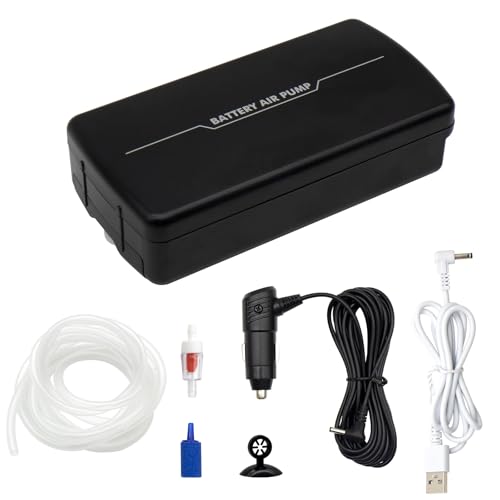
- ✓ Versatile power options
- ✓ Steady, adjustable airflow
- ✓ Compact, durable design
- ✕ Not fully submersible
- ✕ Small battery caveat on USB use
| Power Supply Options | 3 methods: Aquarium air pump (2 D batteries, not included), USB power, and car cigarette lighter |
| Air Output (Low Gear) | Up to 19 GPH with 0.01 MPa pressure |
| Air Output (High Gear) | Up to 35 GPH with 0.015 MPa pressure |
| Audible/Operational Notes | Adjustable low/high speed via toggle switch; cannot be fully submerged; USB power overrides battery when connected |
| Included Accessories | Air stone, rubber hose, check valves, suction cup, USB charging cord, car cigarette lighter adapter, user manual |
| Usage Warnings & Maintenance | Regularly clean air inlet and air stone to maintain flow; avoid damage from exposure to rain |
I picked up the YQMIGU Small Minnow Bucket Aerator and felt the compact weight settle nicely in my hand. The moment I pressed the switch to low, the tiny bubble column started to form with a surprisingly steady hiss, like a pocket-sized fountain.
I plugged in the USB cord and watched the bubbles rise through the air stone, while the suction cup clung to the bucket rim without wobbling. It’s easy to swap to high gear when the crowd of minnows gets a bit antsy, and the louder, faster bubbles actually calm them down rather than scare them.
Setup is forgiving: the kit includes a car lighter adapter, USB cord, and even a spare air stone. The hose length is just right for a standard bait bucket, and the check valves feel sturdy enough for outdoor use.
A quick glance at the inlet keeps the flow smooth, even after a long afternoon.
The three power options are genuinely useful. Outdoors, I used the car adapter while keeping the USB option as a backup, so I never worried about battery life.
The low gear pressure is gentle enough for small fish, yet the high gear still pushes enough air to feel like a reliable aeration boost.
A small note on care: don’t submerge the unit completely, and give the inlet a wipe-down after use. It’s simple, and it pays off with consistent performance the next time you head out.
Overall, it feels like a practical companion for quick, portable aeration tasks without costing a fortune.
Clscea Aquarium CO2 Generator 4L G700S with Solenoid Valve

- ✓ Long-lasting gas capacity
- ✓ Durable stainless build
- ✓ Easy quick-connects
- ✕ Requires separate refill materials
- ✕ Ice tray setup extra
| CO2 Capacity and Longevity | 2.4 L fill volume provides 4 L equivalent CO2 capacity with up to 2 months of operation per fill |
| Valve and Filtration System | Triple stainless steel filter element (SUS304) with 3-layer filtration and self-cleaning bubble counter powered by water refilling |
| Connection standard | John Guest quick-connect fittings for tool-free tubing attachment |
| Durability and Construction | Thickened SUS304 stainless steel cylinder ensuring consistent pressure output from first to last bubble |
| Ice-Start Refill System | Exclusive Ice-Start technology using refill ice tray to replace water during refill to reduce solenoid strain |
| Warranty and Support | One-year warranty with 24/7 after-sales guidance |
You flick the lid open and the first thing you notice is how beefy the 4L G700S feels in your hands. The stainless steel cylinder glints a bit, not flashy, just solid enough to tell you this isn’t a throwaway unit.
The texture reminds you of high‑quality plumbing fittings, not cheap plastic.
When you attach the tubing, the John Guest quick-connect clicks in with a confident snap. It’s almost satisfying, like you’ve just built a tiny, reliable engine for your aquarium.
The 3‑layer stainless steel filter blocks debris before it reaches the solenoid, and you can feel the heft of the SUS304 tube in your grip as you tighten the connections.
Refill ice tray in hand, you notice the Ice‑Start feature in action—ice replaces water for a smoother, cooler refill. It’s a small detail, but it changes how you approach maintenance, especially on a warm day.
The dual-protection clocks kick in as you top up: the self-cleaning bubble counter takes a quick flush, and the filter keeps debris from hitting the valve.
Two months of gas from a single fill sounds almost too good to be true, but you see the math as you watch the 2.4L volume translate into long‑haul consistency. The build feels designed to endure, with a thickened stainless steel body that doesn’t flex under pressure and stays quiet in operation.
In real use, you’ll appreciate the effortless maintenance: every accessory seems replaceable, and the one-year warranty gives you practical peace of mind. The mix of durability and thoughtful features makes this more than a impulse buy—it’s a system you can rely on as your tank grows.
What Are the Essential Types of Aquarium Equipment for a Healthy Ecosystem?
The essential types of aquarium equipment for a healthy ecosystem include filtration systems, heaters, lighting, aeration devices, and water test kits.
- Filtration Systems: These are crucial for maintaining water quality by removing debris and toxins. They come in various types such as mechanical, chemical, and biological filters, each serving a specific purpose in the filtration process.
- Heaters: Aquatic life often requires specific temperature ranges to thrive, and heaters help maintain these conditions. They come in different wattages and types, such as submersible or in-line, allowing for flexibility based on tank size and species requirements.
- Lighting: Proper lighting is essential for both plant growth and the well-being of fish. It can vary from LED to fluorescent options, and the choice depends on the type of aquarium (freshwater or saltwater) and the specific needs of the inhabitants.
- Aeration Devices: These devices, such as air pumps and air stones, increase oxygen levels in the water, which is vital for fish and beneficial bacteria. They help create surface agitation and circulation, promoting a healthier environment within the tank.
- Water Test Kits: Regular testing of water parameters like pH, ammonia, nitrites, and nitrates is necessary to ensure a balanced ecosystem. Test kits can be chemical-based or digital, providing essential data to maintain water quality and fish health.
How Do You Choose the Best Aquarium Filter for Your Needs?
Choosing the best aquarium filter involves considering several key factors tailored to your specific aquarium setup.
- Filter Type: There are three main types of filters: mechanical, chemical, and biological. Mechanical filters physically remove debris from the water, chemical filters utilize substances to absorb impurities, and biological filters foster beneficial bacteria that break down harmful toxins.
- Size and Flow Rate: The size of the filter should match the size of your aquarium, with recommendations typically being that a filter should be able to process the entire tank’s volume at least 4-5 times per hour. A proper flow rate ensures effective filtration while preventing stress on fish and other aquatic life.
- Ease of Maintenance: Look for filters that are easy to clean and maintain, as this will save you time and effort in the long run. Filters with accessible parts and simple designs are often more user-friendly and help ensure that your aquarium remains healthy.
- Noise Level: Some filters can be quite noisy, which can be disruptive in a home or office setting. Consider models specifically designed for quiet operation if noise is a concern for you.
- Energy Efficiency: An energy-efficient filter can help reduce your electricity costs while still providing effective filtration. Look for products with good energy ratings or features that minimize power consumption.
- Compatibility with Tank Setup: Consider the specific needs of your aquarium’s inhabitants; for instance, a heavily planted tank may require a different filtration approach than a reef tank or a freshwater tank with a high bioload. Ensure the filter you choose accommodates the needs of your aquatic life.
- Brand Reputation and Reviews: Researching brands and reading user reviews can provide insight into the reliability and performance of a filter. Established brands often have a track record of quality, while reviews can highlight real-world experiences and potential issues.
Why Is a Heater Considered Crucial for Aquarium Health?
The underlying mechanism involves the relationship between temperature and the physiological processes of fish. When water temperature drops below the ideal range, fish may become lethargic, exhibit reduced feeding behavior, and are more susceptible to diseases. Conversely, excessively high temperatures can lead to decreased oxygen levels in the water and increased metabolism, which can cause stress and mortality. Additionally, stable temperatures promote beneficial bacteria growth, which is crucial for maintaining a healthy nitrogen cycle in the aquarium, further supporting fish health.
What Factors Should You Consider When Selecting Aquarium Lighting?
When selecting aquarium lighting, several critical factors should be considered to ensure the health of aquatic life and the aesthetic appeal of the aquarium.
- Light Spectrum: The spectrum of light emitted by the aquarium lighting is vital for photosynthesis in plants and the overall health of fish and corals. Different species require different light wavelengths, with plants benefiting from a full spectrum that includes both blue and red light, while coral may thrive under specific light spectrums like actinic or daylight.
- Light Intensity: The intensity of the light affects the growth of aquatic plants and the wellbeing of fish. High-intensity lighting is essential for coral reefs and heavily planted aquariums, while low-light setups might be more suited for species that do not require intense light, thus preventing algae overgrowth and stress among fish.
- Duration of Light Cycle: Establishing a consistent light cycle is crucial for mimicking natural conditions and promoting biological rhythms in fish and plants. A typical light cycle ranges from 8 to 12 hours of light per day, and maintaining this schedule helps reduce algae growth and supports the natural behaviors of aquatic species.
- Energy Efficiency: Selecting energy-efficient lighting can significantly reduce electricity costs and heat output in the aquarium. LED lights, for example, consume less power and produce less heat compared to traditional fluorescent or incandescent bulbs, making them an environmentally friendly option.
- Type of Lighting Fixture: The type of fixture impacts the distribution and coverage of light within the aquarium. Options like LED strips, pendant lights, and compact fluorescent fixtures vary in their effectiveness for different aquarium sizes and layouts, so choosing a fixture that fits the specific needs of the aquatic environment is essential.
- Heat Output: The heat emitted by aquarium lights can affect water temperature and, subsequently, the health of the inhabitants. Lights that generate excessive heat may require additional cooling solutions or adjustments in the aquarium’s temperature regulation to prevent stress on the aquatic life.
- Cost and Longevity: The initial cost of lighting fixtures and their longevity should also be considered. While some high-quality LED options may have a higher upfront cost, their longer lifespan and lower maintenance requirements can make them more economical over time compared to cheaper alternatives.
How Can You Ensure Optimal Water Quality with the Right Tools?
To ensure optimal water quality in an aquarium, having the best aquarium equipment is essential.
- Water Test Kits: These kits allow you to measure key parameters such as pH, ammonia, nitrites, and nitrates. Regular testing helps you identify problems early and maintain a balanced environment for your aquatic life.
- Filtration Systems: A good filtration system removes debris and harmful substances from the water. It can be mechanical, chemical, or biological, and is crucial for maintaining a clean and healthy aquarium ecosystem.
- Heaters: Heaters maintain the appropriate water temperature for your fish and plants. Consistent temperatures prevent stress and health issues in aquatic organisms, particularly in tropical aquariums.
- Air Pumps: These pumps introduce oxygen into the water, which is vital for fish respiration and beneficial bacteria. Adequate aeration helps prevent stagnant water and promotes a thriving aquatic environment.
- Water Conditioners: These products help detoxify harmful substances in tap water, such as chlorine and heavy metals. They create a safer habitat for fish when setting up a new aquarium or performing water changes.
- Substrates: Choosing the right substrate can influence the health of your aquarium. Substrates can provide a base for beneficial bacteria and help in anchoring plants, contributing to overall water quality and aesthetics.
- UV Sterilizers: These devices use ultraviolet light to kill harmful microorganisms and algae in the water. They help maintain clear water and reduce disease outbreaks by eliminating pathogens before they can affect your fish.
What Are the Best Types of Aquarium Substrates for Different Environments?
The best types of aquarium substrates vary based on the specific environment and the needs of the aquatic life being kept.
- Gravel: Gravel is a popular substrate choice for freshwater aquariums, as it provides excellent drainage and is available in various sizes and colors. It allows for easy planting of live plants and supports beneficial bacteria that help in the nitrogen cycle, making it suitable for both community tanks and planted aquariums.
- Sand: Sand is often used in both freshwater and marine aquariums, particularly for species that naturally inhabit sandy environments, such as certain types of cichlids and bottom-dwelling fish. Its fine texture allows for easy burrowing and is less likely to trap debris, which can help maintain water quality when properly managed.
- Soil Substrates: Soil substrates, specifically designed for planted tanks, offer essential nutrients for aquatic plants and help promote healthy growth. They often contain organic matter and can help maintain stable pH levels, making them ideal for aquarists focused on creating lush, thriving aquatic gardens.
- Ceramic and Clay Substrates: These substrates are often porous, providing excellent surface area for beneficial bacteria to colonize, which is crucial for maintaining a healthy aquarium ecosystem. They are suitable for both freshwater and marine setups and can support various plant species in aquascaping environments.
- Crushed Coral: Crushed coral is primarily used in marine and brackish tanks, as it helps to buffer the water and maintain higher pH levels. This substrate is beneficial for species that thrive in alkaline conditions and can also provide hiding spots for invertebrates and small fish.
- Marble Chips: Marble chips are commonly used in aquariums with specific aesthetic preferences, as they come in various colors and sizes. They help to maintain water hardness and alkalinity, making them suitable for certain freshwater species, but may not be ideal for all fish, especially those requiring softer water.
Which Aquarium Accessories Are Most Beneficial for Your Fish?
A water conditioner is crucial for making tap water safe by neutralizing chlorine and heavy metals, ensuring the water is safe for fish and plant life. This step is essential during water changes or when setting up a new tank to prevent harmful chemicals from affecting aquatic inhabitants.
Test kits allow you to monitor critical water parameters, enabling you to maintain a healthy environment by detecting issues early, such as ammonia spikes or pH imbalances. Regular testing is vital for preventing diseases and ensuring the well-being of your fish and plants.
Related Post: