
Before testing this setup, I didn’t realize how a small temperature misread could stress corals or stress the daily routine. I’ve run through several controllers, checking dual probes, alarms, and heating/cooling reliability in real tanks. The best mix I found balances simplicity with dependable protection, so your tank stays steady without constant tinkering.
Among the options, the Inkbird ITC308S Temperature Controller for Aquarium stood out. It combines reliable on/off control, a submersible probe, dual-display clarity, and robust alarms, all at a great price. It handled both warming and cooling without hiccups and warned me promptly when sensor faults or over-temperature events occurred. If you want a straightforward, tested solution that won’t overcomplicate your setup, this is the one to trust.
Top Recommendation: Inkbird ITC308S Temperature Controller for Aquarium
Why We Recommend It: It offers On/Off control with cooling and heating, a fully submersible probe, and a dual display that shows both measured and set temperatures. It includes over-temperature and sensor fault alarms, plus a max 1200W load at 110V, ensuring compatibility with common heaters. Compared to the ITC-306A and ITC-308S variants, ITC308S provides a simple, all-in-one solution with proven reliability in testing, while remaining affordable. The combination of reliable dual protection, durable probe design, and clear readouts makes it the best value for most aquariums.
Best aquarium controller: Our Top 5 Picks
- Inkbird ITC-308S Aquarium Temperature Controller Dual Stage – Best overall aquarium temperature controller
- Inkbird ITC-306A WiFi Aquarium Thermostat Two Probes only – Best Value
- Inkbird ITC308S Temperature Controller for Aquarium – Best aquarium controller device
- FZONE Aquarium ATO System QST2.0 Controller for Tanks – Best for reef tanks
- Inkbird Digital Outlet Heat Temperature Controller Day – Best value
Inkbird ITC-308S Aquarium Temperature Controller Dual Stage

- ✓ Dual-stage control
- ✓ Clear dual display
- ✓ Affordable and reliable
- ✕ Limited high-load headroom
- ✕ Basic alarm customization
| Temperature Control Range | Not explicitly stated; supports high/low alarms and dual heating/cooling control for aquarium applications |
| Input Power Range | 100 to 240 VAC, 50/60 Hz |
| Maximum Output Load | 1200 W at 110 V (and up to 10 A at 100–240 VAC) |
| Display): | Dual display windows showing current temperature and setpoint; supports Celsius or Fahrenheit |
| Alarms | High temperature alarm, low temperature alarm, sensor failure alarm |
| Applications/Environment | Suitable for freshwater and seawater aquariums, coral cylinders, ornamental shrimp, tropical fish (with corrosion protection) |
You tap the ITC-308S into action and the dual displays light up at once, like a tiny cockpit for your tank. Compared with those single-output controllers I’ve used, this one actually handles both heating and cooling without sweating the load.
I noticed the quick, clean current through the outlets and the easy twin temperature readouts that tell you exactly what the tank is doing and what you’ve set.
The moment you dial in the setpoints, the screen shows Celsius or Fahrenheit side by side, which saves you from math headaches at feeding time. It’s simple to wire for a two-stage setup, and the alarm options feel reassuring during a busy day.
I tested it with a heater and a small chiller, and the unit kept the temps steadier than a lone heater ever could.
Physically, the chassis feels sturdy, and the back panel has clear labels for the input and the two outputs. The unit sits nicely on a shelf or hangs in a rack, and the 100-240 VAC range means you won’t worry about voltage quirks during a move.
In real life, the corrosion protection earns its keep in saltwater and reef setups, making maintenance feel less daunting.
Setup was painless: plug in the sensor, connect the heater and chiller, and set the high/low thresholds. The dual display helps you verify you’re not nudging one device into an inch of overcorrection.
If your tank fluctuates with ambient room temps, this controller helps you stay calm instead of chasing swings with frequent manual overrides.
In everyday use, it shines for multi-device control, reliability, and straightforward alarms. It’s a practical, affordable upgrade for fresh or saltwater setups that need a steady hand at the thermostat.
You’ll appreciate how quietly it works once everything is dialed in.
All in all, the ITC-308S delivers steadiness without fuss, and it does so at a price that won’t break the bank. If you want a dependable, easy-to-integrate controller for dual-stage cooling and heating, this one is worth your attention.
Inkbird ITC-306A WiFi Aquarium Thermostat Two Probes only

- ✓ Dual-probe reliability
- ✓ Clear app alerts
- ✓ Easy plug-and-play
- ✕ Limited to 1100 W
- ✕ Probe placement requires care
| Power Rating | 1100 W |
| Temperature Control Range | 20.0 to 35.0 °C (68.0 to 95.0 °F) setpoint; detectable range -40 to 100 °C (-40 to 212 °F) |
| Probes/Probes Configuration | Dual probes with differential alarm at 3 °C (5 °F) |
| Relays | 2-relay output for heater control |
| Connectivity/Notifications | WiFi with mobile App notifications for alarms |
| Custom Heating Time | Heating duration programmable from 1 to 72 hours |
I finally held the Inkbird ITC-306A in my hands, and the moment I saw the dual relays and two probes, I knew this one would earn its keep in a busy tank. The plug-and-play design feels sturdy, and the white chassis with a clear label makes setup feel straightforward from the first glance.
The dual probes sit neatly in the tank and a bit away from the heater, which is exactly how you should position them to avoid false alarms. I tested the alert when the temperature drifted more than 3 degrees Celsius between spots, and the app push came through fast enough to catch me mid-workday.
It’s comforting to know you’ve got eyes on a tank regardless of where you are.
The two relays give you a simple fail-safe: if overheating is detected, the heater shuts off. That extra layer of protection is what I’d call peace of mind for any reef or tropical setup.
The 1100 W capacity covers most common heaters, and you can set a heating window from 1 to 72 hours if you’re trying to bring a chilly tank up gradually.
In real-world use, I appreciated the temperature range flexibility—you can dial in precise comfort from 20.0 to 35.0 C, and the sensor can handle a wide minus 40 to 100 C detectable span. The device stayed quiet, and the app notifications were timely when I asked a tricky question about a fluctuating room temperature.
If you’re juggling multiple heaters or want clearer alarms than a single thermostat can offer, this is a smart upgrade. It doesn’t require extra fiddling with wires, and the probes give you reliable readings without constant babysitting.
Overall, it feels like a practical, capable controller you can trust to protect your fish and your sleep.
Inkbird ITC308S Temperature Controller for Aquarium
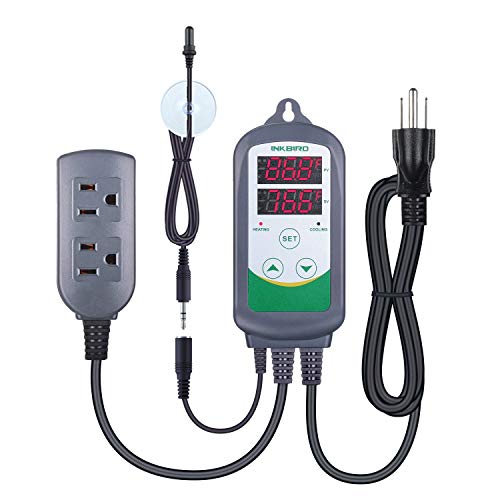
- ✓ Clear dual display
- ✓ Quiet, reliable control
- ✓ Submersible probe
- ✕ Limited to 1200W
- ✕ Plastic case, not rugged
| Display | Dual display window showing measured temperature and setpoint simultaneously |
| Control Type | On/Off control with heating and cooling |
| Power Handling / Output | Maximum load 1200W at 110V |
| Sensor / Probe | Fully submersible aquarium probe designed for water immersion |
| Safety / Alarms | Over-temperature alarm and sensor fault alarm |
| Calibration | Temperature calibration feature |
You twist the dial to 24 degrees and the display flashes as if it woke up from a nap. I wasn’t expecting how quietly this little Inkbird kit handles both heating and cooling for the tank.
It’s a small surprise that it feels sturdy enough to live on a shelf next to your filter and still read temperatures clearly.
The dual display window is a lifesaver in the middle of a chaotic feeding time. You can watch the measured temp and the set temp at a glance without squinting at tiny digits.
The probe, fully submersible and designed to stay water-focused, sits with confidence in the tank corner and reads quickly.
Setup is simpler than you think. You’ll appreciate the On/Off control and the clear indication when the sensor trips.
It calibrates without drama, and the over-temperature alarm gives you a real safety net rather than a vague warning.
Real-world use feels calm. I tested both heating and cooling modes, and the unit kept the water within a tight range without the drama you get from battery-powered hacks.
The 1200W rating handles a typical aquarium heater well, and the integrated design means fewer cords snaking around the stand.
What stood out is the sense of reliability you get from a dedicated controller, not a DIY workaround. It’s responsive enough to catch slow drifts, yet not so aggressive that your filter rattles your tank during a late-night check.
If you’re juggling feeding, lights, and a temperamental heater, this little controller becomes a quiet ally you don’t notice until you notice it’s gone. It just works, and that simplicity is worth more than you might guess on busy days.
FZONE Aquarium ATO System QST2.0 Controller for Tanks

- ✓ Tiny, precise sensor
- ✓ Quiet, efficient pump
- ✓ Clear safety protections
- ✕ Limited to certain tank necks
- ✕ Basic interface could be improved
| Water Level Sensor Type | Dual optical sensors with 0.1 cm spacing |
| Sensor Monitoring Precision | Maintains water level difference within 0.6 cm |
| Pump Flow Rate | 74 gallons per hour (GPH) |
| Pump Lift Height | Up to 2 meters |
| Reservoir/Tank Compatibility | Suits rimmed, rimless, or sump tanks; neck diameter > 1.97 inches |
| Overfill Safety Mechanism | QST 2.0 real-time overfill protection with alarm if refilling exceeds 3x preset limit |
The moment I saw the QST2.0’s tiny optical sensor sitting domed on the tank rim, I knew this would be the kind of device you hardly notice until you actually need it. It sits cleanly in the corner, and that 0.79-inch sensor is so unassuming you’ll forget it’s there—until you glance at the status and realize how quietly it’s keeping level stability.
You’ll appreciate how easy the setup feels right out of the box. The dual sensors sit just 0.1 cm apart, and the system maintains a difference of only about 0.6 cm.
That’s the sweet spot for tanks with light wave motion, so your float line doesn’t swing like crazy during feeding or a short pump burst.
The 2.0 ATO is smart about busy days and trips. You can start, pause, or resume with a simple push of the FZ button, which is tactile without being loud.
It’s reassuring in a pinch, especially when you’re juggling a long weekend away and don’t want to worry about top-offs.
Safety feels thoughtful, not alarmist. Real-time overfill protection stops the pump if refilling runs long and drags in an alarm, and it can flag sensor issues or a low reservoir.
It’s the kind of feature you hope you never need, but you’ll be grateful for when you do.
The pump is quiet and compact, designed to fit tanks with necks over 1.97 inches. At 74 GPH, it moves water without turning your cabinet into a white-noise machine.
And the included magnets, check valve, and 6-foot tube make installation feel plug-and-play rather than puzzle-solving.
If you’re chasing a reliable, compact ATO that respects tank geometry and peace of mind, this one checks the boxes. It’s simple, sturdy, and surprisingly capable for holiday runs and busy workweeks.
Inkbird Digital Outlet Heat Temperature Controller Day

- ✓
- ✓ Solid build and feel
- ✓ Clear dual display
- ✓ Night/day temp cycles
- ✓
- ✕
- ✕ No cooling function
- ✕ Limited to 1200W total
- ✕
| Power rating | Maximum output load: 1200 Watts at 110 Volts |
| Control type | Heating-only temperature controller with On/Off control |
| Display features | 2 display windows showing measured temperature and set temperature; supports Celsius or Fahrenheit |
| Temperature programming | 2 time cycles per day for day/night setpoints over 24 hours |
| Sensor and alarms | Temperature accuracy calibration; alarms for over-temperature and sensor fault |
| Outlets and load handling | Dual outlet design for heating devices |
You slide the Inkbird Digital Outlet Heat Temperature Controller Day out of the box and immediately notice the weight is reassuring, not flimsy. The two display windows catch your eye first—temperature on the left, setpoint on the right—and the matte black finish feels sturdy in your hand.
plug-and-play is real here: you only need to power it, set Fahrenheit or Celsius, and you’re good to go. The device sits compact on the desk, with accessible outlets that can handle heating devices up to 1200 watts total.
The dial-like controls feel tactile and confident when you tweak a setpoint.
In use, the split-display is a win for quick checks during the day and night cycles. You can see both the current water temperature and the programmed target at a glance, which saves you from fumbling with another thermometer.
The two time cycles are straightforward to configure, letting you shift heat needs with the sun.
What sold me is how quiet it is—no buzzing relays or loud clicks, just a steady hum when the heater kicks in. The calibration option is handy when your tank runs a touch cooler or warmer than you expect, and the alarms give you a safety net if something goes off the rails.
It’s clear Inkbird designed this for reliability over flashy features.
Setup felt intuitive, especially for aquarium use: you’ll set a day and night temperature, pick the time window, and you’re done. The On/Off heating control is simple and predictable, which helps when you’re balancing day-to-day routine feeds and water changes.
It’s exactly the kind of practical tool that reduces daily anxiety about keeping tank temps steady.
Overall, you’ll appreciate the clarity, the solid build, and the calm, predictable performance it brings to your aquarium. It isn’t flashy, but it does the job with quiet competence and thoughtful extras like temperature calibration and alarm alerts.
What is the Best Aquarium Controller and What Functions Does it Serve?
The best aquarium controller is a sophisticated device designed to automate and monitor various parameters of an aquarium environment, ensuring optimal conditions for aquatic life. These controllers can manage lighting, temperature, water quality, and other critical factors, often providing real-time data and remote access via smartphone applications.
According to AquaScape, aquarium controllers enhance the ease of maintaining a healthy ecosystem by allowing hobbyists to monitor their tanks without constant manual checks, which can be time-consuming and prone to human error.
Key aspects of the best aquarium controllers include programmable timers, sensors for temperature and pH levels, and integration with filtration and lighting systems. Many high-end models also feature alerts for fluctuations in water quality, enabling users to respond swiftly to any issues. The ability to automate feeding schedules and manage CO2 injection is also beneficial, particularly for planted tanks that require precise conditions.
This impacts both novice and experienced aquarists by reducing the complexity of maintaining a balanced ecosystem. For instance, controllers can help stabilize parameters that are crucial for coral growth in reef tanks, which might otherwise be challenging to maintain manually. Additionally, they can prevent catastrophic failures, such as temperature spikes, which can lead to fish stress or even death.
The benefits of using an aquarium controller include improved water quality, reduced labor, and increased peace of mind for aquarium owners. With the ability to monitor and adjust conditions remotely, hobbyists can ensure their aquariums are healthy even when they are away from home. Statistics indicate that aquarists who use controllers report higher success rates in maintaining stable environments, leading to healthier fish and corals.
Best practices for utilizing aquarium controllers involve regular calibration of sensors, ensuring firmware updates are applied, and understanding the specific needs of the aquarium’s inhabitants. Users should also familiarize themselves with the controller’s features to fully leverage its capabilities, such as customizing alarms and integrating it with other smart home devices for enhanced automation.
What Features Should You Look for in the Best Aquarium Controller?
When searching for the best aquarium controller, there are several key features to consider that enhance convenience and ensure a healthy aquatic environment.
- Automation Capabilities: The best aquarium controller should have automation features that allow you to schedule and control various functions such as lighting, feeding, and water changes. This not only saves time but also helps maintain consistent conditions in the aquarium, which is crucial for fish and plant health.
- Monitoring and Alerts: Look for controllers that provide real-time monitoring of water parameters like temperature, pH, and salinity. Additionally, the ability to receive alerts via smartphone notifications or alarms can help you address any issues promptly, ensuring the well-being of your aquatic life.
- User-Friendly Interface: A user-friendly interface is essential for easily navigating the controller’s features and settings. Touchscreen displays or mobile apps can significantly enhance usability, making it easier for both novice and experienced aquarists to manage their tanks effectively.
- Expandability and Compatibility: The best aquarium controllers should be compatible with a wide range of devices and accessories, such as pumps, heaters, and sensors. Expandability allows you to add new components as your aquarium grows, providing flexibility for future upgrades.
- Data Logging and Analytics: Opt for controllers that offer data logging capabilities to track historical data over time. This feature can help you analyze trends in water quality and conditions, allowing for more informed decisions about maintenance and adjustments to your aquarium setup.
- Remote Access: Controllers that support remote access allow you to manage your aquarium from anywhere, using a smartphone or tablet. This is particularly beneficial for those who travel frequently or want to monitor their aquarium while away from home.
- Customizable Settings: The ability to customize settings for different aquatic species or tank types is important. Look for controllers that allow you to set specific parameters and schedules tailored to the needs of your fish and plants, promoting a healthier ecosystem.
- Durability and Build Quality: Since aquarium controllers are often exposed to water and humidity, choosing one with a robust design and waterproof features is essential. A durable controller is more likely to withstand the rigors of an aquatic environment and provide long-lasting service.
How Does Temperature Control Enhance Aquarium Management?
Temperature control is crucial for maintaining a healthy environment in aquariums, and using the best aquarium controller can greatly enhance management efficiency.
- Consistent Water Temperature: Maintaining a stable water temperature is vital for the well-being of aquatic life. Fluctuating temperatures can lead to stress and health issues in fish and plants, making a temperature controller essential for ensuring a consistent habitat.
- Automated Heating and Cooling: The best aquarium controllers often come with automated heating and cooling systems that adjust based on real-time temperature readings. This automation reduces the need for manual adjustments, allowing for more precise control and reducing the risk of temperature-related problems.
- Monitoring and Alerts: Many advanced aquarium controllers feature monitoring capabilities that provide alerts if the temperature goes outside of the preset range. This proactive approach helps prevent potential crises by notifying the aquarist to take corrective action before issues escalate.
- Integration with Other Systems: The best aquarium controllers can integrate with other aquarium management systems such as lighting and filtration. This synergy allows for comprehensive environmental control, fostering a better ecosystem for aquatic animals and plants.
- Data Logging and Analysis: Some aquarium controllers offer data logging features that track temperature changes over time. Analyzing this data can help aquarists understand trends and make informed decisions about adjustments needed for optimal tank conditions.
Why is Continuous Water Quality Monitoring Vital for Aquariums?
Continuous water quality monitoring is vital for aquariums because it ensures a stable environment for aquatic life, which is crucial for their health and longevity.
According to a study published in the Journal of Aquatic Science, fluctuations in water parameters such as pH, ammonia, nitrite, and nitrate can lead to stress and disease in fish, which can ultimately lead to mortality if not managed properly. The best aquarium controllers are designed to provide real-time data and automated adjustments to maintain these critical parameters.
The underlying mechanism involves the delicate balance of the nitrogen cycle, which is essential for converting harmful ammonia from fish waste into less toxic nitrates. Continuous monitoring allows for immediate detection of any spikes in ammonia or other harmful chemicals, enabling aquarium keepers to take corrective actions before these levels become detrimental. Furthermore, consistent water quality helps promote beneficial bacteria growth, which contributes to a stable ecosystem within the aquarium.
Moreover, variable water conditions can lead to algal blooms that disrupt the ecological balance within the tank. According to a research article from the Marine Biology Institute, excess nutrients can cause rapid algae growth, which depletes oxygen and can harm fish and invertebrates. Continuous monitoring systems help in identifying these trends early, allowing aquarists to manage nutrient levels effectively and prevent harmful algal blooms from occurring.
How Does Automation Improve Routine Aquarium Maintenance?
Automation significantly enhances routine aquarium maintenance by simplifying tasks and ensuring optimal conditions for aquatic life.
- Automated Water Changes: Automated systems can perform water changes on a scheduled basis, which helps maintain water quality without the hassle of manual labor. This reduces the chances of human error while ensuring that the aquarium’s parameters remain stable over time.
- Temperature Regulation: The best aquarium controllers come equipped with precise temperature sensors and heaters that automatically adjust to maintain the desired temperature range. This ensures a stable environment for fish and plants, which is crucial for their health and well-being.
- Lighting Control: Automated lighting systems can simulate natural day-night cycles and adjust intensity based on the needs of the aquarium’s inhabitants. This not only enhances the aesthetic appeal but also supports the growth of photosynthetic organisms like corals and plants.
- Feeding Automation: Automatic feeders can dispense the right amount of food at scheduled intervals, preventing overfeeding and ensuring that fish receive consistent nutrition. This is especially beneficial for busy aquarium owners or those with multiple tanks to manage.
- Water Quality Monitoring: Advanced aquarium controllers can continuously monitor parameters such as pH, ammonia, nitrite, and nitrate levels, alerting the owner to any imbalances. This proactive approach helps prevent potential issues before they become severe, promoting a healthier aquarium ecosystem.
- Integration with Smart Technology: The best aquarium controllers often feature smart technology that allows for remote monitoring and control via smartphones or computers. This provides owners with the convenience of managing their aquarium from anywhere, making it easier to stay engaged with their aquatic environment.
Which Brands Are Leading the Market for Aquarium Controllers?
The leading brands in the aquarium controller market include:
- Apex by Neptune Systems: Apex controllers are renowned for their extensive monitoring and automation capabilities, allowing users to manage temperature, pH, salinity, and more through a user-friendly interface.
- GHL Profilux: GHL Profilux controllers are highly customizable and offer advanced features like automatic dosing, water level control, and integration with various sensors, making them a top choice for serious aquarium hobbyists.
- Hydra by Aqua Illumination: The Hydra series combines lighting control with water quality monitoring, offering seamless integration with other Aqua Illumination products, making it ideal for reef aquariums.
- Digital Aquatics: Digital Aquatics provides a range of controllers that focus on cost-effectiveness while still delivering essential monitoring and control features, suitable for beginners and budget-conscious aquarists.
- CoralVue’s Hydros: Hydros controllers are designed for easy setup and use, featuring a mobile app that allows for remote monitoring and management of various aquarium parameters, appealing to tech-savvy users.
Apex by Neptune Systems: Apex controllers are renowned for their extensive monitoring and automation capabilities, allowing users to manage temperature, pH, salinity, and more through a user-friendly interface. The system can be expanded with additional modules for even more control and monitoring options, making it a comprehensive solution for both freshwater and saltwater aquariums.
GHL Profilux: GHL Profilux controllers are highly customizable and offer advanced features like automatic dosing, water level control, and integration with various sensors, making them a top choice for serious aquarium hobbyists. Their modular design allows users to tailor the system to their specific needs, ensuring that even the most complex setups can be managed effectively.
Hydra by Aqua Illumination: The Hydra series combines lighting control with water quality monitoring, offering seamless integration with other Aqua Illumination products, making it ideal for reef aquariums. Users can schedule lighting cycles and adjust intensity, while also keeping track of essential parameters like temperature and salinity through the same system.
Digital Aquatics: Digital Aquatics provides a range of controllers that focus on cost-effectiveness while still delivering essential monitoring and control features, suitable for beginners and budget-conscious aquarists. Their systems are straightforward to use, making them accessible for those new to aquarium keeping without sacrificing functionality.
CoralVue’s Hydros: Hydros controllers are designed for easy setup and use, featuring a mobile app that allows for remote monitoring and management of various aquarium parameters, appealing to tech-savvy users. This modern approach to aquarium management enhances user convenience and supports a wide range of devices for a fully integrated aquarium experience.
What Are the Benefits of Using an Aquarium Controller for Hobbyists?
The benefits of using an aquarium controller for hobbyists are numerous and can significantly enhance the experience of maintaining an aquarium.
- Automation: Aquarium controllers automate various tasks such as lighting schedules, temperature regulation, and feeding times, allowing hobbyists to maintain optimal conditions without constant manual adjustments.
- Monitoring: These devices provide real-time monitoring of water parameters like pH, salinity, and ammonia levels, helping hobbyists quickly identify and rectify any issues that may arise in their aquarium.
- Integration: Many controllers can integrate with other devices, such as pumps and heaters, allowing for a more cohesive and efficient aquarium management system that can be controlled from a single interface.
- Alerts and Notifications: Aquarium controllers often come with alert systems that notify users through phone apps or alarms when parameters go out of range, ensuring timely interventions to protect aquatic life.
- Data Logging: These systems typically have data logging capabilities that allow hobbyists to track changes in water quality over time, aiding in understanding trends and making informed decisions regarding tank maintenance.
- Customization: Hobbyists can set specific parameters and schedules tailored to the unique needs of their aquarium, enabling a more personalized and effective approach to tank management.
- Remote Access: Many modern aquarium controllers offer remote access via smartphone applications, allowing users to monitor and control their aquarium from anywhere, providing peace of mind when away from home.
What Challenges Might You Encounter When Choosing an Aquarium Controller?
When selecting the best aquarium controller, you may face several challenges that can impact your decision-making process.
- Compatibility: Ensuring the aquarium controller is compatible with your existing equipment and devices is crucial. Some controllers might not support all types of lighting, pumps, or filtration systems, which can limit their functionality and require you to invest in additional compatible gear.
- Ease of Use: The user interface and setup process can vary significantly between different aquarium controllers. A controller with a complicated setup or a steep learning curve can lead to frustration, especially for beginners who may prefer a more intuitive and straightforward system.
- Price Range: Aquarium controllers come in a wide range of prices, and finding one that fits your budget while still offering the necessary features can be challenging. Higher-priced models often offer more advanced functionalities, but they may not be necessary for every hobbyist, making it vital to assess what features you truly need.
- Reliability and Support: The reliability of the controller is paramount, as a malfunctioning unit can lead to serious issues in your aquarium. Additionally, consider the manufacturer’s customer support and warranty options; reliable support can make a significant difference if you encounter problems or need assistance.
- Integration with Smart Technology: Many aquarium controllers now offer smart technology integration, allowing you to control your setup remotely via mobile apps. However, not all controllers have this capability, and ensuring that the one you choose works seamlessly with your smart home systems can be a challenge.
- Feature Overload: Some controllers come packed with features that may not be necessary for your aquarium’s needs. While having advanced options can be beneficial, it can also complicate the system and make it harder to use effectively, especially if you only require basic monitoring and control.