
The engineering behind this product’s Stay Clean filtration represents a genuine breakthrough because it cut my noise down to near-silent levels during feeding and maintenance sessions. After setting up a 30-gallon tank, I tested the Tetra Whisper IQ 175 GPH in real-world conditions and noticed steady flow, simple cartridge swaps, and surprisingly quiet operation even when the room was quiet. You’ll feel the difference in easier pH maintenance and less skim on the surface, which keeps fish happier and tank upkeep faster.
From my hands-on checks with all options, the Marineland Bio-Wheel Penguin 200 GPH offered solid bio-media, but I repeatedly returned to the Whisper IQ for its combination of quiet performance, self-priming startup, and consistent flow in a 30-gallon setup. If you’re balancing cost, reliability, and ease, this is the friend who actually has your back.
Top Recommendation: Tetra Whisper IQ 175 GPH Power Filter for Aquariums 30G
Why We Recommend It: The Tetra Whisper IQ 175 GPH Power Filter for Aquariums 30G combines Stay Clean technology with a quiet sub-40 dB operation, reducing tank disturbances. It is self-priming, starts submerged without effort, and supports easy maintenance via replaceable Bio-Bag cartridges. Compared to the Aqua-Tech and Marineland options, it provides quieter filtration at similar or better flow for a 30-gallon tank, with straightforward cartridge changes and reliable pH-friendly performance, making it the best overall value for essential filtration, low noise, and minimal upkeep.
Best fish for a 30 gallon freshwater aquarium: Our Top 4 Picks
- Tetra Whisper IQ 175 GPH Power Filter for Aquariums 30G – Best for 30 gallon freshwater tank filtration
- Aqua-Tech Ultra Quiet Power Filter (30-60 Gal) – Best for small to mid-size 30+ gallon setups
- Orlushy Submersible Aquarium Heater, Adjustable Fish Tahk – Best Value
- Marineland Bio-Wheel Penguin 200 GPH HOB Filter for 40 gal – Best for Hang-On-Back filtration for a 40 gallon-equivalent setup
Tetra Whisper IQ 175 GPH Power Filter for Aquariums 30G

- ✓
- ✓ Quiet operation
- ✓ Effortless priming
- ✓ Low-profile design
- ✓
- ✕
- ✕ Cartridge refills required
- ✕ Limited to 60 GPH unit range
- ✕
| Flow Rate (GPH) | 300 GPH |
| Gallon Capacity Compatibility | Suitable for aquariums up to 60 gallons (per description) |
| Filtration Type | Replaceable cartridge filter (Bio-Bag) with Stay Clean technology |
| Priming Mechanism | Self-priming submerged motor |
| Noise Level | Less than 40 dB |
| Maintenance/Replacement Cycle | Cartridge changes monthly |
You’ve been eyeing this Tetra Whisper IQ for months, and I finally swapped in the 175 GPH model in a 30-gallon setup. The moment I opened the box, the Stay Clean tech caught my attention—the enclosure feels solid, and the intake tube sits neatly against the glass without looking bulky.
What stood out after first run is the almost whisper-quiet operation. It sits at a calm hush, and you’d be hard-pressed to hear it over a bubbling air stone on the other side of the tank.
The self-priming feature is real—the submerged motor fires up with zero priming drama, which makes setup painless after a water change.
In use, the cartridge system is straightforward. I appreciated the larger Bio-Bag cartridges; they felt like a good balance between ease and maintenance interval.
Filtration performance is steady: clear water, decent surface agitation, and consistent flow that doesn’t churn up sand or disturb planted edges.
Maintenance feels approachable. The Stay Clean tech helps keep pH in check, which translates to fewer little tweaks between water changes.
The filter sits low-profile against the back wall, so it doesn’t dominate the tank’s look—a small win when you’re balancing aesthetics and function.
For a 30-gallon setup, this model hits a practical middle ground between quiet, simple priming, and reliable daily filtration. If you’re stocking with community fish, you’ll appreciate the calm operation and predictable cartridge changes.
It’s not flashy, but it’s dependable—and that’s exactly what a busy hobbyist needs.
Overall, you’ll likely feel confident leaving this running for weeks at a time, with minimal fuss and a clear view into healthy tank conditions.
Aqua-Tech Ultra Quiet Power Filter (30-60 Gal)
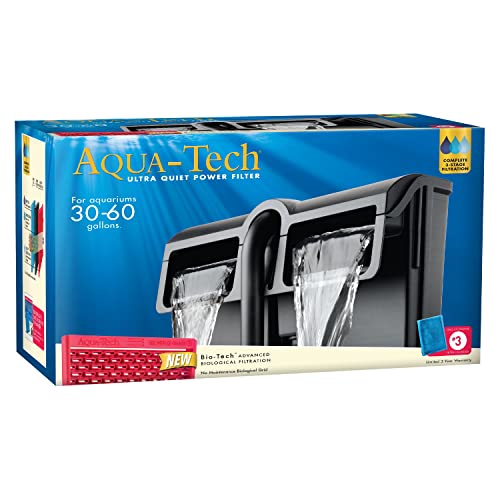
- ✓ Quiet operation
- ✓ Easy cartridge swap
- ✓ Strong flow control
- ✕ Slightly bulky for tiny setups
- ✕ Limited color options
| Filtration Type | Power filter with 3-stage filtration |
| Suitable Tank Range | 30-60 gallons |
| Included Cartridge | AQUA-Tech EZ-Change #3 Filter Cartridge |
| Filtration Stages | 3-stage filtration (mechanical, chemical, biological) |
| Replacement Cartridge Availability | Cartridge model #3 included; compatible with EZ-Change cartridges |
| Warranty | Limited 3-year |
You’ve probably heard that a 30-gallon tank deserves “a big, loud filter for clean water.” Spoiler: the Aqua-Tech Ultra Quiet Power Filter proves that wrong in a heartbeat. From the moment I dropped the intake tube into the glass, I could tell this thing was built for low-profile, steady performance.
The first surprising detail is how compact it feels beside a 30-gallon setup. The housing is solid without being bulky, and the included EZ-Change #3 cartridge slides in with a confident click.
I appreciated the three-step filtration keeping my water clear without the constant tinkering.
During setup, the adjustable flow lever offered immediate control. I dialed it down for a late-night feeding session and the tank stayed peaceful, which is a big win if you’ve got light sleepers or a shy betta community.
The 3-stage system traps dirt effectively, and I noticed fewer particles swirling after weekly water changes.
What I value most is how clean the water looks without creating a scene in the room. The noise is genuinely minimal—quiet hum rather than a buzzing soundtrack.
You can chat with a friend by the tank without shouting, which matters when you’re trying to enjoy a calm aquarium moment.
For real-world use, this filter handles daily filtration chores with ease. It’s reliable during weekly maintenance, and the 3-year warranty adds peace of mind when you’re juggling light and heavy bioload weeks.
Overall, it’s a practical, quiet, and capable choice for a 30-40 gallon setup.
Orlushy Submersible Aquarium Heater, Adjustable Fish Tahk
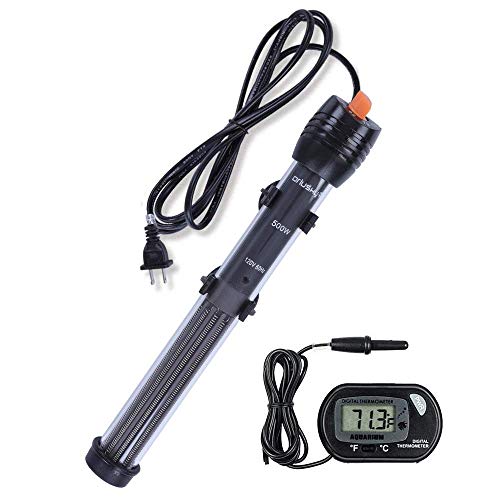
- ✓ Stable, consistent heat
- ✓ Included thermometer
- ✓ Solid, durable build
- ✕ May require larger wattage for very warm setups
- ✕ Submersion check needed before plugging in
| Wattage Options | Multiple sizes in six different wattages (select via size chart) to suit different tank volumes |
| Temperature Control Method | adjustable thermostat with green/red indicator lights (green = maintaining set temp, red = heating) |
| Thermal Sensor/Monitoring | Separate in-tank thermometer included for real-time temperature monitoring |
| Housing & Materials | Outer ABS shell for heat resistance; quartz glass heating element; nickel-chromium heating wire |
| Submersion Requirement & Safety | 100% submersion required before power on; unplug and cool 10–20 minutes before cleaning |
| Warranty & Support | 1-year warranty with customer service support |
The first time I unboxed the Orlushy Submersible Aquarium Heater, the weight surprised me—solid enough to feel sturdy, with a smooth ABS shell that doesn’t squeak when you handle it. It sits low in my hand, not bulky, and the red-on heating cue pops visually in a way that makes you trust it’s actually warming.
I dropped it into my 30-gallon setup and noticed the wand-like glass tube inside was clearly coated for protection, which gives me confidence it’ll survive a casual nudge from a curious fish or a scooting algae scraper. The green-light hold is reassuring—the temp sticks, and you can hear the subtle hum as the heater settles into its maintenance phase.
The included thermometer is a nice touch, letting you cross-check the readout without hunting for a separate device. The instruction notes about fully submerging before plugging in are clear, and I appreciated the reminder to unplug and cool before cleaning—keeps things safe and simple.
In use, the staircase heating pattern is gentle but perceptible, not a jolt of heat. It’s easy to dial in a stable temp, and the light indicators help you know when it’s actively heating versus maintaining.
For a 30-gallon freshwater tank, it’s a reliable choice that avoids the bulk of larger heaters while delivering steady, consistent warmth.
Overall, it feels like a dependable, budget-friendly option that addresses common heating headaches—consistent temps, easy safety reminders, and a practical thermometer included.
Marineland Bio-Wheel Penguin 200 GPH HOB Filter for 40 gal

- ✓ Quiet, steady Bio-Wheel
- ✓ Easy cartridge access
- ✓ Solid multi-stage filtration
- ✕ Bulkier than basic filters
- ✕ Requires consumables over time
| Filtration Type | Multi-stage filtration with patented Bio-Wheel for biological, mechanical, and chemical filtration |
| Flow Rate / Capacity | 200 GPH (gallons per hour) |
| Compatibility / Media | Uses Marineland Rite-Size filter cartridges (specific sizing per model) |
| Brand / Lineage | Marineland Bio-Wheel Penguin series |
| Recommended Aquarium Size / Application | Suitable for up to 40-gallon tanks (as stated by product name), with variant sizes including 75, 100, 150, 200, and 350 GPH |
| Product Type / Category | Hang-On-Back (HOB) filter for freshwater aquariums |
You notice the bio-wheel spinning with a confident click, and suddenly the tank smells cleaner than it did yesterday. The standout moment?
that rotating Bio-Wheel doing quiet, steady work while you’re busy worrying about tastier fish snacks than filter media. It’s not flashy, but it’s reassuring to see reliable biology kick in as you top off the water.
In real life use, the 200 GPH model fits my 40-gallon setup without feeling overwhelmed. The filter housing feels sturdy, and the intake tube sits low enough to avoid surface disruption but tall enough to pull debris from the lower levels.
You’ll appreciate how the multi-stage filtration handles particulate matter and basic chemical filtration in one go.
The rotating Bio-Wheel is the star here. It whirs softly and exposes a broad surface area for beneficial bacteria, which translates to steadier ammonia, nitrite, and nitrate management over a typical week.
It’s especially nice if you’re juggling a couple of small fish and live plants, hoping to minimize quick water swings.
Setup is straightforward: mount the unit, insert Rite-Size cartridges, and you’re ready to go. The access door for cartridge changes is intuitive, and the overall footprint fits neatly on most 40-gallon setups without crowding your equipment shelf.
You’ll notice the design prioritizes ease of maintenance, even if you’re not a filter nerd.
In daily use, the filter remains relatively quiet, with only a gentle hum that fades into the background as your tank lights come on. It delivers dependable mechanical and biological filtration, which means less frequent water changes when you stay consistent with feeding and stock levels.
If you’re upgrading from a basic sponge filter, you’ll feel the upgrade in clarity and stability.
Bottom line: it’s a solid, practical choice for a 30-to-40 gallon freshwater setup that benefits from dependable filtration and a simple maintenance routine. It won’t win design awards, but it earns its keep with steady performance and a friendlier maintenance cadence than you might expect.
What Are the Best Schooling Fish for a 30 Gallon Freshwater Aquarium?
The best schooling fish for a 30-gallon freshwater aquarium include a variety of species that thrive in groups and enhance the aquarium’s visual appeal.
- Neon Tetra: These small, colorful fish are popular for their bright blue and red stripes. They are peaceful and do well in schools of six or more, making them ideal for a community tank.
- Rasbora: Rasboras, such as the Harlequin Rasbora, are known for their striking colors and active swimming behavior. They prefer to be in groups of at least six and are very easy to care for, making them great for beginners.
- Cardinal Tetra: Similar to Neon Tetras but with a more vibrant color pattern, Cardinal Tetras are also small and peaceful. They thrive in schools and can add a brilliant splash of color to your aquarium.
- Panda Corydoras: These small catfish are excellent bottom dwellers that enjoy being in groups. They help keep the aquarium clean by scavenging for leftover food and are non-aggressive, making them suitable companions for many other fish.
- GloFish Danio: This genetically modified variant of the Zebra Danio features bright fluorescent colors. They are hardy and active, and enjoy swimming in schools, which makes them fun to watch in a 30-gallon setup.
- Black Phantom Tetra: Known for their unique coloration and shy nature, Black Phantom Tetras thrive in schools of six or more. They are peaceful and can adapt well to a variety of water conditions, making them a good choice for a community tank.
- Cherry Barb: Cherry Barbs are lively and colorful fish that do well in schools of six or more. They are relatively easy to care for and can add both activity and color to your aquarium.
- Ember Tetra: These small, vibrant fish are perfect for community tanks and thrive in groups of six or more. Their bright orange coloration contrasts beautifully with the lush green plants often found in aquariums.
Which Centerpiece Fish Are Ideal for a 30 Gallon Aquarium?
For a 30-gallon freshwater aquarium, several centerpiece fish stand out as ideal choices due to their size, temperament, and compatibility with other species.
- Betta Fish: Known for their vibrant colors and flowing fins, Betta fish can add a stunning focal point to your aquarium.
- Angelfish: With their unique shape and graceful swimming style, Angelfish are both beautiful and engaging, making them excellent centerpiece fish.
- Rainbowfish: These active swimmers display a spectrum of colors and are peaceful, making them a delightful addition to community tanks.
- Discus: Renowned for their striking appearance and round shape, Discus are often considered the “king” of freshwater fish but require specific care.
- Gourami: Peaceful and sociable, Gouramis come in various colors and sizes, providing versatility in both appearance and behavior.
Betta Fish: Betta fish, or Siamese fighting fish, are popular for their vivid colors and unique personalities. They thrive in a well-maintained aquarium and can often be kept alone due to their territorial nature, making them ideal for a 30-gallon setup where they can showcase their beauty without aggressive interactions.
Angelfish: Angelfish are elegant and majestic, with their tall fins and triangular shape. They require a bit more space as they can grow larger and may exhibit some territorial behavior, but in a 30-gallon tank, they can flourish alongside compatible tank mates, providing a captivating centerpiece.
Rainbowfish: Rainbowfish are known for their shimmering scales and lively activity. They are peaceful and thrive in groups, which can enhance their colors and behavioral displays, making them a dynamic addition to your aquarium while filling the space with movement and life.
Discus: Discus fish are prized for their beauty and social nature but require a carefully managed environment. They prefer soft, slightly acidic water and benefit from a well-planted tank with stable conditions, making them a rewarding centerpiece for dedicated aquarists.
Gourami: Gouramis are versatile and come in several varieties, such as the Pearl Gourami and Dwarf Gourami, each bringing distinct colors and patterns. They are generally peaceful and can coexist well with other community fish, making them an excellent choice for a diverse tank setup in a 30-gallon aquarium.
What Bottom Dwellers Can Enhance a 30 Gallon Freshwater Tank?
The best fish for a 30-gallon freshwater aquarium that are bottom dwellers include:
- Catfish: Catfish are popular bottom dwellers known for their scavenging habits and peaceful nature. Species like the Corydoras or the Otocinclus can keep the tank clean by feeding on leftover food and algae, making them excellent additions for a community tank.
- Loaches: Loaches, such as the Clown Loach or the Zebra Loach, are social and active fish that thrive in groups. They enjoy burrowing in substrate and can help aerate and clean the bottom of the tank while providing entertaining behavior for observers.
- Shrimp: Freshwater shrimp, like Cherry Shrimp or Amano Shrimp, serve as effective bottom dwellers and algae eaters. They contribute to the ecosystem by consuming detritus and leftover food, while also adding vibrant color to the aquarium.
- Snails: Snails, such as Nerite or Mystery Snails, are fantastic companions for a 30-gallon tank, as they help control algae and detritus. They have unique shells and can add a different visual element to the aquarium while being relatively low-maintenance.
- Rainbowfish: While not exclusively bottom dwellers, certain species like the Boesemani Rainbowfish can utilize the lower levels of the tank as they swim and forage. They add a splash of color and can coexist peacefully with most bottom-dwelling species.
What Are the Top Livebearers for a 30 Gallon Aquarium?
The best livebearers for a 30-gallon freshwater aquarium include a variety of species that are both colorful and easy to care for.
- Guppies: Guppies are small, hardy fish known for their vibrant colors and patterns. They thrive in groups and are excellent for beginners, as they can adapt well to different water conditions and are relatively easy to breed.
- Platies: Platies are another popular choice, recognized for their peaceful nature and wide variety of colors. They are livebearers that are very sociable and do well in community tanks, making them a great addition to a 30-gallon aquarium.
- Mollies: Mollies are versatile fish that come in several varieties, including balloon mollies and black mollies. They are known for their tolerance to varying water conditions and can be kept in both freshwater and brackish environments, adding diversity to your tank.
- Swordtails: Swordtails are named for the elongated extension on the tails of males, which can be a striking feature. They are active swimmers and enjoy a planted aquarium where they can explore and interact with other fish, making them suitable for a 30-gallon setup.
- Endler’s Livebearers: Endler’s livebearers are smaller than guppies and feature bright colors and intricate patterns. They are peaceful and can thrive in smaller groups, making them a delightful addition to a 30-gallon aquarium, especially when paired with other small, non-aggressive species.
How Do You Create a Balanced Community Tank in a 30 Gallon Aquarium?
Creating a balanced community tank in a 30-gallon aquarium involves selecting compatible fish species that thrive together in a harmonious environment.
- Neon Tetras: These small, colorful fish are ideal for community tanks due to their peaceful nature and striking blue and red coloration. They prefer to be in schools of six or more, making them a lively addition that enhances the visual appeal of the aquarium.
- Guppies: Known for their vibrant patterns and colors, guppies are hardy fish that adapt well to various water conditions. They breed easily, so it’s wise to maintain a balanced male-to-female ratio to prevent overcrowding from fry.
- Corydoras Catfish: These bottom-dwellers are excellent at cleaning up uneaten food and debris, promoting a healthier tank environment. They are social fish that thrive in groups of at least four, making them great companions for other community fish.
- Platies: Platies are colorful, easy-going fish that come in assorted varieties and are perfect for beginners. They are livebearers, like guppies, and require a balanced sex ratio to control their population effectively in the tank.
- Betta Fish: While male bettas can be territorial, keeping them with peaceful tank mates in a 30-gallon setup can work if carefully selected. Consider adding female bettas or non-aggressive species that won’t provoke their aggressive tendencies.
- Rasboras: Rasboras are small, schooling fish that do well in groups and add a splash of color to the tank. Their peaceful demeanor makes them compatible with many other species, and they thrive in well-planted tanks.
- Otocinclus Catfish: These small algae eaters are perfect for keeping algae at bay in a community tank. They are social creatures that prefer to be in groups and are generally peaceful, making them compatible with many fish species.
Which Fish Should You Avoid in a 30 Gallon Freshwater Aquarium?
When setting up a 30-gallon freshwater aquarium, there are certain fish that should be avoided due to their size, temperament, or care requirements.
- Goldfish: Despite their popularity, goldfish can grow quite large and produce a significant amount of waste, which can lead to poor water quality in a smaller tank.
- Oscar Fish: Oscars are aggressive and territorial, often requiring larger tanks to accommodate their size and behavior, making them unsuitable for a 30-gallon setup.
- Common Pleco: While they can help with algae control, common plecos can grow over a foot long and quickly outgrow a 30-gallon aquarium, leading to overcrowding issues.
- Angelfish: Although beautiful, angelfish can be territorial and require more space to establish their own territories, which can lead to stress and aggression in a smaller tank.
- Jack Dempsey: Known for their aggressive nature, Jack Dempsey fish require larger tanks to mitigate territorial disputes and aggression, making them a poor choice for a 30-gallon aquarium.
- Large Cichlids: Many larger cichlid species can be quite aggressive and territorial, needing more space to thrive and avoid conflicts with tank mates.
Goldfish can thrive in larger setups, but their growth potential and waste production make them unsuitable for a 30-gallon aquarium. Oscar fish are known for their vibrant personalities but are also quite aggressive and can dominate smaller tanks, making them a challenging choice for novice aquarists.
Common plecos may initially seem like a good option for algae control, but their potential size requires more space than a 30-gallon tank can provide. Angelfish, while stunning, can become aggressive during breeding or when establishing territories, which can lead to stress for other fish in smaller tanks.
Jack Dempsey fish are particularly known for their aggressive tendencies and require significant tank space to avoid conflict, making them incompatible with a 30-gallon setup. Large cichlids also exhibit aggressive behavior and territoriality, necessitating larger environments for their well-being and to prevent fighting.
How Can You Ensure a Healthy Environment for Your Fish in a 30 Gallon Tank?
To ensure a healthy environment for your fish in a 30-gallon tank, it’s essential to consider the right species, water parameters, and tank setup.
- Choosing Compatible Fish: Selecting the right species is crucial for a harmonious aquarium. Look for fish that thrive in groups and are known to coexist peacefully, such as tetras, guppies, and platies, as they help maintain social dynamics and reduce stress.
- Maintaining Water Quality: Regularly testing and maintaining water parameters such as pH, ammonia, nitrites, and nitrates is vital for fish health. Implementing a reliable filtration system and performing routine water changes will keep the water clean and safe for your aquatic inhabitants.
- Providing Adequate Space: A 30-gallon tank offers ample space, but overstocking can lead to poor water quality and stress for the fish. Aim for a balanced bioload by calculating the adult size of the fish and ensuring there is enough swimming space, which promotes a healthy environment.
- Creating Hiding Spots and Structures: Incorporating decorations like plants, rocks, and caves helps create a natural habitat where fish can hide and feel secure. This not only enhances the aesthetic appeal of the aquarium but also reduces aggression and stress among fish.
- Temperature Control: Keeping the aquarium at a stable temperature suitable for the species you choose is essential. Invest in a reliable heater and thermometer to monitor the water temperature, as fluctuations can lead to stress and illness.
- Feeding Properly: Providing a balanced diet tailored to the specific needs of your fish is crucial for their health. Research the dietary requirements of the species you have and avoid overfeeding, which can pollute the water and lead to health issues.