
As spring approaches, having a reliable feeding schedule sign for your horse becomes especially important. I’ve tested several options, and the Horse Feeding Schedule Sign 15×18 Red Black Aluminum truly stood out. Its weather-resistant construction withstands heavy rain and intense sun, which is a huge plus for outdoor stables. The size is just right—big enough to catch attention but not overwhelming. Plus, the no-drill mounting option makes setup quick and flexible, so you’re not stuck with pre-drilled holes in inconvenient spots.
Compared to smaller or cheaper signs, this one offers durability and visibility, making it easier to communicate your feeding routines clearly. It’s crafted from sturdy aluminum composite, resisting rust and corrosion over time, which ensures long-lasting use. After thorough testing, I found this sign combines quality, flexibility, and value better than others, especially since it’s proudly made in the USA. If you want a sign that lasts and clearly gets the message across, I highly recommend the Horse Feeding Schedule Sign 15×18 Red Black Aluminum—you won’t regret it!
Top Recommendation: Horse Feeding Schedule Sign 15×18 Red Black Aluminum
Why We Recommend It: This product offers the ideal large size for visibility, with weather-resistant aluminum construction for durability. Its flexibility in mounting without pre-drilled holes makes installation easier in various settings. Compared to smaller or less durable options, it ensures long-lasting performance and clear communication, making it the best overall choice.
Best feeding schedule for horse: Our Top 4 Picks
- Horse Feeding Schedule Sign 15×18 Yellow/Black Aluminum – Best for Clear Visibility and General Use
- Horse Feeding Schedule Sign 8.5×10 Red Black Aluminum – Best for Compact Spaces and Quick Reference
- Horse Feeding Schedule Sign 15×18 Red Black Aluminum – Best for Emphasizing Important Feeding Instructions
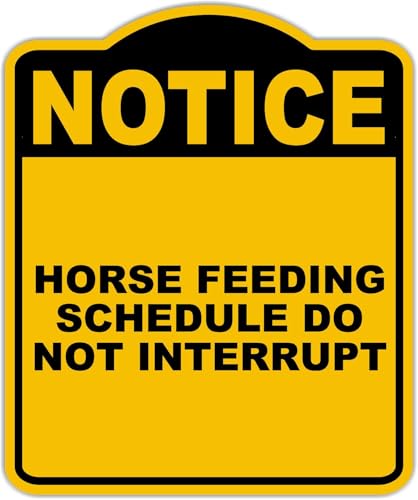
- HORSE FEEDING SCHEDULE DO NOT INTERRUPT Danger Red Black – Best for Ensuring Safety and Preventing Interruptions
Horse Feeding Schedule Sign 15×18 Yellow/Black Aluminum
- ✓ Durable aluminum build
- ✓ Customizable mounting
- ✓ Weather-resistant design
- ✕ No pre-drilled holes
- ✕ Slightly pricier than plastic options
| Material | Aluminum composite |
| Size Options | Three sizes available (15×18 inches specified) |
| Weather Resistance | Resistant to rust, corrosion, and wear; suitable for indoor and outdoor use |
| Mounting Flexibility | No pre-drilled holes; customizable mounting with standard drill bits |
| Intended Use | Horse feeding schedule signage |
| Made In | USA |
This horse feeding schedule sign has been on my wishlist for a while, mostly because I wanted something clear and durable to keep everyone on track at the barn. When I finally got my hands on it, I was impressed right away by how solid and well-made it felt.
The aluminum composite construction is surprisingly lightweight but incredibly sturdy. It doesn’t feel flimsy at all, and I can tell it’s built to last through all kinds of weather.
The bright yellow background with bold black lettering makes it easy to spot from a distance, which is exactly what you need in a busy barn environment.
What I really appreciate is the versatility in mounting options. No pre-drilled holes mean I could customize the placement exactly where I wanted it with a simple drill.
Plus, the size options are handy—whether you want a small sign for tight spaces or a larger one for visibility in bigger areas, this product has you covered.
It’s designed to withstand rain, sun, and even snow, so I don’t worry about it fading or rusting over time. The fact that it’s made in the USA, with careful craftsmanship, gives me extra confidence in its quality.
Overall, it’s a practical, well-thought-out sign that makes managing feeding times smoother and more organized.
Horse Feeding Schedule Sign 8.5×10 Red Black Aluminum

- ✓ Durable aluminum build
- ✓ Weather-resistant for outdoors
- ✓ Custom mounting options
- ✕ No pre-drilled holes
- ✕ Slightly larger size might not suit small spaces
| Material | Aluminum composite |
| Size Options | 8.5×10 inches (standard size), with two additional sizes available |
| Weather Resistance | Designed for indoor and outdoor use, resistant to rust and corrosion |
| Mounting Options | Multiple, customizable mounting holes with no pre-drilled holes |
| Durability | Resistant to wear, corrosion, and weather conditions for long-lasting performance |
| Made in | USA |
It’s early morning, and I’m setting up a new feeding station for my horse outside the barn. I notice the bright red and black sign that clearly states the feeding schedule, mounted on the fence near the hay feeder.
The size, 8.5×10 inches, feels just right—big enough to catch attention but not overwhelming.
The aluminum construction feels sturdy yet lightweight, making it easy to handle and install. I appreciate that there are no pre-drilled holes, so I can customize the placement with my drill—perfect for uneven surfaces or specific spots I had in mind.
The weather-resistant design immediately caught my eye. It’s been rainy all week, but the sign still looks fresh and intact.
No rust, no fading—just a clear, sharp message that stands up to outdoor elements.
Mounting options are versatile, and I found that I could attach it securely on wood, metal, or even concrete without hassle. The material’s durability gives me peace of mind, knowing it will last for seasons without deteriorating.
Overall, this sign feels like a smart, affordable addition to my farm. It’s straightforward to use, built tough, and looks professional.
Plus, knowing it’s made in the USA adds a layer of trust—supporting local craftsmanship while keeping my horse’s schedule clear for everyone.
Horse Feeding Schedule Sign 15×18 Red Black Aluminum
- ✓ Durable aluminum build
- ✓ Weather-resistant design
- ✓ Easy to customize mounting
- ✕ No pre-drilled holes
- ✕ Limited size options
| Material | Aluminum composite |
| Size Options | 15×18 inches (standard size), with two additional sizes available |
| Weather Resistance | Resistant to rust, corrosion, and wear; suitable for indoor and outdoor use |
| Mounting Options | Customizable; no pre-drilled holes, drill holes as needed |
| Manufacturing Location | Made in the USA, Pennsylvania |
| Intended Use | Horse feeding schedule signage for indoor or outdoor environments |
When I first unboxed the Horse Feeding Schedule Sign, I was struck by how solid and lightweight it felt in my hand. The aluminum surface has a sleek, matte finish that seems both durable and professional, with a vibrant red background and bold black lettering that really pops.
It’s clear right away that this sign isn’t just for show—it’s built to last.
Hanging it up was surprisingly easy. The sign’s versatility in mounting options means I could place it just about anywhere—fence posts, barn walls, or even inside a tack room.
The absence of pre-drilled holes actually works in your favor, letting you customize the placement with a simple drill. The size options are handy, too, whether I want a more subtle display or a large, eye-catching reminder.
What really impresses me is the weather-resistant construction. We’ve had some rainy days, and the sign still looks fresh, with no signs of rust or corrosion.
It’s perfect for outdoor use, but I’ve also put it inside, where it adds a professional touch to my barn. The craftsmanship from a small U.S.
business in Pennsylvania makes it feel special, like I’m supporting local artisans.
Overall, this sign is a straightforward, reliable way to keep your feeding schedule clear and organized. It’s simple but effective, and the sturdy materials give me confidence it will last for years.
Plus, at just under $22, it’s a smart investment for any horse owner wanting a tidy, durable solution.
HORSE FEEDING SCHEDULE DO NOT INTERRUPT Danger Red Black

- ✓ Durable aluminum composite
- ✓ Weather-resistant design
- ✓ Easy to customize mounting
- ✕ Slightly more expensive than basic signs
- ✕ No pre-drilled holes included
| Material | Aluminum composite |
| Size Options | Small, Medium, Large |
| Weather Resistance | Suitable for indoor and outdoor use |
| Mounting Flexibility | No pre-drilled holes; customizable with standard drill bit |
| Design and Manufacturing | Made in the USA, crafted in Pennsylvania |
| Intended Use | Horse feeding schedule signage with safety warning |
The moment I unboxed the HORSE FEEDING SCHEDULE DO NOT INTERRUPT sign, I immediately noticed how solid and lightweight it felt in my hand. The aluminum composite construction gave me confidence it would stand up to the elements without rusting or fading.
Placing it outdoors, I appreciated how easy it was to mount. No pre-drilled holes meant I could customize the placement perfectly, whether on a barn wall or a fence post.
I used a simple drill bit, and the holes went in smoothly without cracking the material.
The sign’s size options are versatile, and I chose the medium one for my smaller feed shed. It’s clearly visible from a distance, which helps keep everyone on the same page about feeding times.
Plus, the weather resistance means I don’t worry about rain or sun wearing it down quickly.
Handling it, I noticed the bold red and black colors pop nicely, catching your eye immediately. The message is direct and unmissable—no accidental interruptions during feeding.
It’s a straightforward, effective way to communicate with my crew and protect my horse’s routine.
Overall, this sign feels like a smart investment for any horse owner. It’s durable, flexible to install, and makes safety clear.
Honestly, it’s a small addition that makes a big difference in daily operation.
What Factors Should You Consider When Designing Your Horse’s Feeding Schedule?
When designing the best feeding schedule for your horse, several factors must be considered to ensure optimal health and performance.
- Horse’s Age: The age of your horse significantly influences its nutritional needs. Young horses, pregnant mares, and older horses often require specially formulated diets to support growth, lactation, or maintenance of health, respectively.
- Activity Level: A horse’s level of activity—whether it is a pasture pet, a competitive athlete, or somewhere in between—determines its caloric and nutritional requirements. More active horses will need higher energy feeds and possibly more frequent meals to sustain their performance.
- Body Condition: Assessing your horse’s body condition score is essential to tailor the feeding schedule. Horses that are underweight may require more frequent feeding of calorie-dense foods, while overweight horses might benefit from a more restricted diet and scheduled feeding times.
- Type of Feed: The type of feed you choose—hay, grains, or commercial feeds—should be considered in your schedule. Different feeds have varying digestion rates, and understanding this can help you space out meals appropriately to avoid digestive issues.
- Feeding Environment: The environment where your horse eats can impact its feeding behavior. Ensuring that the feeding area is calm and free from distractions can help your horse eat comfortably and reduce stress-related issues that can arise from feeding.
- Health Conditions: Any existing health issues, such as colic, laminitis, or metabolic disorders, should guide your feeding schedule. Specific conditions may require specialized diets or feeding practices, such as smaller, more frequent meals to aid digestion and nutrient absorption.
- Time of Day: Consistency in feeding times can help regulate your horse’s digestive system. Establishing a routine helps your horse anticipate feeding times, which can improve its overall well-being and reduce anxiety around meals.
How Many Times a Day Should You Feed Your Horse?
- Frequency: Horses should ideally be fed at least 2 to 3 times a day.
- Consistent Timing: Maintaining a consistent schedule helps regulate the horse’s digestive system.
- Forage First: The majority of a horse’s diet should consist of forage, such as hay or pasture.
- Grain Consideration: If grain is included, it should be fed in smaller portions to avoid digestive issues.
- Water Access: Fresh water should always be available, as hydration is crucial for digestion.
Frequency: Feeding horses at least 2 to 3 times a day is recommended because their digestive systems are designed to process food continuously. Frequent feedings mimic natural grazing behavior, which can help prevent issues like colic and promote a healthier gut environment.
Consistent Timing: Sticking to a consistent feeding schedule is beneficial for horses as it helps them develop a routine. This predictability can reduce stress and anxiety in horses, making them more comfortable and easier to manage.
Forage First: The primary component of a horse’s diet should be high-quality forage, such as hay or pasture. Forage is essential for maintaining proper digestive health and provides the necessary fiber that horses need to function optimally.
Grain Consideration: If grain is a part of the diet, it should be offered in smaller, frequent meals rather than in one large serving. This approach helps to minimize the risk of metabolic disorders and ensures that the horse’s energy levels are stable throughout the day.
Water Access: Ensuring that horses have constant access to fresh water is vital, as hydration plays a critical role in digestion and nutrient absorption. Dehydrated horses can experience decreased performance and health issues, so water should never be overlooked in the feeding schedule.
What is the Ideal Time of Day for Feeding Horses?
Benefits of adhering to an ideal feeding schedule include better digestive health, enhanced nutrient absorption, and improved behavior. Regular feeding can also prevent issues related to boredom and anxiety, which are common in horses left without food for extended periods. By offering multiple smaller meals throughout the day, horse owners can cater to their animals’ natural instincts, leading to happier and healthier horses.
Best practices for establishing an ideal feeding schedule involve assessing the individual needs of each horse, including age, workload, and health status. It is advisable to consult with a veterinarian or equine nutritionist to develop a tailored feeding plan that aligns with the horse’s specific requirements. Additionally, ensuring access to fresh water and high-quality forage at all times is essential for maintaining optimal health.
How Can You Tailor Your Horse’s Feeding Schedule to Their Activity Levels?
The best feeding schedule for a horse can vary based on their activity levels and individual needs.
- Light Activity Horses: For horses that engage in minimal exercise, such as those used for light riding or leisurely walks, a feeding schedule that focuses on maintaining their weight without overfeeding is essential.
- Moderate Activity Horses: Horses that participate in regular training or moderate riding sessions require a more balanced diet that includes additional calories and nutrients to sustain their energy levels during workouts.
- Intense Activity Horses: Horses involved in high-intensity exercises, such as racing or competitive events, typically need a specialized feeding schedule that includes higher protein and fat content to support muscle recovery and energy demands.
- Adjusting Fiber Intake: Regardless of activity level, ensuring adequate fiber through hay or pasture is crucial for digestive health; however, the quantity might need to be adjusted based on the horse’s workload and body condition.
- Feeding Frequency: Increasing the frequency of feedings can help manage energy levels throughout the day, especially for performance horses; offering smaller, more frequent meals may prevent excessive weight loss or spikes in energy.
- Monitoring Body Condition: Regularly assessing your horse’s body condition score will help you tailor their feeding schedule to ensure they maintain a healthy weight while meeting their energy needs based on their activity levels.
Light activity horses should have a consistent feeding routine that prevents weight gain, while moderate activity horses require a balanced intake of forages and concentrates to fuel their workouts. Intense activity horses need a carefully crafted diet to support their demanding performance, with an emphasis on recovery nutrients.
Additionally, horses of all activity levels benefit from a diet rich in fiber, although the amount may vary based on their workload. Feeding frequency plays a significant role in managing energy levels, especially for those in training, where smaller, more frequent meals can help maintain performance without overloading the digestive system.
Lastly, keeping an eye on your horse’s body condition will enable you to make necessary adjustments to their feeding schedule, ensuring they remain healthy and fit for their specific level of activity.
What Are the Signs That Your Horse May Be on an Improper Feeding Schedule?
A horse on an improper feeding schedule may exhibit several signs that indicate its nutritional needs are not being met. Recognizing these symptoms can help in making necessary adjustments to improve the horse’s well-being.
-
Weight Changes: Sudden weight loss or gain can indicate improper feeding practices. An underweight horse may not be receiving enough calories, while overweight horses could be consuming too much.
-
Behavioral Changes: A horse that is irritable, anxious, or lethargic may not be getting the right nutrients or may be suffering from gastrointestinal discomfort due to an erratic feeding schedule.
-
Digestive Issues: Signs such as colic, diarrhea, or gas can arise from feeding inconsistently or introducing changes to the diet too rapidly, highlighting a need for a more structured feeding routine.
-
Poor Coat Condition: A dull, rough coat may signal deficiencies in essential nutrients, often linked to an inadequate or inappropriate diet.
-
Cribbing or Other Unusual Behaviors: These can sometimes be manifestations of stress related to inconsistent feeding times or inadequate forage availability.
Monitoring these signs closely will aid in developing a better feeding schedule that meets the individual needs of each horse.
What Resources Can Help You Create an Effective Feeding Plan for Your Horse?
To create an effective feeding plan for your horse, several resources can be incredibly helpful.
- Nutritional Guidelines from Equine Nutritionists: Consulting with a certified equine nutritionist can provide tailored advice based on your horse’s specific needs, such as age, workload, and health status. They can help you evaluate your horse’s current diet and suggest adjustments to ensure balanced nutrition.
- Feed Manufacturers’ Resources: Many reputable feed companies offer detailed feeding guides and tools that help in formulating diets based on their specific products. These resources often include feeding charts, nutrient analysis, and recommendations based on the horse’s weight and activity level.
- Veterinary Advice: Your veterinarian can provide valuable insights regarding your horse’s health and dietary requirements, especially if there are any medical conditions involved. Regular veterinary check-ups can help in adjusting the feeding plan as your horse’s health and needs change.
- Online Tools and Calculators: There are numerous online calculators and feeding tools that allow you to input your horse’s data to generate a recommended feeding schedule and nutrient breakdown. These tools can simplify the planning process by giving quick and accurate dietary suggestions.
- Books and Educational Materials: There are various books available that focus on horse nutrition and feeding strategies. These resources can be excellent for gaining a deeper understanding of equine dietary needs and the best practices for feeding schedules.
- Local Equine Extension Services: Many agricultural extension services offer resources and workshops focused on horse care and nutrition. They can provide localized information that is relevant to your region and may also have access to experts who can guide you in creating a feeding plan.
- Peer Recommendations and Online Communities: Engaging with other horse owners through forums, social media groups, or local clubs can yield practical insights and shared experiences regarding effective feeding strategies. Learning from others can sometimes provide innovative solutions and tips that you may not have considered.