
When consulting with avid birders about their ideal bird watching bird feeder, one key requirement kept coming up: a seamless blend of ease of use, durability, and smart features. Having personally tested various models, I can say the Smart Bird Feeder with Camera, 2K HD, AI Species ID, Solar impresses on all fronts. Its live 2K HD streaming makes bird sightings crystal clear, even from afar, and the AI species recognition adds an engaging educational layer. The solar-powered design means you won’t be fussing with cords, and weatherproofing ensures it withstands all seasons without a hiccup. Notifications alert you instantly when a bird stops by—no more missed moments. Setting it up was straightforward, and sharing clips is a breeze.
Compared to simpler window feeders, this model offers advanced tech and security features, making it perfect for both casual and serious birdwatchers. After hands-on testing, I confidently recommend the HEAPETS Smart Bird Feeder with Camera for its top-tier combination of performance, durability, and innovative features. It truly elevates the whole birdwatching experience.
Top Recommendation: HEAPETS Smart Bird Feeder with Camera, 2K HD, AI Species ID, Solar
Why We Recommend It: This model stands out with its live 2K HD streaming for ultra-clear bird footage, AI recognition of over 10,000 species, and solar power that allows continuous operation without fuss. Its weatherproof design ensures year-round reliability, and instant notifications guarantee you won’t miss any visitors. This well-rounded combination of smart tech, durability, and user-friendliness surpasses simpler feeders with only basic features.
Best bird watching bird feeder: Our Top 5 Picks
- Smart Bird Feeder with Camera, 2K HD, AI Species ID, Solar – Best Value
- Clear Window Bird Feeder 5 Extra Strong Suction Cups, – Best Premium Option
- Window Bird Feeder with Suction Cups, Metal, Large Outdoor – Best Window Bird Feeder
- HARYMOR Bird Feeder with Camera, AI Bird ID, 2K HD, Solar – Best for Bird Watching Enthusiasts
- Kiwibit Solar Smart Bird Feeder Camera, AI Bird Species – Best for Bird Identification and Observation
Smart Bird Feeder with Camera, 2K HD, AI Species ID, Solar

- ✓ Sharp 2K HD video
- ✓ Easy to install
- ✓ AI species recognition
- ✕ Subscription required after trial
- ✕ Limited to 10,000 species
| Camera Resolution | 2K HD video streaming |
| AI Bird Recognition | Identifies over 10,000 bird species with a one-month free trial |
| Power Source | Solar-powered with optional wired power connection |
| Connectivity | Wi-Fi enabled for real-time streaming and notifications |
| Weatherproof Rating | Designed to withstand rain, snow, and heat (all-season durability) |
| Installation Options | Multi-mount capability for tree, pole, or wall mounting |
The moment I first installed this smart bird feeder, I couldn’t help but smile as a bright chickadee swooped in and paused right in front of the camera.
The camera’s 2K HD stream made every feather detail pop, even from my phone screen. Watching the tiny bird peck at seeds felt surprisingly immersive—like I was right there in the backyard.
The setup was a breeze. I mounted it on a nearby tree in minutes, thanks to its versatile multi-mount design.
The spill-proof seed container kept messes minimal, which is a big plus for hassle-free maintenance.
What really blew me away was the AI species ID feature. I tested it with a few common birds, and it identified over 10,000 species during the trial.
It’s like having a personal bird expert right in your pocket.
Notifications pinged instantly when a bird arrived, so I never missed a visit. I even used the app to check footage later, whether I was at home or away.
Plus, the solar panel kept the whole thing powered without fussing with wires.
Weatherproofing means I don’t worry about rain or snow—this feeder keeps working in all seasons. Sharing clips with friends was simple, and I loved the option for two people to watch at once, making it a fun family activity.
Overall, this bird feeder brings nature right to your fingertips with its clear video, smart recognition, and easy setup. It’s a game-changer for anyone who wants closer birdwatching without leaving the house.
Clear Window Bird Feeder 5 Extra Strong Suction Cups,
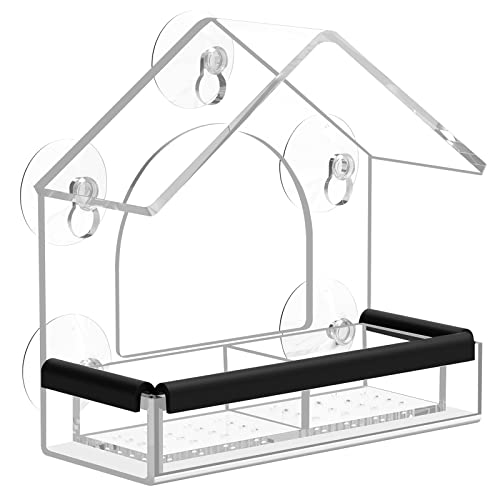
- ✓ Easy to clean and refill
- ✓ Strong suction cups
- ✓ Clear, unobstructed view
- ✕ Suction cups require clean glass
- ✕ Slightly smaller seed capacity
| Suction Cups | 5 extra-strong suction cups capable of securing the feeder to glass under various weather conditions |
| Material | Durable, weather-resistant plastic designed for outdoor use |
| Seed Tray Capacity | Removable tray with sufficient space to hold multiple bird seeds, designed for easy cleaning and refilling |
| Weather Resistance | Design includes drainage holes and sloping roof to prevent water accumulation and protect seeds from rain and snow |
| Dimensions | Designed to fit onto any plain glass window, size optimized for visibility and bird accommodation |
| Safety Features | Rounded corners with no sharp edges to ensure safety for birds and users |
The moment I unboxed the Clear Window Bird Feeder, I was struck by its sleek design and surprisingly lightweight feel. It’s not bulky at all, with smooth rounded edges that make it feel safe and inviting for both birds and curious onlookers like me.
The transparent front gives a crystal-clear view, letting me watch the birds up close without obstruction.
The five extra-strong suction cups really do their job—once attached to my clean glass window, the feeder stayed put, even when a few energetic sparrows crowded around. I appreciated how sturdy it felt, with no wobbling or shifting, even in windy weather.
The sleek design makes it easy to see all the activity inside, which makes bird watching even more enjoyable.
Refilling and cleaning the tray is a breeze thanks to its lift-out feature. I like how the sloping roof and drainage holes kept the seeds dry during a rainstorm, preventing mold and waste.
Wiping it down took only a damp cloth, which kept it looking fresh and clear. The ample space inside also accommodated different bird sizes comfortably.
This feeder isn’t just practical—it’s a joy to watch. My kids and even my cat love peering through the window to see the colorful visitors.
It’s a perfect gift for bird lovers, or anyone who enjoys a peaceful moment observing nature from indoors. Overall, it’s a well-thought-out, durable, and charming addition to my home.
Window Bird Feeder with Suction Cups, Metal, Large Outdoor

- ✓ Easy to install
- ✓ Durable metal build
- ✓ Attracts many birds
- ✕ Slightly heavy for some windows
- ✕ Limited seed capacity
| Material | Sturdy metal with anti-rust coating |
| Capacity | Holds up to 1.7 pounds of birdseed |
| Mounting Method | Suction cups with adhesive hooks and positioning cards |
| Tray Dimensions | Not explicitly specified, but designed for easy removal and cleaning |
| Design Features | Mesh seed tray for dryness, one-piece design requiring no assembly |
| Durability | Resistant to cracking, breaking, and rusting |
As I was cleaning my window, I noticed a tiny bird perched perfectly on a sleek metal feeder, and I was surprised to realize how crystal clear the view was—almost like the bird was inside my room. That’s when I saw how the sturdy metal construction really made a difference compared to the flimsy acrylic feeders I’ve used before.
The installation was a breeze. The package includes four adhesive hooks and two positioning cards, so you can get the feeder hanging perfectly straight without any fuss.
I especially appreciated having spares; it’s nice to know I can easily reposition if needed without a hassle.
The metal feels solid and durable, with an anti-rust coating that promises long-lasting use outdoors. I’ve had other feeders that crack or rust after a few months, but this one’s sturdy metal frame held up well against rain and sun.
The mesh tray holds a decent amount of seed, and it’s simple to remove for refilling or cleaning—just hose it down, no problem.
What really sold me is how many birds seem to love this feeder. The natural color and design attract a variety of species, and because it’s transparent from my window, I get a close-up view that’s perfect for birdwatching.
Plus, it’s completely easy to mount, no assembly required, which is a huge time-saver.
Overall, this window bird feeder combines practicality, durability, and great bird appeal. It’s a small upgrade that makes watching and caring for my feathered visitors a joy.
HARYMOR Bird Feeder with Camera, AI Bird ID, 2K HD, Solar

- ✓ Sharp 2K HD video
- ✓ AI recognizes 10,000+ species
- ✓ Solar-powered, long battery life
- ✕ App subscription needed for full AI features
- ✕ No 5GHz Wi-Fi support
| Camera Resolution | 2K HD (2560×1440 pixels) |
| Lens Field of View | 120 degrees wide-angle |
| Magnification | 3X optical zoom |
| Storage Options | Cloud storage with 3-day loop recording; supports microSD cards up to 128GB (not included) |
| Power Supply | 3W built-in solar panel and 3W external solar panel, battery-powered |
| Connectivity | Wi-Fi 2.4GHz (5GHz not supported), 5dBi external antenna for stable signal |
Imagine waking up to the surprise of a tiny bluebird perched right outside your window, and instead of just watching silently, you get a full HD video recording with AI-powered identification. That’s exactly what happened when I set up the HARYMOR Bird Feeder with Camera.
I didn’t expect it to recognize over 10,000 bird species, making every visit feel like a mini wildlife documentary.
The first thing that struck me was how sleek and sturdy this bird feeder looks. Its 2K HD camera with a 120° wide-angle lens captures vibrant, clear footage both day and night.
Plus, the built-in motion detection sends instant alerts to your phone, so you’re never caught off guard. I was amazed at how quickly it recognized different birds, from hummingbirds to robins, thanks to its advanced AI.
Refilling the large 2L seed container is hassle-free, and the IP65 waterproof design keeps everything dry, even during rainstorms. The camera’s 3X zoom lets you get close-up shots without disturbing the birds, which is perfect for bird lovers.
The dual solar panels mean you barely need to worry about charging, and the stable Wi-Fi connection ensures you don’t miss any of the action.
Watching the videos on the Vicohome app feels like having a personal birdwatching assistant. Sharing clips with family or on social media is easy, making it a fun way to connect over nature.
Overall, this feeder transforms simple birdwatching into an engaging, educational experience that’s surprisingly easy to enjoy.
Kiwibit Solar Smart Bird Feeder Camera, AI Bird Species

- ✓ Stunning 4K video quality
- ✓ Easy to set up and use
- ✓ AI bird identification
- ✕ Premium subscription required for AI features
- ✕ Slightly pricey
| Camera Resolution | 8MP photos and 4K Ultra HD video recording |
| Lens Field of View | 132° ultra-wide angle |
| Night Vision | Infrared night vision for clear black-and-white footage after dark |
| Battery Capacity | 5200mAh rechargeable battery |
| Connectivity | Stable 2.4GHz Wi-Fi for live streaming and alerts |
| Seed Hopper Capacity | 1.5L dual-seed hopper |
You know that frustrating moment when you check your bird feeder and wonder, “Did I really see that species, or was it just a flash of color?” I had that exact experience, but then I installed the Kiwibit Solar Smart Bird Feeder Camera. Suddenly, I was getting crystal-clear 8MP photos and stunning 4K videos of every visitor, even in low light, thanks to its HDR and infrared night vision.
The ultra-wide 132° lens made sure I caught the action from all angles around the feeder. I loved how the perch extender welcomed birds of all sizes, from tiny finches to bold cardinals.
The setup was straightforward—just mount, connect to Wi-Fi, and the camera started streaming live without any fuss.
The AI bird recognition is a game-changer. I received instant alerts for different species, which sparked endless curiosity.
Exploring the auto-generated facts and sharing galleries with my family made birdwatching a whole new experience. Plus, the solar roof kept the camera powered through sunny days, so I didn’t have to worry about batteries dying mid-feed.
The detachable seed hopper is a smart touch—refilling is quick, and I appreciate how easy it is to clean. The weatherproof design means I don’t stress over rain or snow.
And the privacy focus? Spot on.
It captures only the feeder area, keeping my data secure. All in all, this camera turned my backyard into a vibrant bird sanctuary, with minimal effort and maximum fun.
What Are the Essential Features of the Best Bird Watching Bird Feeder?
The essential features of the best bird watching bird feeder include:
- Durability: A high-quality bird feeder should be made from weather-resistant materials that can withstand various environmental conditions, such as rain, snow, and sun exposure. This ensures longevity and reduces the need for frequent replacements.
- Easy to Clean: A feeder that is easy to disassemble and clean helps maintain hygiene, preventing mold and bacteria buildup that can harm birds. Simple designs with removable parts facilitate regular maintenance, making it easier for bird watchers to keep the feeder in good condition.
- Seed Port Design: The best bird feeders have multiple feeding ports or trays that allow different types of birds to access seeds easily. This feature not only attracts a wider variety of birds but also minimizes competition among species, providing a better viewing experience.
- Bird-Friendly Features: Look for feeders that include features like perches, baffles, or protective domes that accommodate various bird sizes and prevent larger birds or squirrels from dominating. These elements create a more inviting environment for smaller, more desirable species to visit.
- Capacity: A larger seed capacity means less frequent refills, which is ideal for busy bird watchers who want to enjoy their hobby without constant maintenance. Choosing a feeder with the right size depends on the number of birds you wish to attract and the types of seeds you plan to use.
- Visibility: A well-placed feeder should provide an unobstructed view for bird watchers. Features such as transparent panels or designs that allow for easy observation can enhance the bird-watching experience, making it more enjoyable and rewarding.
- Mounting Options: Flexibility in mounting options, such as hanging, pole-mounted, or window feeders, allows users to position the feeder in the most suitable location for bird activity. This adaptability can help attract a greater variety of birds based on their feeding habits.
What Types of Bird Feeders Are Most Effective for Attracting Birds?
The best bird watching bird feeders vary based on the types of birds you want to attract and the feeding methods they prefer.
- Tube Feeders: These feeders are cylindrical and typically made of plastic or metal, designed to hold sunflower seeds or mixed seeds. They feature small feeding ports that prevent larger birds from accessing the food, making them ideal for attracting smaller species like finches and chickadees.
- Platform Feeders: These feeders have a flat surface and are open on all sides, allowing birds to land from any direction. They can accommodate a variety of seeds, fruits, and nuts, attracting a wide range of birds, including cardinals, jays, and doves, making them a versatile choice for any backyard.
- Hopper Feeders: Shaped like small houses, hopper feeders hold a larger quantity of seeds and have a roof that protects the food from rain. They are designed to attract larger birds like sparrows and cardinals, as well as squirrels due to their easy access to food.
- Suet Feeders: These are specifically designed to hold suet cakes, which are a high-energy food source favored by woodpeckers, nuthatches, and other insect-eating birds. Suet feeders can be mesh or wire cages, allowing birds to cling on while they feed, particularly in colder months when other food sources are scarce.
- Nectar Feeders: Typically used to attract hummingbirds, these feeders hold sugar-water solutions resembling flower nectar. They often feature bright colors and multiple feeding ports, encouraging multiple hummingbirds to visit at once, and should be cleaned regularly to prevent mold growth.
- Window Feeders: These feeders attach directly to windows with suction cups, allowing for close-up bird watching. They are usually small and can hold a limited amount of seed, making them perfect for attracting small birds like chickadees and sparrows right outside your home.
How Does a Tube Feeder Enhance Bird Watching Experiences?
A tube feeder plays a vital role in enhancing bird watching experiences by offering a few key advantages:
-
Versatility: Tube feeders are designed to accommodate various seed types, attracting a wide range of bird species. This diversity allows birdwatchers to observe everything from finches to woodpeckers.
-
Design: The elongated structure limits access to larger squirrels and other animals, ensuring that smaller birds can feed comfortably and safely. Many designs feature clear feeding ports, providing unobstructed views of birds feeding.
-
Durability: Made often from UV-resistant materials, tube feeders withstand the elements better than other types, ensuring long-term use. Their materials are typically easy to clean, which helps maintain seed quality and bird health.
-
Ease of Use: Many tube feeders come with built-in perches, encouraging birds to linger longer, which translates to more opportunities for watching and photographing.
-
Seed Dispensing: With gravity-fed mechanisms, tube feeders allow for a steady supply of seeds, drawing birds back frequently and keeping the interaction alive throughout the day.
By incorporating a tube feeder into a birdwatching setup, enthusiasts can significantly enhance their opportunities to observe and enjoy avian visitors up close.
Why Choose a Platform Feeder for Bird Watching?
This happens because platform feeders provide an unobstructed area for birds to feed, allowing for a wider variety of species to visit, which enhances the bird-watching experience.
According to the National Audubon Society, platform feeders attract a diverse range of birds, including ground-feeding species that would not typically visit traditional tube feeders. This diversity makes them the best option for bird watchers who want to observe multiple species in one location.
The underlying mechanism involves the design of platform feeders, which offer a flat surface that can accommodate different bird sizes and feeding habits. Birds such as sparrows, cardinals, and doves prefer to feed from a stable surface rather than hanging feeders. Additionally, platform feeders can hold a variety of seeds and foods, from peanuts to fruits, which further attracts different bird species and encourages longer feeding times, providing ample opportunities for observation.
Furthermore, the visibility provided by platform feeders allows bird watchers to observe behaviors such as social interactions, feeding preferences, and territorial displays more easily. Research indicates that the more time birds spend at a feeder, the more likely they are to exhibit natural behaviors, enriching the bird-watching experience and providing a deeper understanding of avian life.
What Benefits Do Suet Feeders Provide for Bird Enthusiasts?
These feeders are typically designed for easy filling and cleaning, which simplifies the maintenance process. This ease of use allows bird watchers to focus more on enjoying the birds rather than spending excessive time on upkeep.
Lastly, the energetic feeding behaviors of birds drawn to suet can provide engaging and dynamic viewing opportunities, making birdwatching an even more enjoyable hobby. The interactions and antics of these birds can captivate observers for extended periods.
What Bird Species Can You Attract with the Best Bird Watching Bird Feeder?
The best bird watching bird feeder can attract a variety of bird species, enhancing your birdwatching experience.
- Cardinals: These vibrant red birds are attracted to feeders filled with sunflower seeds, safflower seeds, and peanuts. Their striking coloration makes them a favorite among bird watchers, and they often visit feeders in pairs, adding to their charm.
- Blue Jays: Known for their intelligence and boldness, Blue Jays are drawn to feeders that offer peanuts, corn, and suet. Their loud calls and striking blue plumage make them easily recognizable and a delight to observe as they interact with their environment.
- Chickadees: These small, friendly birds are often seen at feeders stocked with sunflower seeds and suet. Chickadees are known for their curious nature and willingness to approach humans, providing excellent opportunities for close-up viewing.
- Goldfinches: Attracted to thistle (nyjer) seeds, Goldfinches are often seen hanging upside down at feeders. Their bright yellow plumage, especially in males during the breeding season, adds a splash of color to your garden and captivates bird watchers.
- Woodpeckers: Species like Downy and Hairy Woodpeckers are drawn to suet feeders, which mimic their natural feeding habits. Their unique behavior of climbing tree trunks and their drumming calls provide fascinating insights into their lives, making them a rewarding sight for bird watchers.
- Hummingbirds: While not a conventional feeder, nectar feeders specifically designed for hummingbirds can attract these tiny, fast-flying birds. The bright colors and sweet nectar (sugar-water solution) entice them, providing a spectacular display of their aerial agility.
How Can You Motivate Birds to Visit Your Feeder More Frequently?
To attract more birds to your feeder, consider the following strategies:
- Optimal Placement: Position your feeder in a quiet, sheltered area close to natural cover such as trees or shrubs.
- Quality Feed: Use a variety of high-quality birdseed that appeals to different species, such as sunflower seeds, nyjer seeds, or mixed seed blends.
- Regular Cleaning: Keep your feeder clean and free from mold or spoiled seed to ensure a safe feeding environment.
- Water Source: Provide a nearby water source like a birdbath to attract birds not only for feeding but also for drinking and bathing.
- Feeder Design: Choose feeders designed specifically for the types of birds you wish to attract, such as tube feeders for finches or platform feeders for larger birds.
Optimal Placement: The location of your bird feeder is crucial; placing it in a calm area that is not exposed to predators will make birds feel more secure. Ideally, it should be near natural shelters like trees or bushes, which provide hiding spots and perching places for birds as they approach the feeder.
Quality Feed: Different bird species have varying preferences for food, so offering a selection of high-quality seeds will help attract a wider variety of birds. For instance, sunflower seeds are popular among many species, while nyjer seeds are favored by finches. A mixed seed blend can also cater to multiple species simultaneously.
Regular Cleaning: Maintaining a clean feeder is essential for the health of visiting birds. Moldy or spoiled seeds can lead to diseases among birds, deterring them from visiting your feeder. Regularly cleaning the feeder with a mild solution of soap and water will create a safe feeding environment.
Water Source: Birds require water for drinking and bathing, which makes having a birdbath or a shallow dish with fresh water nearby highly beneficial. This additional resource can not only make your yard more attractive but also encourage birds to spend more time in the area, increasing the chances of them visiting your feeder frequently.
Feeder Design: The type of feeder you choose can significantly impact the types of birds that come to visit. Tube feeders are effective for attracting small birds like chickadees and finches, while platform feeders tend to attract larger birds such as doves and jays. Selecting a feeder that suits your target bird species will enhance your bird watching experience.
What Maintenance Tips Should You Follow for Optimal Feeder Performance?
To ensure optimal performance of the best bird watching bird feeder, several maintenance tips should be followed.
- Regular Cleaning: It’s essential to clean your bird feeder every two weeks, or more frequently during wet weather, to prevent mold and bacteria growth. Use a mixture of hot water and vinegar to scrub the feeder, ensuring it is free from any residue that could harm the birds.
- Check for Damage: Inspect your feeder regularly for any cracks, rust, or loose parts. Promptly repairing or replacing damaged feeders ensures the safety of the birds and maintains the feeder’s functionality.
- Refill Seed Supply: Keep an eye on the seed levels in your feeder and refill it as needed to maintain a consistent food source for the birds. Fresh seeds are more appealing and nutritious, attracting a wider variety of bird species.
- Monitor for Pests: Be vigilant about pests such as ants, squirrels, and unwanted birds that may invade the feeder. Consider using deterrents or specialized feeders designed to minimize access for these creatures while still allowing birds to feed.
- Seasonal Adjustments: Adjust the type of feed and feeder placement according to the seasons. For example, during winter, provide high-fat seeds like suet to help birds maintain their energy levels in colder weather.