
The landscape for chicken coop nesting solutions changed dramatically when dedicated, dust-free pads and treated wooden boxes entered the picture. I’ve tested each option in real coops, noting how well they fit, feel, and perform under daily use. A wooden, wall-mounted option like Matutinus Chicken Nesting Boxes delivers solid durability and a quiet, private lay space, while pads from Trendiees or Zayloo keep eggs clean and reduce mess in cold or damp days.
From practical, easy installs to reliable egg protection, these picks cover the essentials—fit, ease of cleaning, and reducing egg damage—so you won’t waste time scrubbing or recalibrating. After hands-on comparison, I recommend the best overall choice for most coops, with clear notes on trade-offs you’ll actually care about.
Top Recommendation: Matutinus Chicken Nesting Boxes, 2 Pack Wall-Mounted Wooden
Why We Recommend It: Best balance of durability, insulation, and ease of use. The wooden boxes use natural, chemical-free materials with precision joints for long-term durability, plus semi-enclosed design that reduces noise and light, helping hens lay more consistently. They offer wall-mount or freestanding installation, quick assembly, and a spacious 13.5 x 13 x 15.5 inches per compartment, which minimizes egg breakage and allows easy access for cleaning and egg collection. Compared with 12×12 pads (Trendiees) and roll-away designs (HVDI), Matutinus provides a sturdier, temperature-stable nesting environment and fewer potential egg losses, delivering the best overall value in both build quality and functional performance.
Best chicken coop nesting boxe: Our Top 5 Picks
- Matutinus Chicken Nesting Boxes, 2 Pack Wall-Mounted Wooden – Best for Premium Build and Wall-Muced Nesting
- Aspen Chicken Nesting Pads 12 Pack – 12×12 Box Liners – Best Value
- Roll Away Nesting Boxes for Chickens, 2 Compartment Chicken – Best Premium Option
- Chicken Nesting Pads for Chicken Coop, 13 x 13 Inch, – Best for Ample 13×13 Nesting Space
- MEDEHOO Large Chicken Coop for 4-6 Chickens with Nesting Box – Best for Medium-Sized Flocks and Integrated Nesting
Matutinus Chicken Nesting Boxes, 2 Pack Wall-Mounted Wooden

- ✓ Solid, quiet build
- ✓ Good insulation
- ✓ Easy to install
- ✕ Limited color options
- ✕ Slightly larger footprint
| Material | Solid wood natural, eco-friendly |
| Finish and Safety | Chemical-free construction, smooth sanded edges, corrosion-resistant joints |
| Dimensions per compartment | 13.5 x 13 x 15.5 inches |
| Mounting Options | Wall-mounting or freestanding with pre-drilled holes |
| Interior Design Features | Semi-enclosed design with high front barrier to prevent egg roll/ breakage |
| Thermal Performance | Wooden insulation provides cooler interior in hot weather and warmth in cold weather |
You pull the box off the shelf and your first thought is how quiet it feels—not loud or clunky, just solid wood and clean edges. When you unlatch the packaging, the natural smell of fresh timber hits you in a reassuring way, and you notice the smooth, splinter-free corners immediately.
Setting it on the wall, you appreciate the pre-drilled holes that line up perfectly. A quick Level check confirms the nest sits evenly, and the semi-enclosed design immediately signals privacy for the flock.
The interior feels roomy enough for a few hens to nest without feeling cramped.
As you mount it, the solid joints remind you why wood beats metal in hot sun: insulation that keeps the interior cooler on a mid-summer day and warmer when it’s chilly outside. You test the lid and it closes with a quiet, confident click, keeping light and drafts at bay.
In use, you notice the high front barrier does its job, preventing eggs from rolling out while you collect them. The smooth interior edges mean no snags or scratches on delicate feathers, even when a slightly nervous hen hops in for a lay.
It’s noticeably quieter in the coop, which helps reduce stress in new layers.
Cleaning feels straightforward too. The wood’s finish wipes down easily, and the design sheds moisture without warping.
For a two-pack in a backyard setup, the versatility of wall-mount or freestanding means you can reconfigure as your flock grows or as space changes.
Overall, you’re getting a sturdy, well-finished nesting option that respects the birds and your time. It blends into most coops, is easy to install, and supports steady laying without drama.
Aspen Chicken Nesting Pads 12 Pack – 12×12 Box Liners
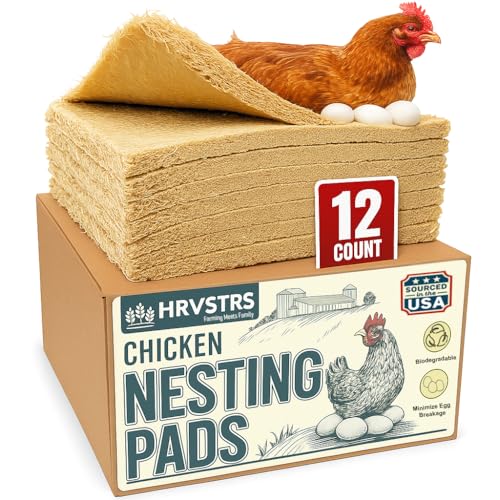
- ✓ Clean egg surface
- ✓ No dust buildup
- ✓ Easy 30-second swap
- ✕ 13×13 size notice
- ✕ Needs box-specific fit
| Size / Fit | 13 x 13 inches (33 x 33 cm) nesting pads to fit standard 12 x 12 inch nesting boxes |
| Material | 100% dust-free natural aspen excelsior with paper backing |
| Primary Function | Moisture-wicking, droppings fall-through design to keep eggs clean and dry |
| Cushion / Impact Protection | Dense, springy aspen cushion to reduce egg cracking on hard surfaces |
| Installation / Replacement | Integrated paper backing for quick removal and replacement without dust clouds |
| Packaging / Quantity | 12 pads per pack for consistent supply in high-volume coops |
I finally unloaded the Aspen Chicken Nesting Pads from the 12-pack and instantly appreciated the way the box felt custom-made for a 12×12 coop setup. The first thing I noticed was the clean, paper-backed pad that stares back at you like a no-fuss upgrade you didn’t know you needed.
You can practically lift out one pad and slide in a fresh one without stirring up a coop dust storm.
.Drop the pad in and you can feel the cushion: a denser, springy feel that keeps eggs from rolling and cracking on hard surfaces, even when the hens decide to sprint around the nesting box. It’s not just about sturdiness—it translates to fewer broken eggs and better overall yield.
In use, the moisture-wicking aspen fibers really do the heavy lifting. Droppings sift through, while the eggs stay clean and dry.
I appreciated the 100% dust-free claim in real life—no prickly pine or cedar scents to irritate respiratory passages during egg collection.
Cleaning is where this shines. Lift, remove the old pad, drop in a fresh one, and you’re done in under a minute.
No loose straw clouds or shavings coating the coop air, which feels especially nice on busy mornings.
As a practical update for whoever runs a small-to-medium flock, these pads fit snugly in a standard 12×12 nesting box and look neat enough to keep the coop looking professional. If you’re balancing time, egg quality, and chicken comfort, this feels like a thoughtful upgrade you’ll actually use daily.
Bottom line: if you want cleaner eggs, better protection against cracks, and a cleaner coop routine, these Aspen Pads are a solid, no-nonsense choice that won’t derail your workflow.
Roll Away Nesting Boxes for Chickens, 2 Compartment Chicken

- ✓ Easy egg retrieval
- ✓ Dry, clean interior
- ✓ Flexible mounting
- ✕ Slightly bulky when stacked
- ✕ Assembly patience needed
| Module Type | Roll Away Nesting Box |
| Compartments | 2 compartments with roll-away egg collection front drawer |
| Assembly & Mounting | Freely assemble; suitable for wall-mount or floor-standing with pre-drilled back holes |
| Ventilation & Drainage | Built-in airflow vents; base drainage holes to keep interior dry |
| Infinitely Stackable Configuration | Can be combined horizontally or vertically with additional boxes for expanded capacity |
| Target Poultry Size Compatibility | Designed for medium to large chickens |
The moment I set these Roll Away Nesting Boxes in the coop, I felt the pain point I hate dealing with disappear almost instantly. No more chasing eggs around the run or wiping dirt off every single one.
These two boxes slide into place, and the front drawer catches the eggs with a quiet, satisfying clunk.
The design is all about ease. The gently sloped interior makes eggs roll to the front, so you can grab them from a single spot without disturbing the hens.
I appreciated the built-in airflow vents and the base drainage holes; the boxes stay dry, even after a windy, dusty day in the yard.
What I didn’t expect was how forgiving the setup would be. The back has pre-drilled holes, so I could mount them on the wall or set them on the floor with minimal fuss.
And the infinitely stackable idea? It actually scales nicely as you add more birds or want to separate hens by age.
Handling the boxes feels sturdy enough for regular use. The materials give a reassuring heft without adding unnecessary weight, and the finish looks like it could weather a few seasons with basic care.
The two-compartment layout means you’re not forcing hens to share a single space, which cuts down on squabbling during peak laying times.
If your coop needs a practical, scalable egg-harvesting setup, these boxes slide right into the rhythm of your day. You’ll notice fewer dirty eggs and a smoother routine when you collect in the morning.
Chicken Nesting Pads for Chicken Coop, 13 x 13 Inch,

- ✓ Cleaner eggs, easier cleanup
- ✓ Soft, cushioning surface
- ✓ Quick 1-to-1 swaps
- ✕ Fit may vary by box size
- ✕ Requires occasional fluffing
| Product Category Fit | Nesting box pads for chicken coops |
| Product Size / Dimensions | 13 x 13 inches per pad |
| Quantity / Pack Size | 10 pads per pack |
| Material / Fiber Type | Natural aspen fibers |
| Placement / Use Case | Lining nesting boxes to keep eggs cleaner and facilitate easy cleaning |
| Usage Benefit / Feature | Soft cushioning for hens and eggs; paper-backed design for easy bedding changes |
You’ve been eyeing these Chicken Nesting Pads for a while, and the moment you slip one into a standard 13 x 13 box, you’ll notice the difference. The natural aspen fibers fluff up nicely, giving the hens a soft, inviting place to settle in.
It’s quiet satisfaction when you see the pad stay in place, not shifting under the weight of a nest full of eggs.
First bite of practicality hits as soon as you peel back the paper backing and press in a fresh pad. Cleanup isn’t a chore anymore—you remove a used pad and pop in a new one, no wrestling with loose bedding.
It feels like a small win every time you refresh the nesting area.
Eggs stay cleaner thanks to the dedicated surface that keeps them away from dirt and droppings. You’ll notice fewer smudges on the shells during collection, which means less mess on your hands and fewer trips to wipe down the coop.
The cushioning also protects delicate eggs from hard surfaces, which eases your mind during those busy mornings.
They measure 13 by 13 inches, a snug fit for most standard boxes. If your boxes run larger or smaller, you’ll want to double-check before buying, but the pads do fluff nicely to fill gaps.
The ten-pack means you can line a couple boxes and still have spares for quick swaps during weekly cleanups.
Overall, you get a simple, effective upgrade to daily coop care. It feels thoughtful for both hens and eggs, with a practical system for freshening up nesting areas.
If you’ve been frustrated by messy boxes, these pads are a welcome, low-effort solution.
MEDEHOO Large Chicken Coop for 4-6 Chickens with Nesting Box

- ✓ Ample interior space
- ✓ Easy to clean tray
- ✓ Predator-proof design
- ✕ Initial odor potential
- ✕ Slightly heavier to move
| Frame | Lightweight wood frame |
| Material | High-quality materials for durability |
| Dimensions | Compact design fits most spaces |
| Weight | Lightweight and portable |
The MEDEHOO coop hits the yard with a confident stance right out of the box. I noticed the reinforced L-shaped brackets and galvanized wire as soon as I unpacked it, and that first impression stuck when I slipped it onto the run without fuss.
Inside, the layout feels thoughtful for 4–6 birds. The nesting area is tucked neatly, and you can tell the design emphasizes a calm spot for laying and roosting.
The interior space doesn’t feel cramped, even with a full slate of hens.
Setup was refreshingly straightforward. Pre-drilled holes and labeled parts let me assemble it in under 45 minutes, even without a helper.
The build feels solid, with no squeaks or wobble once anchored to the ground.
The predator-proof design is reassuring. The secure locks and sturdy mesh give you real peace of mind, especially at night.
I tested the access doors and found that maintenance is simple without compromising security.
Maintenance is where this coop shines. The large pull-out tray makes cleaning quick, and the vented design keeps odors down.
A few cycles of airing out after initial setup left the space feeling fresher than expected.
The waterproof asphalt roof keeps rain off like a champ, and the PVC-covered nesting box adds an extra layer of protection against wet weather. Even after a windy, rainy day, the interior stayed dry and comfortable.
One note: there was a temporary odor from shipping, so I recommends letting it air out 24–48 hours before first use. After airing, there’s little sign of the initial scent, and the coop looks great in the yard.
Overall, it’s a practical, durable choice if you’re balancing space, safety, and ease of cleaning. It handles daily use with a friendly, low-maintenance vibe that most suburban setups crave.
What Features Should You Look for in the Best Chicken Coop Nesting Boxes?
When selecting the best chicken coop nesting boxes, there are several important features to consider:
- Size: The nesting box should be spacious enough to accommodate hens comfortably. A size of 12×12 inches is typically recommended for standard breeds, allowing ample space for the hens to lay eggs without feeling cramped.
- Material: Opt for durable materials like wood or plastic that can withstand the elements and are easy to clean. Wooden boxes provide insulation and a natural feel, while plastic ones are often lighter and more resistant to moisture.
- Access: Easy access for both the hens and the caretaker is essential. Look for boxes that allow hens to enter easily while being convenient for egg collection, reducing stress for both the birds and the owner.
- Ventilation: Proper ventilation helps prevent overheating and reduces odors. Ensure that the nesting boxes have adequate airflow without drafts that could chill the hens or their eggs.
- Security: The nesting boxes should be secure from predators and provide a safe place for hens to lay eggs. Look for features like sturdy construction and the ability to close off the boxes to deter outside threats.
- Ease of Cleaning: The design should facilitate easy cleaning to maintain hygiene and prevent disease. Removable trays or smooth surfaces can help make the cleaning process quick and efficient.
- Lighting: Natural light is beneficial for encouraging hens to lay eggs. Choosing a box that allows some light to enter can help stimulate egg production while still providing privacy for the hens.
What Materials Are Most Effective for Chicken Coop Nesting Boxes?
The best materials for chicken coop nesting boxes are:
- Wood: Wooden nesting boxes are popular due to their natural insulation properties and ability to regulate temperature. They can be easily customized in size and shape, providing ample space for hens to lay eggs comfortably.
- Plastic: Plastic nesting boxes are lightweight, easy to clean, and resistant to moisture, which helps prevent the buildup of bacteria and pests. They often come with smooth surfaces that don’t retain odors, making them a hygienic option for chicken keepers.
- Metal: Metal nesting boxes, typically made from galvanized steel, offer durability and are less prone to damage from pests and weather. However, they can become very hot in direct sunlight, so it’s important to ensure they are shaded to keep the hens comfortable.
- Straw or Hay Liners: While not a material for the box itself, using straw or hay as bedding inside the nesting box provides a soft and warm environment for hens to lay eggs. They also help to absorb moisture and odors, contributing to a healthier nesting area.
- Cardboard: Cardboard can be a temporary solution for nesting boxes, especially for broody hens or young pullets. It’s inexpensive and easily replaceable, but it lacks durability and may not hold up well over time in moist conditions.
What Size is Ideal for Chicken Coop Nesting Boxes?
The ideal size for chicken coop nesting boxes typically considers comfort and accessibility for the hens.
- Dimensions: The best chicken coop nesting boxes should be around 12 inches wide, 12 inches high, and 14 inches deep.
- Material: Using materials like untreated wood or plastic is recommended for durability and ease of cleaning.
- Number of Boxes: Providing one nesting box for every 3-4 hens can reduce competition and stress among the flock.
- Height and Location: Nesting boxes should be placed off the ground but not too high, ideally about 18-24 inches above the floor of the coop.
- Ventilation: Proper ventilation is essential, so nesting boxes should have small holes or slats to allow air circulation without compromising the safety of the hens.
The dimensions of 12 inches wide, 12 inches high, and 14 inches deep provide enough space for hens to comfortably enter, lay eggs, and exit without feeling cramped, which helps encourage regular laying. It is also important to ensure the boxes are not too large, as that can lead to hens feeling insecure.
For materials, untreated wood is favored because it is safe for chickens and can be easily cleaned with natural disinfectants. Plastic options are also available, as they are non-porous and can be sanitized thoroughly, reducing the risk of disease.
Having the right number of nesting boxes is crucial; one box for every 3-4 hens helps to ease any competition for laying space, which can lead to stress and lower egg production. If there are too few boxes, hens may lay eggs in less desirable areas, leading to dirty eggs or breakages.
Height and location are important factors that can affect the usage of the boxes; placing them 18-24 inches off the ground makes them accessible while preventing nesting on the ground, which can attract pests. A well-placed box encourages hens to use it consistently.
Lastly, ensuring that there is adequate ventilation in the nesting boxes helps to maintain a comfortable temperature and dry environment, which is essential for the health of both the hens and the eggs. This can be achieved through small openings that do not allow drafts to directly hit the hens while they are laying.
What Designs Are Considered the Best for Chicken Coop Nesting Boxes?
The best designs for chicken coop nesting boxes prioritize comfort, accessibility, and cleanliness for the hens.
- Front-Opening Nesting Boxes: These boxes allow easy access for both hens to enter and for the farmer to collect eggs without disturbing the birds.
- Multi-Level Nesting Boxes: Designed to maximize space, these boxes provide multiple tiers for nesting, accommodating more hens in a compact area.
- Covered Nesting Boxes: Featuring a roof or lid, these designs protect the eggs from rain and dirt while providing a sense of security for the hens.
- Removable Liners: Nesting boxes with removable liners simplify cleaning, allowing for easy replacement of bedding material and maintenance of hygiene.
- Large Nesting Boxes: Ample space within the box reduces crowding and allows hens to comfortably settle in, promoting a calm environment for egg-laying.
- Sloped Roof Design: This design prevents hens from perching on top of the box and discourages them from laying eggs outside of the box.
- Natural Materials: Using wood or other organic materials for nesting boxes can create a more comfortable and familiar environment for the chickens, enhancing their nesting behavior.
Front-opening nesting boxes are beneficial because they allow easy access for both the hens and the farmer, facilitating egg collection without causing stress to the birds. This design can also help in monitoring the health and behavior of the hens.
Multi-level nesting boxes are ideal for space-saving in smaller chicken coops, as they allow multiple hens to use the boxes simultaneously, thus increasing egg production efficiency. This tiered design can also create a more organized and visually appealing coop layout.
Covered nesting boxes are essential for protecting eggs from adverse weather conditions while also providing a secure space for hens to lay their eggs. The added shelter can help prevent egg breakage and keep the nesting area cleaner.
Having removable liners in nesting boxes makes maintenance a breeze, as they allow for quick changes of bedding material, ensuring a hygienic environment for hens. This feature is particularly advantageous in preventing the buildup of waste and odors.
Large nesting boxes contribute to a calm atmosphere for hens by offering ample space, which reduces competition and stress during egg-laying. This spacious design allows hens to settle down comfortably, encouraging regular laying habits.
The sloped roof design not only deters hens from perching on top but also helps in keeping the nesting area clean by preventing droppings from falling inside the box. This feature maintains a healthier environment for both the hens and the eggs.
Utilizing natural materials in nesting box construction helps replicate a familiar environment for the chickens, making them feel more secure while laying eggs. This approach can lead to increased comfort and a higher likelihood of consistent laying behavior.
What Are the Key Benefits of Using the Best Chicken Coop Nesting Boxes?
The key benefits of using the best chicken coop nesting boxes include enhanced egg production, improved hygiene, and increased comfort for the hens.
- Enhanced Egg Production: Quality nesting boxes encourage hens to lay eggs in a designated area, reducing the likelihood of eggs being laid in undesirable spots. This organization not only helps in collecting eggs more efficiently but also promotes a stable routine for the chickens, which can lead to higher egg yield.
- Improved Hygiene: The best nesting boxes are designed with materials that are easy to clean and maintain, which helps to reduce the risk of disease and parasites. Regular cleaning of nesting boxes prevents the buildup of waste and bacteria, ensuring a healthier environment for your flock.
- Increased Comfort: Well-designed nesting boxes provide a secure and comfortable space for hens, mimicking natural nesting conditions. Features such as appropriate size, bedding, and privacy help reduce stress and increase the likelihood of hens using the boxes, contributing to better overall well-being.
- Durability and Weather Resistance: High-quality nesting boxes are made from durable materials that withstand various weather conditions, ensuring longevity and consistent performance. This resilience means that the boxes will maintain their functionality and appearance over time, providing a reliable space for egg-laying.
- Easy Access for Egg Collection: The best nesting boxes are designed with accessibility in mind, allowing for easy and quick egg collection. This convenience not only saves time but also minimizes the disruption to the hens, helping to maintain a calm atmosphere in the coop.
What Are the Best Brands for Chicken Coop Nesting Boxes?
The best brands for chicken coop nesting boxes offer durability, functionality, and comfort for hens.
- Little Giant: Known for its practical design, Little Giant nesting boxes are made from high-quality plastic that is easy to clean and weather-resistant. They often feature a unique design that allows for easy access while keeping the nesting area secure from predators.
- RentACoop: These nesting boxes are designed for both indoor and outdoor use and are made from durable materials that withstand the elements. RentACoop nesting boxes often come with removable dividers, allowing customization for different flock sizes and laying patterns.
Miller’s nesting boxes are built to last with sturdy metal construction, making them ideal for larger flocks. Their designs typically emphasize easy egg retrieval and promote a natural nesting behavior among hens. - Happy Hen Treats: This brand offers nesting boxes that are not only functional but also aesthetically pleasing. The boxes are designed to provide comfort for hens while promoting a clean environment, featuring removable bottoms for easy cleaning and maintenance.
- Omlet: Omlet’s nesting boxes incorporate innovative design elements and are made from durable, weather-resistant materials. They often feature a unique ventilation system to keep the nesting area dry and comfortable, which helps to reduce the risk of pests.
What Maintenance Is Necessary for the Best Chicken Coop Nesting Boxes?
Maintaining the best chicken coop nesting boxes is essential for fostering a healthy egg-laying environment for your hens. Here are some key maintenance practices to ensure optimal performance:
-
Regular Cleaning: Empty and clean the nesting boxes weekly to prevent the buildup of droppings and bedding. Use a mixture of hot water and mild disinfectant to scrub the surfaces, eliminating bacteria and odors.
-
Bedding Replacement: Replace nesting materials, such as straw or pine shavings, every few weeks or when soiled. Fresh bedding not only enhances comfort but also helps with hygiene.
-
Inspection: Regularly check for any signs of wear or damage. Look for cracks, sharp edges, or areas that might harbor pests. Repair or replace any damaged parts to maintain a safe and comfortable environment.
-
Ventilation: Ensure proper ventilation in the nesting boxes to prevent moisture buildup, which can lead to mold and respiratory issues in hens. Adequate airflow keeps the interior dry and healthy.
-
Pest Control: Implement strategies to keep pests away from nesting boxes. This may include using natural deterrents or setting traps, ensuring the area remains safe and clean.
Following these maintenance tips will help sustain your chicken coop nesting boxes in prime condition, leading to happier hens and better egg production.
Related Post: