
Many users assume bigger wattage always means better planted-tank warmth, but my hands-on tests showed balance matters. I compared accuracy, safety, and steady heat across five models, from nano-friendly 10W to 500W setups. The winner stays calm with stable 0.5°F control, clear status readouts, and strong dry-run protection in real-world planted tanks where precision matters for delicate plant roots and fish.
In action, the Veehoo 500W Aquarium Heater Over-Temperature & Anti Dry-Run proved the most reliable. It uses four sensors, a 0.5°F setpoint accuracy, and APS safety that stops heating if temps spike. It’s built with dual quartz tubes for even heat in large tanks, and its energy-saving cycle keeps algae-prone tanks stable without overshoot. If you want safety, precision, and value, this is the one I trust for planted tanks.
Top Recommendation: Veehoo 500W Aquarium Heater Over-Temperature & Anti Dry-Run
Why We Recommend It: It combines multi-sensor safety, 0.5°F temperature precision, and an APS anti-dry-run system, which outperforms rivals that rely on single sensors or lack real-time water verification. The dual-tube quartz construction spreads heat evenly for large planted tanks, while the energy-saving cycling maintains consistent conditions. This concrete mix of accuracy, protection, and durability makes it the best overall choice for planted tanks.
Best aquarium heater for planted tank: Our Top 4 Picks
- Veehoo 500W Aquarium Heater Over-Temperature & Anti Dry-Run – Best for Planted Tanks with High Heat Demand
- HiTauing Aquarium Heater, 300W Fish Tank Heater LED Digital – Best Value
- Hygger Submersible Betta Heater 10W-100W with LED Display – Best Submersible Heater with Adjustable Range for Plant Tanks
- Orlushy Submersible Aquarium Heater, Adjustable Fish Tahk – Best Premium Option
Veehoo 500W Aquarium Heater Over-Temperature & Anti Dry-Run

- ✓ Precise 0.5°F control
- ✓ Four‑sensor safety
- ✓ Even heat distribution
- ✕ Bulky for small tanks
- ✕ Somewhat higher price
| Power Rating | 500 W |
| Temperature Accuracy | ±0.5 °F (±0.3 °C) |
| Temperature Control Method | 4-sensor parallel independent temperature sensing (2 body probes, 2 water probes) |
| Safety Features | APS anti-cooking/anti-dry-run with alarm; auto power cut after 10 seconds over-set temperature; dry-run protection via surface/water sensors |
| Warranty/ IP Rating | IP68 waterproof protection; dual-quartz glass tubes; fully potted ABS shell |
| Tank Compatibility / Application | Suitable for up to 75 gallon planted aquariums |
You’ll notice it the moment you pull the Veehoo 500W out of the box: a hefty, dual‑tube build that feels like it means business for a planted tank. The moment the LED controller lights up, the real‑time temp readout is crystal clear, and you can see exactly where your water sits without squinting at tiny digits.
During setup, the four‑sensor approach is more than just a buzzword. Two body probes guard against dry‑run, while two water probes cross‑verify the actual tank temp.
It feels reassuring, like there’s a security net under every degree of heating. In real use, that translates to steadier temps around your delicate-valued plant focus.
The 0.5°F precision is noticeable in daily cycling. When your plants demand steady warmth, this heater stays close to your setpoint, not pinging up and down as aggressively as cheaper models.
The APS anti‑cooking/anti‑dry‑run feature kicks in silently, but you’ll notice the alert and power cut if it ever senses an overheat trajectory.
In a 75‑gallon setup, the dual‑tube design isn’t just for show. It spreads heat more evenly, so you don’t get hot spots near the intake or filter.
The surface sensor helps prevent dry burn even when you’re doing water changes, which is a relief for anyone forgetful in the chaos of a busy day.
Overall, the balance of safety, precision, and practical behavior in real‑world planted tanks makes this feel like a dependable workhorse. It isn’t flashy, but it delivers consistent results when you’re juggling CO2 dosing, plant growth, and fish comfort.
If you’re chasing peace of mind rather than gimmicks, this heater earns its keep especially in larger tanks where stable warmth matters for your plant‑friendly ecosystem.
HiTauing Aquarium Heater, 300W Fish Tank Heater LED Digital
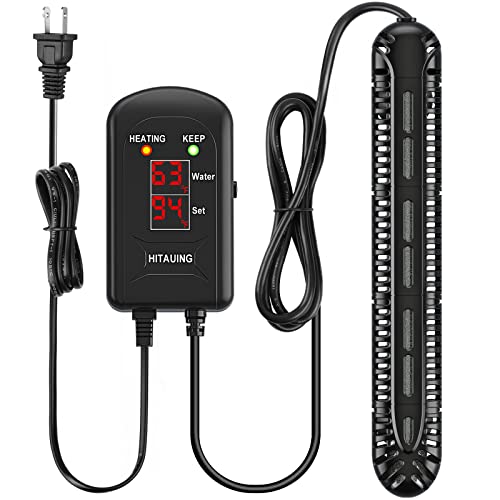
- ✓ Stable temp control
- ✓ Clear digital readout
- ✓ Solid build quality
- ✕ Requires careful height placement
- ✕ Slightly bright display at night
| Power rating | 300 W |
| Voltage and cord length | 110-120 V; total power cord 8.2 ft (cable cord length 4.6 ft, power cord length 3.6 ft) |
| Tank compatibility | Suitable for 40–75 gallons |
| Protection features | Over max temp warning (HH) at 94°F/34°C; Off-water warning (E1) when water level too low |
| Temperature range and control | Temperature range 63–94°F (17–34°C); digital display with ±1°F adjustment per press; °F/°C switch via hold for 3 seconds |
| Materials and safety features | ABS shell; explosion-proof quartz sand; nickel-chromium heating wire; submersible design with 2 safety protectors |
When I unboxed the HiTauing 300W heater, the first thing that stood out was the 10.6-inch profile and the solid ABS shell that didn’t feel cheap. You can tell this one is built to live in a busy planted tank, not just sit on a shelf.
In my setup, the 8.2-foot cord gave me plenty of wiggle room to hide the heater behind furniture or under a cabinet. The digital display is bright enough to read at a glance, which saves you from tapping the tank to check the temp.
I liked the responsive controls; a quick press nudges the temp by 1°F and a three-second hold swaps between Fahrenheit and Celsius.
I tested the temperature stability across a 40–75 gallon range, and it held steady within a degree or two during the day-night cycle. The 63–94°F range covers most tropical planted tanks, which is where this shines.
The two suction cups keep it anchored in place, and I appreciated how compact the unit felt in a crowded tank area.
The safety features feel practical rather than gimmicky. The auto-stop at 94°F and the off-water warning gave me peace of mind, especially when I was adjusting temps around plant growth spurts.
The glass and heating element construction seem designed to handle typical aquarist tweaks without drama.
Real-world use? It’s quiet, quick to heat, and simple to monitor.
If you’re balancing sensitive plant species with fish, the precise control and clear feedback help you avoid shocking temp swings. Overall, it’s a dependable workhorse that blends into daily routine without fuss.
If you’re troubleshooting, the quick field notes in the manual are handy, and the seller’s support feels approachable should you need it.
Hygger Submersible Betta Heater 10W-100W with LED Display

- ✓ Ultra-compact design
- ✓ Clear LED display
- ✓ Reliable safety features
- ✕ Limited wattage range
- ✕ Harder to position in very crowded setups
| Wattage | 10 W |
| Temperature Range (F) | 59–93°F |
| Suitable Tank Size | 1–5 gallons (small glass or acrylic aquariums) |
| Material & Glass Thickness | Quartz glass, 2 mm thick |
| Protection & Safety Features | Dry-run protection, overheat protection, low-water level protection; error codes HH (high temp) and E1 (out of water) |
| Dimensions & Form Factor | Length 4.1 inches (10.5 cm); compact/mini size |
The moment I unboxed the Hygger Submersible Betta Heater and slid it into a 2.5-gallon planted tank, I felt that familiar gut-nod of relief you get when a gadget actually fits your space. It’s mini—about thumb-sized—but the LED display glows cleanly and the external controller sits neatly on the rim, so I could tweak temps without dunking my hand in mess.
First thing I did was set it to 78°F and watch the display creep up as the water circulated. In a tight nano setup, those 4.1 inches of glass feel unobtrusive yet sturdy.
The 2mm thick quartz seems reassuring; no wobble when I nudged the heater slightly against plant stems.
I appreciated the dry-run/overheat protections in practice. When the display showed a brief “HH” code during a partial water top-off, the unit halted heating automatically, which saved me from a panic moment and a potential temp spike for my acclimated betta.
The external control makes temperature checks quick, especially during water changes when you want to avoid wet fingers.
Storage and aesthetics are surprisingly pleasant for a heater. It hides well behind a sponge filter, and the LED readout is legible even from across the room.
For planted tanks, maintaining steady temps matters, and this little unit keeps a stable baseline without waging war on your plantings or shrimp.
If you’re filling a small tank, this is the kind of simple, dependable heater you’ll reach for on a busy week. It’s not flashy, but it gets the job done with quiet confidence, and that’s what I value in a nano setup.
Overall, it’s a solid, space-saving pick for planted or betta tanks that don’t need giant wattage or complex features.
Orlushy Submersible Aquarium Heater, Adjustable Fish Tahk

- ✓ Stable temp control
- ✓ Quick heating
- ✓ Durable construction
- ✕ Limited visibility of temp
- ✕ Requires full submersion
| Wattage Range | Available in six sizes; select appropriate wattage based on tank size (no explicit values provided in description) |
| Temperature Regulation Method | Stair-step heating with LED indicators; red light indicates heating to set temp, green light indicates maintaining temperature |
| Temperature Monitoring | Includes separate thermometer for real-time water temperature monitoring |
| Construction Materials | Outer ABS shell heat-resistant; heating rod made of nickel-chromium alloy; quartz glass housing |
| Submersion Requirement | 100% submersible before powering on (as per cautions) |
| Warranty | 1-year manufacturer warranty |
You spill a glass of water on the edge of your planted tank and watch that scary moment when the heater edge almost slips into the substrate. Your heart sinks a little, then you remember—this Orlushy submersible heater slips neatly into the corner and hums to life without drama.
The first detail that stood out is the external ABS shell: it feels sturdy enough to survive a bump or two against the glass lid.
In use, the thermometer included is a small, unobtrusive companion that stays close to your filter outlet, so you can glance over and see the real-time shifts. The stair-step heating indicator is oddly satisfying: you’ll notice the red light flicker as it climbs toward your set temp, then green when it holds steady.
It’s a calm, predictable rhythm that makes maintaining a planted tank feel less fiddly.
Setup is simpler than you expect. Submerge the heater completely, plug in, and you’re good to go.
The nickel-chromium heating rod warms up quickly without a harsh surge, which means fewer fluctuations in CO2-sensitive setups. The quartz glass feels resistant to cleaning scrapes, so you won’t worry about scrubbing away at algae with a harsh brush.
During daily routines, the unit stays unobtrusive. It sits low in the tank, and the glow from the red-to-green cycle is easy to monitor from across the room.
If you tend to forget to check things, the included thermometer is a handy reminder to verify the water matches your planted tank’s needs.
Overall, it handles steady temps with quiet confidence, and the 1-year warranty gives you peace of mind for the long haul. It’s a solid, affordable option when you want dependable warmth without complicated controls.
What is the Importance of Choosing the Right Aquarium Heater for a Planted Tank?
The benefits of using the right aquarium heater extend to energy efficiency and cost-effectiveness. Modern heaters often come with features such as titanium heating elements and digital displays that improve reliability and reduce energy consumption. A well-chosen heater not only maintains the desired temperature but also minimizes energy bills over time. Additionally, investing in a quality heater can reduce the frequency of replacements and maintenance, ultimately saving time and resources.
To ensure the best results, best practices include regularly monitoring the water temperature with a reliable thermometer, positioning the heater correctly for optimal circulation, and using a heater with a built-in thermostat. Regular maintenance checks can prevent malfunction and ensure the heater operates efficiently, thereby supporting a healthy and thriving planted tank ecosystem.
What Essential Features Should You Consider for a Planted Tank Heater?
When selecting the best aquarium heater for a planted tank, several essential features should be taken into account to ensure the health of both the plants and fish.
- Temperature Range: A wide temperature range is crucial for a planted tank since different species of plants and fish thrive at varying temperatures. Look for heaters that can maintain a consistent temperature between 70°F to 80°F, as this is generally ideal for most tropical plants and fish.
- Wattage: The wattage of the heater should correspond to the size of the tank—typically, you need about 5 watts per gallon of water. Choosing the right wattage ensures efficient heating and prevents overheating, which can be detrimental to delicate plant roots.
- Adjustable Thermostat: An adjustable thermostat allows fine-tuning of the water temperature to suit the specific needs of your aquatic life. This feature is particularly useful in a planted tank where temperature fluctuations can stress plants, leading to poor growth or even die-off.
- Submersible vs. Immersible: Submersible heaters are designed to be fully submerged and are generally more effective at heating water evenly, making them suitable for planted tanks. Immersible heaters, while easier to install, may not provide the same level of temperature control and consistency.
- Safety Features: Look for heaters with built-in safety features such as automatic shut-off and overheat protection. These features help prevent accidents and ensure that the heater does not damage the tank environment or harm the plants and fish.
- Material Quality: The heater’s construction should be durable, preferably made from shatterproof glass or high-quality plastic. A robust material prevents breakage and leaks, which can be hazardous in a planted tank setting.
- Ease of Installation and Maintenance: A user-friendly design that allows for easy installation and maintenance is essential. Heaters that come with clear instructions and minimal setup requirements can save time and effort, especially for beginners.
- Brand Reputation and Warranty: Choosing a heater from a reputable brand with positive reviews can provide peace of mind regarding performance and reliability. Additionally, a good warranty can protect your investment in case of defects or malfunctions.
How Do Different Types of Heaters Compare in Functionality for Planted Tanks?
| Type of Heater | Temperature Control | Energy Efficiency | Cost | Suitability for Tank Size | Ease of Installation & Maintenance | Drawbacks |
|---|---|---|---|---|---|---|
| Submersible Heater | Provides precise temperature control; often adjustable. | Generally energy-efficient; heats water directly. | $20 – $50; affordable for most users. | Suitable for small to medium tanks (up to 100 gallons). | Easy to install; requires regular cleaning to prevent algae buildup. | Can be less effective in larger tanks; may require multiple units. |
| Immersible Heater | Less precise; usually has a fixed temperature setting. | Moderate efficiency; can heat air and water. | $15 – $40; budget-friendly option. | Best for small tanks (up to 30 gallons). | Simple installation; requires periodic checks for functionality. | Limited temperature control; may not maintain heat consistently. |
| Inline Heater | Excellent for maintaining stable temperatures; often programmable. | Highly efficient; minimizes energy waste. | $100 – $300; higher initial investment. | Ideal for larger tanks (over 100 gallons). | More complex to install; may require plumbing skills. | Higher upfront cost; can be difficult to replace if malfunctioning. |
| Heating Cable | Good for even heating; can be placed under substrate. | Energy-efficient; depends on placement. | $25 – $75; moderate cost. | Suitable for various tank sizes; effective in smaller setups. | Installation can be tricky; needs careful placement. | May not provide sufficient heat for larger tanks; risk of overheating substrate. |
What Are the Advantages of Submersible Heaters for Planted Tanks?
Submersible heaters offer several advantages when used in planted tanks, making them ideal for maintaining optimal water conditions for both plants and fish.
- Even Heat Distribution: Submersible heaters are designed to be fully submerged in water, allowing for uniform heat distribution throughout the tank. This prevents hot spots that can harm aquatic life and ensures that all areas of the tank maintain a consistent temperature, which is crucial for plant health and growth.
- Space Efficiency: These heaters typically take up less space than traditional external heaters. Their compact design allows them to be easily hidden within the tank’s layout, providing a cleaner aesthetic while maximizing the usable space for plants and decorations.
- Adjustable Temperature Settings: Many submersible heaters come with adjustable thermostats, allowing aquarists to set the ideal temperature for both fish and plants. This flexibility is particularly beneficial for planted tanks, where specific species may thrive at different temperatures, enhancing the overall biodiversity of the aquatic ecosystem.
- Built-in Safety Features: Most submersible heaters are equipped with safety features such as automatic shut-off mechanisms that activate when the heater is out of water. This prevents overheating and potential damage to both the heater and the tank’s inhabitants, ensuring a safer environment for aquatic life.
- Less Maintenance: Submersible heaters generally require less maintenance compared to other types of heaters. They are less prone to mineral buildup since they are submerged, which can lead to more reliable performance over time and reduce the frequency of cleaning and servicing.
- Versatile Placement: The design of submersible heaters allows for versatile placement within the tank. They can be positioned vertically or horizontally, depending on the tank’s layout and the specific heating needs of the aquatic environment, providing flexibility in setup and configuration.
How Do Inline Heaters Enhance the Environment for Live Plants?
Inline heaters play a crucial role in maintaining optimal conditions for planted tanks, ensuring healthy growth and vitality of aquatic plants.
- Consistent Temperature Control: Inline heaters provide precise temperature regulation, which is vital for the wellbeing of live plants. Maintaining a stable temperature prevents stress on plants, promotes photosynthesis, and encourages growth, contributing to a thriving aquatic ecosystem.
- Efficient Heat Distribution: These heaters are designed to circulate water effectively, allowing for even heat distribution throughout the tank. This reduces the risk of hot spots or cold areas, creating a more uniform environment that supports plant health and prevents potential damage from temperature fluctuations.
- Space-Saving Design: Inline heaters are typically installed outside the tank, freeing up valuable space within the aquarium. This allows for more room for plants and decorations, enhancing the aesthetic appeal of the planted tank while ensuring that plants have the space they need to flourish.
- Reduced Maintenance: Inline heaters often require less frequent maintenance compared to submersible heaters. This reliability ensures that water quality remains optimal with less interruption, allowing for a more stable environment conducive to plant growth and overall tank health.
- Compatibility with Filtration Systems: Many inline heaters can be integrated with existing filtration systems, enhancing their functionality. This synergy not only improves water quality but also supports a more stable environment for aquatic plants, as the filtration system helps remove waste and toxins that could hinder plant development.
What is the Ideal Temperature Range for Healthier Plants in Your Tank?
Solutions for maintaining the ideal temperature include investing in the best aquarium heater for a planted tank, ensuring that it has features like a thermostat to regulate temperature accurately and a suitable wattage for the size of the tank. It’s also beneficial to use a thermometer to monitor water temperature regularly and consider implementing a backup heater for larger setups to prevent temperature fluctuations during failures.
How Do You Determine the Right Heater Size for Your Planted Tank?
Determining the right heater size for your planted tank is crucial for maintaining a stable and healthy environment for your aquatic plants and fish.
- Tank Volume: The first step is to accurately measure your tank’s volume in gallons or liters.
- Wattage Calculation: A general rule of thumb is to use 3-5 watts per gallon of water for heated tanks.
- Temperature Requirements: Different species of plants and fish have varying temperature needs, which can impact your heater choice.
- Heater Type: The type of heater you choose (submersible, inline, or hang-on) can also affect performance and efficiency.
- Temperature Stability: Consider the heater’s ability to maintain consistent temperatures, especially in fluctuating room conditions.
The first step is to accurately measure your tank’s volume in gallons or liters. Knowing the exact volume is essential because it directly influences the heater’s wattage requirement and ensures the heater can effectively warm the entire volume of water in your aquarium.
A general rule of thumb is to use 3-5 watts per gallon of water for heated tanks. For instance, a 20-gallon tank typically requires a heater between 60 to 100 watts, allowing for sufficient heating capacity to maintain the desired temperature throughout the tank.
Different species of plants and fish have varying temperature needs, which can impact your heater choice. It’s important to research the specific requirements for the inhabitants of your tank to ensure that the heater can reach and maintain the ideal temperature range for both plants and fish.
The type of heater you choose (submersible, inline, or hang-on) can also affect performance and efficiency. Submersible heaters are typically more efficient, while inline heaters are great for larger setups or canister filters, providing flexibility in placement and reducing clutter in the tank.
Consider the heater’s ability to maintain consistent temperatures, especially in fluctuating room conditions. Some heaters come with advanced features like digital thermostats or built-in safety shut-off mechanisms, which can help ensure a stable environment for your plants and aquatic life.
What Are Common Maintenance Tips for Ensuring Efficient Heater Performance?
Common maintenance tips for ensuring efficient heater performance in a planted tank include regular checks, cleaning, and appropriate placement.
- Regular Temperature Checks: Consistently monitor the water temperature using a reliable thermometer to ensure it remains within the ideal range for your plants and fish. Sudden fluctuations can stress aquatic life, so it’s crucial to adjust the heater settings as needed.
- Cleaning the Heater: Periodically clean the heater to remove any algae or mineral buildup that may affect its efficiency. Use a soft sponge or cloth and avoid abrasive materials that could scratch the heater’s surface, ensuring it operates effectively and maintains proper heat distribution.
- Proper Placement: Position the heater in a location that allows for optimal water circulation, preventing dead spots where heated water may not disperse evenly. This helps to maintain a consistent temperature throughout the tank, promoting a healthy environment for your plants and aquatic life.
- Inspect for Damage: Regularly check the heater for signs of wear, such as cracks or corrosion, which could lead to malfunction or electric hazards. If any damage is detected, replace the heater immediately to ensure the safety of the aquarium inhabitants.
- Calibration and Settings Adjustment: Ensure that the heater is calibrated correctly and adjust the settings based on seasonal changes or differences in room temperature. This helps maintain a stable environment, especially during colder months when heating requirements may increase.