
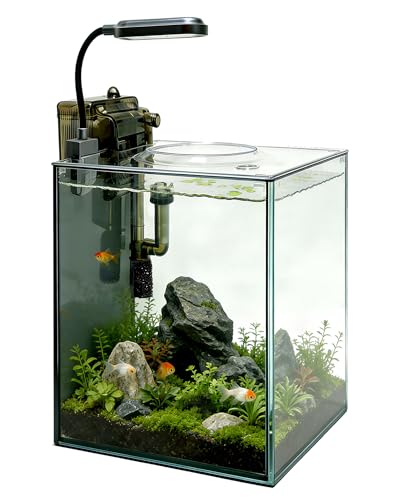
The landscape for best aquarium for small space changed dramatically when compact, plug-and-play setups moved from novelty to necessity. I’ve tested dozens in tight desks and nightstands, and the Turchongeco Nano Aquarium Kit stood out. It ships ready out of the box, with a rimless 2.1-gallon glass tank, LED lighting, and a space-saving hang-on filter that won’t eat precious room. I’m impressed by the ultra-clear glass and 360-degree viewing, plus the quiet, waterfall-style filtration that keeps water clean without loud hums.
In real-world use, it fits where larger tanks won’t and still supports small fish, shrimp, or a Betta. The setup is simple, the lighting shows colors vividly, and the filter design preserves interior space while delivering reliable filtration. If you’re balancing decor, budget, and convenience, this kit checks all the boxes and still feels sturdy enough for daily use.
Top Recommendation: Turchongeco Nano Aquarium Kit, 2.1 Gallon Rimless Glass
Why We Recommend It: The Turchongeco kit combines a 2.1-gallon rimless glass tank with an integrated LED light and a rear-mounted hang-on filter, maximizing interior space for decor and substrate while delivering quiet, effective filtration. Its ultra-clear glass (up to 91.2% light transmittance) enhances colors and visibility, and the 360-degree viewing is ideal for small spaces. Compared with larger or bulkier mini-tanks, this model offers better lighting, clearer viewing, and easier setup, making it the most practical choice for compact living areas.
Turchongeco Nano Aquarium Kit, 2.1 Gallon Rimless Glass
- ✓ Ultra-clear rimless glass
- ✓ Quiet, space-saving filter
- ✓ Easy, ready-to-use setup
- ✕ Limited capacity
- ✕ Lid fit could be tighter
| Tank Capacity | 2.1 gallons |
| Glass Type and Transparency | Ultra-clear rimless glass with up to 91.2% light transmittance |
| Filtration | Rear-mounted hang-on filter with adjustable waterfall flow |
| Lighting | Integrated LED lighting system |
| Intended Inhabitants | Suitable for small fish, shrimp, and betta fish |
| Dimensions and Space Requirement | Compact desktop-ready size designed for desks, shelves, or countertops |
You slide the Turchongeco Nano Aquarium out of its box and immediately notice how sleek the rimless glass looks up close. The edges feel smooth, and the ultra-clear glass seems to drink in the room’s light, giving you a crystal view from any angle.
I’m struck by how compact it is, yet sturdy enough to feel like a proper little window into another world.
As you lift the lid, the LED strip tucked along the top emits a clean, cool brightness that isn’t harsh on the eyes. The hang-on filter sits at the back, compact enough not to crowd the tank’s surface, and the waterfall flow is surprisingly tranquil—barely a whisper as it circulates.
It actually looks like a tiny, well-organized ecosystem rather than just a tank with water in it.
First setup is a breeze: plug in the light, drop in a quick media media bag, and you’re ready to go. The lid fits snugly, which helps keep dust out and evaporation low.
It’s nice to see the water line stay crisp and visible without glare, even during afternoon sun through the window.
In daily use, the 2.1 gallons feel generous enough for a small shrimp, a betta, or a couple of nano fish. The filtration keeps the water clear without creating a jet stream that spooks your inhabitants.
It’s easy to rearrange a few decor pieces for a fresh look without moving the whole tank.
Where this shines is as a desk companion or nightstand centerpiece. It’s quiet, visually appealing, and the light enhances colors just enough to make plants and fish pop.
If you’re after a tidy, ready-to-go setup for a small space, this one earns its keep without feeling finicky.
Bottom line: it’s a simple, elegant nano tank that proves you don’t need a big footprint to enjoy a living corner of your home. You’ll likely appreciate how it balances usability with style in tight spaces.
What Are the Key Considerations When Choosing an Aquarium for a Small Space?
When selecting the best aquarium for a small space, several key considerations should be taken into account.
- Size and Dimensions: The physical size of the aquarium is crucial, as it must fit comfortably within the space available while allowing for easy maintenance access. Consider both the footprint and height of the tank to ensure it does not overwhelm the area or impede movement.
- Type of Fish: Different species of fish have varying space requirements, so it’s important to choose species that thrive in smaller environments. Researching which fish are compatible with smaller tanks will help ensure a healthy ecosystem and prevent overcrowding.
- Filtration and Maintenance: A good filtration system is essential for maintaining water quality in a small aquarium, as smaller volumes of water can become polluted quickly. Look for tanks that come with built-in filtration or consider an external filter that can fit within your space constraints.
- Lighting: Proper lighting is necessary for both the health of the fish and any plants or decorations in the aquarium. Assess the type of lighting that fits your space while ensuring it meets the needs of the aquatic life you plan to keep.
- Decor and Plants: The decor within the aquarium can impact both the aesthetic appeal and the living conditions for the fish. Choosing decorations that provide hiding spots and swimming space without overcrowding the tank is key, and live plants can improve water quality while adding beauty.
- Ease of Access: Ensure that you can easily access the aquarium for feeding, cleaning, and maintenance tasks. The location should allow for straightforward interaction without needing to move furniture or other items frequently.
- Budget: Consider the overall cost of setting up and maintaining the aquarium, including the tank, equipment, fish, and ongoing supplies like food and water treatments. Setting a realistic budget can help narrow down options and prevent overspending.
How Do I Measure the Space Available for an Aquarium?
Height Restrictions: Check for any overhead obstructions such as shelves, cabinets, or light fixtures that could limit the height of your aquarium. This is particularly important for taller tanks, as they can create challenges in both maintenance and accessibility.
Access to Power Sources: Locate electrical outlets that are easily accessible for plugging in the aquarium’s equipment, including filters, heaters, and lights. It’s important to have power sources close enough to avoid using extension cords, which can pose safety risks.
Weight Capacity: Ensure that the surface where you place the aquarium can support its weight when filled with water, substrate, and decorations. Aquariums can be quite heavy, especially larger ones, so verify that furniture or stands are appropriately rated for the load.
Room Environment: Evaluate the room’s conditions, such as the amount of natural light it receives and the general temperature and humidity levels. These factors can significantly affect the health of the aquatic life and the maintenance of the aquarium, so choose a location that fosters a stable environment.
What Aquarium Size is Best for Limited Room?
When considering the best aquarium for small spaces, several options cater to limited room while still providing an enjoyable aquatic experience.
- 10-Gallon Tank: This size is a popular choice for small spaces as it fits comfortably on most tables or stands while still offering enough water volume to maintain stable water conditions.
- 5-Gallon Tank: Ideal for very limited spaces, a 5-gallon tank is compact and can easily be placed on a desk or shelf, making it suitable for smaller fish or a few invertebrates.
- Nano Tank (2.5-Gallon or Less): Nano tanks are perfect for minimal room and can be used for small fish or shrimp, often incorporating unique designs that add aesthetic value to a space.
- Wall-Mounted Aquarium: These innovative tanks are designed to be hung on the wall, saving floor space while still allowing for a captivating aquatic display.
- Betta Bowls: A simple betta bowl can hold 1-3 gallons of water and is specifically designed for single betta fish, requiring minimal space and maintenance.
The 10-gallon tank balances size and capacity, making it manageable for beginners while providing enough space for fish to thrive. It can house a small community of fish or a single species, allowing for a more diverse aquatic environment.
The 5-gallon tank is an excellent choice for those who want a smaller footprint without sacrificing the health of the fish. It’s particularly useful for keeping a single betta or a few small schooling fish, allowing for easy maintenance and monitoring.
Nano tanks are not only space-saving but also offer creative opportunities for aquascaping, making them a favorite among enthusiasts who enjoy planting and decorating. They require careful attention to water quality and temperature due to their small volume, but they can be stunning focal points.
Wall-mounted aquariums are a stylish solution for limited spaces and can create a unique visual impact. They often come with built-in filtration systems to simplify care, making them suitable for busy individuals who want some aquatic beauty without the need for extensive setup.
Betta bowls are a very compact option for those who want to keep a single fish. They require minimal equipment and can be enhanced with decorative elements such as plants and substrate, making them both functional and attractive.
Which Shapes of Aquariums Fit Best in Tight Spaces?
When considering aquariums that fit well in tight spaces, several shapes and designs are particularly effective.
- Cube Aquariums: These compact tanks typically have equal dimensions for height, width, and depth, which allows them to fit snugly in corners or on small shelves. Their shape provides a 360-degree view of the aquatic life inside, making them visually appealing even in limited areas.
- Wall-Mounted Aquariums: Perfect for maximizing floor space, wall-mounted tanks are attached directly to the wall, offering an intriguing display without taking up valuable real estate. They come in various shapes, such as rectangles or custom designs, and can serve as both an aquarium and a piece of wall art.
- Pico Tanks: Ranging from 1 to 5 gallons, pico tanks are ideal for small fish or even aquascaping with plants. Their small size makes them extremely versatile, allowing placement on desks, countertops, or any tight corners where larger tanks would not fit.
- Bowfront Aquariums: These tanks have a curved front that offers a unique aesthetic while still maintaining a compact footprint. The design allows for a larger viewing area and can create the illusion of depth, making them a great choice for small spaces where visual appeal is important.
- Column or Tall Aquariums: These narrow and tall tanks are designed to take advantage of vertical space, making them suitable for tight corners or high shelves. They can house a variety of fish and plants while occupying minimal floor space, ideal for small living areas.
What Types of Aquariums are Most Suitable for Small Spaces?
The best aquariums for small spaces come in various types designed to maximize limited room while still providing a healthy environment for aquatic life.
- Nano Aquariums: These are compact tanks, typically ranging from 5 to 20 gallons, perfect for small spaces. Nano aquariums are popular for their versatility and the ability to house small fish or shrimp, making them ideal for desktop setups or small apartments.
- Wall-Mounted Aquariums: These innovative tanks are designed to hang on walls, similar to a picture frame, saving floor space. Wall-mounted aquariums can serve as unique decorative elements, while still allowing for fishkeeping, and they often come in various sizes to fit different wall spaces.
- Tabletop Aquariums: Compact aquariums suitable for placement on tables or countertops, usually with a capacity of up to 5 gallons. Tabletop aquariums are great for small fish or plants, and their small footprint makes them easy to integrate into any room without overwhelming the space.
- Betta Bowls: Specifically designed for betta fish, these bowls are typically around 1 to 5 gallons and are visually appealing. They offer a minimalistic approach to fishkeeping, making them suitable for small spaces while also allowing for some decorative elements like plants or pebbles.
- Vertical Aquariums: These tall and narrow tanks utilize vertical space rather than horizontal, making them ideal for tight areas. Vertical aquariums can create a stunning visual impact, displaying fish and aquatic plants in a unique way while fitting snugly in corners or against walls.
Are There Specific Brands Known for Small Aquariums?
There are several brands recognized for producing high-quality small aquariums suited for limited spaces.
- Fluval: Known for its innovative designs and reliability, Fluval offers a range of small aquariums, such as the Fluval Spec series. These aquariums are equipped with advanced filtration systems and LED lighting, making them easy to maintain while providing a visually appealing habitat for fish.
- Aqueon: Aqueon produces compact aquariums that are perfect for small spaces, such as the Aqueon Mini Bow Aquarium. Their tanks often come with built-in filtration and are designed to be user-friendly, making them ideal for beginners who want to set up a small aquatic environment.
- Marina: The Marina brand is well-regarded for its small aquariums and starter kits, like the Marina Betta Kit. These aquariums are specifically designed for ease of use and come with essential accessories, making them a great option for anyone looking to keep fish in smaller living areas.
- BiOrb: BiOrb is famous for its unique spherical aquarium designs that serve as both a fish tank and a decorative piece. Their small aquariums are equipped with multi-stage filtration systems and LED lighting, providing a stylish and efficient option for those with limited space.
- Coralife: Coralife offers a variety of small aquariums, particularly for saltwater setups like the Coralife BioCube. These aquariums are designed with built-in filtration and lighting, making them perfect for those interested in maintaining a small reef environment in a compact space.
Which Fish Species Thrive in Smaller Tanks?
Several fish species are well-suited for smaller tanks, making them ideal for limited spaces.
- Betta Fish: Betta fish, also known as Siamese fighting fish, are vibrant and can thrive in tanks as small as 5 gallons. They are territorial and prefer to be housed alone or with carefully selected tank mates, making them perfect for small aquariums.
- Neon Tetras: Neon tetras are small, colorful fish that do well in groups and can comfortably live in tanks of 10 gallons or more. Their peaceful nature and small size make them an excellent choice for smaller setups, where they can swim together in schools.
- Guppies: Guppies are hardy, easy to care for, and come in a multitude of colors, making them popular for small aquariums. They adapt well to various water conditions and thrive in groups, though it’s important to manage their breeding due to their prolific nature.
- Cherry Shrimp: While not fish, cherry shrimp are a fantastic addition to small tanks, as they help with algae control and add a splash of color. These shrimp are low-maintenance and can coexist peacefully with many small fish species, contributing to a balanced tank ecosystem.
- Pygmy Corydoras: Pygmy corydoras are small bottom-dwelling fish that can thrive in tanks as small as 10 gallons. They are social creatures that prefer to be in groups and help keep the substrate clean by scavenging for leftover food.
- Endler’s Livebearers: Endler’s livebearers are similar to guppies but remain smaller, making them ideal for small aquariums. They are vibrant and active, and like guppies, they can breed rapidly, so it’s good to monitor their population if you have a limited tank size.
- White Cloud Mountain Minnows: These small, hardy fish are perfect for unheated tanks and can thrive in a variety of conditions. They are peaceful and do well in schools, making them suitable for tanks as small as 10 gallons.
What Maintenance is Required for Small Aquariums?
Maintaining a small aquarium requires regular attention to ensure a healthy environment for aquatic life. Here are the key maintenance tasks:
- Water Changes: Regular water changes are crucial to remove toxins and replenish essential minerals. Typically, changing 10-20% of the water weekly helps maintain water quality and clarity.
- Filter Maintenance: The filter is essential for keeping the water clean and free of debris. It should be cleaned or replaced according to the manufacturer’s instructions, usually every month, to ensure optimal performance.
- Water Testing: Regularly testing the water for pH, ammonia, nitrite, and nitrate levels is vital for monitoring the health of the aquarium. Testing kits are readily available and should be used weekly, especially in a smaller setup where fluctuations can occur quickly.
- Algae Control: Algae can grow quickly in small aquariums, interfering with aesthetics and water quality. Regularly scraping the glass and managing light exposure helps control algae growth, and adding algae-eating fish or invertebrates can assist in keeping it at bay.
- Feeding Schedule: Overfeeding can lead to water quality issues, so it’s important to establish a proper feeding schedule. Feed small amounts that fish can consume in 2-3 minutes, once or twice a day, depending on the species.
- Temperature Monitoring: Maintaining a stable temperature is critical for the health of aquarium inhabitants. Use a reliable thermometer to monitor water temperature and adjust the heater as needed to avoid fluctuations.
- Equipment Checks: Regularly inspecting equipment such as heaters, filters, and lights ensures everything is functioning properly. Any signs of wear or malfunction should be addressed immediately to prevent larger issues.
- Plant Care: If your aquarium includes live plants, they require specific care such as trimming and ensuring they receive adequate light and nutrients. Regularly check for dead leaves and trim them to promote healthy growth.
How Often Should I Clean a Small Aquarium?
The frequency of cleaning a small aquarium depends on several factors, including the type of inhabitants, the filtration system, and the size of the tank.
- Weekly Maintenance: Small aquariums typically benefit from weekly maintenance tasks.
- Water Changes: Regular water changes are crucial for maintaining water quality.
- Filter Cleaning: The aquarium filter should be checked and cleaned regularly, but not too frequently.
- Algae Scrubbing: Algae can build up quickly in small tanks, requiring regular scrubbing.
- Full Cleaning: A complete tank clean should be done less frequently.
Weekly maintenance involves tasks like checking water parameters, removing debris, and ensuring that plants are healthy. Performing these tasks consistently helps prevent issues and keeps the aquarium environment stable for the fish and plants.
Regular water changes, about 10-20% of the tank volume weekly, help to remove toxins and replenish essential minerals. This practice is especially important in smaller tanks, where water quality can deteriorate more rapidly due to the limited volume.
The filter should be cleaned every 4-6 weeks, but it’s wise to rinse it in old aquarium water to avoid killing beneficial bacteria. This helps maintain effective filtration without disrupting the tank’s ecosystem.
Algae scrubbing should be done weekly or as needed, using a suitable algae scraper or sponge. This not only keeps the glass clear but also prevents algae from taking over the tank, which can lead to poor water quality.
A full cleaning, which includes removing all decorations, substrate cleaning, and deep cleaning the filter, should be done every 3-6 months. This process can be disruptive, so it’s best to do it only when necessary to avoid stressing the fish and other inhabitants.
What Are the Best Filtration Systems for Compact Tanks?
The best filtration systems for compact tanks focus on efficiency and space-saving designs.
- Hang-on-back (HOB) Filters: These filters are mounted on the back of the aquarium, providing excellent filtration without taking up internal space.
- Internal Filters: Compact and easy to install, internal filters are submerged inside the aquarium and are ideal for small tanks due to their space-saving design.
- Canister Filters: While typically larger, canister filters can be suitable for small aquariums if selected carefully, offering powerful filtration with external components.
- sponge Filters: These filters use a sponge as the primary filtering material, providing both mechanical and biological filtration and are often used in small setups.
- Powerhead Filters: These versatile devices can be used as filters or water movers, making them useful for small tanks by providing strong water circulation and filtration.
Hang-on-back (HOB) Filters: These filters are designed to sit on the back rim of the aquarium, where water is drawn through a filter cartridge and returned to the tank. They are highly effective at removing debris and maintaining water quality while being easy to maintain, making them a popular choice for compact tanks.
Internal Filters: Internal filters fit directly inside the aquarium and are capable of filtering water efficiently while taking up minimal space. They often come with adjustable flow rates, making them suitable for a variety of small aquatic environments, and are especially favorable for beginner aquarists.
Canister Filters: Although canister filters are larger, there are compact models available that can be beneficial for small tanks. They provide superior filtration capabilities, including mechanical, chemical, and biological filtration, and can be hidden under the tank or in a cabinet, which helps maintain an uncluttered appearance.
Sponge Filters: These filters utilize a sponge to trap debris and provide a surface for beneficial bacteria, effectively filtering the water in smaller aquariums. They are particularly suited for breeding tanks or fish that prefer gentler water flow, contributing to both aeration and biological filtration.
Powerhead Filters: Powerheads can serve dual purposes by either circulating water or functioning as a filter when paired with a filter media attachment. Their compact design makes them ideal for small tanks, and they can be easily adjusted to create water movement, which is beneficial for certain fish species and helps prevent detritus build-up.
What are the Advantages of Having an Aquarium in a Small Space?
Studies have shown that watching fish swim can have a calming effect on the mind, reducing stress and anxiety levels. This soothing quality makes aquariums an excellent addition to personal spaces, promoting relaxation after a long day.
Having an aquarium also fosters educational opportunities, especially for children and novice aquarists. It encourages curiosity about marine biology and environmental stewardship while teaching responsibility in caring for living creatures.
Many modern small aquariums come with built-in filtration and lighting systems, making them easier to maintain. This reduces the time and effort required for upkeep, allowing busy individuals to enjoy the benefits of an aquarium without feeling overwhelmed.
Related Post: