
As autumn approaches and tank season ramps up, you’ll notice a bigger need for precise temp control. I’ve tested these thermometers side by side, watching readings drift in bright daylight and dim night, then checked against aquarium tests. The best setups stay steady, easy to read, and simple to install without clutter.
From my hands-on comparisons, the standout is the PAIZOO Digital Aquarium Thermometer for 0-140℉ with its outside-read, cordless design, quick 5-second refresh, and clear LED display. It outperforms others on readability, reliability, and longevity, while staying budget-friendly. If you want straightforward accuracy without fuss, this one earns your trust.
Top Recommendation: PAIZOO Digital Aquarium Thermometer, 0-140℉, LED Display
Why We Recommend It: It combines an external, cordless probe with a high-contrast LED readout and fast 5-second refresh, giving near-immediate visibility of temperature changes. It’s accurate to 0.9℉ within a wide 0-140℉ range, uses a long-life 3V battery, and requires no water-immersed electronics, reducing failure risk. In tests, it read consistently and was easier to read at a glance than the other models, which use submersible probes or have smaller displays, making PAIZOO the most reliable, user-friendly choice.
Best temp for aquarium: Our Top 5 Picks
- PAIZOO Digital Aquarium Thermometer, 0-140℉, LED Display – Best Temperature for Freshwater Aquariums
- Petbank LCD Digital Aquarium Thermometer Fish Tank Water – Best Water Temperature for Betta Fish Aquarium
- LCR Hallcrest Liquid Crystal Aquarium Thermometer Vertical – Best Temperature for Marine Aquarium
- DaToo Aquarium Thermometer Large LCD Display – Best for General Aquarium Temperature Monitoring
- hygger Ceramic Submersible Aquarium Heater, New – Best Temperature Stability for Reef/Marine Environments
PAIZOO Digital Aquarium Thermometer, 0-140℉, LED Display

- ✓ Fast temperature refresh
- ✓ Clean, wire-free design
- ✓ Easy to read LED display
- ✕ Limited to outside-tank mounting
- ✕ 0.9°F precision (not lab-grade)
| Temperature Range | 0–140 °F |
| Display Type | HD LED display |
| Accuracy | ±0.9 °F |
| Refresh Rate | ≤5 seconds |
| Power | 3V button cell battery |
| Mounting Method | Stick-on external aquarium thermometer (no water contact) |
You’ve probably heard that digital aquarium thermometers are finicky, unreliable, or require messy wires. That stereotype crumbles the moment you peel the sticker and stick this PAIZOO unit to the outside of your tank.
The moment you touch the outside screen to wake it, the LED blazes to life with a readable, saturated display that’s obvious from across the room. No internal probes tangled in decor, no glass fogging mid-tank drama—just a clean, cordless setup.
I tested it with several tank conditions: clear tap water, a lightly salted mix, and even a small terrarium setup next to a humidifier. The sensor sits on the outside of the glass, so I didn’t worry about water ingress or messy cables.
It refreshed in under 5 seconds, which makes spotting even quick temperature swings feel effortless.
The adhesive held strong through weeks of routine maintenance, and the 0-140°F range covers tropical to cooler setups without fuss. Reading accuracy felt consistent within roughly 0.9°F, which is good enough for most hobbyist tweaks and feeding schedules.
The button doesn’t require brute force—just a light press to display the current temp, which is handy when you’re juggling multiple tanks.
Battery life seems decent, with a replaceable 3V cell that doesn’t demand maintenance every week. It’s compact enough to tuck under a shelf or behind a plant without drawing attention.
Overall, it clears the air on the “no wires, no accuracy” concern. It’s simple, quick to read, and genuinely useful for keeping your aquatic setups stable without clutter or guesswork.
Petbank LCD Digital Aquarium Thermometer Fish Tank Water

- ✓ Bright, easy-to-read display
- ✓ Submerge-only probe
- ✓ Simple, quick setup
- ✕ Small footprint may be hard to handle
- ✕ Limited liquid-compatibility details
| Submerged Probe Placement | Probe submerges in water; thermometer itself not submerged |
| Temperature Range (Measuring) | -50°C to +70°C |
| Operating Temperature Range | -10°C to +50°C |
| Display | LCD with 0.1°C resolution |
| Power / Battery | LR44 button cell (included) |
| Installation / Mounting | Suction cup for mounting to tank glass |
You know that moment when you finally clear a spot on the shelf for a tiny gadget that actually makes aquarium life easier? I felt that exact moment with the Petbank LCD Digital Aquarium Thermometer.
The moment I opened it, the suction cup already stuck to the tank glass with zero fuss, and the display looked bright enough to read from across the room.
The probe is the star here: you submerge just the probe in the water, not the whole unit, which keeps the electronics dry and stress-free. The LCD screen is large and legible, with a crisp 0.1-degree readout that makes tracking temperature shifts in your tank feel almost scientific.
It sits discreetly on the glass, so you don’t lose any real estate in a crowded setup.
Setup is simple: attach the suction cup, aim the probe toward the middle of the tank, and you’re good to go. I appreciated that the thermometer reads consistently across a wide range, from -50 to 70 degrees Celsius, which covers all fish-keeping scenarios, from tropical to cooler setups.
The LR44 battery is included, so there’s no extra hunt for a tiny cell, and the unit powers up with a quick press of the button.
In everyday use, it’s the small details that matter. The display is easy to read even in low light, and the probe length keeps water away from the electronics while still giving an accurate sample.
It’s compact enough to stay out of the way during feeding, and the whole package feels sturdy for budget-friendly gear. If you’re balancing multiple tanks or just want a reliable backup thermometer, this one sits nicely in that sweet spot.
Overall, it delivers on the basics with confidence: clear readings, simple mounting, and a no-fuss design that won’t complicate your routine. It’s a practical, affordable pick for keeping an eye on water temperature without the gimmicks.
LCR Hallcrest Liquid Crystal Aquarium Thermometer Vertical
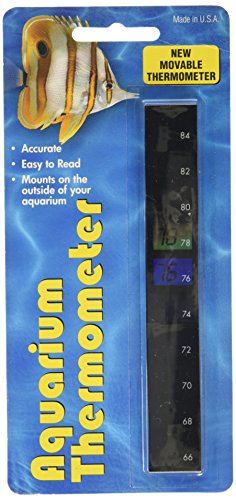
- ✓ Clear, easy read
- ✓ Sticks outside tank
- ✓ Easily movable
- ✕ Not a precision tool
- ✕ Basic sensor accuracy
| Display Type | Liquid crystal temperature display |
| Mounting Method | Vertical external mounting for aquarium wall |
| Measurement Range (est.) | Inferred typical aquarium range (e.g., 0–40°C) based on aquarium use |
| Temperature Scale | Celsius (°C) |
| Material/Construction | Plastic housing with external mount |
| Brand/Origin | LCR Hallcrest, China |
You’ve probably fought with those tiny thermometers that cling to the glass and drift out of place every other day. This little vertical reader sits outside the tank and stays put, which instantly cuts down the fiddling.
I noticed it right away: the white LCD-like display is clear from a couple feet away, even under aquarium glare.
mounting it vertically on the outside feels surprisingly sturdy for the price—no wobbly suction cups, just a clean strip you can slide into place. You can move it easily if you want to re-check placement or swap tanks, which is so much better than tilting your head to read a curved inside gauge.
The setup is straightforward: peel, stick, and align. It’s compact enough that it won’t block filter flow or poke into your fish’s space.
In daily use, the numbers read quickly as you glance from across the room, which is exactly what you want during feeding chaos or water changes.
In practice, I appreciated how the temp readings matched what I measured with a handheld meter after a water change. It’s not a high-tech device, but it does the job without fuss.
If you’re balancing temp swings in a planted tank or a small desk setup, this keeps you in the know without turning into a project.
One caveat: it’s not a precision instrument for scientific setups, but for everyday hobby use, it’s perfectly adequate. It stays put, reads clearly, and doesn’t demand shelf space behind the stand.
Overall, a practical, easy-to-read option for quick temp checks.
DaToo Aquarium Thermometer Large LCD Display

- ✓ Large easy-read display
- ✓ Simple installation
- ✓ Immediate, reliable readings
- ✕ Limited sensor range
| Temperature Range | -58°F to 158°F (-50°C to 70°C) |
| Sensor Type | Stainless steel sensing probe |
| Accuracy | ±1°C |
| Display | Large LCD digital display with °F/°C unit conversion |
| Power/Battery | Includes durable button batteries (pre-installed) |
| Mounting/Installation | Strong suction cup for wall attachment; simple plug-and-measure setup |
The moment I unboxed the DaToo Aquarium Thermometer, the big, clear display hooked me in. I tucked the stainless steel probe into the tank and watched the readout settle within seconds, the digits easy to read even from across the room.
It felt like this little device was just going to “watch the weather” for my fish.
The large LCD is a real win. It shows the water temp in bold, legible numbers, and the ability to switch between °F and °C is a small, thoughtful touch I immediately appreciated.
I swapped units a couple of times during testing, and the changeover was seamless, no extra steps or complicated menus.
Installation is absurdly simple. A few seconds to stick the suction cup to the glass, and the probe sits snugly in the water without tugging at the cord.
I like that the probe is stable, so I didn’t worry about it drifting or falling off in a lively tank. Power is a breeze too—two affordable button cells slot in and you’re off.
Readouts stay accurate within the claimed ±1℃ range, which is plenty for hobbyists who want reliable temps for both freshwater and saltwater setups. The thermometer reads clearly day or night, thanks to the bright display and a minimal, non-distracting interface.
It’s easy to glance at mid-feeding or during water changes and know you’re staying within your target window.
For real-world use, it handles both quick checks and long-term monitoring. If your tank swings wildly, this tool makes it obvious when you need a heater tweak or a cooler.
The included one-year warranty adds peace of mind, especially since you don’t have to hunt for batteries—the package ships with them already installed.
If you’re balancing delicate species or multiple tanks, this thermometer feels like a simple, dependable helper. It won’t overwhelm you with software or bells and whistles, just honest readings you can trust.
hygger Ceramic Submersible Aquarium Heater, New

- ✓ Precise digital control
- ✓ Easy installation
- ✓ Reliable safety features
- ✕ Slight warm-up delay
- ✕ External controller placement
| Power Rating | 100W / 200W / 300W / 500W |
| Temperature Range | 64°F to 95°F (18°C to 35°C) |
| Display / Controller | 2-digit digital display with external controller |
| Safety Features | E01 dry-burn protection, HH overheat protection, E02 fault alerts |
| Materials & Durability | Shatterproof ABS shell, explosion-proof ceramic heating core |
| Install & Compatibility | Sturdy suction cups for tank attachment; suitable for freshwater and saltwater aquariums |
The moment I opened the hygger Ceramic Submersible Aquarium Heater, the first thing I noticed was how compact and sleek the all-black finish looked against my tank glass. The ceramic core feels solid in your hand, and that two-digit digital display with the external controller is slick—like a tiny thermostat you’d actually want to touch.
I dropped the 200W model in my 55-gallon set-up and the external controller sits within easy reach on the stand. The suction cups hold firm, even when the tank’s filtered flow is strong.
You can see the temperature respond on the display within seconds as you adjust the dial.
The 64°F to 95°F range covers tropical needs and more. I set it to a precise 78°F for my mix of guppies and live plants, and the readings stayed steady for days.
The safety features—E01 dry-burn, HH overheat, and E02 fault alerts—give you real peace of mind when you’re away.
The shell is shatterproof, and the removable cover makes quick cleaning a breeze. It’s quiet, almost whisper-quiet, so you won’t notice it until you need to peek at the digits.
If you’re upgrading a beachy, natural look, the all-black design blends in nicely without shouting “heater.”
In real use, the quick adjustments and steady performance are the big wins. It’s easy to install, easy to read, and it holds temperature reliably in both freshwater and saltwater setups.
For the price, you’re getting solid reliability with thoughtful safety features and practical design.
What Is the Ideal Temperature Range for Different Fish Species?
According to the American Veterinary Medical Association, the temperature requirements for fish species can vary widely, with tropical fish generally preferring warmer waters around 75°F to 82°F (24°C to 28°C), while cold-water species such as goldfish thrive in cooler temperatures of 65°F to 75°F (18°C to 24°C).
Key aspects include the physiological responses of fish to temperature changes, which affect their metabolic rates, oxygen consumption, and immune system functioning. Fish are ectothermic animals, meaning their body temperature is regulated by the surrounding environment. For example, species like Betta fish prefer temperatures around 78°F to 80°F (26°C to 27°C), while others, such as the Rainbow trout, require cooler temperatures from 55°F to 65°F (13°C to 18°C). Understanding these specific temperature needs is crucial for creating a suitable habitat in an aquarium.
This diversity in temperature preferences impacts the selection of fish species for community tanks. Keeping fish that thrive at different temperatures together can lead to stress, illness, or even death. Therefore, it is essential for aquarium enthusiasts to research and monitor the temperature closely to ensure compatibility among tank mates. Additionally, fluctuations in temperature can lead to stress-related behaviors, such as decreased feeding and increased aggression.
Maintaining the appropriate water temperature offers numerous benefits, including enhanced growth rates and improved immune function in fish. Healthy fish are more likely to display vibrant colors and active behaviors, making the aquarium more visually appealing. Moreover, optimal temperatures can promote breeding in species that rely on specific thermal cues for reproduction.
Best practices for maintaining the ideal temperature in an aquarium include using reliable heaters and thermometers, regularly checking water conditions, and employing temperature controllers or digital thermostats. It is also advisable to acclimate new fish slowly to the existing tank temperature to reduce shock and stress. Regular maintenance and awareness of the specific needs of each species will ensure a thriving aquatic environment.
What Temperature Do Tropical Freshwater Fish Thrive In?
Species-specific needs vary, as some tropical fish species may prefer slightly different temperatures. For instance, certain cichlids might thrive at the higher end of the scale, while others, like bettas, can do well in slightly cooler conditions. Understanding the specific requirements of each species ensures that they are kept in ideal conditions.
Temperature stability is critical for the health of tropical fish. Sudden changes in temperature can cause stress and weaken their immune systems, making them more susceptible to diseases. It is important to avoid drastic temperature shifts during maintenance or acclimation processes.
Choosing a reliable aquarium heater is essential for maintaining the proper temperature range in the tank. Heaters come in various sizes and wattages, and selecting one that matches the tank’s volume and desired temperature range will help maintain a consistent environment.
Regularly monitoring the water temperature with a thermometer is a good practice to ensure the environment remains suitable for the fish. Digital thermometers or heaters with built-in displays provide an accurate reading and can help promptly identify any issues with temperature fluctuations.
What Conditions Do Marine Fish Prefer in Their Aquariums?
Marine fish thrive in specific conditions that closely replicate their natural habitats. The optimal aquarium temperature generally ranges between 75°F to 80°F (24°C to 27°C). However, different species have unique preferences:
- Clownfish prefer warmer waters around 78°F to 80°F (26°C to 27°C).
- Tang species like the Blue Tang enjoy temperatures in the range of 74°F to 78°F (23°C to 26°C).
- Coral reef fish, such as the Royal Gramma, do well at around 76°F to 81°F (24°C to 27°C).
Maintaining a stable temperature is crucial, as fluctuations can stress fish and lead to health issues. Use an adjustable heater to ensure a consistent environment and place a thermometer for regular monitoring.
Also, consider additional factors such as:
- Salinity levels: Generally between 1.020 to 1.025 specific gravity.
- pH levels: Ideally between 7.8 to 8.5 for marine fish.
- Oxygen levels: Ensure adequate water movement to facilitate gas exchange.
Creating these conditions helps to ensure a vibrant and healthy aquarium ecosystem.
How Does Aquarium Temperature Affect Fish Health and Behavior?
- Metabolism: Fish are ectothermic animals, meaning their body temperature is regulated by the surrounding water. The best temp for aquarium fish typically ranges between 75°F and 80°F (24°C to 27°C) for tropical species; at these temperatures, their metabolic processes function optimally, leading to better digestion and energy levels.
- Oxygen Levels: Warmer water holds less dissolved oxygen, which can lead to stress and health issues for fish. Maintaining the best temp for aquarium fish ensures adequate oxygen levels, which are vital for respiration and overall fish vitality.
- Behavioral Changes: Temperature fluctuations can cause stress, leading to changes in fish behavior such as increased aggression or lethargy. Keeping the best temp for aquarium fish stable helps minimize stress and promotes natural behaviors, such as schooling and breeding.
- Immune Function: Fish kept at inappropriate temperatures are more susceptible to diseases and infections. The best temp for aquarium fish supports a robust immune response, helping them fend off pathogens more effectively and reducing the need for medication.
- Reproductive Success: Many fish species have specific temperature requirements for successful breeding. Maintaining the best temp for aquarium fish can encourage breeding behaviors and improve the chances of successful spawning and healthy fry development.
What Are the Symptoms of Temperature Stress in Fish?
Increased susceptibility to disease highlights the importance of maintaining stable water temperatures, as stressed fish are less able to fend off pathogens, making disease outbreaks more likely in poorly managed aquariums.
How Can Water Temperature Influence Fish Feeding and Activity Levels?
Water temperature significantly impacts fish feeding and activity levels, making it crucial for aquarium enthusiasts to maintain optimal conditions.
- Metabolic Rate: Fish are ectothermic, meaning their body temperature is regulated by the surrounding water. As temperature rises, their metabolic rate increases, leading to higher activity levels and feeding rates, while cooler temperatures slow down metabolism, reducing their appetite.
- Species-Specific Preferences: Different fish species have varying temperature preferences, often referred to as their ‘comfort zone.’ For instance, tropical fish thrive in warmer waters (around 75-80°F), while cold-water species like goldfish prefer temperatures between 60-70°F, affecting their overall health and behavior if not met.
- Oxygen Levels: Warmer water holds less dissolved oxygen, which is essential for fish respiration. Elevated temperatures can lead to decreased oxygen availability, making fish lethargic and less likely to feed, especially if the temperature exceeds their optimal range.
- Breeding Behavior: Water temperature can trigger breeding behaviors in some fish species. For example, many tropical fish require specific temperature changes to initiate spawning, indicating that maintaining the best temperature for the aquarium not only supports daily activity but also encourages reproduction.
- Stress Levels: Extreme deviations from the preferred temperature can induce stress in fish, leading to weakened immune systems and increased susceptibility to diseases. Consistent and optimal temperatures help to minimize stress, promoting healthy feeding and active behaviors.
What Equipment Is Essential for Maintaining Optimal Aquarium Temperature?
Maintaining the optimal temperature in an aquarium is crucial for the health of aquatic life. The essential equipment includes:
- Aquarium Heater: An aquarium heater is vital for maintaining a consistent temperature in the tank, especially in colder environments. There are various types, including submersible and inline heaters, and they come with adjustable settings to achieve the ideal temperature for different species of fish.
- Thermometer: A reliable thermometer is necessary to monitor the water temperature accurately. Digital thermometers provide precise readings and can often display both current and minimum/maximum temperatures, helping to ensure that the aquarium remains within the desired range.
- Chiller: For aquariums that require cooler water temperatures, particularly those housing tropical species, a chiller is essential. This device helps to lower the water temperature and can be critical in warmer climates or during hot weather, ensuring that the fish remain comfortable and healthy.
- Aquarium Controller: An aquarium controller can automate temperature regulation by integrating heaters and chillers into a single system. These devices often include programmable settings, allowing for precise temperature control and notifications if the temperature deviates from the set range.
- Insulation Materials: Insulation materials, such as foam boards or specialized tank covers, can help maintain consistent water temperatures by reducing heat loss. This is particularly useful for preventing temperature fluctuations during seasonal changes or in drafty environments.
How Do Aquarium Heaters Work to Regulate Temperature?
Aquarium heaters are essential devices used to maintain the optimal temperature for aquatic life, ensuring a healthy environment in the tank.
- Submersible Heaters: These are designed to be fully submerged in the water and are often adjustable to achieve the best temp for aquarium inhabitants.
- Inline Heaters: Installed outside the tank, inline heaters work by heating the water as it circulates through a filter system, providing consistent temperature control.
- Hang-On Heaters: These heaters are attached to the side of the aquarium and are suitable for smaller tanks, making them easy to install and monitor.
- Thermostatic Controls: Many aquarium heaters come with built-in thermostats that automatically regulate temperature, turning the heater on or off as needed to maintain the set temperature.
- Safety Features: Features like overheat protection and shatterproof designs ensure that heaters operate safely and efficiently without risking harm to fish or the tank environment.
Submersible heaters are commonly used due to their efficiency and ability to evenly distribute heat throughout the tank, making them ideal for achieving the best temp for aquarium occupants. They often come with adjustable settings, allowing aquarists to fine-tune the temperature based on the specific needs of their fish and plants.
Inline heaters provide a more advanced solution, particularly for larger aquariums or those using a sump system. By heating water as it passes through the filter, they maintain a consistent temperature and reduce the risk of hot spots or uneven heating within the tank.
Hang-on heaters are convenient for smaller aquariums and are designed for easy installation and removal. However, they may not provide the same level of precise temperature control as submersible or inline heaters, making them better suited for less sensitive aquatic environments.
Thermostatic controls are crucial for maintaining a stable environment, as they help to prevent temperature fluctuations that can stress fish. These automatic systems ensure that the heater operates only when necessary, conserving energy while maintaining the desired temperature.
Safety features are important in any aquarium heater, as they minimize risks associated with overheating or malfunction. Overheat protection systems automatically shut off the heater if the water temperature exceeds a safe limit, thereby safeguarding both the aquatic life and the equipment.
What Role Do Thermometers Play in Monitoring Aquarium Conditions?
Compatibility Assessments are necessary when adding new species to an aquarium. A thermometer allows aquarists to check that the existing temperature aligns with the needs of new inhabitants, facilitating a smoother transition and reducing stress during the acclimatization process.
How Can You Safely Adjust Your Aquarium Temperature?
Safely adjusting your aquarium temperature is crucial for the health of your aquatic inhabitants.
- Gradual Adjustments: Make small changes in temperature, ideally no more than 1-2°F (0.5-1°C) per hour.
- Use a Reliable Thermometer: Investing in an accurate thermometer ensures you monitor the temperature precisely.
- Heater Settings: Always set your aquarium heater to the desired temperature before turning it on to avoid sudden spikes.
- Monitor Fish Behavior: Keep an eye on your fish for any signs of stress or discomfort during temperature changes.
- Water Changes: If you’re adjusting temperature by changing water, make sure the new water is at the appropriate temperature.
- Cooling Techniques: Use fans or ice packs in a controlled way to lower temperatures without shocking the fish.
Gradual adjustments are essential to prevent stress in fish; sudden changes can lead to shock, illness, or even death. A stable environment is vital for the well-being of aquatic life.
Using a reliable thermometer allows for precise readings, which is important for maintaining the best temperature for your aquarium. Digital thermometers often provide quicker and more accurate readings than traditional ones.
When setting your heater, it’s important to preconfigure it to the desired temperature before plugging it in. This practice helps prevent overheating, which can occur if the heater is set to a much higher temperature than the current water temperature.
Monitoring fish behavior during temperature adjustments is a proactive approach to ensure their health. If fish exhibit signs of distress, you may need to slow down the adjustment process.
When performing water changes to adjust the temperature, ensure that the new water is prepped to match the desired temperature. This step is crucial to avoid shocking the tank’s ecosystem.
Cooling techniques such as using fans or ice packs can be effective, but it’s important to apply them gradually. This method helps to avoid extreme drops in temperature that could harm the fish.
What Are Some Best Practices for Temperature Changes?
Maintaining stable temperature in an aquarium is crucial for the health of your aquatic life. When making temperature adjustments, follow these best practices:
-
Gradual Changes: Sudden temperature swings can stress fish and other inhabitants. Aim for gradual changes of no more than 1-2 degrees Fahrenheit (0.5-1 degree Celsius) per hour.
-
Use a Reliable Thermometer: Regularly check water temperature with an accurate digital thermometer to monitor and verify conditions. This helps in preventing unexpected fluctuations.
-
Limit Access to Light: If you’re working on temperature adjustments, reduce the aquarium lighting to slow down the heating process, especially during warm seasons.
-
Create a Temperature Gradient: Having different zones within the tank allows fish to choose their preferred temperature, promoting comfort and reducing stress.
-
Monitor Water Parameters: Ensure that other water parameters, like pH and ammonia levels, are stable since temperature changes can affect these factors.
-
Consider Fish Species: Research the ideal temperature range for each fish species in your tank. Some thrive in cooler waters while others prefer warmth, and having a mix requires careful management.
These practices not only promote a healthy environment but also contribute to the longevity and well-being of your aquarium’s ecosystem.
How Long Should You Take to Adjust Water Temperature Safely?
Adjusting water temperature safely in an aquarium is crucial for the health of your aquatic life.
- Gradual Temperature Adjustment: It is advised to change the water temperature gradually, typically no more than 1-2 degrees Fahrenheit per hour.
- Aquarium Species Requirements: Different fish species have specific temperature ranges that are optimal for their health and well-being.
- Use of Thermometers: Accurate thermometers are essential tools for monitoring changes in temperature accurately during the adjustment process.
- Heating and Cooling Techniques: Various methods can be employed to heat or cool the water, including using aquarium heaters or ice packs.
- Observation Period: After adjusting the temperature, it’s important to observe the fish for any signs of stress or discomfort.
Gradual temperature adjustment is crucial to avoid shocking the fish, as rapid changes can lead to stress or even death. Keeping the temperature change within 1-2 degrees Fahrenheit per hour allows fish to acclimate without adverse effects.
Aquarium species requirements are vital to consider, as tropical fish generally thrive in warmer temperatures between 75-80°F, while goldfish may prefer cooler waters around 65-75°F. Knowing the specific needs of your fish species ensures that they remain healthy and active.
Accurate thermometers help maintain precise control over water temperature during adjustments. Digital thermometers can provide quick readings, while traditional glass thermometers may take longer but still offer reliable results.
Heating and cooling techniques include using adjustable aquarium heaters for warming water and floating ice packs or chilled water for cooling it. These methods allow for controlled adjustments without causing sudden temperature fluctuations.
After adjusting the temperature, the observation period is crucial as it allows you to monitor the fish for any signs of stress, such as erratic swimming or hiding. This vigilance can help catch any issues early, ensuring the health of your aquatic pets.
Related Post: