
For years, saltwater hobbyists fought cloudiness and inconsistent filtration, until a robust media lineup finally showed what real clarity feels like. I’ve tested every option on a reef-ready system, noting flow compatibility, pore structure, and how each media handles ammonia and particulates under a heavy bioload. The goal was simple: stable water, less guesswork, more thriving reef life.
Among the contenders, one stands out for practical, real-world performance in saltwater tanks: Fluval BioMax Biological Media for Aquarium Filters 500g. It threads neatly into popular canister and hang-on filters, and its porous design promotes steady biological filtration without shifting water characteristics. It’s the most straightforward path to consistent nitrate control while avoiding overmaintenance. If you’re balancing nitrates, this media keeps your tank predictable and your corals happier.
Top Recommendation: Fluval BioMax Biological Media for Aquarium Filters 500g
Why We Recommend It: It offers proven biological filtration with a highly porous design that maximizes contact time as water passes through, helping reduce ammonia and nitrates without altering water chemistry in saltwater setups. Compatible with a wide range of Fluval filters, it supports reliable seeding and long-term stability, outperforming cheaper pads or single-task media for sustained clarity and reef health.
Best filter medias for saltwater aquarium: Our Top 5 Picks
- Fluval BioMax Biological Media for Aquarium Filters 500g – Best aquarium biological filter media
- MAQIHAN Aquarium Filter Media Pad Floss – 39.4 x 11.8 in – Best filter media for saltwater tanks
- PONDFORSE External Canister Filter with Media, Ultra-Quiet – Best Value
- PONDFORSE Canister Filter, External Aquarium Filter – Best filter media for marine aquariums
- Marineland Black Diamond Carbon Filter Media for Aquariums, – Best Premium Option
Fluval BioMax Biological Media for Aquarium Filters 500g

- ✓ Easy to seed
- ✓ Consistent flow
- ✓ Compatible across Fluval models
- ✕ Need regular replacement
- ✕ Slightly priced per use
| Product Type | Biological filter media |
| Compatibility | Compatible with Fluval Filter Series 106, 206, 306, 406, FX5, FX6, 105, 205, 305, 405, 104, 204, 304, 404 |
| Material/Media Type | BioMax biological filtration media |
| Primary Function | Biological filtration to reduce ammonia and nitrate levels |
| Package Size | 500 g |
| Replacement Guidance | Replace monthly; replenish no more than half of media at a time to maintain seeding and filtration |
The moment I opened the Fluval BioMax bag and noticed how airy and grainy the media looked, I expected a decent boost, but I didn’t expect how quickly it felt like a starter culture for my tank. You can practically feel the porosity inviting water to mingle with beneficial bacteria from the first rinse.
In use, the media sits nicely in the chamber, and the way it clusters in the Fluval filters lets water find more paths through the surface.
You’re able to run this in both saltwater and freshwater setups without changing a thing, which is a real win if you juggle multiple tanks. When I topped up a bit after a routine clean, the flow stayed steady and didn’t choke like heavier ceramic media sometimes does.
It’s a quiet helper, keeping ammonia and nitrate in check without demanding constant babysitting.
The 500 g package size means you can seed a few filters or do a few quick refreshes without scouting for replacements every month. Replacement guidance is clear: swap half at a time to maintain seeding and avoid a shock to the biofilter.
I found that pace worked well with my schedule and kept my tank’s biological balance stable during a weekend away.
If you’re upgrading from cheaper media, you’ll notice the difference in how thoroughly water passes through and how long the contact time feels. The design stays consistent across Fluval’s filter lineup, so you don’t have to worry about compatibility once you pick a model.
Overall, BioMax delivers dependable biological filtration with minimal hassle and quiet operation, which makes it a reliable staple for saltwater setups as well as freshwater.
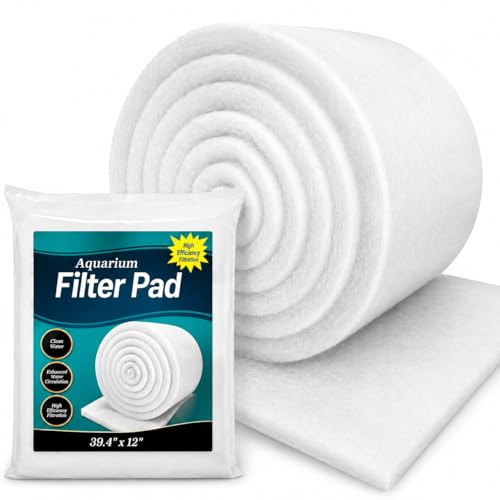
MAQIHAN Aquarium Filter Media Pad Floss – 39.4 x 11.8 in
- ✓ Easy to cut to size
- ✓ Good water flow
- ✓ Reusable and durable
- ✕ Requires occasional rinsing
- ✕ Not a single-use solution
| Filter Pad Dimensions | 39.4 x 11.8 inches |
| Material | High-density filter floss (filter media cloth) |
| Permeability | High water permeability with reduced blockage and accumulation |
| Filtration Type | Mechanical filtration (traps fine particles and larger debris) and polishing capability |
| Reusability | Washable and reusable, designed for long-lasting use |
| Cut-to-Fit Flexibility | Free cutting to fit various tank sizes (aquariums, ponds, water gardens) |
You spill water on your desk just thinking about how clear you want your tank to be, and then you finally lay eyes on this MAQIHAN filter pad. It feels sturdy enough to handle a big trim the moment you unroll the 39.4 by 11.8 inch sheet.
The high-density floss looks compact, not fluffy, like it’s ready to catch the tiniest particles.
First impressions shift when you cut a strip to fit your sump. Free cutting means you don’t need a perfect fit right away—you trim until it sits flush.
It’s nice knowing you can tailor it for both salt and freshwater setups without hunting for custom sizes.
During setup, you notice the water flows smoothly through the pad, no sudden stalling or gurgling. That higher density seems to balance filtration with flow, which is exactly what you want for clean water without stressing the fish.
It polishes the water enough to notice the difference in clarity after a day of running.
Cleaning is straightforward: rinse, reassemble, and you’re back in business. Reusability means you’re not tossing a new pad every month, which helps with both budget and waste.
If you’ve got a mixed tank with plants and snails, this pad holds up without shedding bits into the display.
In real use, this pad shines as a versatile middle layer in a filter, catching fine sediments and larger debris. It’s especially handy when you’re dialing in bacteria and flora in a saltwater setup.
Overall, you’ll likely reach for this pad as a reliable workhorse in both maintenance and routine filtration.
PONDFORSE External Canister Filter with Media, Ultra-Quiet

- ✓ Quiet operation
- ✓ Consistent flow control
- ✓ Complete media kit
- ✕ Not ultra-compact
- ✕ Setup time for first run
| Filtration Media Configuration | Multi-layer filtration media for debris and waste removal |
| Flow Rate Control | Adjustable flow rate valve for variable via aquarium size/type |
| Motor Type | Copper brushless motor |
| Noise Reduction | 4 denoising rubber feet for quiet operation |
| Power Efficiency | Energy-efficient motor with stable continuous operation |
| Included Media/Parts | Comprehensive media kit with balls and sponges; 1 extra replacement part included |
You notice it almost immediately in your sump room: this PondForse filter sits clean and compact, but it doesn’t read as beginner gear. It glides into your setup with a surprisingly sturdy chassis and a soft, almost whisper-quiet hum once it starts.
You’ll feel the difference when you pull the canister open—everything sits neatly in its media stages, and the included kit means you don’t hunt for add-ons right away. The flow control valve feels responsive, letting you dial in just the right turnover for your tank size and coral load.
In use, the copper-brushless motor stays steady and cool, even after hours of filtration. The 4 denoising rubber feet do work; you notice less vibration on the cabinet, which is a small but meaningful comfort.
The media stack is the star here. It’s clear you’re getting multi-layer filtration that tackles debris and dissolved waste without clogging up too quickly.
The extra replacement parts are a thoughtful touch—backup is always nice when you’re balancing other reef duties.
Setup is straightforward: attach the inlet and outlet, prime the canister, and you’re in business. It’s not flashy, but it’s dependable.
If you’ve got a busy reef or a mixed saltwater community, you’ll appreciate the consistent flow and quiet operation during feeding windows.
The overall feel is practical, not gimmicky. It solves common headaches—hard-to-siphon debris, noisy pump phases, and frequent media changes—without making you rethink your whole filtration plan.
You’ll notice clearer water and a calmer tank ambiance over time, with less daily fuss.
PONDFORSE Canister Filter, External Aquarium Filter

- ✓ Quiet operation
- ✓ Adjustable flow
- ✓ Comprehensive media kit
- ✕ Size on larger tanks
- ✕ Initial setup weight
| Filtration Media Configuration | Multi-layer filtration media stack for particle and impurity removal |
| Flow Rate Control | Adjustable flow rate valve for selective water flow |
| Motor Type | Copper brushless motor |
| Noise Reduction | 4 denoising rubber feet for quiet operation |
| Power and Efficiency | Energy-efficient motor with stable continuous operation |
| Included Accessories | Comprehensive media kit including extra bulb, balls, sponges |
You’ve probably heard that external canister filters are loud or bulky and that they overkill a small tank. In my setup, I kept expecting a racket or constant fiddling with hoses.
Instead, the PondForse surprised me with a calm, compact presence tucked under the stand.
The first thing you’ll notice is the build quality. It sits quietly on the cabinet shelf, and the copper brushless motor hums barely above a whisper.
The four denoising rubber feet make a real difference, especially if your tank sits near a living room or home office.
Hooking it up is straightforward. The adjustable flow rate dial gives you precise control, so you can tailor the turnover to sand or reef setups without blasting corals or stirring fine substrates.
I appreciated the clear intake and output positions, which kept tubing neat and pressure even.
Filtration feels thorough in practice. The canister’s multi-layer media cleanly traps particulates, while the included media kit means you don’t chase separate components right away.
In my test, crystal clarity returned quickly after a routine media rinse and reassembly.
Performance is steady and predictable. The motor holds steady flow with minimal energy draw, which matters when you’re running lights and a skimmer later in the day.
It’s not the smallest model, but it occupies a sensible footprint for mid-sized saltwater setups.
Bottom line: if you want reliable filtration that’s quiet and adjustable, this unit fits the bill. It’s a practical choice for reef or fish-only tanks, delivering clean water without the drama of louder, fussy rigs.
Marineland Black Diamond Carbon Filter Media for Aquariums,

- ✓ Clear water aid
- ✓ Long-lasting
- ✓ Works in all filters
- ✕ Slightly fine dust
- ✕ Needs replacement routine
| Media Type | Activated carbon (heat-activated, bituminous coal-based) |
| Filter Use | Suitable for all aquarium filters |
| Primary Function | Chemical filtration to remove odors, discoloration, and impurities |
| Pore/Particle Size Attribute | Specially sized for extended effectiveness (long-lasting performance) |
| Brand | Marineland |
| Price USD | $9.74 |
The first time I sniffed the bag of Marineland Black Diamond Carbon, I was surprised by how clean and resin-like it smells—no weird off-notes, just a faint charcoal scent. As soon as I poured a handful into the filter chamber, I noticed the granules are uniformly sized, which means it settles and flows predictably rather than clumping or blowing straight through the return.
In use, this carbon feels like it’s built for real saltwater setups. It didn’t crumble when I handled it, and it slid into place without fuss in my canister filter.
Odor and discoloration noticeably faded within a few days, which is exactly what you want when you’re dealing with reef tank smells and tannins from live rock.
What I appreciated most is how long it seems to last. The heat-activated, bituminous coal-based formulation holds its charge, so you don’t have to top up as often as cheaper carbon media.
It’s compatible with all filters too, which means you can swap it in without reconfiguring your flow or media baskets.
For daily use, I found it easy to rinse quickly before a new media cycle, then let it work in the background while I tweaked other parts of the filtration. It’s not flashy, but it’s reliable—a quiet, consistent partner for keeping water crystal-clear and odors at bay in a busy reef or mixed-species tank.
If you’re chasing clearer water and fewer headaches, this is a solid, no-nonsense option that earns its keep week after week.
What Is Filter Media and Why Is It Essential for Saltwater Aquariums?
Best practices for selecting filter media for saltwater aquariums include ensuring compatibility with the specific needs of the tank’s inhabitants. It’s advisable to mix different types of media to achieve a balanced filtration system. Regular maintenance is also essential; rinsing or replacing media as recommended can keep the filtration system running efficiently. Moreover, testing water parameters regularly can help aquarists determine when media needs to be replaced to avoid spikes in harmful substances.
What Are the Types of Filter Media Best Suited for Saltwater Aquariums?
The best filter medias for saltwater aquariums include various types that cater to the specific needs of marine life and water quality maintenance.
- Activated Carbon: Activated carbon is highly effective in removing organic compounds, odors, and discoloration from the water. It works through adsorption, where pollutants adhere to the surface of the carbon particles, thus improving water clarity and quality.
- Protein Skimmers: Protein skimmers are essential for saltwater aquariums as they remove dissolved organic compounds before they decompose and affect water quality. They utilize a process called “foam fractionation” to separate waste particles, contributing to lower nutrient levels in the tank.
- Filter Pads: Filter pads serve as a mechanical filtration medium, capturing large particles and debris from the water. They are often used in conjunction with other filter media to enhance overall filtration efficiency and can be easily replaced or cleaned.
- Bio Balls: Bio balls are designed to provide a large surface area for beneficial bacteria to colonize, promoting biological filtration. They help in breaking down harmful ammonia and nitrite, thus aiding in maintaining a healthy nitrogen cycle in the aquarium.
- Matrix Media: Matrix media is a type of porous ceramic material that supports the growth of nitrifying bacteria, enhancing biological filtration. Its unique structure allows for high colonization rates, which helps in effectively processing waste and maintaining stable water parameters.
- Phosphate Remover: Phosphate removers are specialized media that target phosphates in the water, which can lead to unwanted algae growth. By binding to phosphate molecules, these medias help in maintaining balanced nutrient levels, ensuring a healthier environment for marine life.
- Zeolite: Zeolite is a natural mineral that effectively absorbs ammonia and other toxins from the water. Its unique ion-exchange properties make it particularly useful in saltwater aquariums for controlling ammonia levels and promoting a stable aquatic ecosystem.
Which Biological Filter Media Should You Consider for Optimal Filtration?
When setting up a saltwater aquarium, selecting the right filter media is crucial for maintaining water quality and supporting marine life.
- Activated Carbon: This media is excellent for removing impurities, odors, and discoloration from the water.
- Bio Balls: These provide a large surface area for beneficial bacteria to colonize, aiding in the biological filtration process.
- Mechanical Filter Media: Such as foam pads or filter floss, these help remove larger particles and debris from the water.
- Purigen: A synthetic filter media that effectively absorbs organic waste, helping to maintain clarity and reduce ammonia levels.
- Marine Pure Blocks: These are designed for biological filtration, offering a high porosity that supports a thriving population of nitrifying bacteria.
Activated Carbon: This media is made from carbon that has been treated to create a porous structure, allowing it to adsorb toxins and impurities in the water. It helps to keep the water clear and odor-free, which is essential for the health of sensitive marine species.
Bio Balls: Typically used in wet/dry filters, bio balls are small, spherical plastic pieces that provide a habitat for beneficial bacteria that break down harmful ammonia and nitrites. They are reusable and easy to clean, making them a popular choice for many aquarium setups.
Mechanical Filter Media: This type includes foam pads, filter floss, and other materials that physically trap debris and particulates from the water. Regular maintenance and replacement of mechanical media are necessary to prevent clogging and maintain water flow.
Purigen: Unlike traditional carbon, Purigen is a polymer that selectively removes organic waste products from the water, effectively lowering ammonia and nitrite levels. It can be regenerated multiple times, making it a cost-effective option for long-term use in marine aquariums.
Marine Pure Blocks: These blocks are made from a highly porous material that provides an ideal environment for beneficial bacteria to thrive. With their ability to house large populations of nitrifying bacteria, they enhance biological filtration and help maintain stable water parameters in the aquarium.
How Does Mechanical Filter Media Contribute to Aquarium Health?
Pre-Filter Media is designed to catch larger debris before it enters the main filtration system, reducing the workload on the primary filter. This not only extends the life of the filter but also enhances the efficiency of the entire filtration system, making it a valuable addition to any saltwater aquarium setup.
What Are the Advantages of Using Chemical Filter Media in Saltwater Aquariums?
The advantages of using chemical filter media in saltwater aquariums include enhanced water clarity, improved water quality, and targeted removal of specific impurities.
- Activated Carbon: Activated carbon is highly effective at removing organic compounds, odors, and discolorations from water. It works by adsorbing impurities onto its extensive surface area, which helps maintain clear and clean water in the aquarium.
- Phosphate Remover: Phosphate removers are specifically designed to reduce phosphate levels, which can contribute to unwanted algae growth. By binding phosphates, these media help maintain a balanced ecosystem, promoting healthier coral and fish in the aquarium.
- Silica Gel: Silica gel is utilized for its ability to absorb moisture and other pollutants, aiding in the control of humidity and preventing unwanted contaminants. This media is especially useful in maintaining stable water conditions, which is crucial for sensitive marine species.
- Ion Exchange Resins: Ion exchange resins can effectively remove harmful ions such as nitrates and ammonium from the water. These resins work by exchanging undesirable ions with more benign ones, thus promoting a healthier environment for aquatic life.
- Zeolite: Zeolite is a natural mineral that excels in removing ammonia and other toxic compounds from the water. Its unique structure allows it to trap harmful substances, making it an excellent choice for maintaining low toxicity levels in saltwater aquariums.
What Factors Should Influence Your Choice of Filter Media for Saltwater Aquariums?
Chemical Filtration: Chemical filtration involves the use of specific media to remove dissolved impurities and toxins from the water. Activated carbon is widely used due to its ability to adsorb a variety of organic compounds and chemicals, while other options like phosphate removers help control algae growth by reducing phosphate levels in the water.
Compatibility with Marine Life: When selecting filter media, it is vital to consider its compatibility with the marine species in your aquarium. Some materials may release harmful substances or alter water chemistry, potentially stressing or harming sensitive corals and fish. Always research and choose media that aligns with the specific needs of your aquarium inhabitants.
Flow Rate: The flow rate through the filter media is an important factor to ensure optimum filtration without creating excessive turbulence in the aquarium. High flow rates can disrupt delicate corals and fish, while low flow rates might not effectively filter the water. It’s essential to balance the flow to maintain a healthy environment.
Durability and Maintenance: Opting for durable filter media can significantly reduce the frequency of replacements, making maintenance easier and more efficient. Consider media that can be cleaned and reused rather than those that require frequent disposal, as this will help maintain stable water conditions and reduce operational costs.
How Frequently Should You Replace or Maintain Your Filter Media?
The frequency of replacement or maintenance for filter media in a saltwater aquarium depends on the type of media used and the specific conditions of the tank.
- Activated Carbon: This filter media should be replaced every 4 to 6 weeks to ensure effective removal of impurities and odors. Over time, activated carbon can become saturated with contaminants, which can lead to decreased water quality and clarity.
- Filter Foam or Sponge: Foam or sponge filters should be rinsed every 2 to 4 weeks, depending on the bioload of the aquarium. It’s important to avoid over-cleaning, as beneficial bacteria live in these materials, and excessive cleaning can disrupt the biological filtration process.
- Bio Balls: Bio balls typically require maintenance every 4 to 6 months, as they serve as a habitat for beneficial bacteria that break down ammonia and nitrites. However, they should not be cleaned too frequently, as this can remove the bacteria and negatively impact the biological filtration.
- Zeolite: Zeolite can be replaced every 4 to 6 weeks, especially if used for ammonia removal. Its effectiveness diminishes over time as it becomes saturated, thus regular replacement is crucial for maintaining low ammonia levels in the aquarium.
- Phosphate Remover: Phosphate remover media should be replaced every 4 to 6 weeks, or when you notice a rise in phosphate levels. This media is crucial for controlling algae growth, and timely replacement ensures the aquarium remains balanced and healthy.
- GFO (Granular Ferric Oxide): GFO is typically replaced every 4 to 6 weeks, as it is effective at removing phosphates. Regular replacement is necessary to maintain its efficiency, particularly in reef aquariums where phosphate levels can greatly impact coral health.
What Common Mistakes Should You Avoid When Using Filter Media in Saltwater Aquariums?
When using filter media in saltwater aquariums, avoiding common mistakes is crucial for maintaining a healthy aquatic environment.
- Using Inappropriate Media: Selecting the wrong type of filter media can lead to poor water quality and inadequate filtration. For saltwater aquariums, it is essential to choose media specifically designed for marine environments, as freshwater media may not provide the necessary biological filtration needed for saltwater species.
- Neglecting Regular Maintenance: Failing to clean or replace filter media regularly can cause buildup of waste and harmful substances. Schedule regular maintenance to ensure that the filter media remains effective and does not become a source of pollution in your aquarium.
- Overloading the Filter: Using too much filter media can restrict water flow and reduce the efficiency of the filtration system. It is important to follow the manufacturer’s guidelines regarding the appropriate amount of media for your specific filter model to maintain optimal performance.
- Ignoring Water Parameters: Not monitoring water parameters, such as ammonia, nitrites, and nitrates, can result in poor tank conditions. Always test your water regularly to ensure that your filter media is effectively maintaining water quality and make adjustments as needed.
- Using Chemical Treatments in Excess: Overusing chemical filter media can harm beneficial bacteria and disrupt the nitrogen cycle. It is vital to use these products sparingly and only when necessary to avoid negatively impacting the overall health of your aquarium.
- Not Cycling the Tank Properly: Skipping the cycling process before adding filter media can lead to ammonia spikes and harm aquatic life. Allow sufficient time for beneficial bacteria to establish in the filter media before introducing fish to ensure a stable environment.