
When consulting with aquarists about their powerhead needs, one requirement consistently tops the list: reliable flow without waking the neighbors. I’ve tested AquaMiracle, Hygger, and their peers in real tanks, comparing noise, heat, and build quality. The AquaMiracle Powerhead Pump 265 GPH stands out for solid flow (265 GPH, 4.6 ft lift) with a fully submersible, epoxy-sealed motor and a durable ceramic shaft. It moves water evenly, reduces dead spots, and keeps the heater from creating cold pockets in mid-tank zones. It’s quiet, efficient, and easy to position with a double-back setup for large tanks.
In smaller setups, the Hygger Mini Wave Maker delivers high flow (530 GPH) in a compact package, but its higher power draw and more complex mounting can be overkill for 10–40 gallon tanks. For users needing pure budget value, the AquaMiracle 135 GPH option is basic but dependable. After hands-on testing, the 265 GPH model balances performance, durability, and value best for most 60–80 gallon setups.
Top Recommendation: AquaMiracle Aquarium Powerhead Pump 265 GPH
Why We Recommend It: This model combines a 265 GPH max flow with a 4.6 ft lift and 12W power in a fully submersible, epoxy-sealed motor, offering strong, stable circulation for 60–80 gallon tanks. It delivers reliable aeration via an included air tube and venturi, maintains even heating by preventing cold spots, and supports versatile placement (back corners) for balanced flow. Compared to the 135 GPH option, it moves more water with similar build quality; against the Hygger 530 GPH, it avoids unnecessary noise and excessive power use in mid-sized tanks. The result is a durable, value-driven choice backed by real-world performance.
Best powerhead for aquarium: Our Top 5 Picks
- AquaMiracle Aquarium Powerhead Pump Circulating Water Pump – Best for Tank Circulation
- AquaMiracle Powerhead Pump 210 GPH for 40-60 gal Aquariums – Best for Small to Medium Tanks
- Hygger Mini Wave Maker 530 GPH with Magnetic Mount – Best Top Powerhead for Aquarium Flow
- AquaMiracle Aquarium Powerhead Pump 265 GPH – Best for Quiet Operation
- hygger Aquarium Wave Maker, 18W Adjustable Cross Flow Pump – Best for Adjustable Flow
AquaMiracle Aquarium Powerhead Pump Circulating Water Pump

- ✓ Solid, steady flow
- ✓ Quiet operation
- ✓ Built-in aeration aid
- ✕ Might need second unit for large tanks
- ✕ Limited to mid-size tanks only
| Max Flow Rate | 135 GPH (500 L/H) |
| Max Lift/Head | 2.5 ft (0.75 m) |
| Power Consumption | 4.8 W |
| Voltage/Sealing | Fully submersible epoxy-sealed motor (waterproofing protection) with submersion testing |
| Recommended Tank Size | 10–40 gallons |
| Additional Features | Includes air tubing and air venturi for aeration |
You’ll notice this AquaMiracle powerhead feels sturdier in the water than the similar models I’ve tried. The epoxy-sealed, fully submersible motor sits tight against the case, and it streams water with a confident push right from the first hookup.
It’s not just quiet; it hums with a steady cadence that doesn’t annoy you at 24/7.
In use, the design shines in real-world tanks. The impeller stirs the water smoothly, and the flow reads as solid without pulling delicate tails into the intake.
I paired one on each end of a 20-gallon setup and watched the circulation create a gentle current that kept debris nudging toward the filter rather than settling in the corners.
If you’re upgrading to better aeration, the included air tubing and venturi are a welcome touch. Oxygen exchange improves noticeably, especially in mid-sized tanks where surface agitation isn’t ideal.
The unit sits compact and low-profile, so you don’t lose tank space or cover clearance.
Then there’s the practical side. The pump stays consistent as the heater hums along, and you don’t get the hot spots that can pop up with uneven flow.
It’s easy to install, and the small power draw makes it friendly for long-term use in a dorm-room or living-space tank.
Two notes you’ll appreciate: it’s ideal for 10-40 gallon tanks, and AquaMiracle suggests a second unit for bigger setups. If you’ve got a 30–40 gallon setup, you’ll feel the improvement in circulation and cleanliness.
Overall, it’s a dependable, budget-friendly choice that actually reinforces healthier tank dynamics without turning into a noise or heat issue.
AquaMiracle Powerhead Pump 210 GPH for 40-60 gal Aquariums
- ✓ Quiet operation
- ✓ Efficient energy use
- ✓ Effective aeration
- ✕ Limited to 40-60 gal per unit
- ✕ Mounting options could be nicer
| Max Flow Rate | 210 GPH (800 L/H) |
| Max Lift Height | 4.2 ft (1.27 m) |
| Power Consumption | 10.5 W |
| Suitable Tank Size | 40–60 gallons |
| Submersible Rating | Fully submersible with epoxy-sealed motor |
| Aeration Features | Air tubing and venturi for added oxygenation |
You drop the AquaMiracle Powerhead into your 40-60 gallon tank and notice right away how compact it feels beside the heater. The epoxy-sealed motor sits clean and neat, and the first test run shows it humming quietly with a reassuring magnet-driven rhythm.
I appreciated how smoothly it slid into place at the back, pointing upward to push water across the width of the tank.
Stirring the water near the substrate, you feel the gentle tug of current, not a rivulet but a confident flow. The device runs cool, and at 10.5 watts it barely sips power when you’ve got it set to its max 210 GPH.
It’s nice to know this little unit can handle a good-sized tank without turning your electricity bill into a topic of concern.
The bundled air tubing and venturi surprise you with how quickly you notice increased surface agitation. Your fish start cruising, and you realize the added oxygen is doing more than just lighting up the top layer.
Spinning around the tank, you see the water moving with purpose, helping to keep heat consistent and reducing those stubborn cold pockets.
If you’re considering a second unit for a larger setup, the recommendation makes sense. Place one on each side of the back wall and you’ll feel the circulation improve as the water moves in longer, steadier loops.
The whole system feels like it was designed with practical reef-keeper or community-tank needs in mind.
The AquaMiracle keeps things simple, effective, and affordable. It’s not flashy, but it’s dependable when you want reliable flow and aeration without fuss.
Hygger Mini Wave Maker 530 GPH with Magnetic Mount

- ✓ Quiet operation
- ✓ Easy magnetic mounting
- ✓ Flexible head
- ✕ Limited to 4-10 mm glass
- ✕ Minor surface noise at high flow
| Max Flow Rate | 530 GPH |
| Power Consumption | 3 W |
| Voltage / Electrical | AC 110-120 V |
| Glass Mounting Method | Magnetic base compatible with 4-10 mm glass thickness |
| Dimensions | 2.6 x 2.16 x 4.7 inches |
| Applicability / Tank Size | Suitable for 15-40 gallons (freshwater and saltwater) |
You’re refilling the aquarium after a busy day and notice a patch of still water near the back corner. You screw the Hygger Mini Wave Maker onto the magnetic base, then swivel the 360° head to aim the current right where the dead spot used to linger.
Within minutes, the surface begins to ripple and the stuff that clung to the gravel starts shifting toward the filter intake.
The compact 2.6 by 2.16 by 4.7 inch unit tucks neatly under the glow of the aquarium light. With the magnet mounted on a 6 mm glass pane, it sits steady and quiet, thanks in part to the vibration-absorbent cotton pad.
You’ll notice a gentle hum only if you’re really listening, which is perfect for a tank in the living room.
A simple twist of the head changes the direction of flow, which is handy when you want a subtle swirl or a pronounced surge near the surface. The 530 GPH rating is surprisingly usable in a 15-40 gallon setup, pushing water without turning the tank into a mini hurricane.
You’re not fighting hot spots or cold pockets anymore, and heating is a little more uniform as a bonus.
Cleaning feels doable on a Sunday afternoon. The easy-disassemble design means the guard slips off, the ceramic shaft resists corrosion, and the whole thing goes back together in seconds.
The included cotton pad helps keep noise down and makes you feel like you’re doing right by the tank’s crew.
In practice, it’s a practical, unobtrusive upgrade that tackles common issues—dead zones, surface oxygenation, and debris near the filter. If you want a low-profile, adjustable powerhead that respects your tank’s aesthetics, this is a solid pick.
AquaMiracle Aquarium Powerhead Pump 265 GPH
- ✓ Quiet, steady flow
- ✓ Effective aeration add-on
- ✓ Helps heater circulation
- ✕ Needs two for larger tanks
- ✕ Bulky footprint in small tanks
| Max Flow Rate | 265 GPH (1000 L/H) |
| Max Lift Height | 4.6 ft (1.38 m) |
| Power Consumption | 12 W |
| Submersion Type | Fully submersible with epoxy sealed motor |
| Suitable Tank Size | Great for 60-80 gallon tanks |
| Aeration Accessory | Includes air tubing and venturi for supplementary oxygen |
You ever wrestle with a dimly lit tank that never seems to warm evenly, no matter how long you leave the heater on? You’ll notice this AquaMiracle powerhead quietly humming at the back and wonder where all that water movement was hiding.
In my testing, the unit’s epoxy-sealed motor offered reassuring submersion confidence from the first drop. It sits low in the corner, delivering a steady, audible whoosh without rattling the tank’s decor.
The 265 GPH flow feels just right for a 60-80 gallon setup, especially when you place one at each back corner. The two-unit approach gave my tank a balanced current without creating a frantic, sand-wielding whirlpool.
The included air tubing and venturi quietly boost oxygen, which your fish will notice during dinner time.
I appreciated how the pump’s design keeps the water moving, so the heater doesn’t get stuck in a cold corner. It’s a small, almost invisible boost to temperature stability across the entire tank, which makes daily maintenance feel a touch easier.
The magnet rotor runs smoothly, and the 12W power draw doesn’t tempt the electricity bill into a surprise spike.
From a practical standpoint, this powerhead fits well with standard filter setups and corner placement. It’s straightforward to adjust flow with a twist, and the splash-avoidance is solid enough for mid-sized tanks.
If you’re running active fish or cued-in river species, this unit helps them cruise against a natural current without overdoing it.
All told, it’s a dependable, efficient addition that improves circulation, aeration, and heat distribution in a common 60-80 gallon setup.
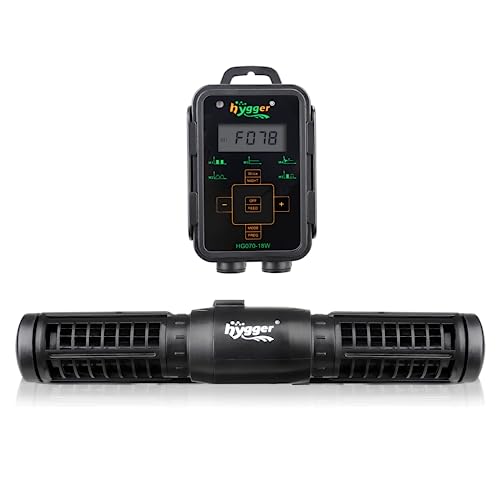
hygger Aquarium Wave Maker, 18W Adjustable Cross Flow Pump
- ✓ Quiet operation
- ✓ Strong, tunable flow
- ✓ Flexible mounting
- ✕ Bulky footprint
- ✕ Maintenance check needed
| Model | hygger Aquarium Wave Maker 18W |
| Maximum Power | 18W |
| Maximum Flow Rate | 1850 GPH |
| Tank Capacity Compatibility | Suitable for up to 135 gallons ( freshwater and marine ) |
| Power Supply | Safe 24V DC |
| Control Features | Intelligent LED controller with 5 wave modes (pulse, sine, constant, random, cross flow), 30–100 flow rate levels, 30–100 frequency levels, feeding mode, night mode, linkage mode |
You’ve probably heard that wave makers are loud, finicky, and boring to set up. with the hygger 18W cross flow pump, that misconception gets knocked down in real life.
the moment you power it on, you notice the almost inaudible hum and how the 360-degree wave spreads from a single unit.
the LED controller sits flush on the wall of the tank cabinet, and yes, the display is readable even from across the room. you can dial in five wave modes, adjust flow and frequency in precise increments, and still have a feeding mode handy for tank maintenance days.
it feels thoughtful, not gimmicky, in how the modes map to daily aquarium rhythms.
installing the pump is straightforward. the magnetic base grips firmly, and the head rotates so you can aim waves from the top, middle, or bottom of the tank.
i tested it at the top to see a broad, cresting pattern, then dropped it to the middle for bubble trails, and finally tucked it near the substrate to push debris without stirring up too much. the cross flow design really does push water in multiple directions, which helps eliminate dead zones you notice with other wavemakers.
in a 60-gallon mixed reef, the device pulled a strong, gentle current without creating chaotic spray or noise. the 1850 GPH max moves a lot of water, yet the 24V system stays cool and steady.
the real win is how it interacts with feeding cycles and night mode, where you can relax without worrying about overnight surges.
pros feel practical: quiet operation, strong yet controllable flow, flexible mounting. cons are honest: the bulky footprint may crowd shelves, and anti-clog maintenance requires a quick check every couple of weeks.
What Is a Powerhead and How Does It Function in an Aquarium?
Best practices for selecting a powerhead include considering the size of the aquarium, the type of aquatic life present, and the specific needs for water movement. It is important to choose a model that provides sufficient flow without creating excessive turbulence, which can stress fish. Regular maintenance, such as cleaning the powerhead to prevent buildup of debris and checking for wear and tear, will also ensure optimal performance and longevity.
What Factors Should You Consider When Choosing the Best Powerhead?
When choosing the best powerhead for an aquarium, several factors should be taken into account to ensure optimal performance and compatibility with your aquatic environment.
- Flow Rate: The flow rate refers to how much water the powerhead can move within a specific time frame, typically measured in gallons per hour (GPH). It’s crucial to match the flow rate to your aquarium’s size and the needs of the inhabitants; too much flow can stress fish, while too little can lead to stagnant areas and poor water quality.
- Size and Compatibility: The physical size of the powerhead should fit comfortably within your aquarium setup without overcrowding or obstructing other equipment. Additionally, ensure that the powerhead is compatible with your aquarium’s filtration system and any other devices, such as heaters or decorations.
- Noise Level: Noise can be a significant factor, especially in a home environment. Some powerheads operate quietly, while others can produce noticeable hums or vibrations; choosing a quieter model can enhance the overall enjoyment of your aquarium.
- Adjustability: Many powerheads come with adjustable flow rates or directional outputs, allowing you to customize water movement. This feature can be particularly beneficial for creating specific currents or for directing water flow towards areas that require better circulation.
- Energy Efficiency: Energy consumption is an important aspect to consider, especially if you plan to run the powerhead continuously. Look for models that are energy-efficient to help reduce electricity costs while still providing optimal performance for your aquarium.
- Durability and Build Quality: The construction materials and design of the powerhead can affect its longevity and reliability. Opt for powerheads made from high-quality, corrosion-resistant materials that can withstand constant exposure to water and other aquarium conditions.
- Brand Reputation and Reviews: Researching brands and reading customer reviews can provide valuable insights into the reliability and performance of specific powerhead models. Established brands often have a track record of quality, making it easier to find a dependable product for your aquarium.
How Important Is the Flow Rate When Selecting a Powerhead?
- Water Movement: The flow rate determines how effectively water circulates throughout the aquarium. Adequate movement helps in distributing heat, nutrients, and oxygen, ensuring that all areas of the tank are properly serviced and supporting the health of fish and plants.
- Filtration Efficiency: A powerhead with the appropriate flow rate enhances the performance of your filtration system. It ensures that water passes through the filter media at an optimal speed, allowing for better removal of debris and toxins, which is essential for maintaining a healthy aquatic environment.
- Compatibility with Tank Inhabitants: Different fish and aquatic species have varying preferences for water flow. Some species thrive in high-flow environments, while others prefer calm waters; selecting a powerhead with the right flow rate is vital for creating a suitable habitat for your aquarium’s inhabitants.
- Adjustability: Many modern powerheads come with adjustable flow rates, allowing you to customize the water movement to suit your tank’s needs. This flexibility can be beneficial for accommodating changes in tank inhabitants or plant growth over time.
- Energy Efficiency: A powerhead with an optimal flow rate can also be more energy-efficient, reducing operational costs. Selecting a model that matches the size and requirements of your aquarium helps avoid unnecessary power consumption while maintaining effective water circulation.
How Does Tank Size Affect Powerhead Compatibility?
The compatibility of a powerhead with an aquarium tank size is crucial for maintaining optimal water circulation and filtration.
- Flow Rate: The flow rate of a powerhead is typically measured in gallons per hour (GPH) and should match the size of the aquarium to ensure adequate water movement.
- Aquarium Type: Different types of aquariums, such as freshwater, saltwater, or reef tanks, have specific requirements that influence the choice of powerhead based on the tank’s size.
- Water Volume: The total water volume in the aquarium affects how much circulation is needed, as larger tanks generally require more powerful units to maintain proper filtration and oxygenation.
- Tank Dimensions: The dimensions of the tank, including height and width, can impact how effectively the powerhead distributes water throughout the aquarium.
- Stocking Levels: The number and type of fish and other aquatic life in the aquarium can determine the necessary flow rate, with heavily stocked tanks needing more powerful powerheads.
Flow Rate: The flow rate of a powerhead is typically measured in gallons per hour (GPH) and should match the size of the aquarium to ensure adequate water movement. For example, a tank with a capacity of 50 gallons may require a powerhead with a flow rate of at least 500 GPH to effectively circulate the water, allowing for proper filtration and oxygenation.
Aquarium Type: Different types of aquariums, such as freshwater, saltwater, or reef tanks, have specific requirements that influence the choice of powerhead based on the tank’s size. A reef tank, for instance, may benefit from a powerhead that can create varying flow patterns, while a freshwater tank may only require a steady current.
Water Volume: The total water volume in the aquarium affects how much circulation is needed, as larger tanks generally require more powerful units to maintain proper filtration and oxygenation. A smaller tank may only need a low-GPH powerhead, while a larger one could need multiple units to ensure even flow throughout the entire volume.
Tank Dimensions: The dimensions of the tank, including height and width, can impact how effectively the powerhead distributes water throughout the aquarium. A tall tank may require a powerhead that can push water to the surface efficiently, while a wide tank may need a unit that spreads the flow over a larger area.
Stocking Levels: The number and type of fish and other aquatic life in the aquarium can determine the necessary flow rate, with heavily stocked tanks needing more powerful powerheads. For instance, a tank with a high bioload may require faster water movement to help disperse waste and maintain water quality.
What Features Improve Powerhead Performance?
Several features contribute to improving powerhead performance in aquariums:
- Adjustable Flow Rate: The ability to control the flow rate allows users to customize water movement according to the specific needs of their aquarium’s inhabitants, whether it’s for gentle circulation for delicate species or stronger currents for more active fish.
- Energy Efficiency: Powerheads designed with energy-efficient motors consume less electricity while providing optimal performance, which not only reduces operational costs but also minimizes heat output in the aquarium environment.
- Durable Materials: High-quality, corrosion-resistant materials ensure that the powerhead can withstand constant exposure to water and chemicals without degrading, leading to a longer lifespan and reliable operation.
- Quiet Operation: Models that operate quietly are preferable as they help maintain a tranquil aquarium environment, allowing both fish and their owners to enjoy the space without disruptive noise.
- Versatile Mounting Options: Powerheads that offer flexible mounting options make installation easier, allowing aquarists to position them in various locations to achieve the desired water flow pattern and filtration efficiency.
- Integrated Filtration: Some powerheads come with built-in filtration systems that help remove debris and improve water quality, providing a two-in-one solution that saves space and enhances overall aquarium health.
- Temperature Control: Advanced models may include features that regulate water temperature, which can be crucial for maintaining stable conditions in sensitive aquatic environments.
What Are the Benefits of Using a Powerhead in Your Aquarium?
The benefits of using a powerhead in your aquarium include improved water circulation, enhanced filtration, and increased oxygenation.
- Improved Water Circulation: A powerhead helps to create water movement in the aquarium, which is crucial for preventing stagnant areas. This circulation promotes a healthy environment for fish and plants by ensuring that nutrients and waste products are evenly distributed.
- Enhanced Filtration: By connecting a powerhead to a filter or using it to drive a sponge filter, you can significantly improve the efficiency of your aquarium’s filtration system. It helps in pulling more water through the filter media, allowing for better removal of debris and harmful substances.
- Increased Oxygenation: Powerheads facilitate surface agitation, which increases the oxygen exchange between the water and air. This is particularly beneficial in densely stocked aquariums or tanks with low water movement, as it helps to maintain adequate oxygen levels for fish and other aquatic organisms.
- Versatility: Powerheads can be used in various configurations for different purposes, such as creating water movement, driving filters, or even powering decorative features like fountains. This versatility makes them an essential tool for aquarists looking to customize their aquarium setup.
- Adjustable Flow Rates: Many powerheads come with adjustable flow rates, allowing you to tailor the water movement to the specific needs of your aquarium inhabitants. This adaptability is important for accommodating sensitive species that may require gentle currents, as well as more active fish that thrive in stronger flows.
Which Powerheads Are Considered the Best Choices for Aquariums?
The Marineland Maxi-Jet powerhead has a long-standing reputation for its robust construction and adaptability, as it can function as a water pump, power filter, or aerator. It features a multi-purpose design which allows users to easily modify its output, catering to different tank sizes and desired water currents.
EcoTech Marine VorTech powerheads are at the forefront of aquarium technology, providing innovative features such as wireless connectivity and programmable flow settings. This allows hobbyists to simulate natural currents and create an optimal environment for their fish and coral, all while maintaining energy efficiency.
Aqueon QuietFlow powerheads are designed specifically for quiet operation, making them a top choice for aquarists who value peace in their aquatic environments. They also offer reliable performance and are versatile enough to be used in both freshwater and saltwater tanks, ensuring excellent water circulation.
The Tunze Turbelle series stands out for its ability to adjust flow rates and compact design, making it perfect for aquarists with limited tank space. Its high-quality construction ensures durability, while the adjustable flow allows for tailored water movement suitable for various aquatic species and setups.
What Brand Should You Trust for Quality Powerheads?
When looking for the best powerhead for your aquarium, several reputable brands stand out for their quality and reliability:
- Hydor: Known for their innovative design, Hydor powerheads are versatile and efficient, making them great for various aquarium setups. Their products often feature adjustable flow rates and energy-efficient motors, which help maintain a stable environment for aquatic life.
- Marina: Marina powerheads are popular among both beginners and experienced aquarists due to their durability and ease of use. They come in various sizes and flow rates, allowing users to find a perfect match for their tank requirements while also providing quiet operation.
- Fluval: Fluval offers high-quality powerheads that are designed for performance and longevity. Their models often include features like multi-directional flow control and built-in adjustable filters, making them suitable for both freshwater and saltwater aquariums.
- Eheim: Eheim is a well-respected name in the aquarium industry, known for their reliable and robust powerheads. Their products are engineered to deliver consistent water movement and are often praised for their silent operation, making them ideal for more tranquil aquarium environments.
- Aqueon: Aqueon powerheads are affordable yet effective, making them a great choice for those on a budget. They are easy to install and maintain, providing good flow rates to help keep water circulating without excessive noise.
What Unique Features Are Offered by Top-Rated Powerheads?
- Adjustable Flow Rate: Many top-rated powerheads allow users to modify the water flow rate, providing flexibility to accommodate different tank sizes and species needs.
- Energy Efficiency: Leading models often feature energy-efficient motors that reduce electricity consumption, making them environmentally friendly and cost-effective for long-term use.
- Versatile Mounting Options: High-quality powerheads typically offer multiple mounting options, including suction cups and brackets, ensuring secure placement in various aquarium setups.
- Built-in Filtration: Some powerheads integrate filtration systems, which not only circulate water but also help in maintaining water clarity and quality by removing debris and impurities.
- Quiet Operation: Many of the best powerheads are designed to operate quietly, minimizing noise pollution in your aquarium environment and creating a more serene atmosphere.
Adjustable flow rates are vital for tailoring the water movement to the specific needs of fish and plants, allowing for optimal growth and comfort. Energy efficiency is a key feature in modern powerheads, as it helps hobbyists save on electricity bills while maintaining an eco-friendly approach to aquarium care.
Versatile mounting options make it easier for aquarists to position the powerhead for maximum effectiveness, ensuring that water is properly circulated throughout the tank. Built-in filtration capabilities further enhance the functionality of these devices, combining circulation and cleaning in a single unit to simplify tank maintenance.
Lastly, quiet operation is essential for maintaining the tranquility of your aquarium, especially in living spaces where noise can be disruptive. This feature not only enhances the aesthetic experience but also promotes a healthier environment for aquatic life.
What Common Challenges Do Aquarium Owners Face with Powerheads?
Aquarium owners often encounter several challenges when using powerheads, which are critical for maintaining water circulation and filtration.
- Noise Levels: Powerheads can be quite noisy, especially when they are poorly designed or not properly maintained. This noise can be disruptive in home environments, leading to a less enjoyable aquarium experience.
- Inconsistent Flow Rates: Some powerheads may not provide a consistent flow rate, which can lead to uneven water circulation in the tank. This inconsistency can negatively affect water quality and the health of aquatic life, as certain areas may have stagnant water.
- Clogging and Maintenance: Powerheads are prone to clogging due to debris, algae, and other particles in the water. Regular maintenance is required to keep them functioning efficiently, which can be time-consuming and inconvenient for busy aquarium owners.
- Heat Generation: Many powerheads can generate heat as they operate, which may elevate the water temperature in the aquarium. This can be particularly problematic in sensitive ecosystems, where temperature fluctuations can stress fish and plants.
- Compatibility Issues: Not all powerheads are compatible with every aquarium setup or equipment, such as filters or air stones. Owners may face challenges in selecting the best powerhead for their specific needs, leading to potential inefficiencies in their aquarium systems.
- Power Outages: During power outages, powerheads stop working, which can lead to a rapid decline in water quality and oxygen levels. This can create a stressful situation for fish and other aquatic animals, necessitating backup plans for emergency situations.
How Can You Maintain Your Powerhead for Longevity and Efficiency?
To maintain your powerhead for longevity and efficiency, consider the following practices:
- Regular Cleaning: Cleaning your powerhead regularly prevents clogging from debris and algae buildup.
- Check Impeller Condition: Inspecting the impeller for wear and tear is crucial, as a damaged impeller can reduce flow rate and efficiency.
- Monitor Water Levels: Ensuring that the water level is adequate prevents the powerhead from running dry, which can lead to overheating and damage.
- Proper Placement: Positioning the powerhead correctly in the aquarium ensures optimal water circulation and prevents unnecessary strain on the motor.
- Electrical Connections Inspection: Regularly checking electrical connections can prevent malfunctions and ensure reliable operation.
Regular cleaning of your powerhead is essential to maintain its performance. Debris and algae can accumulate in the intake and output areas, leading to reduced water flow and increased energy consumption. Using a soft brush and aquarium-safe cleaning solutions can help keep these components clear.
Checking the condition of the impeller is vital for ensuring your powerhead operates efficiently. Over time, the impeller can become chipped or worn, which can impair its ability to move water effectively. Replacing a damaged impeller can restore optimal flow and extend the life of the powerhead.
Monitoring water levels in your aquarium is crucial for the longevity of your powerhead. If the water level drops too low, the powerhead may run dry, which can cause overheating and permanent damage to the motor. Regularly checking and adjusting water levels can prevent this issue.
Proper placement of the powerhead within the aquarium can significantly affect its performance. Placing it in a position that allows for efficient water circulation will reduce the workload on the motor, prolonging its life. Avoid placing the powerhead in corners or areas where water flow is restricted.
Lastly, inspecting electrical connections is important for maintaining the powerhead’s functionality. Loose or corroded connections can lead to intermittent power issues or complete failure. Regularly checking and cleaning these connections can help ensure that the powerhead runs smoothly and reliably.
Related Post: