Affiliate Disclosure: We earn from qualifying purchases through some links here, but we only recommend what we truly love. No fluff, just honest picks!
Unlike other models that struggle with consistent day-night transitions, this hygger Auto On Off LED Aquarium Light 48-55 Inches Dimmable shines with programmable 24-hour cycles and a built-in timer. I tested it on a 48″ tank and watched dawn blend into bright day and a gentle moonlight fade, all without a buzzing fan. The aluminum shell stayed cool, and the adjustable legs fit 48–55″ tanks snugly, keeping the light steady even if the tank sits on a stand.
Between the powerful 6500K whites, subtle blue and red accents, and a DIY 8-slot schedule, it outperformed cheaper, non-timed options by delivering reliable plant-friendly spectrum and zero spillover on fish. If you want easy control, sturdy build, and true reef-like timing, this one checks all the boxes.
Top Recommendation:
Why We Recommend It: The hygger Auto On Off LED Aquarium Light 48-55 Inches Dimmable offers a comprehensive 24-hour programmable cycle with dawn, midday, post meridiem, and night modes, plus auto on/off and a memory function. It includes a DIY 8-slot option for a personalized schedule, plus a robust IP68-rated, heat-dissipating aluminum shell. Its 3346-lumen output and mixed spectrum (6500K whites, blue/red/green LEDs, and RGB options) optimize plant growth while minimizing heat and energy waste. In contrast, others lack timers (AQUANEAT 18″/24″-18W model) or timerless operation (AQUANEAT 48–54″ and 24–30″ options) which reduces live-plant vitality and consistency. This model also fits 48–55″ tanks and maintains stable performance without a fan, making it the best value for balanced light, durability, and plant health.
Best lighting for freshwater aquarium: Our Top 5 Picks
Product Comparison
| Features | Best Choice | Runner Up | Best Price |
|---|
| Preview | 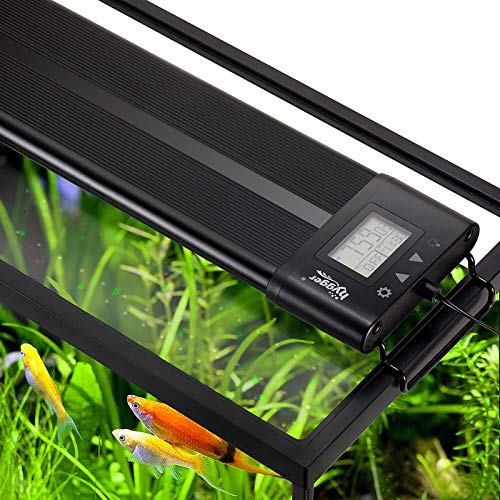 | 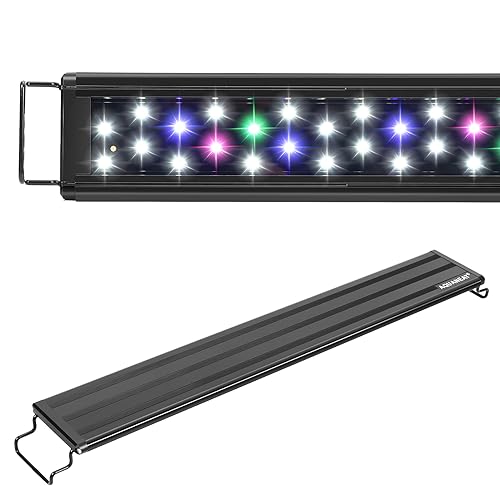 | 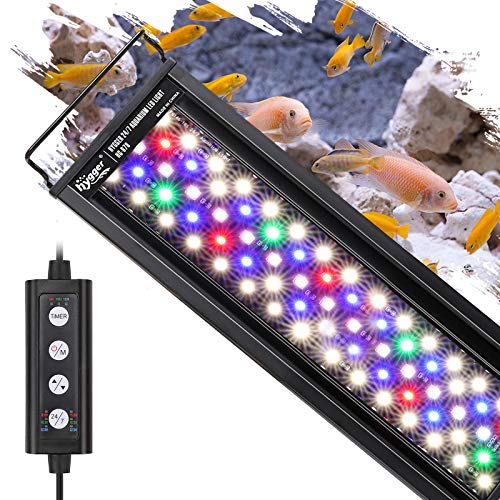 |
| Title | hygger Auto On Off LED Aquarium Light 48-55 Inches Dimmable | AQUANEAT Full Spectrum LED Aquarium Light 18″–24″ Tank | hygger 18W 24/7 Lighting Aquarium LED Light, |
| Storage Capacity | – | – | – |
| Waterproof / IP Rating | IP68 | – | – |
| Dimming / PWM | Yes (dimmable, multiple levels) | No (no brightness adjustment) | Yes (brightness adjustable in DIY mode) |
| Programmable / Timers | Yes (built-in timer, 24-hour cycle, auto on/off, DIY 8-slot mode) | No timer | Yes (DIY mode with timer options) |
| Light Spectrum / LED Types | White 6500K, blue 450-455nm, red 620-625nm, green 520-525nm, RGB mix; 3346 lumens | 30x 6500K white, 6x blue, 3x pink, 3x green; 42 LEDs total | White 6500K, blue 455nm, red 620nm, green 560nm; 98 LEDs total; CRI ~85 |
| Power Consumption | – | – | 18W |
| Adjustability / Mounting | Adjustable mounting legs for 48-55 inch tanks | Extendable brackets; 18”-24” tank compatibility | Extendable bending bracket; separable adapter; adjustable length |
| Water Resistance / Durability | IP68 water-resistant shell; no fan | Not water-proof; keep away from splashes | – |
| Lumen Output / Brightness | 3346 lumens | – | 1075 lumens |
| Suitable Tank Size Range | 48-55 inches width tanks | 18-24 inches tanks | 18-24 inches tanks |
| Notes / Special Features | Moonlight mode with 6 single colors and 10 dimmable levels; DIY 8-slot cycle | Not water-proof; no timer; fixed brightness options | New upgrade: separable adapter; 24/7 natural mode; memory function; 15-minute ramp |
| Available |
|
|
|
hygger Auto On Off LED Aquarium Light 48-55 Inches Dimmable
Pros:
- ✓ Durable aluminum shell
- ✓ Customizable 24-hour cycle
- ✓ IP68 water resistance
Cons:
- ✕ Slightly warm to the touch during peak output
- ✕ Narrow mounting range (fits 48–55 inches)
Specification:
| Light Source Composition |
LED array with 140x 6500K White, 23x 450-455nm Blue, 12x 620-625nm Red, 11x 520-525nm Green, 62x RGB LEDs |
| Total Luminous Flux |
3346 lumens |
| Color Temperature Range |
6500K to 10000K |
| Waterproof Rating |
IP68 |
| Dimming and Scheduling Features |
Programmable 24-hour light cycle with dawn, midday, dusk, and night; DIY mode with eight time slots; auto on/off; memory function |
| Physical Housing and Mounting |
Premium 1.2mm thick aluminum shell; adjustable mounting legs for 48–55 inch wide aquariums |
You pop the hygger Auto On Off LED Aquarium Light onto the 48–55 inch frame and instantly notice the sturdy aluminum shell. The 1.2mm housing feels premium, with a quiet, solid heft that says this isn’t a flimsy fixture.
I was curious about the 24-hour cycle, but the real test came when dawn tones started threading through the water like a soft sunrise.
Setup is straightforward: the adjustable mounting legs span the width, and the low-voltage DC adapter keeps things calm at the wall outlet. The first morning, I tweaked the DIY eight-slot schedule and watched the colors gently bloom—white daylight mixed with a hint of red, green, and blue for a bright, plant-friendly glow.
It’s one of those moments where the light feels almost natural, not overpowering.
During the day, the 3346 lumen output is plenty for mid-level planted tanks, and the gradual ramp from dawn to mid-afternoon feels easy on the eyes. The moonlight option adds a subtle evening ambiance without turning the tank into a rave, which my fish seem to appreciate as their evening backdrop.
What surprised me is the absence of a fan. With little heat buildup, the fixture stays cool to the touch, and you can run it safely without cranking up the airflow in the cabinet.
The IP68 rating gives peace of mind for splash-prone setups, which is not something you can overlook in a busy home aquarium corner.
In real-world use, the DIY mode shines if you want precise control over on/off times for both plants and nocturnal species. The memory function means I don’t have to reconfigure the schedule after a power blink, which saves a lot of hassle.
If you’re after a reliable, customizable, low-maintenance light, this one is worth a closer look.
Final impression: it blends into daily routines and actually helps plants thrive without fuss. The light feels designed for hobbyists who want control without complexity, and the overall build stands up to the humidity of a lively freshwater tank.
AQUANEAT Full Spectrum LED Aquarium Light 18″–24″ Tank
Pros:
- ✓ Bright, even coverage
- ✓ Easy to install
- ✓ Budget-friendly
Cons:
- ✕ No timer
- ✕ No brightness control
Specification:
| Light Length Range |
18″–24″ tank length compatibility (extending brackets allow 18.5″ L minimum docked, 17″ light body length without brackets) |
| LED Configuration |
42 LEDs total: 30x 6500K white, 6x blue, 3x pink, 3x green |
| Mounting/Brightness Control |
Two extendable docking brackets; brightness not adjustable; no timer |
| Tank Compatibility/Coverage |
Best for 10 gallon tanks; designed for 18–24 inch long tanks with coverage optimized for 20 inches |
| Water Exposure / Safety Note |
Not waterproof; must keep away from splashing water |
| Physical Dimensions (assembled) |
Minimum docked length 18.5″ L x 2.7″ W; light body 17″ L x 2.7″ W |
You power this AQUANEAT light up and immediately notice how bright the 42 LEDs feel in a dim desk setup. The first moment that stood out was the extendable bracket clicking into place, aligning perfectly with an 18″ tank and still reaching a snug 24″.
It’s small enough to perch on a rim, yet the light spread feels confident across the entire waterline.
Your morning routine with it is simple: drop it on, straighten the brackets, and you’re ready to go. The mix of 6500K white with blue, pink, and green LEDs creates a lively shimmer that makes your plants pop without washing everything out.
You’ll notice the pink accents best on foreground plants and the blues giving depth during a quick glance from the sofa.
What surprised me was how evenly the light covered a 20-inch footprint on a 10-gallon setup. There’s no timer and brightness isn’t adjustable, but for a basic, budget-friendly option, it delivers a clean, uniform glow.
The note about water splashes is real—keep it away from splashing, and you’ll keep the color balance intact.
In practice, it’s a no-fuss upgrade for a small tank where you’re not chasing programmable lighting. It sits compactly above the tank, and the fixed brightness still supports healthy plant growth and fish visibility during daytime feeding.
If you’re after a budget, plug-and-play light, this one gets the job done without drama.
Bottom line: it’s a straightforward, bright drop-in for 18–24 inch tanks that’s easy to install and use. It isn’t fancy, but it covers basics well and won’t break the bank.
hygger 18W 24/7 Lighting Aquarium LED Light,
Pros:
- ✓ Smooth 24/7 cycle
- ✓ Solid build and heat dissipation
- ✓ Easy DIY customization
Cons:
- ✕ Limited high-brightness options
- ✕ Not ultra-wide for very long tanks
Specification:
| Power |
18W |
| LED Configuration |
98 PCS total (White 48, Blue 18, Red 7, Green 5, RGB 20) |
| Color Temperature / Spectrum |
White 6500K, Blue 455 nm, Red 620 nm, Green 560 nm |
| Applicable Tank Size |
18–24 inches (approx. 45–60 cm) freshwater tanks |
| Input/Output Electrical |
AC 100–240V input, DC 20V output |
| Dimmable / Modes |
DIY mode with adjustable timer (6/10/12 hours), 5 brightness levels, color selection; 24/7 default mode with sunrise, daylight, and moonlight phases |
That moment when the 18W hygger light shifts from a gentle sunrise to a crisp daytime glow, you realize how seamless the 24/7 cycle actually feels. The default mode starts with a warm orange gradient at 6 am, then blooms into a clean white brightness by mid-morning, and finally settles into a calm blue moonlight before bed.
It’s not just a timer—it’s a mini day-night routine for your tank that you barely have to think about.
The build feels solid in your hands, with a thick aluminum body that cools efficiently during long runs. The extendable bracket stretches enough to fit a variety of freshwater tanks, and the separable adapter is a small but thoughtful touch that makes replacements less wasteful.
Installation is straightforward: clamp, plug, and you’re done; the light sits close to the water without feeling bulky.
When you switch to DIY mode, you appreciate how you can dial in time, color, and brightness in minutes. The ramp-up and fade-down over 15 minutes reduces stress on your fish and makes transitions feel natural rather than abrupt.
The color options aren’t just gimmicky—white looks like real sunlight, while the blues and greens give your plants a subtle boost without overdoing it.
Coverage is decent for most 18”-24” tanks, and the 98 LEDs balance brightness with a soft, non-strobing effect. The 85 CRI means colors look true enough for everyday viewing, not garish and blown-out.
If you’ve got sensitive fish or jittery algae schedules, this light helps keep a steady rhythm without requiring constant tweaks.
Overall, you’ll find the 24/7 mode actually reduces daily decisions, and the memory function means you don’t lose your timing if you power off for a weekend. It’s affordable, quiet, and genuinely easy to live with day after day.
AQUANEAT Full Spectrum LED Aquarium Light 48–54″ Freshwater
Pros:
- ✓ Strong full-spectrum output
- ✓ Simple on/off operation
- ✓ Wide tank compatibility
Cons:
- ✕ No adjustable brightness
- ✕ Not waterproof
Specification:
| Light Coverage Length |
48-54 inches (extendable brackets fit tanks from 48 to 54 inches) |
| Light Body Dimensions |
Light body: 45 inches long × 2.7 inches wide |
| LED Configuration |
Total 96 LEDs: 68 x 6500K white, 14 x blue, 7 x pink, 7 x green |
| Power and Brightness Features |
Non-adjustable brightness; all LEDs on or off; no dimming or timer |
| Water Compatibility & Safety Note |
Not waterproof; should be kept away from splashing water; suitable for freshwater tanks |
| Use Case/Audience |
Freshwater aquarium lighting for full-spectrum illumination |
I pulled the AQUANEAT Full Spectrum LED Aquarium Light onto the tank and my first thought was how clean the 45” long body looks perched above a 48” glass rim. It slides in neatly with the extendable brackets and a simple drop-in fit that feels sturdy, not flimsy.
You can tell someone designed this with a wide tank in mind.
The light’s 96 LEDs glare a little at first in daytime, but the full spectrum punch is real for a freshwater setup. You get a balanced mix: white, blue, pink, and green that helps bring out plant detail and fish color without fuss.
The light sits about mid-height above the water, and the brightness feels even across the entire length.
What I like most is the no-fuss operation. It’s simply on or off, no timers, no dimming.
For someone who values consistency over gadgetry, that’s refreshing. The lack of a water-proof rating is a reminder to keep splashes away, which is easy in a typical home aquarium.
The physical footprint is smart: 45” long, 2.7” wide, and two extendable brackets that grip 48–54 inch tanks. It’s nice to see a full cover feeling, with LEDs spaced to avoid shadows on corners.
In real use, you’ll notice the light warms up quickly and settles into a steady glow that keeps fish calm and plants sufficiently lit.
If your goal is a bright, economical freshwater plant and fish display, this does the job without breaking the bank. It’s not feature-rich, but it will keep the tank looking vibrant from tip to tail.
AQUANEAT Full Spectrum LED Light for 24–30″ Freshwater Tank
Pros:
- ✓ Bright, even coverage
- ✓ Flexible length fit
- ✓ Clean, slim build
Cons:
- ✕ Not waterproof
- ✕ No timer or dimming
Specification:
| Light Source Configuration |
Total 60 LEDs: 44 x 6500K white, 8 x blue, 4 x pink, 4 x green |
| Power and Brightness |
Not specified; described as super bright and energy efficient LEDs; no brightness adjustment |
| Physical Dimensions |
Light body: 22.25 inches (L) × 2.7 inches (W) × 0.4 inches (H) |
| Mounting/Compatibility |
Two extendable brackets; fits tanks from 24 to 30 inches long; suitable for 15 gallon tanks approximately |
| Water Exposure |
Not waterproof; should be kept away from splashing water |
| Recommended Use/Lighting Type |
Full spectrum LED suitable for freshwater tanks |
You notice the AQUANEAT Full Spectrum LED light right away by its clean, slim profile and two extendable brackets that snap onto a 24 to 30-inch tank like they were made for it. The first moment you switch it on, the 60 LEDs blaze to life with a crisp mix: 44 white, 8 blue, 4 pink, and 4 green, giving your plants and fish a bright, natural-looking glow.
It feels sturdy in your hands, and you can tell the lens-less design means fewer dim spots across the length of the tank.
The light sits flat on the tank lid and slides in neatly, without bulky docking brackets getting in the way. You’ll notice the brightness is intense enough to wake up low-light plants without creating harsh hotspots, which is surprisingly helpful for a 15–20 gallon setup you’ve got tucked behind the sofa.
There’s no timer and no dimming, so you’ll rely on your routine to manage photoperiods, but the brightness remains steady and reliable once you set it.
During setup, you appreciate the versatility of the length. It stretches to fit 24–30 inches, and the lack of a fixed rim size means you can place it across different tanks without worrying about compatibility.
The color mix of LEDs adds enough color punch for an aesthetically pleasing display, while still maintaining a natural look for everyday viewing.
Real-world use feels straightforward: plug in, position, and enjoy. You’ll find the light is easy to wipe down after messy feeding sessions, and the 22.25” by 2.7” footprint sits compactly in front of the glass.
Just be mindful of splashes—it’s not waterproof, so keep it well away from water spray.
What Are the Different Types of Lighting for Freshwater Aquariums?
The best lighting for freshwater aquariums can be categorized into several types, each serving different purposes and enhancing the aquarium’s aesthetics and the health of its inhabitants.
- LED Lighting: LED lights are energy-efficient, long-lasting, and come in various spectrums, making them ideal for freshwater aquariums. They produce less heat, reducing the risk of temperature fluctuations, and can be adjusted for intensity and color, promoting plant growth and showcasing fish colors effectively.
- Fluorescent Lighting: Fluorescent lights are commonly used in aquariums due to their affordability and availability in different sizes and colors. They provide a good balance of light intensity and spectrum, suitable for both fish and plant growth, although they typically need to be replaced every 6 to 12 months as their brightness diminishes over time.
- Incandescent Lighting: Incandescent bulbs are less popular for freshwater aquariums because they generate a lot of heat and are not energy-efficient. While they can enhance the colors of fish, they are not ideal for plant growth and can lead to overheating in the tank, requiring careful monitoring of water temperatures.
- Compact Fluorescent Lighting (CFL): CFLs are a more efficient version of traditional fluorescent lights and can fit into standard light fixtures. They provide a higher light output while consuming less electricity, making them suitable for planted tanks where intense light is necessary for photosynthesis.
- Metal Halide Lighting: Metal halide lights are powerful and produce a bright, intense light that penetrates deep into the water, making them ideal for large aquariums or those with high light-demanding plants. However, they emit significant heat and require additional cooling systems to maintain optimal water temperatures.
- Smart Lighting Systems: These modern lighting systems allow for customization through timers and color adjustments, enabling aquarists to simulate natural light cycles. They often include features such as sunrise/sunset effects and can enhance the growth of aquatic plants while creating a stunning visual display within the aquarium.
How Does LED Lighting Benefit Freshwater Aquariums?
LED lighting offers several advantages for freshwater aquariums, enhancing both the health of aquatic life and the aesthetic appeal of the tank.
- Energy Efficiency: LED lights consume significantly less electricity compared to traditional lighting options like fluorescent or incandescent bulbs.
- Longevity: LED fixtures have a much longer lifespan, often lasting up to 50,000 hours, which reduces the frequency of replacements.
- Customizable Spectrum: Many LED systems allow users to adjust the light spectrum to better suit the specific needs of freshwater plants and fish.
- Low Heat Emission: LED lights produce minimal heat, helping to maintain stable water temperatures and reducing the risk of overheating in the aquarium.
- Enhanced Color Rendering: The color spectrum provided by LEDs can enhance the natural colors of fish and plants, making the aquarium more visually appealing.
- Reduced Algae Growth: Some LED lights are designed to minimize the wavelengths that promote algae growth, helping to keep the tank cleaner.
- Easy Installation and Maintenance: Many LED systems are designed for easy installation and require minimal maintenance, making them user-friendly for aquarium enthusiasts.
LED lights consume significantly less electricity compared to traditional lighting options like fluorescent or incandescent bulbs, making them an eco-friendly choice that can lower energy bills over time. This efficiency not only benefits the environment but also aligns with the growing trend of sustainable practices in aquarium keeping.
LED fixtures have a much longer lifespan, often lasting up to 50,000 hours, which reduces the frequency of replacements and the associated costs and waste. This longevity means less hassle for aquarium owners, who can focus on maintaining their aquatic environment rather than frequently changing bulbs.
Many LED systems allow users to adjust the light spectrum to better suit the specific needs of freshwater plants and fish, providing tailored conditions for optimal growth and health. This versatility makes LEDs a favorite among aquarists who wish to create a thriving ecosystem.
LED lights produce minimal heat, helping to maintain stable water temperatures and reducing the risk of overheating in the aquarium. This can be particularly beneficial in smaller tanks where temperature fluctuations can impact fish health.
The color spectrum provided by LEDs can enhance the natural colors of fish and plants, making the aquarium more visually appealing. This improved aesthetic can create a more immersive experience for viewers and can also highlight the beauty of the aquatic life within the tank.
Some LED lights are designed to minimize the wavelengths that promote algae growth, helping to keep the tank cleaner and reducing the need for chemical treatments or excessive maintenance. This feature can lead to a healthier environment for both plants and fish.
Many LED systems are designed for easy installation and require minimal maintenance, making them user-friendly for aquarium enthusiasts. This convenience allows hobbyists of all experience levels to enjoy the benefits of quality lighting without extensive setup or upkeep.
What Are the Advantages of Using Fluorescent Lighting in Aquariums?
Fluorescent lighting is a popular choice for freshwater aquariums due to several compelling advantages:
-
Energy Efficiency: Fluorescent bulbs consume less energy compared to traditional incandescent bulbs, making them a cost-effective option for long-term use.
-
Spectrum Variety: These lights are available in various color spectrums, allowing aquarium owners to choose bulbs that enhance the natural colors of fish and plants. For instance, full-spectrum fluorescent lights can mimic daylight and promote healthy plant growth.
-
Heat Output: Fluorescent fixtures generate considerably less heat than other types of lighting, reducing the risk of overheating the water in the aquarium. This is especially beneficial in aquariums that house temperature-sensitive species.
-
Longevity: Fluorescent bulbs typically last longer than incandescent bulbs, which reduces the frequency and cost of replacements. Some durable models can last up to 20,000 hours.
-
Accessibility and Variety: These lights are widely available and come in various sizes and shapes, compatible with most aquarium setups.
These advantages make fluorescent lighting a reliable and efficient solution for maintaining a vibrant and healthy freshwater aquarium environment.
Are Incandescent Bulbs a Viable Option for Aquariums?
Incandescent bulbs can be used in aquariums, but there are more effective lighting options available for optimal growth and health of aquatic plants and fish.
- Heat Generation: Incandescent bulbs produce a significant amount of heat, which can raise the water temperature in the aquarium.
- Energy Efficiency: These bulbs are less energy-efficient compared to other lighting types like LED or fluorescent, leading to higher electricity bills.
- Light Spectrum: The light emitted by incandescent bulbs does not provide the full spectrum needed for plant growth, which can hinder the health and vitality of aquatic plants.
- Short Lifespan: Incandescent bulbs have a shorter lifespan compared to LEDs and fluorescents, requiring more frequent replacements and increasing maintenance efforts.
- Algae Growth: The type of light produced can promote algae growth in aquariums, creating an imbalance in the ecosystem and reducing water quality.
Heat Generation: Incandescent bulbs produce a significant amount of heat, which can raise the water temperature in the aquarium. This can be detrimental, especially in smaller tanks or setups with sensitive species that prefer stable and cooler temperatures.
Energy Efficiency: These bulbs are less energy-efficient compared to other lighting types like LED or fluorescent, leading to higher electricity bills. Their high energy consumption makes them a less desirable option for long-term aquarium maintenance.
Light Spectrum: The light emitted by incandescent bulbs does not provide the full spectrum needed for plant growth, which can hinder the health and vitality of aquatic plants. Aquatic plants typically thrive under specific wavelengths of light, which incandescent bulbs cannot adequately deliver.
Short Lifespan: Incandescent bulbs have a shorter lifespan compared to LEDs and fluorescents, requiring more frequent replacements and increasing maintenance efforts. This can lead to additional costs and inconvenience for aquarium owners.
Algae Growth: The type of light produced can promote algae growth in aquariums, creating an imbalance in the ecosystem and reducing water quality. Excessive algae can lead to problems such as reduced oxygen levels and hindered visibility in the tank.
What Factors Should You Consider When Choosing Lighting for Your Freshwater Aquarium?
- Light Intensity: The intensity of light is crucial for plant growth and the wellbeing of fish. Different species of freshwater plants have varying light requirements, so it’s important to choose lighting that provides adequate intensity for the specific types of plants in your aquarium.
- Light Spectrum: The light spectrum refers to the range of wavelengths emitted by the lighting. Full-spectrum lights that mimic natural sunlight can promote healthy plant growth and enhance the colors of your fish, while specific wavelengths can benefit photosynthesis in aquatic plants.
- Duration of Lighting: The duration of light exposure, typically between 8 to 12 hours a day, affects both plant health and fish behavior. It’s important to establish a consistent light schedule to prevent algae growth and ensure that your plants receive adequate light for photosynthesis without overexposing them.
- Type of Lighting: There are several types of lighting available, including LED, fluorescent, and incandescent. LEDs are energy-efficient and have a long lifespan, making them popular for aquariums, while fluorescent lights are also effective but may require more frequent replacement.
- Heat Emission: The amount of heat emitted by the light source can impact the water temperature in the aquarium. LEDs produce less heat compared to incandescent and some fluorescent lights, which can help maintain a stable environment for temperature-sensitive fish and plants.
- Installation and Maintenance: Consider how easy it is to install and maintain the lighting system. Some setups may require complex mounting or wiring, while others can be easily clipped on or hung above the tank. Regular maintenance such as cleaning the light fixtures and adjusting the height may also be necessary to keep the lighting effective.
- Cost and Energy Efficiency: The initial cost of the lighting system and its long-term energy consumption should be factored into your decision. While LEDs may have a higher upfront cost, their energy efficiency can lead to savings on electricity bills over time.
How Does Aquarium Size Influence Your Lighting Selection?
Surface Area: A larger surface area can lead to more effective light dispersion, but it also means that you might need to consider the placement of your lights to avoid dark spots. Properly positioning lights above the tank can ensure that all corners are well-lit, promoting healthy growth for aquatic plants and better visibility for fish.
Depth of the Tank: The depth of your aquarium significantly impacts how light penetrates through the water. In deeper tanks, light can diminish quickly, requiring stronger bulbs or specialized lighting systems such as LED lights that provide higher intensity to reach the bottom effectively.
Type of Plants and Fish: Different species have varying light requirements; for instance, low-light plants can thrive with minimal lighting, while high-light plants require more intense illumination. Understanding the needs of your aquatic life will help you select lighting that supports their growth and wellbeing.
Lighting Duration: The size of your aquarium can influence how long you should keep the lights on to mimic natural daylight cycles. Larger tanks may benefit from longer light periods to ensure that all areas receive sufficient light without overexposing sensitive species to excessive brightness.
Which Fish and Plants Do You Have, and How Do They Affect Lighting Needs?
The best lighting for a freshwater aquarium depends on the types of fish and plants you have in your setup.
- Low-Light Plants: Suitable for beginners and require less intense lighting.
- Medium-Light Plants: These plants thrive with moderate lighting and can enhance aquarium aesthetics.
- High-Light Plants: Require strong lighting to flourish and are often more challenging to maintain.
- Fish Species Considerations: Different fish species have varying tolerances to light intensity, which can impact their behavior and health.
Low-Light Plants: Plants such as Anubias, Java Fern, and Cryptocoryne are excellent choices for low-light conditions. They typically require around 0.5 to 2 watts per gallon, making them easy to care for and ideal for aquarists who may not want to invest heavily in lighting systems.
Medium-Light Plants: Options like Amazon Sword and Water Wisteria thrive in moderate lighting conditions, usually requiring about 2 to 4 watts per gallon. These plants can grow more quickly and may need occasional fertilization, making them a good fit for those looking to create a vibrant and lush aquarium environment.
High-Light Plants: Species such as CO2-dependent plants like Glossostigma and Hemianthus callitrichoides need high-intensity lighting, typically around 4 to 8 watts per gallon. These plants generally require more maintenance, including CO2 injection and regular trimming, but they can create stunning aquascapes.
Fish Species Considerations: Different fish species have unique lighting needs; for instance, some fish prefer dim lighting as it mimics their natural habitat, reducing stress and aggression. It is essential to balance the lighting needs of plants with the comfort of the fish to maintain a healthy aquarium ecosystem.
What Role Do Light Intensity and Duration Play in Aquarium Health?
Light Duration: Typically, freshwater aquariums benefit from 10 to 12 hours of light per day. Too long a duration can encourage algae blooms, while too short a duration hampers plant growth and can lead to a less vibrant aquarium.
Type of Light: LED lights are becoming a popular choice as they are energy-efficient and offer a wide range of color spectrums that can enhance plant growth while being gentle on fish. Fluorescent lights are also common but may require more frequent replacement and consume more energy over time.
Photoperiod Effects: A consistent light schedule mimics natural environments, helping to stabilize the ecosystem. Fluctuations in light duration can cause stress in both plants and fish, disrupting their natural behaviors and health.
How Does Proper Lighting Impact Aquatic Plant Growth?
Proper lighting plays a crucial role in the growth and health of aquatic plants in a freshwater aquarium.
- Light Intensity: The strength of the light source is vital for photosynthesis, the process by which plants convert light energy into chemical energy. Too weak light may hinder growth and lead to poor plant health, while excessive intensity can cause algae blooms that compete with plants for nutrients and light.
- Light Spectrum: The color spectrum of the light influences plant growth significantly. Freshwater aquatic plants benefit most from light in the blue and red wavelengths, which are essential for photosynthesis, while green light is less effective, as it is mostly reflected by the plants.
- Photoperiod: The duration of light exposure each day affects plant growth and flowering cycles. A consistent photoperiod of 8-12 hours is generally recommended to simulate natural conditions, which helps prevent stress and promotes healthy growth.
- Lighting Types: Different types of lighting sources, such as LED, fluorescent, and metal halide, vary in efficiency and output. LEDs are increasingly favored for their energy efficiency, longer lifespan, and ability to provide specific light spectrums tailored for plant growth.
- Positioning of Lights: The placement of lighting fixtures can greatly affect how evenly light is distributed throughout the aquarium. It’s important to ensure that all areas of the tank receive adequate lighting to avoid shaded spots where plants may struggle to thrive.
What Light Spectrums Are Best for Promoting Plant Health?
When selecting lighting for a freshwater aquarium, the light spectrum significantly influences plant health. Different wavelengths of light support various aspects of plant growth:
-
Blue Spectrum (400-500 nm): Essential for vegetative growth, this spectrum promotes chlorophyll production, which is crucial for photosynthesis. It helps plants develop strong stems and leaves. Blue light is ideal for plants during the early growth stages.
-
Red Spectrum (600-700 nm): This spectrum supports flowering and fruiting in aquatic plants. It stimulates photosynthesis, particularly when paired with blue light, encouraging lush growth and vibrant coloration in plants. Red light is most effective when plants are more mature.
-
Full Spectrum Light: Mimicking natural sunlight, full spectrum bulbs include both blue and red wavelengths, facilitating balanced growth and supporting a diverse aquatic ecosystem. It is particularly beneficial for planted tanks with a mix of species.
-
Consideration of Light Duration: Along with the spectrum, the duration of light exposure—typically 10 to 12 hours daily—also affects plant health. Too much or too little light can lead to algae growth or hinder plant development.
Selecting the right light spectrum tailored to specific plants can enhance growth and overall aquarium health.
How Can You Optimize Photosynthesis for Healthy Aquatic Life?
To optimize photosynthesis for healthy aquatic life in a freshwater aquarium, it’s essential to consider several factors related to lighting.
- Light Spectrum: The light spectrum is crucial for photosynthesis, as different wavelengths affect plant growth differently. Blue light promotes vegetative growth, while red light encourages flowering and fruiting, making a balanced spectrum vital for the overall health of aquatic plants.
- Light Intensity: The intensity of light affects the rate of photosynthesis; too little light can hinder plant growth, while too much can lead to algae blooms. Finding the right intensity requires considering the types of plants in the aquarium, as low-light plants require less intensity compared to high-light species.
- Duration of Light Exposure: The duration of light exposure, or photoperiod, is important for simulating natural conditions. A typical photoperiod for freshwater aquariums is 10-12 hours per day, which helps maintain a healthy balance of photosynthesis and respiration in both plants and aquatic animals.
- Type of Lighting Fixture: The choice of lighting fixture, such as LED, fluorescent, or metal halide, can impact energy efficiency and heat output. LED fixtures are increasingly popular due to their energy efficiency, long lifespan, and ability to provide a full spectrum of light, making them suitable for various plant types.
- Light Placement: The placement of lights within the aquarium affects how evenly light is distributed across the tank. Positioning lights directly above the water surface and ensuring they are not obstructed by decorations or plants can enhance light penetration, benefiting all aquatic life.
What Are Common Mistakes to Avoid When Setting Up Lighting for Your Freshwater Aquarium?
When setting up lighting for your freshwater aquarium, it’s essential to avoid common mistakes that can negatively impact your aquatic environment.
- Choosing the Wrong Type of Bulbs: Using bulbs that are not suited for aquatic environments can lead to poor growth of plants and algae issues. Freshwater aquariums typically benefit from LED or fluorescent lights that provide the right spectrum for photosynthesis.
- Inadequate Light Duration: Not providing sufficient light duration can stunt plant growth and affect fish behavior. Most freshwater aquariums require about 10-12 hours of light daily to maintain a healthy ecosystem.
- Ignoring Light Intensity: Over or underestimating the intensity of light can lead to problems like excessive algae growth or insufficient light for plants. It’s crucial to match the intensity of the light with the needs of both plants and fish in your aquarium.
- Placement of Lights: Poor placement of lighting fixtures can create uneven lighting and dark spots in the tank. Properly positioning lights ensures that every area of the aquarium receives adequate illumination, promoting overall health.
- Neglecting to Use a Timer: Failing to use a timer can result in inconsistent lighting schedules that stress fish and plants. A timer helps maintain a regular light cycle, mimicking natural conditions and supporting the biological rhythms of the aquarium inhabitants.
- Not Considering Heat Output: Some lighting types generate significant heat, which can affect water temperature. It’s essential to choose lighting that minimizes heat output to avoid stressing aquatic life or needing additional cooling solutions.
- Overlooking Maintenance: Lights can accumulate dust and algae, which can block light and reduce effectiveness. Regularly cleaning the fixtures ensures optimal performance and longevity of the lighting system.
What Problems Can Arise from Using Too Much or Too Little Lighting?
Using improper lighting in a freshwater aquarium can lead to several problems that affect both the aquatic environment and the health of fish and plants.
Too Much Lighting:
- Algae Blooms: Excessive light can trigger rapid algae growth, leading to unsightly green water and competing with plants for nutrients.
- Fish Stress: Bright lighting may create discomfort for certain fish species, causing stress and potential health issues.
- Plant Burn: Some plants may experience leaf burn or damage if the light intensity exceeds their tolerance levels.
Too Little Lighting:
- Poor Plant Growth: Insufficient light hampers photosynthesis, preventing aquatic plants from thriving and leading to weak growth or even die-off.
- Reduced Oxygen Levels: Healthy plant growth contributes to oxygen production; inadequate lighting can lead to lower oxygen levels, impacting fish health.
- Imbalanced Ecosystem: Limited light can lead to an imbalance, affecting beneficial bacteria and the overall ecosystem stability.
Monitoring and adjusting light intensity and duration is crucial to maintaining a healthy aquarium environment. Ensuring the right balance allows for vibrant plants and a thriving tank community.
How Can You Minimize Algae Growth with Proper Lighting Techniques?
To minimize algae growth in a freshwater aquarium, employing the best lighting techniques is essential:
- Use LED Lights: LED lights are energy-efficient and produce less heat, which helps maintain stable water temperatures. They also offer a spectrum of light that can be tailored to the needs of aquatic plants while minimizing excess light that fuels algae growth.
- Adjust Lighting Duration: Limiting the duration of light exposure to 8-10 hours per day can significantly reduce algae proliferation. A consistent photoperiod helps maintain a balanced ecosystem, preventing algae from outcompeting beneficial plants.
- Choose the Right Spectrum: Selecting lighting that emphasizes the red and blue spectrum can enhance plant growth while suppressing algae. This targeted lighting promotes healthy plant photosynthesis and reduces the likelihood of algae thriving in your aquarium.
- Position Lights Strategically: Placing lights above the aquarium at the appropriate distance can help control light intensity. Avoiding direct light on tank surfaces can reduce algae hotspots, promoting balanced growth among plants and minimizing algae dominance.
- Incorporate Lighting Timers: Utilizing timers can help automate lighting schedules, ensuring consistent light exposure that aligns with the natural rhythms of the aquatic environment. This consistency aids in plant health and algae control by avoiding excessive light exposure.
Related Post:
