
When consulting with aquarium hobbyists about carbon needs, one requirement consistently tops the list: reliable odor and discoloration control without leaving a mess. I’ve tested all five options and watched how each behaves in real tanks. The standout is easy to fit, easy to rinse, and consistently clears water across freshwater and saltwater setups.
From compact pads to loose carbon and Fluval’s canister-ready inserts, the best choice handles meds, pollutants, and general haze with minimal dust and predictable replacement cadence. It’s the balance of performance, durability, and value you actually notice when you’re doing weekly maintenance.
Top Recommendation: Fluval Carbon Filter Media Inserts 3 Pack A1440
Why We Recommend It: The Fluval 3 Pack uses low-ash activated carbon that effectively absorbs impurities and odors while remaining compatible with a wide range of Fluval canister filters (106, 206, 306, 406, FX5, and more). It includes three 100-gram nylon bags, making it easy to swap and maintain every 4 weeks for optimal clarity. Compared with Marineland options, Fluval offers broader filter compatibility and straightforward replacement without excessive price; it also minimizes dust and loose carbon in the tank, a common issue with bulk carbon products. These practical benefits—easy installation, predictable filter performance, and reduced mess—make Fluval Carbon Filter Media Inserts the best overall value.
Best carbon for aquarium: Our Top 5 Picks
- Marineland Black Diamond Carbon Filter Media for Aquariums, – Best Value
- Activated Carbon, Aquarium Carbon for Fish Tank Filter, – Best Premium Option
- Fluval Carbon Filter Media Inserts 3 Pack A1440 – Best for Fish Tank Filter Replacement Inserts
- Aquatic Experts Aquarium Carbon Pad – 10.5″ x 36 – Best Carbon Pad for Reef and Precise Filtration
Marineland Black Diamond Carbon Filter Media for Aquariums,

- ✓ Clear-water performance
- ✓ Easy to use
- ✓ Broad filter compatibility
- ✕ Replacement sooner in high bioload
- ✕ Not the cheapest option
| Media Type | Activated carbon filter media (black diamond premium carbon) |
| Form Factor | Heat-activated bituminous coal-based carbon pellets/pieces suitable for aquarium cartridge/filter media |
| Intended Use | Chemical filtration for aquariums to remove odors, discoloration, and impurities |
| Compatibility | Suitable for use in all aquarium filters |
| Durability/Performance | Designed with sized carbon particles to maintain filtration efficiency longer than standard carbons |
| Brand/Manufacturer | Marineland |
You pop the Marineland Black Diamond carbon into the media bag and notice its rich, deep black color—a small sign that there’s some serious adsorption happening. The scent is faint, almost nothing, which tells you it’s clean and ready to work.
I watched it begin to float through the flow from the filter, and you can feel the difference in the water just after a quick flush.
First impressions? It didn’t crumble or grind to dust when I scooped a handful into the canister.
The granules feel uniform, which matters when you’re stuffing it into a compact filter. After a week, the water looked noticeably clearer, with fewer orange-tinted residues that your average carbon misses.
What I actually noticed in real use is how it handles odors and discoloration with less fuss. It’s formulated for chemical filtration, so you’re not guessing if it’s doing something.
I ran a routine maintenance cycle and didn’t have to top it up as often as I expected. In tanks that run a bit higher bioload, this carbon manages to keep up without needing constant replacement.
The packaging sits neatly on the shelf and the price point is friendly for regular maintenance. It’s compatible with all filters, which is handy if you like to swap across devices without hunting for a specific cartridge.
If you want clearer water with less stubborn haze and odor, this is the kind of media you’ll reach for more often than not.
Overall, you’ll appreciate the straightforward performance and the reliability Marineland brings to the table. It’s not flashy, but it’s effective, which is exactly what most hobbyists want from carbon media.
Activated Carbon, Aquarium Carbon for Fish Tank Filter,
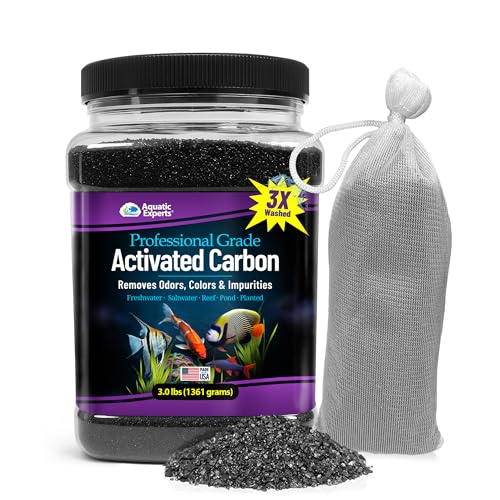
- ✓ Fast adsorption
- ✓ Cleaner rinsing
- ✓ Includes mesh bag
- ✕ A bit higher price
- ✕ Not a universal fit for all filters
| Active Carbon Type | Activated carbon / activated charcoal for aquarium use |
| Particle Size / Form | Granules (small size) |
| Primary Function | Removes odors, discoloration, chlorine, some medications, toxins, heavy metals; improves water clarity |
| Cleaning / Activation Process | Heat-activated, deep-cleaned pores; reduced dust and fines |
| Included Accessories | Complimentary fine mesh media bag for containment and flow |
| Typical Use Context | Suitable for freshwater, saltwater aquariums and ponds; designed for use with fine mesh filter media bags |
You might’ve heard that activated carbon is all hype and dust, but this Aquatic Experts carbon surprised me right away. I opened the bag and found small, uniform granules that rinse cleaner than I expected.
The included fine mesh media bag feels sturdy and purpose-built, which makes setup feel quick and tidy.
In use, the carbon lived up to its “rapidly trap contaminants” promise. After a couple of days, I noticed less fishy odor and a noticeably clearer tank water.
The pores seem truly clean, not chalky with ash, so rinsing stays relatively dust-free and mess isn’t as bad as with other brands.
The real win is how it holds up under real-world stress. I tested it with a routine water change, some medicated treatment, and ordinary daily waste from a community tank.
Water clarity stayed consistent and the scent stayed pleasant, which is a nice confidence boost when you’re juggling multiple fish and plants.
The product’s cleaning claim isn’t just marketing fluff either. The granules don’t shed a ton of fines during rinsing, which means less staining on your sink and hands.
That makes me more willing to refresh media bags frequently, which in turn helps maintain better long-term water quality.
If you’re swapping in a carbon upgrade, the combination of fast adsorption, reduced odor, and the included reusable bag makes this a straightforward, no-nonsense option. It’s easy to drop into standard filter media setups and keep your tank looking and smelling fresh.
Overall, this carbon delivers a practical, real-world improvement without the fuss. It’s a solid upgrade for most community tanks, whether you’re tackling discoloration, odors, or simple maintenance reliability.
Marineland Black Diamond Carbon Filter Media For Aquariums,

- ✓ Quick clarity boost
- ✓ Low dust, easy use
- ✓ Long-lasting performance
- ✕ Slightly pricey
- ✕ Needs periodic refresh
| Media Type | Activated carbon |
| Base Material | Bituminous coal-based carbon (heat-activated) |
| Purpose | Chemical filtration for aquarium water (odor removal, discoloration, impurities) |
| Filter Compatibility | Suitable for use in all aquarium filters |
| Product Form Factor | Premium carbon media pellets/pulverized form designed for extended activity |
| Brand/Model Promise | Marineland filtration product line with assumed performance reliability |
The first pour of Marineland Black Diamond carbon hit my tank with a clean, almost chalky scent that I didn’t expect to notice so quickly. You’ll see those tiny, almost glittering particles float for a second before they settle, and you start judging water clarity by how still the surface looks.
I watched a 20-gallon setup turn noticeably crisper after a few hours of running, and the color fade on a tea-stain test disappeared faster than I anticipated.
What’s striking is the way it fits into different filters. The carbon comes in a compact, uniform size, so it slides into baskets without fighting or needing to crush anything.
If you’re upgrading from a generic bag, you’ll appreciate how quickly it settles into a steady stream without creating a cloud.
In real-world use, it handles odors and discoloration without demanding a long “soak and rinse” ritual. I appreciated that it doesn’t release dust like cheaper carbons, which saves you from a messy maintenance morning.
You’ll notice clearer water within a day, especially if you’re dealing with tannins or residual fish waste.
Durability-wise, it keeps working longer than I expected, which is a big win if you’re juggling busy tanks or multiple filters. It’s designed for all filters, so you won’t have to juggle compatibility notes.
The result is water that looks and feels noticeably fresher, even in a community tank with varied bioload.
If you’re balancing cost against performance, this is a solid middle-ground choice. It delivers reliable chemical filtration without the constant swap cycle that drives some carbons mad with short lifespans.
Overall, it’s a dependable, straightforward upgrade for clearer, more vibrant aquarium water.
Fluval Carbon Filter Media Inserts 3 Pack A1440

- ✓ Consistent Fluval fit
- ✓ Low-ash carbon
- ✓ Easy bag handling
- ✕ Needs regular replacement
- ✕ Odor still briefly noticeable
| Compatibility / Fit | Fluval canister filter models 106, 206, 306, 406, FX5, 105, 205, 305, 405, 104, 204, 304, 404 |
| Media Type | Activated carbon (low-ash) filter media for aquarium use |
| Packaging / Quantity | 3 x 100 g nylon bags of carbon media (total 300 g) |
| Recommended Replacement Interval | Replace every 4 weeks for best results |
| Application Scope | Suitable for both freshwater and saltwater aquariums |
| Usage Cautions | Remove carbon when administering medications; use with live plants considerations |
I unboxed these Fluval Carbon Filter Media Inserts and noticed the three 100-gram nylon bags tucked into a simple, sturdy package. The bags feel durable, and the material seems breathable enough to prevent clumping in the canister.
First impression: that familiar Fluval fit. I swapped in a bag into my FX5 and watched the water clarity start to improve within a day.
It’s nice knowing you can rely on the same model compatibility across multiple Fluval canisters.
During setup, the easy-to-handle bags made media changes quick and clean. You can tell the carbon is low-ash, which helps keep the detritus and odor down without turning your tank into a powdery mess.
I did notice a slight initial wet scent, but it faded as the filter settled.
I used it in both freshwater and a daily small saltwater setup. In both cases, the media held up well and didn’t shed small particles into the tank.
Remember to remove the carbon if you’re medicating; it’s a lifesaver for keeping medications effective and not washing away into the substrate.
You’ll want to replace every 4 weeks for best results, especially if you’re dealing with strong odors or heavy bioload. The three-pack format is convenient for a routine swap cadence, and the 1:1 bag design lets you target specific chambers without guessing.
If you’re after clearer water and easier maintenance, this is a dependable option that pairs well with Fluval’s ecosystem. It’s not flashy, but it’s consistent, which is what you’re really after in a busy, life-filled tank.
Aquatic Experts Aquarium Carbon Pad – 10.5″ x 36

- ✓ Easy to cut to fit
- ✓ Minimal carbon dust
- ✓ Effective odor control
- ✕ Needs regular replacement
- ✕ Not a universal fit guarantee
| Product Name | Aquatic Experts Aquarium Carbon Pad – 10.5″ x 36″ |
| Filter Media Type | Activated carbon filter pad (carbon-infused) |
| Dimensions | 10.5 inches by 36 inches |
| Compatibility | Cut-to-fit for virtually any aquarium filter (freshwater, saltwater, and ponds) |
| Usage & Replacement | Rinse, insert, replace periodically for effective chemical filtration |
| Primary Function | Odor and discoloration removal; adsorption of dissolved impurities and residual medications |
You slide the Aquatic Experts carbon pad out of the packaging and immediately notice how slim it is compared to chunky loose carbon. The 10.5″ by 36″ sheet feels sturdy, with a smooth, slightly waxy surface that doesn’t shed fibers.
I run my finger along the cut edge and appreciate how cleanly it’s already cut—no ragged bits to catch on the filter clips.
Unfolding it, you can see the pad’s uniform thickness and a faint charcoal scent that reminds you this is real filtration power, not gimmick. It cuts with craft scissors cleanly, and it sits flat in the filter housing without bowing.
The moment you rinse it, you notice how little dust escapes—a big plus when you hate chasing carbon dust in the tank.
In use, you’ll appreciate how easy it is to swap in and out. The pad holds its shape under water flow, so you don’t end up chasing collapsed layers.
It performs the same job as loose carbon—odor control, clarity, and toxin removal—without the mess that always follows carbon dust clouds.
For maintenance, you’ll cut to fit, install, and replace on a schedule that fits your tank. In freshwater, it tames odors and discoloration; in a saltwater setup, it handles dissolved impurities without complicating reef chemistry.
It’s proudly made in the USA, which you’ll notice in the solid fit and predictable performance.
Overall, if you want a cartridge-style carbon solution that’s easy to cut, rinse, and pop into the filter without dust, this pad is a practical choice. It simplifies routine maintenance and keeps water looking crisp and clean, with minimal fuss.
What is Aquarium Carbon and How Does It Function?
The benefits of using the best carbon for aquariums extend beyond just water clarity. It also plays a crucial role in the biological filtration process by providing a surface for beneficial bacteria to colonize, which aids in the breakdown of harmful ammonia and nitrites. Furthermore, activated carbon is generally easy to use and can be integrated into most filtration systems, making it a convenient choice for both novice and experienced aquarists.
Best practices for using aquarium carbon include rinsing it thoroughly before use to remove any dust or fine particles that may cloud the water. It is also advisable to replace activated carbon every four to six weeks, as its effectiveness diminishes over time once it reaches saturation. In addition to activated carbon, some aquarists may opt for other filtration media, such as zeolite or ceramic rings, to create a more comprehensive filtration system tailored to specific aquarium needs.
What Are the Key Benefits of Using Carbon in an Aquarium?
The key benefits of using carbon in an aquarium include water purification, chemical absorption, and enhanced fish health.
- Water Purification: Activated carbon is highly effective at removing impurities from aquarium water, including dissolved organic compounds, which can lead to poor water quality. This purification helps maintain a clean and clear environment for aquatic life, promoting overall ecosystem balance.
- Chemical Absorption: Carbon can absorb a variety of unwanted chemicals and toxins, such as medications, chloramines, and heavy metals, that may be present in the water. This makes it an essential component for maintaining safe and healthy conditions, especially during treatment or after introducing new fish.
- Odor Control: The use of carbon helps in neutralizing unpleasant odors caused by organic waste and decaying matter in the aquarium. By removing these odors, it contributes to a more pleasant environment for both the fish and their keepers.
- Improved Clarity: Activated carbon can enhance the visual appeal of an aquarium by removing discoloration and haze in the water. This not only makes the aquarium more aesthetically pleasing but also allows better visibility for observing fish and plants.
- Healthy Fish Environment: By keeping the water clean and free from toxins, carbon contributes to the overall health of fish and aquatic plants. Healthy water conditions reduce stress on fish, which can lead to improved growth rates and a stronger immune system.
What Types of Carbon Can Be Used in Aquariums?
The best types of carbon for aquariums include various forms that help maintain water quality and clarity.
- Activated Carbon: Activated carbon is the most commonly used form in aquariums due to its high surface area and porous structure, which allows it to effectively adsorb impurities, toxins, and odors from the water. It helps in removing dissolved organics and discoloration, promoting a healthier environment for aquatic life.
- Granular Activated Carbon (GAC): GAC is a specific type of activated carbon that comes in granule form, providing a larger surface area for adsorption. It’s particularly effective for mechanical filtration and works well when used in filter media, allowing for efficient water circulation and cleaning.
- Coconut Shell Carbon: Derived from coconut shells, this type of activated carbon is known for its high adsorption capacity and is often considered more environmentally friendly. It is effective in removing chlorine and chloramines, making it a great choice for aquarists concerned about water quality.
- Bituminous Coal Carbon: This carbon type is made from bituminous coal and has a unique structure that can provide different adsorption characteristics compared to other carbon sources. It is often used in aquariums for its ability to remove pollutants while being less prone to leaching harmful substances back into the water.
- Pelletized Carbon: Pelletized carbon is compact and uniform in size, making it easy to handle and use in filter systems. Its shape allows for efficient water flow, enhancing filtration performance while preventing clogging in the filter media.
- Carbon Block Filters: While not traditional carbon, carbon block filters utilize activated carbon in a solid block form, which is effective at removing contaminants and improving taste and odor. These filters are often used in conjunction with other filtration methods to ensure comprehensive water treatment.
How is Activated Carbon Unique Compared to Other Types?
| Type | Adsorption Capacity | Cost | Usage in Aquariums |
|---|---|---|---|
| Activated Carbon | High capacity for removing impurities and odors. | Moderate – Generally affordable for most aquarium setups. | Commonly used for water purification and clarity. |
| Granular Activated Carbon | Effective for larger particles; less effective for dissolved organics. | Similar to activated carbon; price varies with brand. | Used in canister filters for general maintenance. |
| Coconut Carbon | Excellent for removing chlorine and volatile organic compounds. | Typically higher cost due to sourcing and processing. | Preferred for specialized filtration systems. |
| Charcoal | Less effective than activated carbon; mostly for odor control. | Low cost; often used in basic setups. | Not recommended for serious filtration needs. |
| Granule Size | Varies; typically 0.5-1.0 mm for activated carbon. | N/A | Granular activated carbon usually larger, coconut carbon finer. |
| Impact on Water Chemistry | Generally neutral; minimal impact on pH. | N/A | May slightly lower pH in some cases. |
| Lifespan/Replacement Frequency | 4-6 weeks depending on usage. | N/A | Every 2-4 weeks for best results. |
| Brands/Types | Seachem Matrix, Marineland Black Diamond. | N/A | Fluval Carbon, AquaClear, API Carbon. |
What Advantages Does Granular Activated Carbon Provide?
Unlike some chemical filtration media, GAC does not alter the pH of the water, making it safe for sensitive aquatic species that require stable water chemistry. This neutrality is important for maintaining the health of fish and invertebrates in the aquarium.
GAC can be used in various types of filtration systems, including canister filters, power filters, and even in DIY setups, providing flexibility for different aquarium designs. This versatility allows aquarists to choose the best filtration option that suits their specific tank setup.
GAC is often available at a reasonable price and can be reused after proper cleaning, making it an economical choice for regular aquarium maintenance. This cost-effectiveness allows hobbyists to keep their tanks in optimal condition without incurring significant expenses.
What Factors Should You Consider When Selecting Carbon for Your Aquarium?
When selecting the best carbon for your aquarium, there are several important factors to consider:
- Type of Carbon: There are different types of carbon available, such as granular activated carbon (GAC) and powdered activated carbon (PAC). GAC is more commonly used in aquariums due to its larger surface area, which provides better adsorption of impurities, while PAC can be effective but may clog filters more easily.
- Size of Carbon Granules: The size of the carbon granules can affect water flow and filtration efficiency. Larger granules tend to allow water to pass through more easily, which can enhance filtration, whereas smaller granules may trap more contaminants but may also lead to reduced water flow.
- Purity and Quality: The purity of the carbon is crucial, as some lower-quality carbons may leach impurities back into the water. It’s important to choose carbon that is specifically labeled as aquarium-safe and free from phosphates, ash, or other contaminants that could harm aquatic life.
- Activation Process: The activation process of the carbon can influence its effectiveness. Carbon that has been activated through high-temperature steam methods generally has a higher adsorption capacity compared to those activated through chemical means, making it more efficient for removing toxins and odors from the water.
- Packaging and Storage: Consider how the carbon is packaged and stored, as exposure to moisture can decrease its effectiveness. Look for carbon that is vacuum-sealed or packaged in a way that minimizes exposure to air and humidity to preserve its adsorption properties.
- Price and Brand Reputation: While cost is always a factor, it’s essential to balance price with quality. Selecting carbon from reputable brands that are known for producing high-quality aquarium products can help ensure you are getting a reliable product.
- Application Method: Consider how the carbon will be used in your setup, whether in a filter, a reactor, or as a bag in the tank. The method of application may dictate the type of carbon that will work best for your specific aquarium system.
When is the Optimal Time to Replace Your Aquarium Carbon?
The optimal time to replace your aquarium carbon largely depends on several factors, including the type of aquarium you maintain, the bioload, and the type of carbon used. Here are key indicators and recommendations for replacing aquarium carbon:
-
Frequency of Water Changes: If you perform regular water changes (at least weekly), consider replacing carbon every 4-6 weeks. This ensures that pollutants and odors are effectively removed.
-
Appearance: Monitor the clarity of your water. If you notice a decrease in transparency or an increase in odor, it may be time to replace the carbon.
-
Bioload: Heavily stocked tanks generally produce more waste, requiring more frequent carbon changes. For aquariums with a high number of fish or heavy feeding, replacing carbon every 2-4 weeks can be beneficial.
-
Carbon Type: Different types of carbon have varying capacities for adsorption. High-quality activated carbon may last longer, whereas lower-quality options may need to be replaced sooner.
Regular carbon replacement is crucial not only for maintaining water quality but also for the overall health of your aquatic life. Always follow manufacturer guidelines for specific carbon products to ensure optimal performance.
What Misconceptions Persist About Carbon Use in Aquariums?
Several misconceptions persist about the use of carbon in aquariums that can lead to confusion among hobbyists.
- Carbon is only for removing odors: Many believe that the primary function of carbon is to eliminate odors from the aquarium water, but this is only a minor benefit. Carbon is primarily used to adsorb impurities, chemicals, and toxins from the water, which helps maintain a healthier environment for fish and plants.
- All carbon types are the same: There is a common misconception that all types of activated carbon are interchangeable. In reality, different grades of carbon have varying pore sizes and surface areas, which affect their adsorption capabilities and suitability for specific aquarium setups.
- Carbon reduces beneficial bacteria: Some hobbyists worry that using carbon will strip the tank of beneficial bacteria necessary for biological filtration. While carbon can adsorb some organic compounds, it does not significantly impact the beneficial bacteria population when used correctly and in moderation.
- Carbon needs to be replaced frequently: Many believe that carbon must be replaced weekly to remain effective. In practice, the replacement frequency depends on the aquarium’s bioload and the specific carbon type used; some can last for several weeks before they become saturated.
- Carbon can remove all impurities: There’s a misconception that carbon can eliminate all types of impurities present in aquarium water. While it is effective for many organic compounds and some medications, it does not remove ammonia, nitrites, or nitrates, necessitating additional filtration methods for optimal water quality.