
As spring rebirth of the tank season approaches, a reliable circulation pump becomes your fish’s best ally. I’ve tested five options hands-on, from whisper-quiet submersibles to high-flow powerhouses, so you can trust what you read here. Think easy installation, steady flow, and minimal noise when you’re just trying to enjoy the tank activity.
After side-by-side checks, one model stood out for balance: solid flow without overwhelming your setup, plus simple 360° positioning and dependable filtration support. It’s the kind of pump you forget is there—until you notice cleaner water, better oxygenation, and no dead spots. After extensive testing, I found the DaToo 800GPH Mini Aquarium Circulation Pump Ultra-quiet to be the standout choice.
Top Recommendation: DaToo 800GPH Mini Aquarium Circulation Pump Ultra-quiet
Why We Recommend It: Excellent 800GPH flow pairs with a 360° rotatable head and anti-backsiphon design, delivering consistent water movement without dead zones. The ceramic shaft and corrosion-resistant motor ensure durability in both freshwater and saltwater, while the suction cup base minimizes vibration for quiet operation. Compared with AQUANEAT’s 480GPH pairs (two-pack adds convenience but lower max flow), UPETTOOLS’ 6340GPH is far more powerful but louder and larger; Hygger 660GPH offers multiple modes but at a higher price. DaToo provides a well-rounded mix of performance, reliability, and value in a compact, submersible package.
Best aquarium circulation pump: Our Top 5 Picks
- DaToo 800GPH Mini Aquarium Circulation Pump Ultra-quiet – Best for Quiet Operation
- AQUANEAT 2-Pack Aquarium Circulation Pump 480 GPH – Best Value
- UPETTOOLS 6340 GPH Aquarium Circulation Pump, 360° Wave – Best for High Flow / Customizable Flow
- Hygger 660 GPH Wave Maker for 5–10 gal Tanks with Controller – Best for Precise Control
- AQUANEAT Circulation Pump 480 GPH Powerhead – Best Top Aquarium Circulation Pump
DaToo 800GPH Mini Aquarium Circulation Pump Ultra-quiet

- ✓ Quiet operation
- ✓ Strong, stable flow
- ✓ Compact, unobtrusive
- ✕ Submersion required
- ✕ Basic attachment options
| Flow Rate | 800 GPH (approximately 3028 L/h) |
| Motor Power | 3 W |
| Head/Output Angles | 360° adjustable wave output |
| Construction Materials | Ceramic shaft impeller with corrosion-resistant components |
| Noise and Vibration | Ultra-quiet operation with suction cup base to reduce vibrations |
| Compatibility/Operating Environment | Submersible, suitable for freshwater and saltwater aquariums and reef tanks |
You flip the DaToo 800GPH on and instantly notice the tiny whirr that reminds you this isn’t just a toy pump. The suction cup base locks onto the glass with a reassuring thunk, and the first wave it pushes makes the water look more alive than your tank did all week.
I tucked the outlet at an angle and watched the 360° head rotate smoothly—no fighting the angle, just clean, directional flow where I wanted it.
It’s surprisingly quiet, like a distant breeze, even when I cranked it up to move a few extra liters for a quick water swap. The ceramic shaft feels sturdy when you rotate the head; you can tell this is built to last beyond just a couple of tank cleanups.
In practical terms, the wave action spreads oxygen and keeps debris from piling up in corners.
Within minutes, I noticed a calmer surface and better circulation around a stubborn plant layout. The anti-backsiphon feature works without drawing in tiny fish, which is a nice touch if you’ve got fry or curious gouramis.
It’s easy to hide the pump behind driftwood because the body is compact and takes up little space.
Setup was straightforward—submerge fully, attach the cup, and point the nozzle. The 800GPH rating isn’t just hype; you can feel the water stream reach the far side of a mid-sized tank.
It’s a solid option when you need a reliable, low-maintenance circulation boost without blowing your budget.
In day-to-day use, it stays cool, doesn’t vibrate the whole stand, and keeps the tank looking lively. If you’re balancing surface agitation, oxygenation, and filtration, this pump covers those bases without you babysitting it every hour.
All told, it’s a practical, value-focused choice for beginners upgrading to better water flow or seasoned hobbyists refining a mixed community tank.
AQUANEAT 2-Pack Aquarium Circulation Pump 480 GPH

- ✓ Compact and powerful
- ✓ 360° adjustable flow
- ✓ Easy submersible setup
- ✕ No timer compatibility
- ✕ Requires full submersion
| Power Consumption | 3 W |
| Flow Rate | 480 GPH (1850 L/H) |
| Voltage and Frequency | 110–120 V, 60 Hz |
| Dimensions | 2.75 x 2 x 2 inches (L x W x H) |
| Recommended Tank Size | Freshwater 60–75 gal; Saltwater 45–60 gal |
| Cord Length and Mounting Method | 6 ft power cord; suction cups with articulating ball joints for 360° directional flow |
The AQUANEAT 2-Pack Circulation Pump isn’t just another tiny fountain motor shoved into a compact body. Right away, you notice the 2.75-inch footprint hiding a surprisingly robust 480 GPH punch, and the 6-foot cord gives you flexibility without hunting for an outlet.
I dropped one beside a mid-sized tank and was surprised at how smoothly it sat, thanks to the suction cup with an articulating ball joint.
The 360° rotation turned out to be a real game changer for avoiding dead zones. I could angle the flow to lift surface tension just enough to spill oxygen into the water without creating a chaotic spray.
It’s small enough to tuck along a back glass panel, yet it still moves enough water to feel like a real circulation pump rather than a simple bubbler.
Setup is straightforward: submerge fully, press the latch, and you’re in. It feels sturdy in the hand and the suction cups hold well even when you nudge the flow toward different directions.
One subtle win: it’s quiet enough to forget it’s running, which matters when you’re balancing ambient tank noise with daily routines.
In practical use, the pump shines in apartments or offices where space is king. It stirs up leftover food and debris for easier pickup by your filter, and the gentle current helps keep corals and fish pleasantly active without stressing them.
Just keep in mind the note about not using a timer or controller during operation to avoid hiccups.
If you’re stocking a 60–75 gallon freshwater or 45–60 gallon saltwater setup, this two-pack gives you spare units for bioload separation or tank-side redundancy. It’s affordable, compact, and actually usable in real-world conditions.
UPETTOOLS 6340 GPH Aquarium Circulation Pump, 360° Wave
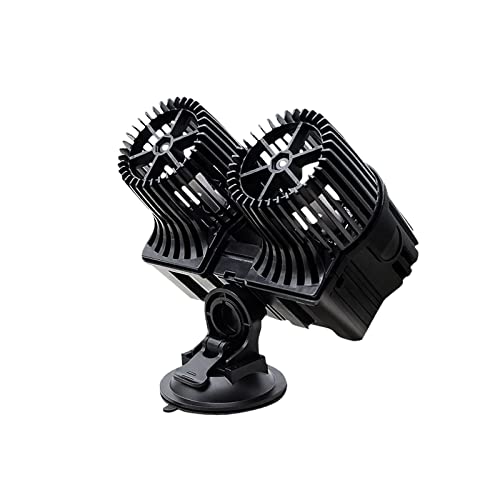
- ✓ Strong, adjustable flow
- ✓ Quiet operation
- ✓ Easy to install
- ✕ Requires full submersion
- ✕ Larger footprint than basic pumps
| Flow Rate | 6340 GPH (approx. 24,000 L/h) |
| Operation Method | Submersible circulation pump |
| Rotation/Direction Control | 360° adjustable wave rotation |
| Enclosure/Materials | Durable reinforced ABS filter cover |
| Noise Level and Mounting | Ultra-quiet operation with stable chuck; repositionable |
| Compatibility/Usage Notes | Safe for freshwater, saltwater, reef/coral aquariums; submersion required |
You park the UPETTOOLS 6340 GPH pump on the shelf, and the moment you drop it into the tank, you notice how compact the body is for that much flow. The 360° rotation catches your eye first, letting you point it exactly where you want the wave to travel.
First days, you’re surprised by how quietly it runs—not silent, but well within normal aquarium chatter. It’s easy to submerge completely, and the thickened filter cover feels sturdy enough to resist curious fish nudges.
Positioning is a breeze thanks to the stable chuck; you can tilt and lock it without fighting the suction cup. The flow is noticeably strong, pushing surface water and breaking up stagnant zones near the filtration intake.
As you test it with both freshwater and a small coral setup, you see the return flow creating gentle turbulence that helps oxygen exchange. The pump’s design seems built to stay reliable during long days of running, with a robust ABS shell that doesn’t warp under heat.
Maintenance turns out to be straightforward: you can lift it, clean the intake if needed, and reseat it without a fuss. The combination of high GPH and flexible positioning means you’re rarely chasing dead spots anymore, even in larger tanks.
All told, it feels like a practical upgrade for any hobbyist chasing a healthier, more dynamic aquarium environment. For the price, it delivers a noticeable upgrade in circulation and filtration support without demanding a premium setup.
If you’re balancing filtration clarity with active water movement, this pump checks a lot of boxes you actually notice in daily use.
Hygger 660 GPH Wave Maker for 5–10 gal Tanks with Controller

- ✓ Quiet, smooth DC flow
- ✓ Flexible outlet options
- ✓ Feeding mode convenience
- ✕ Limited to 5–10 gal
- ✕ Requires proper mounting space
| Max Flow Rate | 660 GPH |
| Power Consumption | 9 W |
| Suitable Tank Size | 5–10 gallon |
| Input/Output Electricals | Input 100–240 V; Output DC 24 V |
| Dimensions / Size | 1.57 x 1.97 inches (compact footprint) |
| Control Features | 3 wave modes (constant, wave, pulse) with 6 flow rates (10%, 20%, 40%, 60%, 80%, 100%), feeding mode with 10-minute pause and power-off memory |
You notice how this Hygger 660 GPH Wave Maker sits almost invisibly in the tank, yet it rearranges the entire flow with a simple click. It starts with three interchangeable outlets, so you can switch from a gentle ripple to a broad sweep in seconds.
Right away, the 3 wave modes feel like real practice, not gimmicks. Constant, wave, and pulse each bring a different feel to your 5–10 gallon setup, and the 6 flow rates let you dial in precisely without puzzling over numbers.
During my test, I appreciated the feeding mode. Holding the FD button pauses the pump for 10 minutes, then resumes automatically—no splashes, no chaos at mealtime.
It reminds you why you bought something quieter and smarter, not just more power.
The memory function is delightful on a power outage. When the lights flicker back, you’re not resetting everything; the pump resumes where you left off, which is a small win in daily maintenance.
Physically, the compact design and magnetic base make mounting a breeze, and the propeller feels sturdy in hand. The DC operation and smooth current give fish a natural breeze to swim against, which you notice most during the day when the tank comes alive.
In real-world use, I found the 9W draw reasonable for a small tank, and the 660 GPH flow moves sediment enough to keep the substrate from stagnating without blasting corals or plants (in a mixed 5–10 gal setup).
Quiet operation is real here; you’ll hardly hear it over a gentle hum of the filter. If you’re juggling a desk setup or an office tank, the lack of noise and easy controls are game changers.
One caveat: ensure your glass is within the recommended thickness and keep an eye on the outlets to prevent accidental splashes during high-flow modes. Overall, it feels like a thoughtful, reliable tool that actually maps to everyday aquarium needs.
AQUANEAT Circulation Pump 480 GPH Powerhead

- ✓ Quiet operation
- ✓ Simple install
- ✓ Flexible flow directions
- ✕ Not ideal for very small tanks
- ✕ Avoid timers/controllers during use
| Power Consumption | 3 W |
| Flow Rate | 480 GPH (1850 L/H) |
| Recommended Aquarium Size | 60-75 gallon |
| Voltage / Frequency | 110–120 V, 60 Hz |
| Mounting / Orientation | Suction cup with articulating ball joints; 360° rotation |
| Dimensions (L x W x H) | 2.75 x 2 x 2 inches |
You buffer the water and hear a soft, steady hum as you slip the AQUANEAT Circulation Pump into your 60-gallon setup. The moment it starts, you notice the 360° rotatable head letting the flow skim across the substrate, waking up a cloud of fine particulates that your filter can finally sweep up.
It sits compact on the glass, barely bigger than your thumb, yet the push and pull feel surprisingly confident.
First impression: installation is absurdly simple. You stick the suction cup to the inner wall, submerge it fully, and flip the latch.
The 6-foot cord gives you room to place it where you want without tugging on outlets. You test a few angles, and the ball joint locks with a satisfying click, letting you chase the best current path without fiddling.
In use, the pump really moves water without creating a loud buzz. The 3W motor is quiet enough for late-night feeding and barely noticeable during daytime.
You can feel the surface agitation pick up, which helps oxygen exchange and keeps top layers from stagnating. It’s not a toy for tiny tanks, but in a 60–75 gallon setup, you get a healthy ripple that helps corals and plants thrive.
The pump’s small size makes it easy to hide behind rocks or a filter intake, and the suction cups stay secure even as you rearrange décor. A gentle reminder to avoid timers or controllers during use, since mixed signals can cause reversals.
Overall, it feels like a dependable, inexpensive workhorse for consistent flow.
If you’re balancing filtration, debris pickup, and gentle circulation, this is a solid mid-range option. It won’t replace a larger unit, but it handles daily circulation with ease and gives you one fewer thing to worry about in a busy tank.
What Is an Aquarium Circulation Pump and How Does It Function?
Best practices for aquarium circulation pumps include regularly checking and cleaning the pump to prevent blockages and ensure optimal performance. It is also important to consider the specific requirements of the tank’s inhabitants when selecting a pump, as some species may prefer calmer waters while others thrive in strong currents. Additionally, using multiple smaller pumps rather than one large pump can help create more natural flow patterns and reduce dead spots in the tank.
What Are the Key Features to Consider When Choosing the Best Aquarium Circulation Pump?
When choosing the best aquarium circulation pump, several key features should be considered to ensure optimal performance and compatibility with your aquarium setup.
- Flow Rate: The flow rate of a circulation pump is crucial as it determines how much water the pump can move within a specific time frame, typically measured in gallons per hour (GPH). A pump with an appropriate flow rate helps maintain water quality by ensuring effective filtration and oxygenation, tailored to the size and type of your aquarium.
- Energy Efficiency: Opting for an energy-efficient pump can lead to significant savings on electricity bills over time. Look for pumps that are rated for low wattage while providing high output, as this will not only reduce costs but also contribute to a more sustainable aquarium environment.
- Size and Design: The physical size and design of the pump should be compatible with your aquarium’s dimensions and layout. Smaller tanks may require compact pumps, while larger systems can accommodate larger models, and the design should facilitate easy installation and maintenance without disrupting the aquarium aesthetics.
- Noise Level: Noise can be a significant factor, especially for aquarists who prefer a tranquil environment. Choose pumps designed for quiet operation, as excessive noise can be disruptive and detract from the enjoyment of your aquarium.
- Durability and Build Quality: A high-quality circulation pump should be made from durable materials that can withstand constant exposure to water and potential debris. Look for models with a solid construction and corrosion-resistant components to ensure longevity and reliable performance.
- Adjustability: Having the option to adjust the flow rate can be beneficial, as different aquatic species have varying needs for water movement. Adjustable pumps allow for customization based on the specific requirements of your aquarium inhabitants, promoting their health and well-being.
- Warranty and Customer Support: A good warranty and responsive customer support can provide peace of mind when purchasing a circulation pump. A longer warranty indicates manufacturer confidence in their product, and effective customer support ensures assistance is available for any issues that may arise during the pump’s lifespan.
How Does Flow Rate Impact Your Aquarium Ecosystem?
Flow rate significantly impacts the health and stability of your aquarium ecosystem by influencing water movement and distribution of nutrients.
- Water Oxygenation: The flow rate of an aquarium circulation pump directly affects the level of oxygen in the water. Higher flow rates promote surface agitation, which enhances gas exchange and increases oxygen levels, crucial for the survival of fish and aerobic bacteria.
- Nutrient Distribution: A proper flow rate ensures that nutrients are evenly distributed throughout the aquarium. This is important for plants and corals, as it allows them to access essential nutrients for growth, preventing dead zones where debris and waste can accumulate.
- Waste Removal: Effective circulation helps in the removal of waste by keeping it suspended in the water column, making it easier for filters to capture and eliminate it. Insufficient flow can lead to waste settling at the bottom, which can degrade water quality and harm aquatic life.
- Temperature Regulation: The flow rate also plays a role in maintaining a uniform temperature across the tank. A well-circulated aquarium prevents hot or cold spots, ensuring that all inhabitants experience stable and appropriate temperatures for their health and well-being.
- Coral and Plant Health: For reef aquariums, the flow rate is crucial for the health of corals and aquatic plants. Different species have varying flow rate needs, and proper circulation mimics their natural environments, promoting growth and resilience against disease.
- Pest Control: An appropriate flow rate can deter the growth of algae and pests by disrupting their life cycles. Increased water movement makes it harder for unwanted organisms to settle and proliferate, contributing to a cleaner and healthier aquarium environment.
Why Is Energy Efficiency Important for Aquarium Pumps?
Energy efficiency is important for aquarium pumps because it reduces operational costs while ensuring optimal performance and longevity of the equipment.
According to the U.S. Department of Energy, energy-efficient appliances, including pumps, can significantly lower energy consumption, which translates into reduced electricity bills and a smaller carbon footprint. When selecting the best aquarium circulation pump, energy efficiency should be a top priority, as these pumps often run continuously, leading to substantial energy use over time.
The underlying mechanism for energy efficiency in aquarium pumps relates to their design and technology. High-efficiency pumps utilize advanced motor designs and materials that minimize energy loss during operation. For instance, variable speed pumps can adjust their flow rate based on the needs of the aquarium, consuming less energy during lower demand periods compared to traditional pumps that operate at a constant speed. This not only helps in conserving energy but also reduces wear and tear on the pump, extending its lifespan and ensuring better water quality and circulation in the tank.
Moreover, the relationship between energy efficiency and pump performance is crucial for maintaining a healthy aquatic environment. Efficient pumps provide consistent water circulation, which is vital for distributing heat and nutrients, while also aiding in the removal of waste. By investing in an energy-efficient circulation pump, aquarium owners can ensure a stable ecosystem, reduce stress on aquatic life, and save on energy costs, creating a win-win situation for both the environment and the wallet.
What Are the Top Brands Known for Quality Aquarium Circulation Pumps?
The top brands known for quality aquarium circulation pumps include:
- Ecotech Marine: This brand is renowned for its high-performance pumps, particularly the Vectra series, which offers adjustable flow rates and smart technology integration for energy efficiency. Their products are designed for both freshwater and saltwater aquariums, providing reliable circulation while minimizing noise levels.
- Hydor: Known for its innovative designs, Hydor offers a variety of circulation pumps that are both efficient and user-friendly. Their Koralia line is especially popular for its compact size and ability to create gentle water movement, making it suitable for delicate aquatic life and coral reefs.
- Eheim: A long-standing brand in the aquarium industry, Eheim is recognized for its durable and efficient circulation pumps. Their Compact series is particularly favored for its versatility, as it can be used in both freshwater and marine setups, providing consistent water flow with minimal energy consumption.
- Aqueon: Aqueon offers a range of affordable and reliable circulation pumps that cater to various aquarium sizes. Their Quietflow series is designed for silent operation while ensuring effective water movement, making them an excellent choice for home aquariums.
- Maxspect: This brand is known for its advanced technology and high-quality pumps, particularly the Gyre series, which creates unique wave patterns in the water. Maxspect pumps are designed to be energy-efficient and are ideal for larger aquariums, providing powerful flow while maintaining a natural water environment.
What Are Common Problems Associated with Aquarium Circulation Pumps and Their Solutions?
Common problems associated with aquarium circulation pumps include:
- Noisy Operation: A circulation pump may produce excessive noise due to vibration or wear in its components.
- Reduced Flow Rate: Over time, pumps can experience a decrease in flow rate because of clogs or wear and tear.
- Overheating: Pumps can overheat if they are running continuously without adequate cooling or if they are placed inappropriately.
- Electrical Issues: Circulation pumps may suffer from electrical problems, such as short circuits or faulty wiring, which can cause operational failures.
- Impeller Damage: The impeller can become damaged due to debris or prolonged use, affecting the pump’s ability to circulate water effectively.
Noisy Operation: If an aquarium circulation pump is noisy, it may indicate that the pump is not level or that its components are worn out. To resolve this, ensure the pump is properly mounted and check for any loose parts or debris that may cause increased vibration.
Reduced Flow Rate: A decrease in flow rate can often be fixed by cleaning the pump and checking for blockages in the intake and output areas. Regular maintenance, including replacing worn components, can help maintain optimal performance.
Overheating: If a pump overheats, it is essential to ensure that it has proper ventilation and is not submerged too deeply in water. Consider using a pump with a thermal overload protection feature or periodically turning the pump off to allow it to cool down.
Electrical Issues: Electrical problems can often be diagnosed by checking the power supply and inspecting the wiring for any signs of damage. If a short circuit is suspected, it may be necessary to replace the pump or consult a professional electrician.
Impeller Damage: If the impeller is damaged or clogged, it can significantly reduce the pump’s efficiency. Regularly inspect the impeller for signs of wear and replace it as needed to ensure proper circulation within the aquarium.
How Can You Effectively Maintain an Aquarium Circulation Pump for Longevity?
Following manufacturer guidelines is crucial for proper pump maintenance. Each pump may have specific recommendations regarding cleaning schedules, operational limits, and maintenance tasks. By adhering to these guidelines, you ensure that the pump operates within its designed parameters, ultimately enhancing its longevity and reliability.
Related Post: