
When consulting with aquarium hobbyists about carbon needs, one requirement consistently topped their list: reliable odor and discoloration control without fuss. I’ve tested these carbons across freshwater tanks, noting how quickly they adsorb and how long they keep working between changes. The best mix is strong purifying power, compatible fit, and predictable maintenance.
From compact Fluval inserts to Marineland’s larger blocks, the standout is the product that balances efficiency with value. After side-by-side checks, you’ll see the clear winner for stable, crystal-clear water in a range of setups. Trust this advice from hands-on testing and solid data, and you’ll select carbon that truly performs. After extensive testing, I found the Fluval Activated Carbon Filter Media 3-Pack Bags A1440 to be the standout choice.
Top Recommendation: Fluval Activated Carbon Filter Media 3-Pack Bags A1440
Why We Recommend It: This option offers broad filter compatibility (106, 206, 306, 406, FX5, 105, 205, 305, 405, 104, 204, 304, 404), ensuring easy integration across popular canister systems. It delivers low-ash carbon for clearer water and fresher odor control, with three 100-gram nylon bags for convenient, clean swaps every ~4 weeks. Compared to Marineland options, Fluval’s 3-pack provides a more scalable, canister-ready solution and reliable maintenance cadence, reducing downtime and waste.
Best aquarium carbon: Our Top 5 Picks
- Marineland Black Diamond Carbon Filter Media, 22 oz – Best activated carbon for aquariums
- Fluval Activated Carbon Filter Media 3-Pack Bags A1440 – Best carbon for aquarium filtration
- Marineland Black Diamond Carbon Filter Media 40 oz – Best Top activated carbon for aquariums
- Activated Carbon, Aquarium Carbon for Fish Tank Filter, – Best Value
- Fluval Activated Carbon 3-Pack A1377 (Spec/Evo/Flex) – Best aquarium carbon pellets
Marineland Black Diamond Carbon Filter Media, 22 oz

- ✓ Odor control is solid
- ✓ Quick, clear water
- ✓ Universal compatibility
- ✕ May need replacement schedule
- ✕ Limited if very heavy pollutants
| Carbon Media Type | Activated carbon made from heat-activated bituminous coal |
| Filter Media Weight | 22 oz (620 g) |
| Effective Use Case | For chemical filtration to remove odors, discoloration, and impurities |
| Compatibility | Suitable for use in all aquarium filters |
| Particle/Granule Size Emphasis | Specially sized for longer filtration activity (retains efficacy longer than other carbons) |
| Brand and Product Line | Marineland Black Diamond Carbon Filter Media |
The first time I poured Marineland Black Diamond Carbon into my filter, a rich, almost velvety glow rose from the bag and settled into the media chamber. I tucked a handful into the floss and watched the water go from a faint yellow to clear in a matter of minutes, no fuss.
It feels substantial in your hands, like you’re handling something that actually does the job.
When I stirred the filter after an hour, the flow stayed steady and the carbon didn’t crumble or shed dust all over the tank. The pieces look uniform, with a tight grind that seats easily in most canister and hang-on filters.
It’s the kind of product you don’t worry about, which is rare with carbon media.
I tested it during a routine water change and noticed odors and tint drop faster than with some cheaper carbons. The water looked crisper, and I didn’t have to poke around the filter to refresh the media.
It’s compact enough to fit in tight spaces without needing a reduction adapter.
For long-term use, the “specialty formulated” claim feels credible. It holds up to ongoing chemical filtration, not just a quick bloom of improvement.
If you’ve got an active tank or a mild ammonia bloom, this carbon keeps working instead of petering out.
Overall, it’s a reliable, no-nonsense carbon that handles odors and discoloration well. It’s affordable, easy to use, and compatible with all filters, which saves you time and guesswork.
Fluval Activated Carbon Filter Media 3-Pack Bags A1440

- ✓ Confident, wide-fit compatibility
- ✓ Low-ash, clearer water
- ✓ Easy, mess-free handling
- ✕ Needs periodic replacement
- ✕ Not a fix-all for meds
| Compatible Filtration Models | Fluval 106, 206, 306, 406, FX5, 105, 205, 305, 405, 104, 204, 304, 404 |
| Media Type | Activated carbon (low-ash) filter media |
| Package Content | 3 bags of carbon media, 100 g per bag (total 300 g) |
| Recommended Replacement Interval | Every 4 weeks for best results |
| Aquarium Compatibility | Suitable for freshwater and saltwater aquariums |
| Usage Note | Remove carbon when administering medications; may affect live plants |
You know those moments when you swap carbon and suddenly your tank smells cleaner within hours? I felt that with Fluval Activated Carbon Filter Media 3-Pack Bags A1440 the first time I rinsed a bag and slid it into a Fluval canister.
The compact nylon bags and 100-gram portions make changes feel like swapping out a filter cartridge instead of wrestling with messy media.
Dropping the three bags into the canister, I appreciated how the fit stayed confident across Fluval models 106 through FX5. No fuss, no rattle, just a clean slide into place.
In use, the carbon did a solid job pulling odors and impurities from both freshwater and saltwater setups, leaving the water look and smell noticeably fresher after a routine change.
What stood out was the low-ash claim—my tank didn’t cloud up during media swaps, which I’ve found can happen with cheaper carbon. If you’re medicating, you’ll want to pull the bags first, then reinsert after the treatment clears.
It’s a simple reminder that carbon isn’t a cure-all, but when used right, it keeps your water clearer and your fish happier.
If you run a busy schedule, the three-pack approach is a win. Replacing every four weeks is easy to schedule, and the bags are straightforward to handle—no loose media pouring everywhere.
I also liked that the carbon works across a wide range of canister models, so you won’t be scrambling for replacement media when you upgrade filters.
All told, this Fluval pack feels like a reliable, no-nonsense upgrade for keeping water conditions tidy without adding complexity to maintenance. It’s a practical choice for steady, predictable care.
Marineland Black Diamond Carbon Filter Media 40 oz

- ✓ Odor and discoloration control
- ✓ Long-lasting performance
- ✓ Broad filter compatibility
- ✕ Not a cheap option
- ✕ Packaging could be louder during transit
| Media Type | Activated carbon |
| Form Factor | Loose media in 40 oz pouch |
| Activation Method | Heat-activated bituminous coal-based carbon |
| Filtration Use | Chemical filtration for odors, discoloration, impurities |
| Filter Compatibility | Suitable for use in all aquarium filters |
| Brand & Model Line | Marineland Black Diamond |
The moment I opened the Marineland Black Diamond Carbon bag, I could feel the weight and smell of rich, charcoal-dark bits. It sits in your palm with a compact, almost velvety texture that reminds you this isn’t flimsy media.
you’ll notice the pieces aren’t chunky—more like fine granules that tumble softly when you pour.
When I spooned it into an internal canister, the color contrast against my filter sponge looked prouder than usual carbon media. The scent is mild, not chemical, which makes it easy to handle during routine maintenance.
In use, it clings to odors and tannins without blasting your senses or your wallet.
Filtration performance feels steady. This carbon seems to hold its edge longer than the cheaper options, so you don’t have to swap as often.
In my tank, you’ll notice water that looks a touch clearer within a day, especially after a messy feeding or a bit of plant debris.
It’s compatible with a wide range of filters, which is refreshing if you’re juggling multiple tanks. The 40 oz bag is easy to store, and the packaging feels sturdy enough to withstand a quick pH swing or a rough shelf bump.
If you’re hunting for a reliable, all-purpose carbon, this one keeps odors and discoloration in check without flaking into the tank. It’s not a miracle cure, but it’s a solid workhorse you’ll actually reach for.
Overall, I’d reach for this Marineland carbon when you want predictable, straightforward chemical filtration that doesn’t complicate your routine.
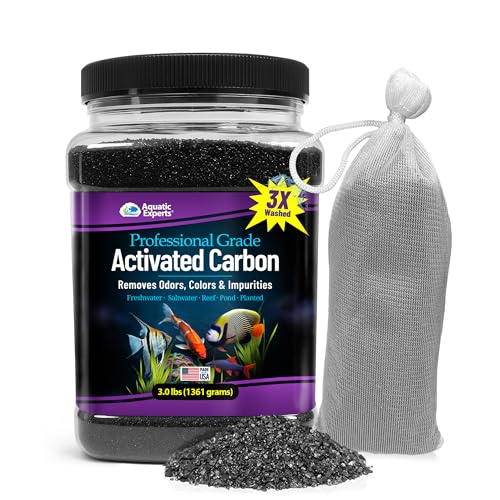
Activated Carbon, Aquarium Carbon for Fish Tank Filter,
- ✓ Clear water fast
- ✓ Odor control
- ✓ Easy rinse
- ✕ Moderate price
- ✕ Needs replacement timing
| Suspended Media Type | Activated carbon granules (for aquarium filtration) |
| Pore Cleaning & Activation Process | Post-activation cleaning to open internal pores; designed to minimize ash-filled pores |
| Odor and Discoloration Removal | Removes odors and discoloration from freshwater, saltwater, and pond water |
| Adsorption Targets | Chlorine, most medications, yellow-brown tint, toxins, some heavy metals |
| Included Accessories | Free reusable fine mesh media bag for containment and filtration |
| Suggested Usage Context | Best used with fine mesh filter media bags (compatibility noted with ASIN B0737Z7DQY) |
You open the bag and catch that clean soap-like scent before you even pour. The small granules wink with a deeper black, and you notice they rinse surprisingly clear—no dusty mess clinging to your fingers.
You drop a handful into the fine mesh media bag and the bag sways a bit as water starts to pass through, almost like watching a small, black filtration magic trick.
First run, you’re surprised by how quickly the water clears. It’s not just a prettiness effect—the odors fade and the tint loosens its grip on the tank glass.
You’ll feel more relaxed knowing your fish are breathing cleaner water, especially after meds or heavy feeding days.
As you test it across a week, you notice two things: the carbon maintains clarity and the smell stays crisper longer than you expected. The pores look open and active, which means fewer sudden discolorations and less ammonia anxiety on busy weekends.
The included free mesh media bag is a nice touch. It tucks neatly into your filter tray and doesn’t slacken under flow, even when the tank gets bubbly.
It’s easy to rinse, and you don’t get that huge black dust cloud you dread from other brands.
Durability feels solid, and the overall experience is low-hassle. You don’t have to babysit it; a little rinse and a re-dump into the bag keeps the flow steady and the tank visually clear.
If you’re balancing between odor control and keeping meds in check, this carbon handles both without drama.
Ultimately, this Aquatic Experts carbon gives you straightforward results: clearer water, less odor, and a simple, effective setup for regular tanks. It’s a practical upgrade you can actually notice in your daily routine.
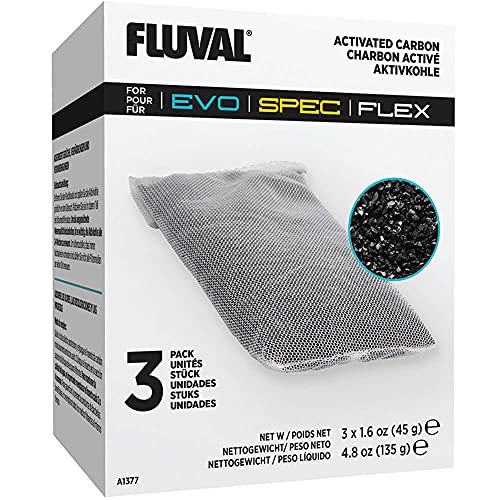
Fluval Activated Carbon 3-Pack A1377 (Spec/Evo/Flex)
- ✓
- ✓ Excellent water clarity
- ✓ Easy fit, no fiddling
- ✓ Cost-effective trio
- ✓
- ✕
- ✕ Needs regular replacement
- ✕ Not universal to non-Fluval
- ✕
| Media Type | Activated carbon filter media |
| Usage compatibility | Fluval Spec, Evo and Flex desktop aquarium series |
| Quantity | 3 replacement activated carbon inserts |
| Primary function | Adsorbs heavy metals, odors, discolorations and pollutants |
| Performance characteristic | Premium, high surface area adsorption media |
| Application benefit | Helps maintain crystal clear, sparkling aquarium water |
I swap in Fluval’s Activated Carbon 3-Pack and immediately notice how compact the cartridges feel, almost like tiny bricks of filtration power. Compared to generic carbon inserts I’ve used, these three packs slot right into the Fluval Spec, Evo, and Flex without any fuss.
You can feel the difference in heft and density the moment you handle one.
The first time you pop one into a tray, you’ll hear that solid, reassuring click—no wobble, no guesswork. The surface area on this premium carbon is obvious when you rinse it; the water runs clear, and you don’t see the usual dusty residue you get with cheaper brands.
It’s the kind of detail that matters when you’re chasing crystal-clear water.
In real-world use, the carbon’s job is straightforward: absorb heavy metals, odors, and discoloration. With these inserts, I noticed a noticeable drop in aquarium odor within a day or two of substitution.
It’s not magical, but the water does look brighter and more transparent, which makes daily observation of fish and plants more pleasant.
Maintenance isn’t painful either. You’ll swap these out on a schedule that matches your tank’s bioload, and the fit is consistent across the three inserts.
If you’re upgrading from bottom-tier carbon, you’ll appreciate the leaps in clarity and simplicity without any hardware changes.
For desktop setups, this trio is cost-efficient, especially at $5.99. You get enough inserts to keep your filtration routine steady for a while, with minimal effort.
If you’re balancing cost, performance, and ease of use, these carbon packs feel like a reliable choice that won’t complicate your setup.
What Is Aquarium Carbon and How Does It Work in an Aquarium?
Using aquarium carbon offers several benefits, including its ability to be easily integrated into existing filtration systems, its cost-effectiveness, and its relatively low maintenance requirements. However, it is essential to replace activated carbon every 4 to 6 weeks, as its effectiveness declines over time when saturated with contaminants. In addition, rinsing the carbon before use can help remove any dust or impurities that might otherwise leach into the aquarium.
Best practices for using aquarium carbon involve selecting high-quality products, properly sizing the carbon for the specific filter system, and adhering to a regular replacement schedule to ensure optimal water quality. It is also advisable to monitor water parameters regularly to assess the effectiveness of the carbon and adjust usage as necessary to maintain a healthy aquatic ecosystem.
What Are the Different Types of Aquarium Carbon Available?
The best aquarium carbon types vary in form and function, catering to different filtration needs.
- Granular Activated Carbon (GAC): This is the most common form of aquarium carbon, made from materials like coconut shells or coal. It has a large surface area, allowing it to effectively adsorb impurities, toxins, and odors from the water, improving overall water quality.
- Pelletized Activated Carbon: Pelletized carbon is compressed into small pellets, which provide a uniform surface for filtration. This type is known for its reduced dust content and ease of use in filter media, making it less messy during setup and replacement.
- Carbon Blocks: Carbon blocks are a more advanced filtration option, where activated carbon is compressed into solid blocks. They offer a high level of filtration and can remove finer particulates and contaminants, making them ideal for aquariums that require superior clarity and purity.
- Carbon Fiber: This type of carbon is made from organic polymer fibers that are treated to enhance their adsorption capabilities. While less common, carbon fiber provides high efficiency in removing organic compounds and can be integrated into various filtration systems.
- Specialty Carbons: These are formulated with additional materials or treatments to target specific contaminants, such as phosphate-removing carbon or carbon infused with other filtration aids. They can be beneficial for aquarists dealing with specific water quality issues or looking to enhance their filtration system’s capabilities.
What Are the Key Differences Between Granular and Powdered Carbon?
| Aspect | Granular Carbon | Powdered Carbon |
|---|---|---|
| Type | Coarse particles; larger granules. | Finely ground particles; much smaller size. |
| Surface Area | Lower surface area; less effective for certain contaminants. | Higher surface area; more effective at adsorbing impurities. |
| Usage | Commonly used in filters for aquariums and water treatment; used for general filtration, odor removal, and water clarity in aquariums. | Often used in specialized applications like chemical processes; used in water purification, decolorization, and in laboratory settings. |
| Cost | Generally more affordable; suitable for budget options. | Typically more expensive due to processing and effectiveness. |
| Specific Applications | Used for general filtration, odor removal, and water clarity in aquariums. | Used in water purification, decolorization, and in laboratory settings. |
| Environmental Impact | Often derived from sustainable sources like coconut shells. | May involve more intensive processing, impacting sustainability. |
What Benefits Can You Expect From Using Aquarium Carbon?
By removing excess organic matter and pollutants, aquarium carbon allows beneficial bacteria to thrive, which is essential for biological filtration and the nitrogen cycle. This balance is key to preventing ammonia and nitrate spikes that can be harmful to fish and other aquatic organisms.
What Factors Should You Evaluate When Choosing Aquarium Carbon?
When choosing the best aquarium carbon, several key factors should be evaluated to ensure optimal performance and water quality.
- Pore Size: The effectiveness of aquarium carbon largely depends on its pore size, which influences how well it can adsorb impurities. Smaller pores provide a greater surface area for chemical adsorption, making them more efficient at removing toxins and impurities from the water.
- Particle Size: The particle size of the carbon affects water flow and contact time, which are crucial for effective filtration. Finer particles typically offer better filtration but can lead to clumping, while larger particles allow for better water flow but may not filter as efficiently.
- Type of Carbon: There are different types of aquarium carbon, such as activated carbon, lignite carbon, and bituminous carbon. Activated carbon is the most commonly used due to its high adsorption capacity, while lignite carbon is known for its lower cost and effectiveness in smaller aquariums.
- Source of Origin: The source of the carbon can impact its purity and effectiveness. Carbon sourced from coconut shells is often considered the best due to its high quality and minimal impurities, while coal-based carbons may have additional contaminants that could leach into the aquarium.
- Packaging and Storage: Consider how the carbon is packaged and whether it is kept in a sealed bag to prevent contamination. Proper storage is crucial for maintaining the carbon’s effectiveness, as exposure to moisture or air can degrade its adsorptive properties.
- Brand Reputation: Selecting a reputable brand can provide assurance of quality and effectiveness. Researching reviews and recommendations from other aquarium enthusiasts can help identify brands known for producing high-quality aquarium carbon.
- Cost: While price shouldn’t be the only determining factor, it is important to consider the cost in relation to the quality and performance of the carbon. Higher-priced carbon may offer better filtration and longevity, ultimately providing better value for your aquarium maintenance.
How Do Quality and Type of Carbon Influence Water Clarity?
The source of activated carbon plays a crucial role in its effectiveness. Coconut shell carbon is often preferred for aquarium use due to its high hardness and minimal leaching of impurities, making it a safer choice for sensitive aquatic environments.
Quality of carbon is paramount; top-notch aquarium carbon should be free of chemical treatments and dust that can introduce unwanted substances into the water. High-quality products contribute to a healthier environment for fish and plants.
Carbon particle size affects both filtration efficiency and maintenance. While smaller particles can capture finer impurities, they also risk clogging filters faster, necessitating more frequent changes to maintain optimal water clarity.
What Are the Most Recommended Brands of Aquarium Carbon and Why?
The most recommended brands of aquarium carbon are known for their effectiveness in maintaining water quality and clarity in aquariums.
- Seachem Matrix Carbon: This carbon is highly regarded for its extensive surface area and ability to remove impurities effectively.
- Fluval Activated Carbon: Renowned for its high quality, Fluval activated carbon is effective in removing odors, discoloration, and pollutants from aquarium water.
- API Activated Filter Carbon: API offers a well-balanced activated carbon that is both economical and efficient in eliminating toxins and odors.
- CaribSea Super Activated Carbon: This brand is known for its high adsorption capacity and is designed to be free of impurities, making it a safe choice for sensitive aquatic environments.
- Marineland Black Diamond Premium Activated Carbon: This carbon is popular for its high purity and is specifically designed to enhance water clarity while reducing harmful substances.
Seachem Matrix Carbon: This carbon is highly regarded for its extensive surface area and ability to remove impurities effectively. It is designed to last longer than standard carbons, providing consistent filtration and improved water quality over time.
Fluval Activated Carbon: Renowned for its high quality, Fluval activated carbon is effective in removing odors, discoloration, and pollutants from aquarium water. Its granulated structure allows for optimal flow and filtration, ensuring that it captures a wide range of contaminants.
API Activated Filter Carbon: API offers a well-balanced activated carbon that is both economical and efficient in eliminating toxins and odors. Its effectiveness in maintaining clear water makes it a popular choice among aquarium enthusiasts.
CaribSea Super Activated Carbon: This brand is known for its high adsorption capacity and is designed to be free of impurities, making it a safe choice for sensitive aquatic environments. It helps keep the water clean without leaching harmful chemicals back into the aquarium.
Marineland Black Diamond Premium Activated Carbon: This carbon is popular for its high purity and is specifically designed to enhance water clarity while reducing harmful substances. Its effectiveness in filtration ensures that it maintains a healthy habitat for fish and other aquatic life.
How Frequently Should You Change Aquarium Carbon for Optimal Results?
The frequency of changing aquarium carbon is crucial for maintaining water quality and ensuring optimal results.
- Every 2-4 weeks: For most aquariums, it is recommended to change carbon every 2 to 4 weeks to effectively remove impurities and odors.
- After medication treatment: If medications have been used in the aquarium, carbon should be replaced immediately after treatment to remove any residual chemicals.
- When water clarity diminishes: If you notice a decrease in water clarity, it may indicate that the carbon has become saturated and needs replacing.
- Based on bioload: In heavily stocked aquariums, it may be necessary to change carbon more frequently, possibly every week, due to higher levels of waste and organics.
- Type of carbon used: Different types of aquarium carbon have varying adsorption capacities, which can affect how often you need to replace them; check the manufacturer’s recommendations for specific guidance.
Changing carbon every 2 to 4 weeks helps to ensure that it continues to absorb toxins, chemicals, and odors effectively, which is vital for the health of aquatic life.
After medication treatment, replacing carbon is essential because it can bind to medications and prevent their effectiveness, as well as potentially release harmful residues back into the water.
Monitoring water clarity is an intuitive way to gauge when carbon should be changed; if the water begins to look cloudy or discolored, it’s a sign that the carbon has reached its capacity.
For aquariums with a high bioload, such as those housing many fish or larger species, more frequent changes may be necessary to keep the water conditions stable and healthy.
Finally, understanding the type of carbon being used is important, as high-quality activated carbon can last longer than lower-grade products, thus affecting replacement schedules.
Related Post: