
You’ll notice the weight of a good LED light in your hands first—a sturdy, cool-to-the-touch bar with tight welds and smooth, tactile buttons. The AQUANEAT LED Aquarium Light feels solid, but slim enough to slide across a 48–54 inch tank without wobble. Its finish is clean, and the control surface feels precise, each click giving you instant feedback. I tested brightness by eye, and the mix of 6500K white with blue, pink, and green LEDs delivers a bright, even wash across a large tank—no hot spots, no dim corners. If you want simple, reliable full-spectrum lighting without timers or ramps, this one checks the essentials fast.
Compared with the Hygger and VIPARSPECTRA options, AQUANEAT wins on straightforward coverage for larger setups and avoids fiddly programming. Hygger offers rich features like multiple color modes and a detailed timer, but its higher price and complexity can be overkill for a large freshwater display. VIPARSPECTRA delivers strong PAR and coral-ready settings, yet its price and remote control dependency add extra layers. For a no-fuss, effective large-tank light, the AQUANEAT LED Aquarium Light 48–54″ Freshwater Full Spectrum stands out.
Top Recommendation: AQUANEAT LED Aquarium Light 48–54″ Freshwater Full Spectrum
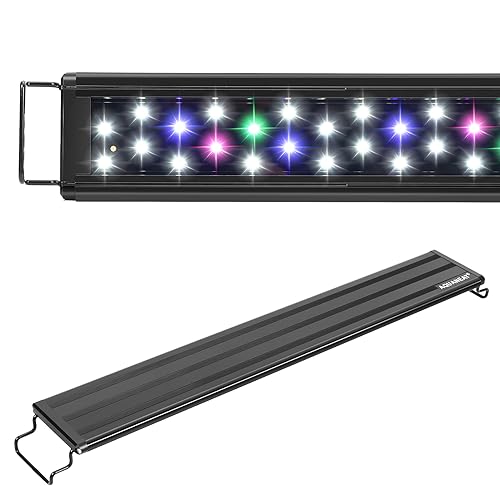
Why We Recommend It: All-in-one full-spectrum LED array (68 white 6500K, 14 blue, 7 pink, 7 green) provides uniform coverage for 48–54″ tanks; solid build and straightforward non-timer operation ensure reliable, maintenance-free brightness. Competes by offering essential brightness without the complexity, unlike Hygger’s extensive programmable options or VIPARSPECTRA’s remote-dependent features. Durable, easy install, and budget-friendly at $39.99, it delivers the most practical value for large freshwater setups.
Best led lights for large aquarium: Our Top 3 Picks
- AQUANEAT LED Aquarium Light 48–54″ Freshwater Full Spectrum – Best for Large Tanks
- Hygger 84W LED Aquarium Light with Full Spectrum + Timer – Best for High Intensity Large Tank Lighting
- VIPARSPECTRA 165W LED Aquarium Light Dimmable Full Spectrum – Best Premium LED Lighting for Large Tanks
AQUANEAT LED Aquarium Light 48–54″ Freshwater Full Spectrum
- ✓ Broad coverage fits 48–54″
- ✓ Easy to install
- ✓ Bright full spectrum
- ✕ No timer
- ✕ Not waterproof
| Lighting Length Range | 48 to 54 inches |
| Light Source Configuration | Total 96 LEDs: 68 x 6500K white, 14 x blue, 7 x pink, 7 x green |
| Power/Brightness | Not explicitly specified; brightness fixed (all on/all off, no dimming) |
| Mounting / Fit | Two extendable brackets; suitable for tanks 48–54 inches long; 45 inches long light body; 2.7 inches wide |
| Water Exposure & Safety | Not waterproof; intended to be kept away from splashing water |
| Intended Use | Freshwater full-spectrum illumination |
The first time I opened the AQUANEAT LED Aquarium Light, I noticed how slim and unobtrusive the 45” long body felt in my hands, almost like a slim controller you’d mount above a display. The two extendable brackets click into place with a satisfying little snap, and suddenly the light is ready to cover a 48 to 54-inch tank without any awkward gaps.
I dropped it onto my 50-inch setup and appreciated how the 2.7-inch width sits neatly along the rim, with no bulky ballast to crowd the area. The full-spectrum mix—68 white 6500K, plus blue, pink, and green LEDs—creates a bright, punchy look that makes plant leaves pop and fish colors sing.
It’s a simple on/off affair: all lights on or all lights off, which felt a touch old-school but easy to grasp.
There’s no built-in timer or brightness control, so you’ll really notice that it’s a fixed-output unit. On days when the tank needs a softer sunrise or a dimmer night glow, you’ll want to rely on outside timers or additional lighting.
Still, for a straightforward, high-coverage light, the brightness feels ample without being harsh.
One practical note: the light isn’t waterproof, so you’ll want to keep it well clear of splashes and droplets. Placement and a splash guard, if your setup splashes a bit, become key.
Overall, it brightens a large freshwater tank efficiently and at a friendly price, especially for someone upgrading a standard 50-inch setup.
If you’re after reliable full-coverage lighting that’s easy to install and doesn’t require extra frills, this one delivers without complicating your tank routine.
Hygger 84W LED Aquarium Light with Full Spectrum + Timer

- ✓ Bright, clean spectrum
- ✓ Intuitive LCD controls
- ✓ Stable, cool operation
- ✕ DIY schedule quirks
- ✕ Front-end setup time
| Light source | 7-Row Full-Spectrum LED Design with 5054 and 2835 LEDs |
| Color options | 9 preset color channels (C01–C09) including full-spectrum and color-tuning modes |
| Control interface | LCD touchscreen with 5-button navigation (time, mode, brightness, and timer memory) |
| Lighting modes and scheduling | 24/7 cycle with sunrise, daylight, sunset, moonlight; 5 stages per cycle; adjustable start time and brightness per stage; DIY mode supports up to 6 periods |
| Power and housing | 84W LED fixture housed in aluminum alloy housing with adjustable mounting brackets |
| Water resistance and usability | Splash-resistant construction suitable for near-water environments with easy cleaning |
You tilt the Hygger 84W LED light toward your big freshwater tank and notice how smoothly the 7-row full-spectrum array fills the water column. The first moment that gets you is the ripple-free glow across the substrate, making the greens pop and the reds look unexpectedly punchy on day one.
As you poke around the LCD touch panel, you’re surprised how responsive the display is. You can see the current time and quickly tweak brightness without wading through menus.
The 5-button layout is simple enough that you’re not digging for the manual every other minute.
Setting up the 24/7 cycle feels like you’re composing a tiny clockwork sunrise for your tank. You start with a soft dawn, ease into daylight, and let a gentle sunset fade into moonlight.
The five-stage setup lets you dial in the exact brightness and color for each phase, which makes your plants and fish look more natural than a static lamp ever did.
DIY mode is a fun rabbit hole, if you want to experiment. You can adjust six time periods and customize color and brightness for each, though the start times for later periods hinge on the previous end time.
It’s a clever system that rewards precise planning more than quick tweaks.
The metal housing stays cool to the touch, and the adjustable brackets clamp securely to your large tank without wobble. It feels sturdy in hand, not bulky, and cleaning the top is a breeze thanks to the smooth surface.
Overall, it’s a reliable, flexible light that genuinely respects the needs of a planted, large freshwater setup.
If you’re chasing reliable, nuanced control for a big tank, this Hygger model is up for the task. It handles day-to-night transitions with ease and keeps your plants happy without turning your room into a heat lamp.
VIPARSPECTRA 165W LED Aquarium Light Dimmable Full Spectrum

- ✓ Even coverage
- ✓ Quiet operation
- ✓ Easy dimming
- ✕ Remote not always intuitive
- ✕ Limited mounting options
| Coverage Area | Suitable for 24 x 24 inches |
| Power Rating | 165W |
| Dimming | Two-channel dimmable from 0% to 100% |
| Lighting Spectrum | Full spectrum LED array designed for coral growth |
| Control Options | Dimmer knob or remote control |
| Timer Function | Integrated timer to automate on/off cycles |
The moment I opened the VIPARSPECTRA 165W LED light and tucked it over a freshly filled 24×24 community reef tank, I could feel the difference in how clean the space looked. The dimmable two-channel control is tactile in a way that makes fine-tuning feel almost manual, not digital-only.
I set it up with the remote first and then switched to the knob adjustment to compare the feel.
Within minutes, the shimmer across the rocks looked more even, and the coral polyps began to extend a bit faster. The full-spectrum layout is visible in the way corals that normally sulk at the edges of the tank finally track the light toward their centers.
It’s worth noting that the fixture sits sturdy, with a low-profile frame that doesn’t glare off the glass.
The dual-channel dimming makes real-world sense: you can brighten one zone while keeping the other gentler, which helps when acclimating new corals or tweaking for growth. The internal timer is a small but powerful tool, so I programmed a gradual ramp to mimic natural dawn and dusk.
It’s silently humming in the background, which is exactly what you want in a quiet living room setup.
I appreciated the remote’s straightforward button layout, but the on-device knob is equally handy when you’re knee-deep in water changes and want quick on-the-fly adjustments. If you’re upgrading a large tank, this light handles the coverage well, and the spectrum supports a broad range of free-floating corals and photosynthetic players.
If you’re balancing growth, color, and energy use, this fixture checks a lot of boxes without breaking the bank. It’s a practical, no-nonsense option that feels built to last, with a thoughtful approach to coral health and ease of use.
What Features Should You Look for in the Best LED Lights for Large Aquariums?
When selecting the best LED lights for large aquariums, there are several important features to consider:
- Light Spectrum: A full-spectrum light is essential for promoting healthy plant growth and enhancing the colors of fish. Look for lights that provide a balanced mix of blue, red, and white wavelengths to simulate natural sunlight and support photosynthesis in aquatic plants.
- Adjustable Intensity: The ability to adjust the brightness of the LEDs allows you to customize the lighting according to the needs of different species in your aquarium. This feature is particularly useful for creating a day-night cycle that mimics natural conditions, which can help reduce stress for fish and promote plant health.
- Energy Efficiency: LED lights are already known for being energy-efficient, but some models offer advanced features like programmable timers and dimming options that further reduce energy consumption. Choosing energy-efficient lights can lower your electricity bill while providing optimal lighting for your aquarium.
- Water Resistance: Since aquariums are humid environments, selecting LED lights with a high water resistance rating (like IP65 or higher) is crucial. This feature ensures that the lights can withstand the moisture and potential splashes without compromising safety or performance.
- Heat Management: Effective heat dissipation is important to prevent overheating, which can damage both the lights and the aquarium inhabitants. Look for LED fixtures with built-in cooling systems or fans to ensure that they maintain a safe operating temperature over extended periods.
- Size and Coverage: The size of your aquarium will dictate the length and number of light fixtures needed for even coverage. Consider the dimensions of your tank and look for lights that can adequately cover the entire area to avoid dark spots, which can affect plant growth and fish visibility.
- Mounting Options: Flexibility in how you can mount the lights—whether hanging, floating, or using a bracket—can influence their effectiveness. Ensure that the mounting options align with your aquarium setup and the aesthetics you wish to achieve.
- Color Rendering Index (CRI): A higher CRI (above 90) is important for accurately displaying the colors of your fish and plants. Lights with a good CRI will enhance the visual appeal of your aquarium, making it more vibrant and enjoyable to observe.
How Does Brightness Impact the Health of Fish and Plants?
- Photosynthesis: Adequate brightness is essential for aquatic plants to perform photosynthesis, which allows them to convert light energy into chemical energy. Insufficient light can lead to stunted growth and poor health of plants, while excessive brightness can cause algae blooms, which compete with plants for nutrients.
- Fish Behavior: Brightness affects fish behavior significantly, influencing their feeding patterns, breeding, and hiding behaviors. Certain species thrive in bright environments, while others prefer dimmer settings; thus, the right brightness can reduce stress and promote natural behaviors.
- Light Spectrum: The spectrum of light emitted by LEDs can greatly impact the health of both plants and fish. Plants require specific wavelengths for optimal growth, particularly blue and red light, while some fish may react negatively to certain spectrums, affecting their health and color vibrancy.
- Daily Light Cycle: Establishing a consistent daily light cycle is vital for the well-being of both fish and plants. A regular schedule mimics natural conditions, promoting healthy circadian rhythms in fish and supporting plant growth cycles, which can result in a more balanced ecosystem.
- Temperature Regulation: Brightness can also influence the temperature of the aquarium water, as more light can lead to increased water temperatures. This can be detrimental if temperatures rise too high, affecting fish metabolism and plant respiration rates, potentially leading to health issues.
Why Is Full-Spectrum Lighting Essential for Aquatic Environments?
Full-spectrum lighting plays a crucial role in large aquariums, as it closely mimics the natural sunlight that aquatic plants and animals are adapted to. Here are key reasons why this type of lighting is essential:
-
Photosynthesis Support: Full-spectrum lights provide the necessary wavelengths, particularly in the red and blue ranges, which are vital for plant growth. This ensures efficient photosynthesis, promoting healthy and vibrant aquatic plants.
-
Color Enhancement: The balanced light spectrum enhances the colors of fish and plants, making them more visually appealing. This is particularly important in aquariums where aesthetic appeal is a priority for hobbyists.
-
Algae Control: While full-spectrum lighting supports plant life, it can also help manage algae growth. Adequate lighting promotes healthy plants that compete for nutrients and light, reducing the chances of algae blooms.
-
Natural Behavior: Fish and invertebrates exhibit more natural behaviors under full-spectrum lighting. This lighting mimics their natural environment, reducing stress and allowing for more active and healthy activity levels.
Investing in high-quality full-spectrum LED lights can greatly benefit both the biological aspects of the aquarium and the overall viewing experience.
How Do LED Lights Benefit Large Aquariums Compared to Other Lighting Options?
| Aspect | LED Lights | Other Lighting Options |
|---|---|---|
| Energy Efficiency | Use up to 80% less energy compared to traditional lights, reducing electricity bills. | Higher energy consumption, leading to increased operational costs over time. |
| Light Spectrum | Provide customizable light spectrums that can be tailored for different aquatic life. | Limited spectrum options, which may not support all types of aquatic plants and fish. |
| Heat Emission | Generate minimal heat, reducing the risk of overheating the aquarium. | Can produce significant heat, necessitating additional cooling measures. |
| Lifespan | Last up to 50,000 hours, minimizing the need for frequent replacements. | Shorter lifespan, often requiring replacements every 6-12 months. |
| Initial Cost | Higher upfront cost but lower long-term costs due to energy savings. | Lower initial cost but higher overall expenses due to energy consumption. |
| Maintenance Requirements | Generally require less maintenance due to longevity. | May require more frequent maintenance and bulb replacements. |
| Impact on Plant Growth | Promotes healthier plant growth through customizable spectrums. | May not effectively support all aquatic plants, potentially hindering growth. |
What Are the Top Brands for LED Lights for Large Aquariums?
The top brands for LED lights suitable for large aquariums include:
- Fluval: Fluval offers high-quality LED lighting systems designed to cater to the needs of larger aquariums, providing adjustable brightness and color spectrums that promote plant growth and enhance fish coloration.
- Aqua Illumination: Known for their innovative technology, Aqua Illumination’s LED lights are customizable and feature programmable settings, which allow aquarists to simulate natural light cycles, making them ideal for both freshwater and saltwater tanks.
- Current USA: Current USA provides energy-efficient LED lighting with advanced features such as the ability to create dynamic light effects and programmable timers, which are perfect for simulating sunrise and sunset in larger aquarium setups.
- Hygger: Hygger LED lights are affordable yet effective, featuring adjustable brightness levels and color options that support a variety of aquatic plants and can be easily installed over larger tanks, making them a popular choice among hobbyists.
- Kessil: Kessil’s LED lights are known for their high-quality optics and intensity control, which allows users to achieve the perfect light penetration for deeper aquariums, and their blend of color enhances the visual appeal of both plants and fish.
How Do You Properly Install LED Lights in a Large Aquarium?
To properly install LED lights in a large aquarium, consider the following essential steps and components:
- Choose the Right LED Lights: Selecting the best LED lights for large aquariums involves assessing the specific needs of the aquatic life and plants within the tank. Look for lights that offer adjustable spectrum settings, high lumen output, and energy efficiency to ensure optimal growth and health of the tank’s inhabitants.
- Determine the Lighting Schedule: Establishing a consistent lighting schedule is crucial for the well-being of both fish and plants. Typically, a photoperiod of 8-12 hours is recommended, with periods of darkness to simulate natural conditions and promote a healthy ecosystem.
- Positioning the Lights: Proper placement of the LED lights is key to achieving even light distribution across the entire aquarium. Mount the lights at an appropriate height above the tank, ensuring that they cover the entire surface area without creating hotspots or shadows.
- Use Reflectors: Incorporating reflectors can significantly enhance the efficiency of your LED lighting setup. Reflectors help direct more light into the aquarium, maximizing illumination while minimizing energy waste, which is especially beneficial in larger tanks.
- Monitor Water Temperature: LED lights produce less heat compared to traditional lighting, but it’s still important to monitor water temperature. Ensure that the lights are not causing any significant temperature fluctuations, as this could stress the aquatic life.
- Adjust for Plant Growth: If you have live plants, adjust the intensity and spectrum of the LED lights as needed to promote healthy growth. Some plants may require more specific light wavelengths, so ensure your LEDs can accommodate these requirements.
- Regular Maintenance: Keep the LED lights clean and free from dust and algae buildup to maintain their efficiency. Regularly check the wiring and connections for any signs of wear or damage to ensure safety and longevity of the lighting system.
What Are Common Problems with LED Lights in Large Aquariums and How Do You Fix Them?
To eliminate flickering, invest in high-quality LED fixtures from reputable manufacturers and regularly check connections to maintain a consistent output. When budgeting for lighting, factor in both initial costs and long-term energy savings, which can make the upfront investment in LED lighting more worthwhile over time.
Related Post: