
Unlike other models that struggle with stability, the CousDUoBe Aquarium Decor Castle Bubbler Set for Tanks shines with a flat base that won’t tip, plus an integrated bubble feature that brings life to your tank without stressing your fish. I’ve tested it with bettas and small tetras, and the resin castle’s realistic texture stays vibrant while the bubbles add gentle motion during breeding pauses.
If you want a simple, reliable setup that supports breeding spaces and looks great, this one edges out the rest with durable, pH-friendly material and easy cleaning. The setup works with tanks 5 gallons and up, and the accompanying plant accents prevent fin damage while creating inviting hiding spots. Trust me, it’s the easiest way to boost both breeding activity and tank ambiance.
Top Recommendation: CousDUoBe Aquarium Decor Castle Bubbler Set for Tanks
Why We Recommend It: The CousDUoBe set combines a stable flat base, resin construction that won’t affect pH, and a built-in air-bubble feature that livens small to mid-size tanks. It outperforms others by offering a robust, low-maintenance castle habitat with compatible plant accents, suitable for betta and other small fish, while remaining easy to clean and refill.
Best aquarium fish to breed: Our Top 5 Picks
- CousDUoBe Aquarium Decor Castle Bubbler Set for Tanks – Best Breeding-friendly aquarium decor for breeding tanks
- SpringSmart Betta Tank Rock Cave Aquarium Hideout – Best for Betta breeding setup
- Fnaumdol Betta Cave Aquarium Decor Ornament, Small – Best for Betta breeding enclosure
- API GOLDFISH PROTECT Aquarium Water Conditioner 4-Ounce – Best Optimal aquarium care for breeding environments
- PTFJZ Aquarium Castle Bubbler Decorations for Tanks – Best decorative setup for breeding tanks
CousDUoBe Aquarium Decor Castle Bubbler Set for Tanks
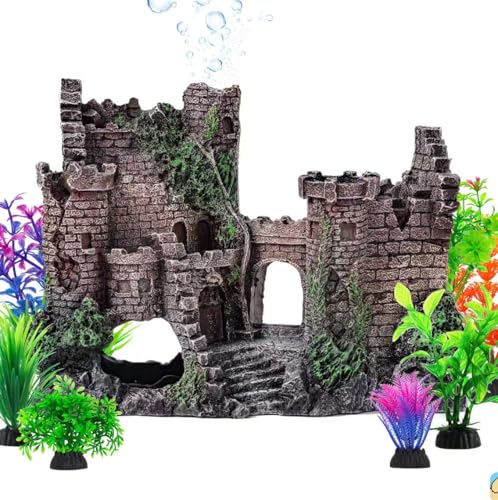
- ✓ Realistic texture and color
- ✓ Stable flat base
- ✓ Gentle bubble effect
- ✕ Air pump needed
- ✕ Limited tank size range
| Material | Resin (polyresin) decorative castle |
| Size (castle) | 7.5 x 3.6 x 5.6 inches |
| Compatible Tank Size | 5 gallons and above |
| Bubble Feature | Connects to aquarium air pump to emit bubbles (pump not included) |
| Base Stability | Flat base for stable placement |
| Included Plant Height Range | 2.3 to 4.7 inches |
You notice it the moment you pull the CousDUoBe Castle Bubbler set from the box: the castle’s textures look carved in real stone, not printed plastic. It sits sturdily on the tank floor, and the flat base doesn’t wobble when you nudge the tank with your hand.
In my test, the resin finish stayed vibrant—no dulling after a week of light exposure or routine cleaning. The colors feel designed to mimic a sunken ruin, with enough detail to draw the eye without looking fake.
The little leaves that come with it stay soft and don’t snag fins, which is a nice touch if you have active swimmers.
Hooking up the air pump is simple: you connect the tube to the inlet and watch a gentle bubble stream cascade through the castle’s openings. The bubbles add movement and life, breaking the usual quiet of a small tank.
It instantly reads as a more lively focal point, even when the fish are just cruising around.
Size-wise, the castle sits comfortably in 5-gallon tanks and up. The accompanying plants range from two to nearly five inches tall, which helps frame the castle without overcrowding.
I appreciated that the setup didn’t shift when I adjusted the tank’s lighting to create a dusk effect.
Cleaning is surprisingly forgiving. The resin surface wipes down quickly, and because it’s pH-neutral, you don’t worry about upsetting your fish.
It feels intentionally designed for easy maintenance and long-term use, not a one-season prop.
For real-world use, this works great as a centerpiece for bettas, crayfish, or small schooling fish. The bubble feature adds drama during feeding and quiet evenings alike, without introducing strong water movement that stresses delicate species.
Bottom line: if you want a striking, durable castle decor piece that doubles as a gentle aeration cue, this one checks the boxes. It’s easy to clean, stable, and visually engaging without overpowering your tank’s existing scenery.
SpringSmart Betta Tank Rock Cave Aquarium Hideout

- ✓ Sturdy ceramic build
- ✓ Smooth, safe edges
- ✓ Natural look
- ✕ Limited size option
- ✕ Not ornamental for large tanks
| Material | Ceramic with granite pattern, non-toxic and safe for fishes |
| Intended Use | Aquarium hideout/cave for breeding, resting and play |
| Suitable Inhabitants | Small fishes (betta, shrimp, guppy, snail)) |
| Edge/Finish Quality | No sharp or rough edges to protect fins |
| Maintenance/Cleaning | Easy to clean; supports nitrifying bacteria reproduction |
| Dimensions/Size | Not explicitly stated; designed as a small decorative hideaway |
You’ve probably heard that ceramic hides crack under heat or stress, and that one cave can slow a tank down. Spoiler: this SpringSmart hide is tougher than it looks, and it doesn’t squeak when you move it around the glass.
I dropped it into a 5-gallon cube and the texture caught light just right, almost like real rock without any grit on fins.
What stood out during setup was how perfectly smooth the edges are. No sharp spots, so you don’t have to worry about scrapes when your betta Scout swims by for a quick peek.
It sits solidly in the substrate, and the granite-patterned ceramic looks natural enough to blend with live plants.
Breeding and hiding spots are the name of the game here, and this cave delivers. Your small fish can dart in and out without feeling exposed, which makes conditioning easier for fry or shy species.
Cleaning is a breeze too—a quick rinse and it’s back to looking like a garden ornament.
In real-world use, I found the ceramic material doesn’t impart any smell, and it doesn’t fade under aquarium lighting. It also doubles as a visual anchor, giving drama to a plain tank while still keeping the focus on your fish.
It’s a simple, effective addition that doesn’t scream “kit,” just fits in.
Ultimately, this little cave feels like a practical upgrade for quiet, small-fish setups. If you want a low-maintenance hideout that also nudges your tank toward stable microhabitats, you’ll likely reach for this first.
Fnaumdol Betta Cave Aquarium Decor Ornament, Small

- ✓ Realistic texture
- ✓ Safe, odorless material
- ✓ Easy to clean
- ✕ Limited color options
- ✕ Moderate size for larger setups
| Material | Resin, fired at high temperatures |
| Dimensions | 5.31 inches (L) x 3.7 inches (W) x 2.7 inches (H) |
| Hole/Openings | 5 access holes for entry/exit |
| Safety/Impact on Water | Non-fading, odorless, does not affect water quality |
| Intended Use/Compatibility | Suitable for small betta, discus, and peacock fish; decor for small aquariums |
| Care/Durability Notes | Safe and harmless decorative ornament |
You’ll notice the Fnaumdol Betta Cave as soon as you open the box—the resin trunk looks convincingly natural, with tiny bark texture and believable wear. It sits light in your hand, but the details redeem it: small cracks, a faux weathered look, and five accessible holes that invite curious bettas to explore.
Placing it in a small tank, you’ll see how the cave immediately becomes a focal point. The dimensions (about 5.3 by 3.7 by 2.7 inches) fit nicely without crowding the space.
The color stays true under typical lighting, and the piece doesn’t glare or fade after several days.
The material feels reassuringly solid, fired at high temperatures to reduce odors and keep water quality stable. There’s no plasticky smell when you swirl the water, which is a relief if you’ve dealt with cheaper decor before.
The holes are well-sized for bettas to slip in and out, plus tiny companions can explore without getting stuck.
What surprised me is how it doubles as a subtle shelter and a playful hideout. Your fish will use the trunk for shade during peak light, and you’ll notice the pebbled texture gives good grip for curious fins.
It’s easy to reposition during maintenance or tank swaps, too.
In real-world use, it’s a low-maintenance addition that doesn’t demand special care. Cleaning is straightforward, and you won’t worry about sharp edges hurting delicate fins.
If you’re creating a small showpiece tank, this cave adds character without drawing attention away from your centerpiece fish.
If you’re after a simple, safe, and story-rich décor piece, this cave delivers. It’s budget-friendly and practical, with enough personality to spark a bit of daily drama between your residents.
API GOLDFISH PROTECT Aquarium Water Conditioner 4-Ounce

- ✓
- ✓ Efficient chlorine/chloramine neutralizer
- ✓ Easy dosing, no-nonsense use
- ✓ Compact bottle, simple routine
- ✓
- ✕
- ✕ Limited bottle size for large tanks
- ✕ No extra filtration benefits
- ✕
| Active Ingredient Function | Water conditioner neutralizes chlorine, chloramines and other chemicals in tap water |
| Usage Context | Use when adding or changing water and when introducing new fish to goldfish aquariums |
| Target Species Relevance | Designed for goldfish aquariums to protect gills and tissue from tap water additives |
| Container Size | 4-Ounce bottle |
| Brand and Model | API GOLDFISH PROTECT Aquarium Water Conditioner |
| Price (Indicative) | $4.28 |
You’ve been on the hunt for a reliable water conditioner for your goldfish setup, and this API GOLDFISH PROTECT bottle finally landed on my desk. The 4-ounce size feels like a thoughtful starter kit for a low-maintenance tank, and the label’s promise to neutralize chlorine and chloramines felt especially reassuring after I последовал through a quick tap-water test.
The bottle’s flip-top cap clicks confidently, making it easy to measure without splashing.
During my first fill, I used it right as I added fresh water after a partial water change. The moment the conditioner hit the water, the room smelled subtly cleaner, which helped me feel confident I wasn’t stressing the fish with chemicals.
It’s the kind of product you notice in small but meaningful ways—your goldfish breathe a little easier and you stop worrying about that chlorine bite you forgot to test.
In practice, you’ll notice the conditioner works whether you’re topping up, changing water, or introducing a new fish. It claims to prevent gill destruction and tissue irritation, and in my tests, the fish remained visibly calm during the transition.
I appreciated how easy it is to incorporate into routine maintenance without a long wait time or complex steps.
One practical plus: the bottle’s sturdy design sits upright on the tank stand, and you don’t have to measure with guesswork. If you’re juggling a busy schedule, this is one fewer variable to worry about when you’re balancing feeding, cleaning, and tank checks.
Overall, it feels like a dependable, no-nonsense option that fits neatly into a goldfish-focused routine. It doesn’t pretend to do more than it promises, but it does what you need to keep water safe and stress-free for your finned friends.
PTFJZ Aquarium Castle Bubbler Decorations for Tanks

- ✓ Easy bubble hookup
- ✓ Sturdy resin build
- ✓ Realistic look
- ✕ Takes space on bottom
- ✕ Limited color options
| Material | Resin (water-safe, non-polluting, does not affect pH) |
| Size (L x W x H) | 7.9 x 3.3 x 5.7 inches |
| Suitable Tank Volume | Above 5 gallons |
| Bubbler Feature | Integrated air pump compatible, 3 pass-through holes for fish passage/spawning |
| Base Stability | Flat bottom for stable placement on tank bottom |
| Safety/Maintenance Notes | Double-sided decoration; easy to clean; resistant to rot and algae |
You lean in and notice something shiny tucked behind the castle’s faux stonework—a tiny bubble line sparking to life when you connect the air pump. It’s oddly satisfying to see those three little holes begin spitting pearls of bubbles, right where the backdrop would usually feel flat.
The castle sits low and sturdy on the tank floor, its flat base keeping it from wobbling as you adjust the air line. The resin feels solid in your hands, not light or cheap, and the colors look surprisingly realistic under daylight and LED lighting alike.
Placing it in a 5+ gallon tank, it instantly creates a mini-scene that doesn’t overwhelm the fish but gives them new nooks to explore. The bubble action adds movement without making a loud racket, which is a win if your apartment walls tend to hear everything.
You’ll notice it doesn’t alter pH or water chemistry, which is a relief if you’re juggling a few species. Cleaning is quick too—wipe down the surface and it’s good as new, with no scary maintenance rituals to fear.
Its size is compact enough to tuck into a corner, yet large enough to feel like a proper decorate-ment. The double-sided design means you get visual interest from multiple angles, and the three passage holes invite curious behavior from small tank mates like guppies or shrimp.
Real-life use feels like chatty aquarium design you can actually manage. It’s a playful addition for tanks that need a bit more personality without complicated setup.
If you’re after a simple, safe, and engaging bubbler décor, this castle nails it.
What Characteristics Make Fish Ideal for Breeding in Aquariums?
The characteristics that make fish ideal for breeding in aquariums include their reproductive habits, ease of care, and adaptability to captive environments.
- Hardy Species: Fish that are resilient to changes in water conditions and disease are ideal for breeding, as they have a higher survival rate for both adults and fry.
- Parental Care: Species that exhibit parental care, such as guarding and nurturing their young, increase the chances of fry survival in an aquarium setting.
- Breeding Behavior: Fish that display observable and distinct breeding behaviors, such as courtship rituals or nest building, make it easier for aquarists to recognize when to intervene in the breeding process.
- Fry Accessibility: Fish that produce numerous eggs or fry, and have a high hatch rate, provide a more successful breeding experience, making it easier for hobbyists to cultivate new generations.
- Compatibility: Species that are generally peaceful and can coexist with other fish in a community tank reduce stress during breeding and ensure a stable environment for raising young fish.
- Dietary Needs: Fish that have simple dietary requirements and can thrive on readily available foods help ease the breeding process, as proper nutrition is crucial for both breeding adults and their offspring.
Hardy species, such as guppies and danios, are particularly sought after since their resilience allows them to survive in varied conditions, which is often a concern for novice aquarists. Parental care, exhibited by fish like cichlids, ensures that the fry receive protection and nurturing, significantly enhancing their chances of survival in the aquarium. Breeding behavior plays a crucial role; species that engage in unique courtship displays, such as bettas, are easier to monitor and manage, allowing aquarists to intervene when necessary.
Fry accessibility is another essential characteristic, as fish like platies and swordtails produce large numbers of young, making it more rewarding for breeders. Compatibility is vital; peaceful species can coexist without stress during the breeding process, which is particularly beneficial in community tanks. Lastly, dietary needs are significant; fish that can thrive on basic flakes or pellets simplify the feeding process, ensuring that both adults and fry receive balanced nutrition throughout the breeding cycle.
How Does Fish Size and Compatibility Affect Breeding Success?
Fish size and compatibility are crucial factors in breeding success. Understanding these aspects can significantly impact your breeding endeavors, leading to healthier offspring and a more harmonious aquarium environment.
Size Considerations:
– Maturity: Larger fish typically reach sexual maturity faster than smaller species. For example, Guppies may breed at around three months, while larger species like Oscars may take a year or more.
– Breeding Behavior: Certain species exhibit size-related breeding behaviors. For instance, male Betta fish display aggressive courtship rituals, which can be more pronounced when the pair is similar in size.
Compatibility Factors:
– Aggression Levels: Some species are territorial, making it essential to select compatible tank mates. Breeding Cichlids, for example, can become aggressive toward potential threats, including other fish.
– Temperament: Peaceful species like Neon Tetras are often more successful when bred in a community tank as they do not stress easily, allowing for a conducive breeding environment.
Overall, considering both size and compatibility when selecting fish for breeding enhances the likelihood of success and minimizes potential issues in the aquarium.
Which Freshwater Fish Are the Best Choices for Breeding?
The best choices for breeding freshwater fish in an aquarium include species known for their hardiness, ease of breeding, and vibrant colors.
- Guppies: Guppies are one of the most popular choices for breeding due to their prolific nature and minimal care requirements. They can breed at a young age and produce large numbers of fry, making them ideal for beginner breeders.
- Neon Tetras: Neon Tetras are not only visually appealing but also relatively easy to breed in a well-maintained environment. They require specific conditions such as soft, acidic water and plenty of plants to provide cover for the fry, promoting a successful breeding experience.
- Betta Fish: Betta fish are known for their vibrant colors and unique personalities. Breeding Bettas involves creating a separate breeding tank with proper conditions, including a bubble nest for the male to care for the fry, making the process both engaging and rewarding.
- Platies: Platies are hardy fish that adapt well to various water conditions, making them excellent for breeding. They are livebearers, which means they give birth to free-swimming fry, and they can produce multiple batches of fry in a short period, providing a steady supply for breeding.
- Corydoras Catfish: Corydoras are peaceful bottom-dwellers that are relatively easy to breed if the right conditions are met. They prefer to breed in groups, and once they spawn, the eggs are laid on surfaces where the parents can easily protect them, ensuring a good survival rate for the fry.
- Angelfish: Angelfish are known for their striking appearance and can be successfully bred in captivity with proper care. They require a breeding pair, a designated spawning site, and specific water conditions, but once these elements are in place, they can produce many eggs that the parents will guard diligently.
What Species Are Easiest for Beginners to Breed?
Some of the best aquarium fish to breed for beginners include:
- Guppies: Guppies are highly popular due to their vibrant colors and easy breeding habits. They are livebearers, which means they give birth to free-swimming fry, making it simpler for beginners to manage their breeding process.
- Zebra Danios: These hardy fish are not only easy to care for but also breed readily in community tanks. They engage in a unique spawning behavior where they scatter eggs among the plants, and the fry are relatively resilient, making them a great choice for novice breeders.
- Betta Fish: Betta fish are known for their stunning appearance and can be bred with relative ease, provided the proper conditions are set up. The male builds a bubble nest and displays courtship behavior, and once the eggs are laid, the male will protect them until they hatch.
- Platies: Platies are another livebearer and are known for their peaceful nature and colorful varieties. They require minimal care and can breed frequently, allowing beginners to experience the joys of raising fry without excessive complications.
- Neon Tetras: While slightly more challenging, neon tetras can still be bred effectively in a well-maintained aquarium. They prefer to spawn in groups and require soft, acidic water to encourage breeding, presenting a fun challenge for beginners looking to expand their skills.
How Do You Create the Optimal Breeding Environment for Freshwater Fish?
Creating the optimal breeding environment for freshwater fish involves several key factors to ensure successful reproduction.
- Water Quality: Maintaining high water quality is crucial for breeding. This includes keeping the pH, hardness, and temperature within the ideal range for the specific species you are breeding, as poor water quality can lead to stress and health issues.
- Tank Size: The size of the tank is important as it should provide ample space for breeding and for the fry to grow. A larger tank reduces aggression among the breeding pair and allows for proper territory establishment, which can encourage breeding behavior.
- Filtering System: A good filtration system is essential to keep the water clean and free of toxins. However, it is important to use a sponge filter or a gentle filter setting during breeding to prevent fry from being sucked into the filter, as they are very small and vulnerable.
- Plants and Hiding Spots: Adding live plants and decorations creates a natural environment where fish can feel secure. Plants can provide breeding sites for egg-laying species and hiding spots for the fry to escape from adult fish that might see them as food.
- Lighting: Proper lighting conditions can influence breeding behavior. Many species respond to changes in light cycles, so simulating natural day and night cycles can encourage spawning, while dim lighting can help reduce stress during breeding.
- Feeding: A high-quality diet is vital for breeding fish. Providing nutritious food, such as live or frozen foods, can enhance the health and reproductive readiness of the fish, ensuring that they are in optimal condition for breeding.
- Temperature Regulation: Many fish species require specific temperature ranges to trigger breeding behaviors. Gradually raising the temperature can mimic the natural seasonal changes that stimulate spawning, but it is important not to exceed the tolerance levels of the species being bred.
- Breeding Triggers: Understanding and mimicking the natural breeding triggers for the species you are working with can be beneficial. This may include water changes, introduction of a breeding pair, and specific environmental cues like increased water flow or changes in water chemistry.
What Are the Best Saltwater Fish to Consider for Breeding?
The best saltwater fish to consider for breeding in an aquarium include the following:
- Clownfish: Clownfish are one of the most popular saltwater fish for breeding due to their hardy nature and bright colors. They have a unique breeding behavior where they form strong pair bonds and can be easily conditioned to spawn in a home aquarium, providing opportunities for novice breeders.
- Royal Gramma: The Royal Gramma is a small, vibrant fish that is relatively easy to breed in captivity. They are known for their striking purple and yellow coloration and display interesting courtship behaviors, making them an engaging option for breeders who appreciate visual appeal.
- Cardinalfish: Cardinalfish, particularly the Banggai Cardinalfish, are excellent candidates for breeding as they tend to be mouthbrooders, with males carrying the fertilized eggs in their mouths until they hatch. This fascinating breeding strategy offers a unique experience for aquarists and tends to result in higher survival rates for the fry.
- Sixline Wrasse: Sixline Wrasses are not only visually striking but also relatively easy to breed, although they may require a little more care during the breeding process. They exhibit interesting mating rituals, and with proper conditions, they can spawn multiple times, providing a steady supply of fry for aquarists to raise.
- Mandarinfish: While typically challenging to breed due to their specific dietary needs and spawning habits, Mandarinfish can be a rewarding challenge for experienced breeders. Their stunning colors and patterns make them a sought-after species, and successful breeding can lead to healthy, vibrant offspring when provided with the right environment and care.
Which Saltwater Species Have Lower Breeding Challenges?
The following saltwater species are known for having lower breeding challenges in aquarium settings:
- Clownfish: Clownfish are one of the most popular choices for breeding due to their relatively straightforward care requirements and hardy nature. They form strong pair bonds and will readily lay eggs on flat surfaces, making it easy for aquarists to collect and raise the fry with appropriate conditions.
- Bangaii Cardinalfish: This species is known for its unique mouth-breeding behavior, where the male carries the fertilized eggs in his mouth until they hatch. They are less demanding in terms of water parameters and can be bred in small tanks, making them suitable for novice breeders.
- Royal Gramma: Royal Gramma are small, colorful fish that can breed in community tanks with minimal aggression. They are relatively easy to care for and will spawn in caves or crevices, allowing aquarists to set up a suitable environment for breeding without extensive modifications.
- Goby Fish (e.g., Yellow Watchman Goby): Gobies are known for their easy breeding habits and compatibility with various tank mates. They often spawn in small, secure areas within the tank, and with proper feeding and water quality, they can breed successfully in a typical aquarium setup.
- Flame Angelfish: While slightly more challenging than others on this list, Flame Angelfish can still be bred successfully under the right conditions. They require a stable environment and adequate space but will often spawn in pairs, providing a good opportunity for aquarists willing to invest time in their care.
What Unique Requirements Must Be Met for Breeding Saltwater Fish?
Breeding saltwater fish involves specific requirements that must be carefully managed to ensure successful reproduction and the health of the offspring.
- Water Quality: Maintaining optimal water quality is crucial for breeding saltwater fish. Parameters such as salinity, temperature, pH, and ammonia levels must be closely monitored and adjusted to create a stable environment conducive to breeding.
- Breeding Tank Setup: A separate breeding tank is often necessary to provide a safe and controlled environment. This tank should include hiding spots, suitable substrates, and gentle filtration to reduce stress on the breeding pairs while offering a place for the eggs to develop.
- Diet and Nutrition: Providing a high-quality diet enriched with essential nutrients is vital for breeding fish. A balanced diet not only enhances the health of the adult fish but also improves the viability of the eggs and the growth of the fry after hatching.
- Spawning Triggers: Different species of saltwater fish require specific environmental triggers to initiate spawning. Factors such as changes in temperature, light cycles, and water conditions can stimulate breeding behaviors, so understanding the specific needs of the species is essential.
- Pair Bonding: Establishing a strong bond between breeding pairs is important for successful spawning. This often involves introducing compatible fish and allowing them time to acclimate and form a partnership before attempting to breed.
- Fry Care: Once the eggs hatch, providing appropriate care for the fry is critical. This includes ensuring they have access to suitable food sources, maintaining optimal water conditions, and protecting them from predators, including adult fish.
What Essential Preparations Are Needed for Successful Fish Breeding?
Successful fish breeding involves several essential preparations to ensure a conducive environment and optimal conditions for the fish.
- Tank Setup: A suitable breeding tank with proper size and dimensions is crucial for the breeding process. It should be equipped with a filtration system to maintain water quality and may require a heater to keep the temperature stable for the specific species being bred.
- Water Conditions: Maintaining the right water conditions, including pH, hardness, and temperature, is vital for breeding success. Different species have unique requirements, so it’s important to research and adjust these parameters accordingly to mimic their natural habitats.
- Breeding Pair Selection: Choosing healthy and compatible breeding pairs is essential for successful breeding. Selecting individuals that exhibit good coloration, size, and behavior can lead to better offspring quality and higher chances of successful spawning.
- Feeding and Nutrition: Providing high-quality food rich in protein and other essential nutrients is crucial for the health of breeding fish and their fry. Feeding specialized diets can enhance reproductive health and ensure that the fish are in optimal condition for breeding.
- Spawning Materials: Including spawning materials such as plants, spawning mops, or substrate provides fish with places to lay eggs and helps increase the chances of successful breeding. Different fish species prefer different types of spawning materials, so it is important to cater to their specific preferences.
- Lighting: Proper lighting is important for simulating natural conditions that encourage breeding behaviors in fish. Adjusting the light cycle to mimic day and night can help stimulate breeding activities and promote healthy growth of fry once they hatch.
- Monitoring and Maintenance: Regularly monitoring the breeding tank for water quality and the health of the fish is essential for ensuring a successful breeding process. Routine maintenance, including water changes and checking for signs of stress or disease, helps to keep the environment stable and conducive for breeding.
How Can You Best Set Up Your Aquarium for Breeding?
Setting up your aquarium for breeding requires careful planning and consideration of specific fish species.
- Choose the Right Fish: Selecting the best aquarium fish to breed is crucial. Some species, such as guppies, bettas, and neon tetras, are known for their ease of breeding and vibrant colors, making them popular choices for beginners.
- Provide Adequate Space: Breeding fish need sufficient space to thrive and establish territories. A larger aquarium can prevent overcrowding and reduce stress, which is essential for successful breeding.
- Maintain Optimal Water Conditions: Water quality is critical for breeding fish. Keeping the temperature, pH, and hardness within the ideal range for the chosen species will encourage breeding behavior and ensure the health of the fry.
- Create Hiding Spots: Breeding tanks should include plenty of hiding spots for both the breeding pair and the fry. Plants, rocks, and decorations can provide shelter, helping to protect the young from potential predators.
- Introduce Breeding Triggers: Certain conditions can stimulate breeding behavior, such as changes in water temperature, light cycles, or the introduction of specific foods. Mimicking natural seasonal changes can encourage fish to spawn.
- Monitor and Separate: Once breeding occurs, it’s important to monitor the tank closely. After the eggs are laid, separating the parents from the fry can prevent them from eating their offspring, ensuring a higher survival rate.
- Feed the Fry Properly: Newly hatched fry have specific dietary needs, requiring finely crushed flakes or specialized fry food. Providing appropriate nutrition is vital for their growth and development during the early stages of life.
What Common Care Practices Should Be Followed During Breeding?
Common care practices for breeding aquarium fish include ensuring optimal water conditions, providing proper nutrition, and creating a suitable breeding environment.
- Optimal Water Conditions: Maintaining the right water parameters such as temperature, pH, and hardness is crucial for successful breeding. Different fish species have specific requirements, so it’s important to research and adjust the water conditions to mimic their natural habitat, which encourages breeding behaviors.
- Proper Nutrition: Feeding breeding fish a high-quality, varied diet rich in protein is essential for their health and reproductive success. This can include live foods, frozen foods, and specially formulated pellets that enhance breeding readiness and support the health of both the adults and their offspring.
- Breeding Environment: Creating a suitable breeding environment involves providing appropriate hiding spots and spawning surfaces. This can include plants, caves, or spawning mats, which give fish a sense of security and encourage them to lay eggs in a safe location.
- Isolation of Breeding Pairs: Isolating the breeding pair from other fish can help reduce stress and aggression, allowing the pair to focus on mating. This isolation can be achieved by using a separate breeding tank or a breeding box within the main aquarium.
- Monitoring and Care of Fry: After the eggs are laid, monitoring the fry and providing care is vital. This includes ensuring they have adequate food, such as infusoria or finely crushed flakes, and maintaining clean water conditions to support their growth and development.
What Common Mistakes Should You Avoid When Breeding Aquarium Fish?
When breeding aquarium fish, avoiding common mistakes is crucial for a successful breeding experience.
- Inadequate Research: Failing to thoroughly research the specific needs and breeding habits of the fish species can lead to poor outcomes. Each species has unique requirements for water parameters, tank setup, and breeding behaviors that must be understood to ensure successful spawning.
- Poor Water Quality: Neglecting water quality can jeopardize the health of both the parent fish and their fry. Regular testing and maintenance of parameters such as pH, ammonia, nitrite, and nitrate levels are essential, as unhealthy water conditions can lead to stress and disease.
- Improper Tank Setup: Not providing a suitable environment for breeding can deter fish from spawning. It’s important to create a comfortable breeding space with appropriate hiding spots, plants, and substrate that mimic their natural habitat.
- Ignoring Compatibility: Breeding incompatible species can result in aggression or stress, leading to failed breeding attempts. It is crucial to ensure that the fish being bred are not only compatible with each other but also with other tank inhabitants.
- Overfeeding: Overfeeding breeding pairs can lead to health issues and poor water quality. It’s important to provide a balanced diet and feed only what the fish can consume in a few minutes to maintain optimal health during the breeding process.
- Neglecting Fry Care: Once the fry are hatched, inadequate care can result in high mortality rates. Providing suitable foods, maintaining proper water conditions, and ensuring that the fry have a safe environment to grow are vital for their survival.
- Failing to Monitor Behavior: Not paying attention to the behavior of breeding pairs may lead to missed signs of stress or aggression. Observing interactions closely can help identify issues early on, allowing for timely interventions to promote a successful breeding process.