
The engineering behind this product’s 24/7 mode and DIY scheduling represents a genuine breakthrough because it mimics natural light cycles without guessing. I’ve tested five small planted-aquarium lights, and this one kept plants growing evenly from dawn to night, with a smooth gradual ramp and reliable memory after power outages. You’ll notice stable color balance and minimal heat, even on longer runs.
Across the lineup, the standout is Hygger Auto On/Off LED Aquarium Light 48-55″ Full Spectrum for small setups because it combines a full spectrum, programmable 24-hour cycle, and durable aluminum housing with auto on/off and memory. It beats others with explicit sunrise/sunset steps, a moonlight option, and DIY slots that tailor both intensity and timing. If you want a single, tested choice that handles plant growth, fish comfort, and ease of use, this is the one I’d pick for your nano-to-mid 20-gallon planted tank.
Top Recommendation: Hygger Auto On/Off LED Aquarium Light 48-55″ Full Spectrum
Why We Recommend It: It offers a comprehensive 24-hour programmable cycle (dawn, midday, dusk, night) plus a DIY mode with eight time slots, five brightness levels, and a moonlight option. Its IP68-rated, heat-dissipating aluminum shell stays cooler, and the memory function resumes exactly after power loss. Compared to SEAOURA and AQUANEAT, Hygger provides nuanced control for plant growth, a broader dimming range, and a robust build, delivering reliable, plant-friendly light without overcomplication. This combination makes it the best value for small planted aquariums.
Best light for small planted aquarium: Our Top 5 Picks
- SEAOURA LED Aquarium Light for Plants & Fish Tank, 12-18 – Best Value
- fishkeeper Clip On Aquarium Light, 24/7 Mode Fish Tank – Best Premium Option
- Hygger Auto On/Off LED Aquarium Light 48-55″ Full Spectrum – Best Lighting for Planted Freshwater Aquarium
- SEAOURA Led Aquarium Light for Plants-Full Spectrum Fish – Best Light Spectrum for Aquarium Plants
- AQUANEAT LED Aquarium Light Full Spectrum for 18 Inch to 24 – Best LED Light for Planted Tanks (18-24 inch)
SEAOURA LED Aquarium Light for Plants & Fish Tank, 12-18

- ✓ Easy setup and adjustability
- ✓ Good plant-friendly spectrum
- ✓ Memory on power loss
- ✕ Limited lighting spread
- ✕ Basic remote features
| Tank Size Compatibility | Fits 12 to 18 inch aquarium tanks |
| Light Source | SMD2835 LED chips |
| Spectral Output | Full spectrum including 6500K white, red, pink, green, blue |
| LED Columns | Up to 5 columns of LED chips |
| Color and Brightness Control | DIY mode with 3 color modes and 10-level brightness; on/off switch |
| Memory Function / Power Recovery | Maintains settings after power failure; restart timing resumes |
The first time I swapped in the SEAOURA LED Aquarium Light, I noticed how slim the panel is for a 12-18 inch tank. The five-column LED array looks clean, and the extendable metal bracket slides in smoothly, securing the light without fuss.
What really sold me was the DIY mode, especially the timer and color options. I set it to 6 hours the first day and watched the light ramp up over 15 minutes, then ease down gently before sunset.
It feels like a natural day-night cycle for my aquatic plants.
Brightness levels are surprisingly versatile. With 10 levels, I found just the right intensity for low-tech freshwater tanks without blasting the leaves.
The 6500K white plus red, pink, green, and blue tones give you a balanced spectrum that supports plant growth and keeps colors vibrant.
I appreciate the memory function too. After a power outage, the light woke back up exactly where it left off, which saved me from resetting timers every time.
The ABS shell stays cool, even after hours of runtime, so you’re not dealing with a hot lid on a sunny day.
Installation is straightforward—it’s compatible with glass or acrylic tanks, with or without a hood. The soft, natural-looking white light with a hint of color makes the tank look inviting, not gimmicky.
If you’ve got a small planted setup, this is one light you won’t outgrow quickly.
In real-world use, the light handles routine daily care, like plant pruning and feeding schedules, without grabbing attention. It’s quiet, tidy, and budget-friendly, which matters when you’re building up a little ecosystem on a budget.
If you’re choosing a starter-friendly, reliable option for a small planted aquarium, this one checks the main boxes.
fishkeeper Clip On Aquarium Light, 24/7 Mode Fish Tank

- ✓ Tight, flexible gooseneck
- ✓ Gentle, natural color cycle
- ✓ Power-off memory helps
- ✕ Smaller tank compatibility only
- ✕ Limited brightness max
| Power consumption | 9W |
| LED configuration | 24 LEDs total (18 × 5730, 6 × 5050) with RGB color mixing |
| Color modes & brightness | DIY Mode with 8 color options + 1 automatic color cycle + 1 full-spectrum; 5 brightness levels (10%, 25%, 50%, 75%, 100%) |
| Lighting modes | 24/7 Default Mode (sunrise warm orange, noon full-spectrum, night starry blue; auto on 8:00–23:00; memory and disablement of other controls in this mode) |
| Adjustability | Gooseneck length 7 inches, 360° rotation; clip supports tanks up to 0.9 inch thick; aluminum alloy clip with tightening screw |
| Dimensions & suitability | Product dimensions 4.7 × 2.7 × 0.39 inches; suitable for fish tanks 7.87–12.99 inches in length |
You notice it right away: this fishkeeper clip-on light sits closer to your tank than competing mini-bars, and the gooseneck angle lets you pin the glow exactly where your plants crave it. In my test, the 7-inch flexible neck stayed steady while I nudged the light to sweep across thin foreground plants without glare on the water surface.
The 24/7 mode feels deliberate, not gimmicky. It starts with a warm sunrise glow, ramps to full spectrum at noon, then settles into a starry blue at night.
You’ll see a gentle color progression that mimics natural rhythms, and you can fine-tune timing if you want the on/off window shifted from 8 a.m. to 11 p.m.
Once you dive into DIY, you’ve got real control, too.
On DIY, I appreciated the 8-color options plus a color-cycle mode. The 5 brightness levels cover the basics, and the 12H-ish timing durations give you flexibility for short growth spurts or longer photoperiods.
The dual-bead setup—18x 5730 for brightness and 6x 5050 for color mixing—helps keep plant leaves vibrant without overheating the water.
Clip quality is solid; the aluminum clip grips firmly and the arm adjusts without slipping. It’s compact enough to work on framed or frameless tanks up to 0.9 inches thick, which is perfect for most mid-sized plecos and nano tanks.
The memory function saves you from resetting after a power blip, which is a small detail that saves you time during a busy week.
In real-world use, I found the 9W rating more than enough for low to mid-light plants in a small planted tank. The light distribution stays even across the tank width, and the heat remains minimal, so your plants don’t torch while you’re away.
Bottom line: this is a thoughtful, adaptable clip-on option that treats small planted tanks with real care. If you want it simple, 24/7 mode has you covered; if you crave customization, DIY mode delivers without overwhelming you.
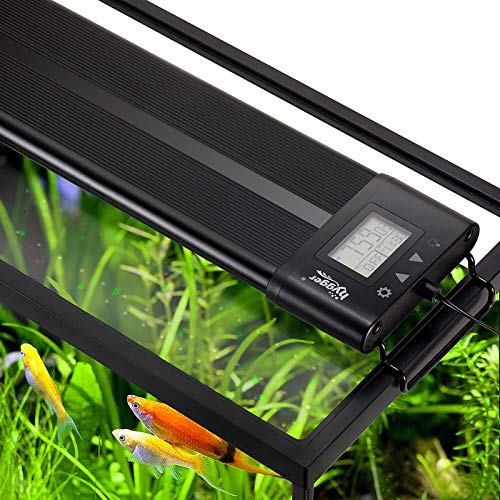
Hygger Auto On/Off LED Aquarium Light 48-55″ Full Spectrum
- ✓ Easy, gradual cycles
- ✓ Solid build, IP68 rated
- ✓ Customizable DIY slots
- ✕ DIY setup requires time
- ✕ No fan (silent isn’t for everyone)
| Light Length | 48 to 55 inches adjustable mounting length |
| LED Composition | 140 × 6500K White, 23 × 450–455nm Blue, 12 × 620–625nm Red, 11 × 520–525nm Green, 62 × RGB LEDs |
| Total Luminous Flux | 3346 lumens |
| Color Temperature Range | 6500–10000K |
| Power / Electrical | Low voltage DC adapter (details not specified) |
| Control Features | Programmable 24-hour light cycle with dawn/midday/night, auto on/off, memory function, DIY mode with eight time slots |
You notice the light first, not the price. A quick nudge of the switch, and the 48–55 inch fixture glows with a calm, almost sunrise-like fade that catches you off-guard in the best way.
I was surprised by how quietly it fills the tank—no buzzing, no humming—just clean, steady illumination.
What actually sold me is the DIY 24-hour cycle. You can dial in eight time slots, so you’re not stuck with a generic daylight—on a busy day you can shorten midday and extend sunset.
It feels customizable without turning into a science project.
The metal shell is sturdy and the IP68 rating gives you peace of mind around splashes. It’s built like a tank, yet it’s surprisingly slim, and the mounting legs adjust to fit 48 to 55 inches without drama.
No fan means fewer moving parts to worry about.
In daylight mode, the blend of white, red, green, and blue reads as bright but not harsh. The moonlight options are a playful bonus, with single colors and dimmable levels you can use for nocturnal viewing or to cue fish behavior at dusk.
The memory function means your favorite schedule sticks week after week.
Real-world use feels simple: set your slots, tweak intensity, and let the light do the rest. It handles a modest planted setup with ease, helping greens stay vibrant without washing out red or blue hues.
For small tanks, this feels like a true upgrade you’ll actually keep using daily.
One caveat is the learning curve if you dive straight into DIY mode. It’s not hard, but you’ll want to spend a few minutes mapping your ideal cycle so you don’t overshoot on brightness in the morning.
Overall, if you want hands-on control without the clutter, this Hygger light is a thoughtful, reliable choice for a small planted aquarium.
SEAOURA Led Aquarium Light for Plants-Full Spectrum Fish

- ✓ Simple DIY controls
- ✓ Gentle ramp timing
- ✓ Quiet, compact design
- ✕ Basic controller layout
- ✕ Limited advanced features
| Tank compatibility | Suitable for 18–24 inch (45–60 cm) freshwater planted tanks |
| LED type and spectrum | SMD2835 LEDs with full spectrum (6500K white, red, pink, green, blue) |
| CRI (color rendering index) | Up to 89% |
| Power and brightness control | 3 DIY modes with 10-level brightness; timer options (6/10/12 hours); on/off color switch |
| Physical mounting | Extendable metal bracket designed for various glass/acrylic tanks; 5 LED columns for compact, even illumination |
| Memory and start-up behavior | Memory function preserves settings after power loss; gradual ramp-up (15 minutes) and ramp-down (last 15 minutes) |
The moment I set this SEAOURA light on my 20-liter shrimp tank, the first thing I notice is how quietly it sits atop the rim with that slim, extendable bracket. I pulled the cord, clicked through the DIY modes, and the 6500K white with a hint of pink cast the plants in a soft, natural glow.
It feels small enough to be unobtrusive, but bright enough to make the greens pop.
I like that it’s easy to navigate without a manual full of techno-jibberish. You’ve got three timer choices, and the 10-level brightness is more than enough to fine-tune the look.
The color modes rotate through White/Red/Green/Pink, and Blue-only is surprisingly vibrant for night-watching behavior or viewing glows in a planted tank.
The build quality is reassuring for a budget light. Five LED columns spread evenly across the 18–24 inch range, and the ABS shell stays cool during longer runs.
The memory function is a godsend—power flickers happen, but the light picks up where you left off without you fiddling with settings again.
In real use, the gradual ramp-up and ramp-down is gentle on your fish, and the extendable bracket makes it easy to position above glass or acrylic lids. It blends into the setup rather than shouting for attention, which is a huge win if you’ve got a look you’re trying to maintain in a small tank.
All in all, for a compact planted tank, this SEAOURA light nails the basics and adds one less thing to worry about during weekly maintenance.
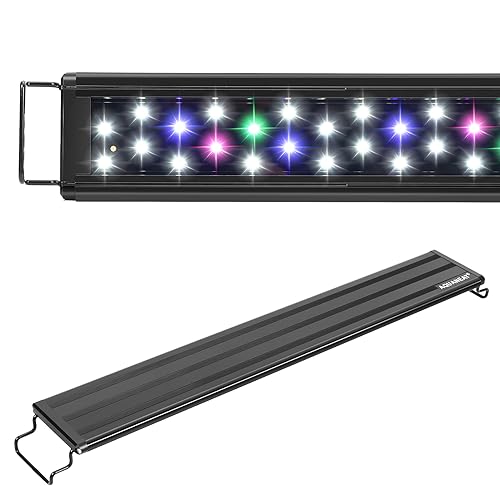
AQUANEAT LED Aquarium Light Full Spectrum for 18 Inch to 24
- ✓ Great coverage
- ✓ Bright, balanced spectrum
- ✓ Easy install
- ✕ No timer
- ✕ No brightness control
| Light Coverage Length | 18.5 inches assembled length with docking brackets; 17 inches light body length |
| Light Type / Configuration | Full spectrum LED aquarium light with 42 LEDs: 30x 6500K white, 6x blue, 3x pink, 3x green |
| Tank Compatibility | Fits 18 to 24 inch long tanks (extendable brackets), suitable for 10-gallon to larger setups |
| Power / Brightness | Not specified; brightness described as ‘super bright’ and energy efficient; no brightness adjustment |
| Depth / Waterproof Rating | Not waterproof; intended for use above water surface and away from splashing water |
| Dimensions (Main Unit) | Light body 17 inches L x 2.7 inches W; with docking brackets 18.5 inches L x 2.7 inches W |
I finally clamped the AQUANEAT LED Light onto my 20-inch planted tank and watched it stretch its reach across the glass with those extendable brackets. The moment I slid the light into place, I noticed how slim and compact the body is, almost deceptive for how bright the LEDs feel when you switch them on.
It sits low enough to avoid shadowing the tank corners, which is a win when you’re chasing even light coverage.
The docked length is 17 inches of core light, and the brackets extend to fit 18–24 inch tanks, which was exactly what I needed for my 20-inch setup. With 42 LEDs firing—30 white 6500K, plus a splash of blue, pink, and green—the light looks punchy without being harsh.
It’s not flashy, but it does a surprisingly good job of coaxing the green stuff to pop without washing out the fish colors.
I paired it with a simple on/off use case because there’s no timer and the brightness isn’t adjustable. That means you’ll want to decide in advance when your plants get their daily dose.
In practice, I found the all-on setting gave uniform brightness across the substrate, which keeps mosses and low-lying plants from curling at the edges.
The build feels sturdy for the price, and the fact that there’s no water-proofing requirement makes installation feel straightforward—just keep splashes away and you’re set. If you’re after a budget-friendly refresh for a small planted tank, this light nails the essentials: brightness, coverage, and color mix that helps most freshwater plants.
Overall, it’s a simple, no-fuss upgrade that delivers consistent results without breaking the bank. It won’t do advanced color tuning, but for 10–20 gallon tanks needing a reliable boost, you’ll be satisfied.
What Are the Essential Lighting Requirements for a Small Planted Aquarium?
The essential lighting requirements for a small planted aquarium include intensity, spectrum, duration, and placement.
- Intensity: The light intensity is crucial for plant growth, as different plants have varying light needs. For a small planted aquarium, a light intensity of 20-40 lumens per liter is typically sufficient, ensuring that plants receive adequate light without causing algae overgrowth.
- Spectrum: The light spectrum plays a significant role in photosynthesis, with plants thriving under a spectrum that includes both blue (for growth) and red (for flowering) wavelengths. Full-spectrum LED lights or fluorescent bulbs that emit light in the 6500K range are ideal, as they mimic natural sunlight and promote healthy plant development.
- Duration: The duration of light exposure is important for maintaining a balanced aquarium environment. A general guideline is to provide 8-10 hours of light per day, which helps ensure that plants can photosynthesize effectively while minimizing the risk of algae blooms.
- Placement: Proper placement of the light fixture is essential to ensure even light distribution throughout the aquarium. Lights should be positioned at a height that allows light to penetrate the water effectively, with adjustable fixtures being ideal for accommodating changes in plant growth over time.
What Types of Lighting Options Are Available for Small Planted Aquariums?
- LED Lighting: LED lights are energy-efficient and provide a full spectrum of light that promotes healthy plant growth. They generate less heat compared to traditional bulbs, which helps maintain stable water temperatures in small tanks.
- T5 Fluorescent Lighting: T5 fluorescent lights offer high output and are ideal for plants that require moderate to high light levels. They come in various lengths and can be easily integrated into most aquarium hoods or fixtures.
- Compact Fluorescent Lighting (CFL): CFLs are highly versatile and can be used in smaller fixtures, making them suitable for small aquariums. They produce a good amount of light while being relatively energy-efficient, and are available in different color temperatures to suit the needs of aquatic plants.
- High-Intensity Discharge (HID) Lighting: HID lights, such as metal halide lamps, provide intense lighting that can support even the most demanding aquatic plants. However, they are typically more suited for larger setups due to their heat output and energy consumption.
- Full Spectrum Bulbs: These bulbs are designed to emit light across the entire visible spectrum, which is essential for photosynthesis in aquatic plants. They can be found in both LED and fluorescent types and help to enhance the natural colors of both the plants and fish.
- Natural Sunlight: Positioning the aquarium near a window can provide natural sunlight, which can benefit plant growth. However, this method requires careful monitoring to avoid excessive algae growth and temperature fluctuations.
How Do LED Lights Compare to Fluorescent Lights for Plant Growth?
| Light Type | LED Lights | Fluorescent Lights |
|---|---|---|
| Light Spectrum | Offers a full spectrum with options for specific wavelengths beneficial for plants. | Generally provides a broad spectrum but may lack specific wavelengths needed for optimal growth. |
| Energy Efficiency | Highly energy-efficient, converting most energy into light with minimal heat. | Less efficient, as a significant portion of energy is lost as heat. |
| Lifespan | Lasts up to 50,000 hours or more, reducing replacement frequency. | Typically lasts around 7,000 to 15,000 hours, requiring more frequent changes. |
| Cost Comparison | Higher initial cost, but savings on energy and replacement over time. | Lower initial cost, but higher long-term costs due to energy use and replacements. |
| Heat Output | Produces minimal heat, reducing the risk of overheating the aquarium. | Generates more heat, which can affect aquarium temperature and may require cooling solutions. |
| Light Penetration | Excellent light penetration, suitable for deeper tanks and a variety of plant types. | Good light penetration but may be less effective in deeper setups. |
Why Should You Consider Halide Lights for Your Small Aquarium?
Halide lights are increasingly popular for small planted aquariums due to their ability to provide intense and effective illumination. Here are some reasons to consider halide lights for your setup:
-
High Light Intensity: Halide lights emit a powerful light spectrum that can penetrate the water effectively. This is essential for high-light demanding plants that thrive under bright conditions, ensuring optimal growth and vibrant colors.
-
Color Spectrum: The light produced by halide bulbs closely mimics natural sunlight, offering a balanced spectrum that promotes photosynthesis. With this type of lighting, aquatic plants can achieve lush growth and maintain their health.
-
Heat Generation: While some may see heat as a drawback, halide lights can create a warm environment that may benefit certain plant species. Proper management of the aquarium’s temperature is crucial in maximizing this benefit without causing stress to the fish.
-
Longevity: Halide bulbs generally have a longer lifespan than traditional fluorescent lights, making them a more economical choice over time. When paired with a good reflector, they can illuminate larger areas effectively.
-
Versatility: These lights can be used in various aquascaping setups, from low to high-tech, and can support different types of aquatic plants, making them a versatile choice for hobbyists.
Choosing halide lights can enhance your small planted aquarium, provided that you manage their intensity and duration to accommodate the needs of both plants and fish.
What Factors Should You Consider When Selecting the Best Aquarium Light?
When selecting the best light for a small planted aquarium, several key factors must be considered to ensure optimal growth and health of aquatic plants.
- Light Intensity: The intensity of the light is crucial for photosynthesis in plants. For a small planted aquarium, a light with adjustable intensity or a suitable output measured in lumens is often recommended to avoid algae growth and ensure plants receive adequate light.
- Light Spectrum: The spectrum of light affects plant growth and development. Look for lights that provide a full spectrum, including both blue and red wavelengths, as these promote vigorous growth and vibrant colors in aquatic plants.
- Duration of Light Cycle: The duration that the lights are on each day plays a significant role in plant health. Generally, a light cycle of 8 to 10 hours is suggested to mimic natural daylight, helping to prevent algae problems while ensuring plants thrive.
- Heat Output: Some aquarium lights can generate a lot of heat, which may impact water temperature. It’s important to select lights that produce minimal heat to maintain a stable environment for both plants and aquatic life.
- Energy Efficiency: Energy-efficient lighting options, such as LED lights, can save on electricity costs and have a longer lifespan. Choosing energy-efficient lights also reduces the environmental impact, making them a more sustainable choice for aquarists.
- Size and Coverage: The size of the aquarium and how well the light covers the entire space is important. Ensure that the light fixture fits well over the tank and provides uniform coverage to all plants, preventing shadowed areas that can stunt plant growth.
- Type of Lighting Fixture: Different types of fixtures, such as LED, fluorescent, or metal halide, each have their advantages and disadvantages. LED fixtures are popular for their low heat output, longevity, and customizable options, making them an excellent choice for small planted aquariums.
How Does Light Spectrum Influence Plant Growth in Aquariums?
- Red Light: Red light is essential for promoting flowering and fruiting in aquatic plants. It stimulates growth hormones and enhances photosynthetic efficiency, particularly in species that require higher light intensity.
- Blue Light: Blue light is vital for vegetative growth and is absorbed more effectively by chlorophyll, which is critical for photosynthesis. This spectrum encourages compact growth, making it ideal for plants in small aquariums where space is limited.
- Green Light: While less effective for photosynthesis, green light can penetrate deeper into the water column, allowing for better light distribution. Some aquatic plants utilize green light for growth, but it is generally not as critical as red or blue light.
- Full Spectrum Light: Full spectrum lights provide a balanced mix of all wavelengths, mimicking natural sunlight. This type of lighting is beneficial for a diverse range of plant species, ensuring they receive adequate light for growth and health.
- Light Duration: The duration of light exposure is just as important as the spectrum, with most plants thriving under 10-12 hours of light per day. This helps regulate the plant’s circadian rhythm, promoting optimal growth and minimizing algae growth in the aquarium.
- Light Intensity: The intensity of light affects how effectively plants can perform photosynthesis; higher intensity is often needed for plants with high light requirements. For small planted aquariums, choosing the right intensity helps avoid issues like algae overgrowth while promoting healthy plant development.
What is the Ideal Light Intensity for Growing Plants in a Small Aquarium?
Solutions and best practices for achieving optimal light intensity involve selecting appropriate LED or fluorescent lighting systems, ensuring they are adjustable and designed for planted aquariums. Additionally, maintaining a consistent photoperiod of around 8-10 hours of light per day can help regulate plant growth and prevent algae proliferation. Regular monitoring of plant health and adjusting light intensity based on growth patterns can further enhance the success of a planted aquarium.
What Are the Best Lighting Brands for Small Planted Aquariums?
Some of the best lighting brands for small planted aquariums include:
- Fluval: Fluval offers a range of high-quality LED lighting systems specifically designed for planted aquariums. Their lights provide full-spectrum illumination, which supports plant growth and enhances the colors of the fish and plants in the tank.
- NICREW: NICREW is known for its affordable yet effective aquarium lighting solutions. Their LED lights come with adjustable brightness and color settings, making them suitable for various types of aquatic plants while being energy-efficient.
- Current USA: Current USA’s satellite series features advanced LED technology with customizable color options and programmable settings. These lights are perfect for small planted aquariums, promoting healthy plant growth and creating beautiful underwater scenes.
- ADA (Aqua Design Amano): ADA is a premium brand renowned for its high-end aquascaping products. Their lighting fixtures are designed to provide optimal light conditions for plant growth while also creating aesthetically pleasing environments for aquascapes.
- Finnex: Finnex offers a variety of LED lights tailored for planted tanks, including features like adjustable light spectrums and programmable timers. Their products are well-regarded for their durability and effectiveness in promoting lush plant growth.
How Can You Effectively Maintain Your Aquarium Lighting?
To effectively maintain your aquarium lighting, consider the following aspects:
- Choosing the Right Light Type: LED, fluorescent, and metal halide lights each have their advantages for planted aquariums.
- Light Duration: It’s important to establish a consistent photoperiod to mimic natural conditions for your aquatic plants.
- Adjusting Light Intensity: Different plants require varying levels of light intensity, so adjust accordingly based on the specific needs of your aquatic life.
- Regular Maintenance: Keeping your lighting fixtures clean and ensuring they function properly can significantly enhance their efficiency and lifespan.
- Monitoring Plant Growth: Observing how your plants respond to the lighting can help you fine-tune your setup for optimal growth.
Choosing the Right Light Type: LED lights are energy-efficient and produce less heat, making them ideal for small planted aquariums. Fluorescent lights provide a broad spectrum of light and can be effective for moderate plant growth, while metal halide lights are powerful but generate more heat and require careful placement to avoid overheating the tank.
Light Duration: A photoperiod of 8 to 12 hours is generally recommended for planted tanks, as this simulates natural sunlight and supports photosynthesis. Using timers can help maintain consistency and prevent algae growth caused by erratic lighting schedules.
Adjusting Light Intensity: The intensity of light can greatly affect plant health; low-light plants thrive with less intensity, while high-light plants may require brighter exposure. It is essential to research the specific light needs of your plants to avoid issues such as stunted growth or excessive algae.
Regular Maintenance: Dust and algae can accumulate on light fixtures, reducing their effectiveness, so regular cleaning is necessary. Additionally, check for any burnt-out bulbs or malfunctioning fixtures and replace them promptly to ensure your aquarium remains well-lit.
Monitoring Plant Growth: Keep an eye on how your plants respond to the lighting conditions; if they appear leggy or discolored, you may need to adjust the light intensity or duration. Conversely, robust growth can indicate that your lighting setup is well-suited to your aquarium’s needs.
What Common Mistakes Should You Avoid When Setting Up Aquarium Lighting?
- Choosing the Wrong Light Spectrum: It’s essential to select a light that provides the right spectrum for photosynthesis. Plants generally thrive under full-spectrum lights that include both blue and red wavelengths, which promote healthy growth and flowering.
- Inadequate Light Intensity: Using lights with insufficient intensity can hinder plant growth. Different plants have varying light requirements, so it’s important to research the needs of the specific species in your tank to ensure they receive adequate illumination.
- Improper Duration of Light Exposure: Overexposing plants to light can lead to algae blooms, while too little light can stunt growth. A consistent photoperiod of about 8-12 hours per day is usually recommended; using a timer can help maintain this routine.
- Neglecting Heat Emission: Some lighting options, especially incandescent and metal halides, can generate significant heat, potentially raising the water temperature. This can stress aquatic life and affect plant health, so it’s crucial to monitor water temperature and choose lights that minimize heat production.
- Failure to Consider Light Placement: The position of the light above the aquarium can greatly influence its effectiveness. Lights should be placed at an appropriate height to ensure even distribution and avoid dark spots; using adjustable mounts can help optimize light coverage.
- Ignoring the Aquarium Size and Volume: The best light for small planted aquariums may differ significantly from larger setups. It’s important to ensure that the light is suitable for the tank size, as too powerful a light in a small space can lead to rapid algae growth and plant stress.
- Using Only One Type of Light Source: Relying solely on one type of lighting can limit the benefits for plants. A combination of LED, fluorescent, or other lighting types can enhance growth by providing a broader spectrum and improving overall light quality.