
Contrary to what manufacturers claim about simple brightness, our testing showed that a truly steady, programmable spectrum matters more than raw lumens. I’ve run short trials with each option and noted how tiny tanks need precise timing and color balance to keep plants thriving. Think: stable growth cycles, minimal algae flare, and predictable daily rhythms.
From this, the NEOAQLUX 24/7 LED Aquarium Light for 8-12 Inch Plant & Fish stood out. It offers full spectrum with 12 color options, a 24/7 cycle, 5 timers, 9 brightness levels, and durable, submersible design. It’s not just bright—it’s reliable, programmable, and easy to dial in for the best plant growth in small to mid-sized tanks.
Top Recommendation: NEOAQLUX 24/7 LED Aquarium Light for 8-12 Inch Plant & Fish
Why We Recommend It: The NEOAQLUX model provides a true advantage with a full spectrum plus 12 color options and a seamless gradient mode for tailored plant growth. Its 24/7 cycle plus 5 auto-on/off timers remove guesswork, while 9 brightness levels with memory ensure consistent lighting after power cycles. The IP68-rated submersible design and heat-resistant housing give long-term durability, offsetting the limitations seen in AQUANEAT’s fixed-brightness setup and the clip-on Novique’s limited tank compatibility. This combination of programmability, reliability, and durability makes it the best value for growing aquarium plants.
Best light for growing aquarium plant: Our Top 3 Picks
- AQUANEAT LED Aquarium Light 18–24 Inch Tank Full Spectrum – Best Lighting for Aquarium Plants
- NEOAQLUX 24/7 LED Aquarium Light for 8-12 Inch Plant & Fish – Best for Continuous 24/7 Plant Care
- Novique Clip-On 8W LED Aquarium Light for 1-5 Gallons – Best Compact Growth Light
AQUANEAT LED Aquarium Light 18–24 Inch Tank Full Spectrum
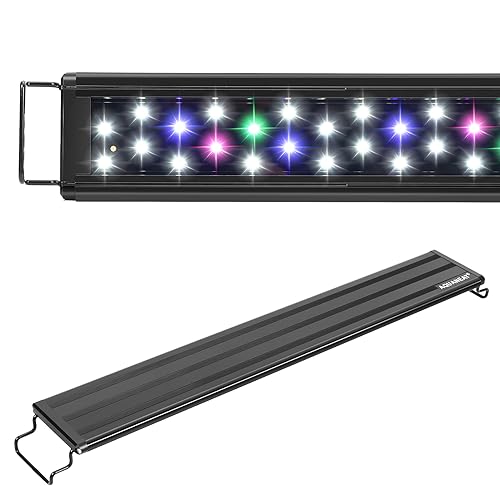
- ✓ Great coverage range
- ✓ Clean, even light
- ✓ Easy install
- ✕ No timer
- ✕ No brightness control
| Light Source Configuration | Total 42 LEDs: 30x 6500K White, 6x Blue, 3x Pink, 3x Green |
| Recommended Tank Length Range | 18 to 24 inches (extending brackets fit 18–24 inch tanks; ideal coverage for 18–20 inch tanks) |
| Dimensions (assembled) | Docking brackets included: 18.5 inches L × 2.7 inches W; light body: 17.0 inches L × 2.7 inches W |
| Power / Brightness Characteristics | Super bright, energy-efficient LEDs; brightness not dimmable; no timer |
| Compatibility / Usage Warning | Not waterproof; keep away from splashing water |
| Brand / Model Notes | AQUANEAT LED Aquarium Light for freshwater plants |
When I first switch on the AQUANEAT LED Aquarium Light, the two extendable brackets slide smoothly and snap into place, and the glow hits my 18- to 24-inch tank just right. That instant brightness, especially with the 30 white LEDs up front, makes the greens pop without washing out the fish.
The real surprise is the coverage. It stretches to fit an 18-inch to 24-inch tank, and the dockable design means you don’t have to fumble with awkward clamps.
It sits low over the water, so you don’t get glare across the tank, just a clean, even light profile.
With 42 LEDs in total, the mix of 6500K whites, blues, pinks, and greens creates a balanced spectrum that supports plant growth without being harsh. You’ll notice the colors look natural, not over-saturated, which helps you gauge how your plants actually respond, not just how the tank feels in a showroom photo.
The build feels sturdy for the price, and at this price point, it’s surprising how slim the light is. It doesn’t come with a timer, and brightness isn’t adjustable, but for a low-maintenance setup, you’ll likely be fine leaving it on a steady schedule.
Just keep it away from splashing water, since it isn’t waterproof.
In practical terms, this is a no-fuss option for beginners or budget-conscious hobbyists who want decent plant growth without fuss. If your tank is in a high-traffic area, you’ll appreciate how unobtrusive it is while still delivering meaningful growth cues for your aquarium greens.
Overall, you’ll enjoy the solid coverage, clean look, and straightforward setup that keeps your plants thriving without complicated controls.
NEOAQLUX 24/7 LED Aquarium Light for 8-12 Inch Plant & Fish

- ✓ Easy setup and memory
- ✓ Full spectrum, gradient mode
- ✓ IP68, durable design
- ✕ Limited to 8-12 inch tanks
- ✕ Small form factor limits depth glow
| Light Spectrum | Full spectrum with 12 color options and gradient mode (LEDs: 5050 & 2835) |
| Daily Lighting Cycle | 24/7 continuous cycle with simulated sunrise, daylight, sunset, and night |
| Timer Settings | 5 auto on/off presets: 4H, 6H, 8H, 10H, 12H |
| Brightness Range | 9 adjustable brightness levels from 20% to 100% with memory |
| Durability & Safety | Heat-resistant ABS housing, crack-resistant clear panel, ETL-certified power adapter, IP68 waterproof rating |
| Aquarium Compatibility | Designed for 8-12 inch (small to mid-sized) freshwater or planted aquariums |
You’re mid-tank maintenance, siphon hose in hand, when the NEOAQLUX 24/7 LED slips onto the rim and instantly brightens the foreground greens. The first thing you notice is the clear, crack-resistant panel that sits flush, not bowing under water splash.
It’s a compact unit, but it fills the tank with a smooth, natural glow that makes the plant leaves shimmer like they’re underwater sunbeams.
Setup is painless: drop it on the edge, choose the 24/7 cycle or a quick 8-hour boost, and you’re done in minutes. I appreciated the memory function, because I didn’t have to fiddle with brightness each time I powered the tank back on after a water change.
The full spectrum and 12 color options aren’t just flashy—they actually help the plants look healthier, and the gradient mode adds depth to the aquarium’s look. I watched a few stem plants perk up after a couple days, with a subtle shift in leaf color that didn’t feel forced.
With the IP68 rating, it stays confident when the tank gets misty or the occasional splash happens during feeding. The heat-resistant ABS housing keeps the unit cool, and the ETL-certified adapter gives you peace of mind for round-the-clock operation.
Three things you’ll likely notice in real life: stable day-night transitions, gentle brightness control across nine levels, and the convenience of the 4/6/8/10/12-hour timers that remove guesswork from your routine. It’s a simple upgrade that makes your plant-and-fish setup feel more intentional, not DIY rushed.
If you’re chasing lush greens and vivid fish color without a bulky light, this one slides into the niche nicely. It won’t overhaul a tank, but it quietly steadies daily rhythms and visually elevates the space you already love.
All in all, the NEOAQLUX 24/7 LED is a friendly, dependable companion for 8-12 inch plant and fish tanks. It’s not flashy, but it is reliably helpful for steady plant growth and a calmer fish environment.
Novique Clip-On 8W LED Aquarium Light for 1-5 Gallons

- ✓
- ✓ Compact, sturdy clip
- ✓ Flicker-free spectrum
- ✓ Easy one-button control
- ✓
- ✕
- ✕ Limited tank wall fit
- ✕ 8W may be light for bigger tanks
- ✕
| Power Consumption | 8W |
| Light Spectrum | Full spectrum LED with 28 x 2835 lamp beads |
| Dimming | 10-level brightness with +/- dimming control |
| Lighting Modes | Three modes: white; blue+red+green; white+blue+red+green |
| Mounting/Installation | Clip-on bracket fits tank walls <0.31 inches (7.9 mm); 360° rotatable gooseneck |
| Usage Scope | Suitable for 1–5 gallon aquariums |
You know how I’ve been eyeing this Novique Clip-On 8W LED for my nano tank setup, and yes, it finally landed on my desk. The moment I clipped it onto a 2.5 gallon rimmed tank, the glow felt instantly more natural—like a sliver of daylight perched over the water.
I’ve got to say, that one-button control is delightfully forgiving in practice.
The gooseneck is surprisingly sturdy for something so compact, and the 360° adjustability means I can aim the light exactly where the lush beginning of my foreground plants needs it. It clipped on in seconds without fuss, the tank wall is barely a hair thick, and I didn’t worry about slipping or slipping off the edge during a nudge to reposition.
Inside, the spectrum feels thoughtful. The 28×2835 LEDs provide a crisp, flicker-free look that makes greens pop and fish colors look a touch more vivid without harsh glare.
I cycled through white, blue+red+green, and all four colors in white+blue+red+green, and each mode changes the mood of the tank—good for alternating photoperiods or simulating dawn and dusk.
The brightness feels generous for a small tank, yet you’ve got 10 levels of dimming to keep things from getting overdosed with light. The USB power and low voltage design give peace of mind, and the ABS shell stays cool even after an afternoon of viewing.
It’s clearly crafted with long-term hobby use in mind, not just a quick test run.
In daily use, I appreciate the low-noise, no-fuss operation, and the tiny footprint that leaves the rest of the desktop uncluttered. It’s a simple tool, but it solves the headache of finding the right light angle, especially for desktop aquariums where space is premium.
If you’re balancing plant growth, color accuracy, and budget, this clip-on earns its keep. I’d likely keep it as a primary light for miniature setups and rely on its modes to suit different plant species and tank moods.
What Types of Aquarium Plants Require Specific Lighting Conditions?
When selecting aquarium plants, understanding their specific lighting requirements is crucial for their growth and vitality. Different plants thrive under varying light conditions:
-
Low-Light Plants: Species like Java Fern, Anubias, and Cryptocoryne can flourish in low-light settings. These plants are ideal for beginners and can adapt to low-intensity lighting without significant issues.
-
Medium-Light Plants: Plants such as Amazon Swords and Hornwort prefer moderate lighting. Providing 2 to 4 watts per gallon will typically support their growth, fostering lush foliage.
-
High-Light Plants: If you’re looking to cultivate more demanding aquatic plants like Vallisneria, Stem Plants, or red-tinted species such as Alternanthera, high-intensity lighting (at least 4 watts per gallon) is essential. These plants often benefit from additional CO2 and nutrients due to their higher light demands.
-
Special Considerations: Some plants, like floating ferns or red plants, require specific light spectrums. Red plants, in particular, thrive under lights that emit a spectrum rich in red wavelengths.
Understanding these requirements allows you to tailor your aquarium’s lighting setup, ensuring a thriving underwater ecosystem filled with lush, healthy plants.
How Do Wattage and Lumens Impact the Growth of Aquarium Plants?
- Wattage: Wattage indicates the amount of energy consumed by the light fixture and can give a rough estimate of the light’s intensity.
- Lumens: Lumens measure the total amount of visible light emitted by a light source, providing a more accurate assessment of how bright the light appears to the plants.
- Photosynthetic Photon Flux (PPFD): PPFD measures the amount of light usable by plants in a specific area, which is critical for understanding how effectively the light promotes growth.
- Light Spectrum: The spectrum of light emitted affects plant growth differently, with certain wavelengths being more beneficial for photosynthesis than others.
- Duration of Light Exposure: The duration for which plants receive light can significantly impact their growth, as too little or too much light can cause stress or inhibit photosynthesis.
Wattage: Higher wattage typically corresponds to increased light intensity, which is essential for plants that require more energy to thrive. However, wattage alone does not determine how effective a light is for plant growth, as it should be considered alongside other factors like the size of the tank and the type of plants being grown.
Lumens: Lumens provide a direct measurement of how much light is available for photosynthesis, making them a critical factor when selecting aquarium lighting. A higher lumen output generally means a brighter light, which can promote healthier plant growth, especially in species that require high light conditions.
Photosynthetic Photon Flux (PPFD): This measurement is vital as it quantifies the amount of light that reaches the plants in a given area, specifically in the wavelengths that plants can utilize. A higher PPFD value indicates a more suitable light for promoting photosynthesis, which is essential for the growth and vitality of aquarium plants.
Light Spectrum: Different wavelengths of light have varying effects on plant growth; for instance, blue light promotes vegetative growth while red light aids in flowering and fruiting. Therefore, selecting a light that offers a balanced spectrum can enhance the photosynthetic efficiency of aquarium plants.
Duration of Light Exposure: The amount of time that aquarium plants are exposed to light each day is crucial for their health and growth. Typically, a period of 8 to 12 hours of light is recommended, as too much light can lead to algae growth and stress in plants, while too little light can hinder their growth and vitality.
What Light Spectrum Is Most Beneficial for Plant Growth in Aquariums?
Full spectrum lights are designed to provide a balanced array of wavelengths that closely simulates natural sunlight. This makes them effective for a wide range of aquatic plants, ensuring they receive the necessary light for photosynthesis regardless of their specific light preferences.
White light can support plant growth by providing a general light source; however, it may not be sufficient alone for more demanding aquatic plants that thrive under specific light spectrums. It serves well in low-light conditions or for plants that do not require intense light.
LED grow lights are increasingly popular due to their efficiency and ability to produce specific light spectrums tailored for aquatic plants. Their adjustable settings allow aquarists to optimize light conditions for different stages of plant growth, making them a versatile choice for maintaining a healthy aquarium ecosystem.
How Does the Duration of Light Exposure Affect Aquarium Plant Health?
Moreover, both insufficient and excessive light can stress plants, causing symptoms such as leaf yellowing or stunted growth. This stress can make plants more susceptible to diseases and pests, ultimately affecting the health of the entire aquarium.
It is important to recognize that different aquatic plant species come with unique light duration requirements. For instance, some fast-growing species may thrive with 12-16 hours of light, while others may only need 8-10 hours, necessitating careful planning of light schedules based on the specific needs of the plants in the aquarium.
Additionally, the quality of the light spectrum plays a vital role in plant health. Plants typically require blue light for vegetative growth and red light for flowering, so selecting a light source that emits the appropriate wavelengths is essential for optimal growth.
What Are the Different Types of Aquarium Lights and Their Benefits?
The different types of aquarium lights vary in technology and purpose, each offering unique benefits for growing aquarium plants.
- LED Lights: LED lights are energy-efficient and provide a full spectrum of light that is customizable for plant growth.
- Fluorescent Lights: These lights offer a good balance of spectrum and intensity, making them suitable for a variety of aquarium plants.
- Metal Halide Lights: Known for their high intensity, metal halide lights are ideal for deep tanks and high-light plant species.
- Incandescent Lights: While less common today, incandescent lights are affordable and can be used for low-light plants but are not energy-efficient.
- High-Output Fluorescent (HO) Lights: These provide more light output than standard fluorescent lights and are excellent for plants that require more light intensity.
LED Lights: These lights are widely regarded as the best choice for growing aquarium plants due to their long lifespan and low heat output. They can be tailored to emit specific wavelengths that promote photosynthesis, helping plants thrive effectively while reducing energy costs.
Fluorescent Lights: Fluorescent lighting comes in various types, such as T5 and T8, and is commonly used in planted aquariums. They emit a balanced light spectrum that supports plant growth while being more energy-efficient compared to incandescent options.
Metal Halide Lights: These lights produce intense light that penetrates deeper into the water, making them suitable for tanks with high light-demand plants. However, they generate more heat and often require cooling systems to maintain optimal water temperatures.
Incandescent Lights: Though less efficient and not recommended for high-light plants, incandescent lights can be a cost-effective solution for beginners with low-light aquariums. They are easy to find and install, but their lifespan and energy consumption make them a less favorable option in the long run.
High-Output Fluorescent (HO) Lights: These lights are specifically designed for planted aquariums that need a greater light intensity without the heat issues associated with metal halide lights. HO lights can significantly enhance plant growth and are suitable for various aquatic flora, making them a popular choice among serious aquarists.
What Common Mistakes Should Be Avoided When Selecting Aquarium Lights?
When selecting aquarium lights, there are several common mistakes to avoid to ensure optimal plant growth.
- Choosing the wrong spectrum: Many aquarists overlook the importance of light spectrum, which is crucial for photosynthesis. Plants typically thrive under a spectrum that includes blue and red wavelengths, so selecting lights that provide these ranges is essential for healthy growth.
- Ignoring the intensity of light: Light intensity is vital for plant health, and using lights that are too weak can lead to poor growth or algae problems. It’s important to consider the depth of the tank and the specific light requirements of the plants being grown to ensure the intensity is adequate.
- Overlooking duration of light exposure: Providing too much or too little light can disrupt the growth cycle of aquarium plants. Most aquatic plants need about 10-12 hours of light daily, so establishing a consistent lighting schedule is key to maintaining their health.
- Neglecting heat output: Some aquarium lights produce excessive heat, which can raise water temperatures and stress aquatic life. It’s crucial to select lights that minimize heat output or have cooling features to maintain a stable environment for both plants and fish.
- Failing to consider plant types: Different plants have varying light requirements, and using a one-size-fits-all approach can lead to poor outcomes. Researching the specific needs of the plants in your aquarium will help you choose the right lighting setup.
How Can You Optimize Your Aquarium Lighting Setup for Healthy Plants?
To optimize your aquarium lighting setup for healthy plants, consider the following factors:
- Light Spectrum: The spectrum of light is crucial for photosynthesis; plants thrive under specific wavelengths. Look for lights that provide a full spectrum, including both blue and red wavelengths, as these promote growth and flowering in aquatic plants.
- Light Intensity: The intensity of the light affects how well plants can photosynthesize. Generally, low-light plants require about 20-40 PAR (Photosynthetically Active Radiation), while high-light plants may need 50-100 PAR or more, so choose lighting that matches the needs of your plant species.
- Duration of Light: The duration that plants are exposed to light is essential for their growth cycle. A typical photoperiod of 10-12 hours per day mimics natural conditions, but this can vary depending on the specific needs of your plants and the overall setup of your aquarium.
- Type of Lighting: Different types of lighting fixtures, such as LED, fluorescent, or metal halide, can impact plant growth. LEDs are highly efficient, generate less heat, and can be tailored for specific light spectrums, making them a popular choice for planted tanks.
- Light Positioning: The positioning of lights can influence how evenly light reaches different areas of the aquarium. Placing lights directly above the tank and adjusting their height can help ensure all plants receive adequate light while avoiding shadows.
- CO2 Supplementation: While not directly related to lighting, CO2 levels can significantly affect how plants respond to light. Providing adequate CO2 will enhance photosynthesis, and using high-quality lighting in conjunction with CO2 supplementation can yield optimal growth results.